10 Customer Service Email Templates to Use in 2025
In customer service, every email is an opportunity. A great response can turn a frustrated user into a loyal advocate, while a poor one can lead to churn and negative reviews. But crafting the perfect, empathetic, and effective email for every single situation, from a warm welcome to a sincere apology, takes significant time and mental energy. That's where a solid set of customer service email templates becomes an invaluable asset for any team.
This guide provides 10 essential templates designed for the most common and critical support scenarios you face daily. We'll go beyond simple copy-paste text. For each template, we will break down the core strategy, offer specific customization tips, and provide actionable takeaways to ensure your communication is consistently world-class.
You will learn not just what to say, but why it works. The goal is to empower your team with the tools and understanding needed to resolve issues efficiently and build stronger customer relationships with every single email they send. Forget staring at a blank screen; these templates provide a strategic foundation for excellence, allowing you to deliver clear, helpful, and brand-aligned support at scale.
1. Welcome/Onboarding Email Template
The welcome email is your first direct, non-transactional communication with a new customer or user. It's a critical opportunity to make a strong first impression, reinforce your brand's value, and guide users toward their "aha!" moment. This template sets the tone for the entire customer relationship by providing essential next steps, highlighting key features, and offering a clear path to getting started. A well-crafted onboarding email can significantly boost user activation and long-term retention.
This proactive approach is one of the most effective customer service email templates because it prevents future support tickets. By anticipating questions and providing clear guidance upfront, you empower users and reduce their need to seek help later. Companies like Slack and Dropbox excel at this, using a series of automated emails to onboard users progressively, which prevents information overload.
Strategic Breakdown & Actionable Tips
- Objective: To confirm signup, set expectations, and guide the user to take a specific first action (e.g., complete their profile, create their first project).
- Key Elements:
- Personalized Greeting: Use the customer's name to make the email feel individual.
- Clear Next Step: Include a prominent call-to-action (CTA) button.
- Value Reinforcement: Briefly remind them why they signed up.
- Support Link: Provide an easy way to get help, like a link to your knowledge base or support email.
- When to Use: Immediately after a user signs up for a trial, creates an account, or makes their first purchase. Speed is crucial; aim to send it within minutes for maximum impact.
<iframe width="560" height="315" src="https://www.youtube.com/embed/_-kgq9CwJuk" frameborder="0" allow="accelerometer; autoplay; clipboard-write; encrypted-media; gyroscope; picture-in-picture" allowfullscreen></iframe>
By focusing on a warm welcome and clear direction, you can transform a simple confirmation into a powerful tool for customer engagement. For further inspiration, discover these 10 tips to send emails that make the other person smile.
2. Problem Resolution/Apology Email Template
When something goes wrong, the problem resolution email is your most powerful tool for service recovery. This email's purpose is to acknowledge a customer's issue, express sincere empathy, and provide a clear, tangible solution. It's a make-or-break moment that can either escalate a customer's frustration or transform them into a loyal advocate for your brand. A well-executed apology email demonstrates accountability and a genuine commitment to customer satisfaction, effectively turning a negative experience into a positive one.
This template is a cornerstone of effective customer service because it directly addresses friction and rebuilds trust. Companies known for exceptional support, like Amazon and Zappos, have mastered this communication. They combine a swift, empathetic apology with a hassle-free solution, such as an immediate refund or a replacement item shipped overnight. This proactive problem-solving not only resolves the immediate issue but also reinforces the customer's confidence in the brand, making them feel heard and valued.
Strategic Breakdown & Actionable Tips
- Objective: To resolve a customer's complaint, restore their trust, and retain their business by offering a sincere apology and a concrete solution.
- Key Elements:
- Sincere Apology: Start by saying "we're sorry." Acknowledge the specific mistake without making excuses.
- Empathetic Statement: Show you understand their frustration (e.g., "We realize how inconvenient this must have been.").
- Clear Solution: Explicitly state what you are doing to fix it (e.g., issuing a refund, sending a replacement, applying a credit).
- Follow-Up Plan: Let them know what will happen next and when to expect it.
- When to Use: As soon as you are aware of a customer complaint or service failure. A rapid response, ideally within a few hours, is critical to show you are taking the issue seriously.
3. Ticket Confirmation/Support Response Email Template
When a customer reaches out for help, their initial moments are filled with uncertainty. The ticket confirmation email is an immediate, often automated, response that acknowledges their inquiry, assures them it has been received, and sets clear expectations for what happens next. This simple communication is a cornerstone of effective support, transforming a moment of customer frustration into an opportunity to demonstrate reliability and organization. It acts as a crucial first step in problem resolution, preventing follow-up emails and reducing customer anxiety.
This type of customer service email template is foundational for any support operation, popularized by platforms like Zendesk and Help Scout. By confirming receipt and providing a ticket number, you immediately give the customer a sense of control and a reference point for future communication. GitHub excels at this by not only confirming an issue but also automatically applying labels, showing that the system is already categorizing and processing their request, which adds a layer of transparency to the support process.
Strategic Breakdown & Actionable Tips
- Objective: To acknowledge a customer's support request, provide a reference number, set a realistic response time, and offer immediate self-help resources.
- Key Elements:
- Prominent Ticket Number: Place the ticket or reference ID at the very top for easy access.
- Clear Expectations: State your estimated response time (e.g., "within 24 business hours"). Honesty is key.
- Helpful Resources: Link to relevant FAQ articles or knowledge base sections that might solve their problem while they wait.
- Issue Summary: Briefly repeat the customer's stated issue to confirm you understood their request correctly.
- When to Use: Immediately and automatically after a customer submits a support ticket through any channel, whether it's an email, a web form, or a chat widget.
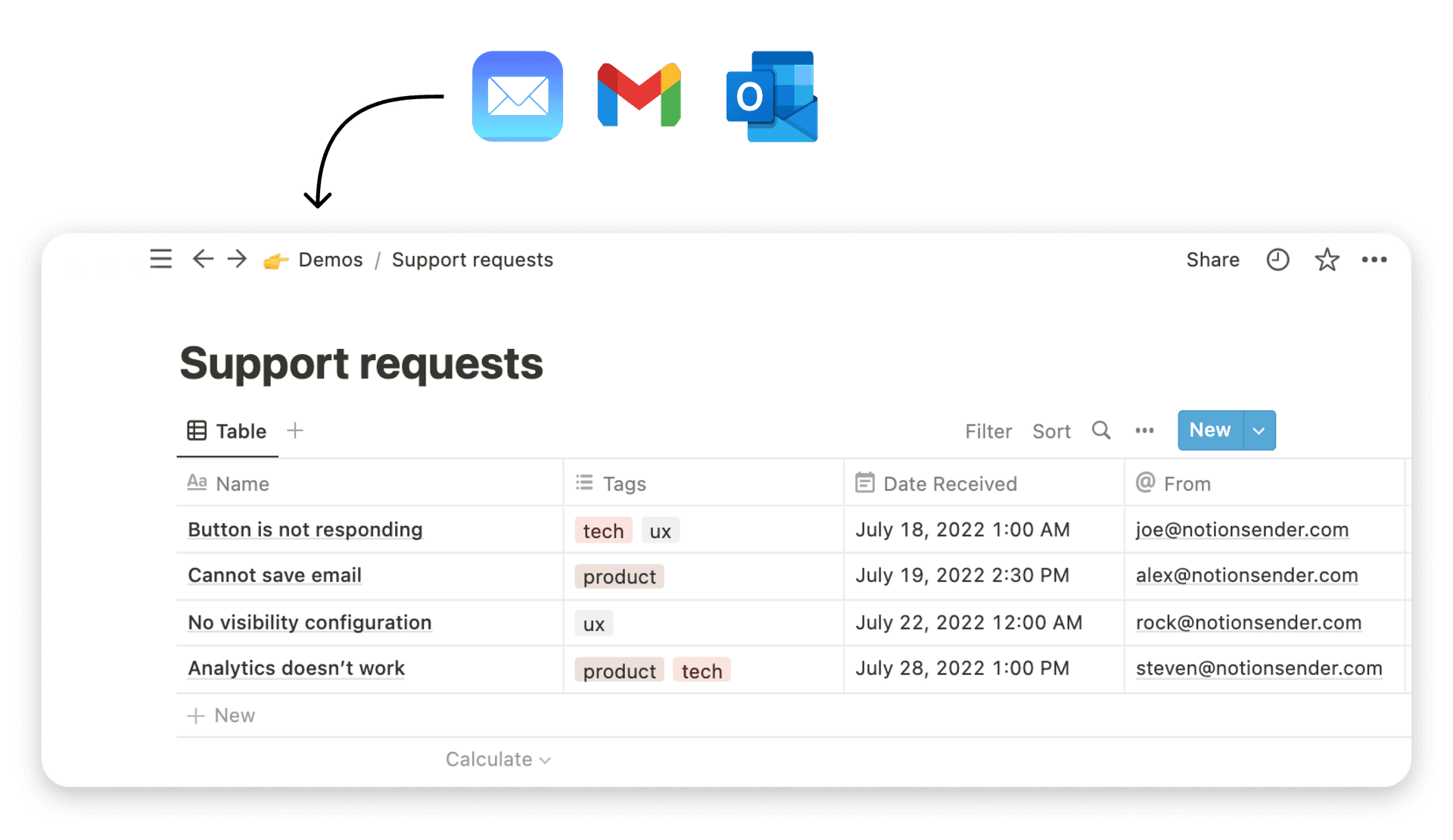
This template reassures customers that they are in the queue and their problem is being addressed. To further streamline these communications, you can explore powerful integrations, as detailed in this guide to sending emails directly from Notion.
4. FAQ/Self-Service Solution Email Template
The FAQ/Self-Service email is a proactive and efficient response to common customer inquiries. Instead of a custom, one-off reply, this template directs users to existing resources like a knowledge base, help center articles, or community forums where their question is already answered. It empowers customers to find solutions instantly and on their own terms, drastically reducing support ticket volume and freeing up your team to handle more complex, high-touch issues. This approach transforms customer service from reactive to educational.
This is one of the most scalable customer service email templates, turning a single support interaction into an opportunity to educate a customer on how to self-serve in the future. Companies like Google and Microsoft have mastered this by building extensive, easily searchable knowledge bases and using automated emails to guide users directly to the most relevant articles. This not only resolves the immediate issue but also builds customer confidence and reduces long-term dependency on live support.
Strategic Breakdown & Actionable Tips
- Objective: To resolve common customer questions quickly by directing them to self-service resources, reducing response times, and promoting user independence.
- Key Elements:
- Direct Link to Solution: Don't just link to your homepage or a generic FAQ. Provide a deep link to the specific article or section that answers their question.
- Contextual Summary: Briefly explain what the linked resource contains to assure them it's relevant.
- Clear Escape Hatch: Always include a prominent option to reply or contact a human agent if the provided resource doesn't solve their problem (e.g., "Did this solve your issue? If not, just reply to this email.").
- Visual Aids: If possible, mention that the article includes screenshots or videos to encourage clicks.
- When to Use: When a customer asks a frequently asked question that is well-documented in your knowledge base. Use automation to trigger these emails based on keywords in the support request for maximum efficiency.
5. Feedback Request/Survey Email Template
The feedback request email is a proactive tool used to gather crucial customer insights, demonstrate that you value their opinion, and identify areas for improvement. This template helps you strategically ask for reviews, ratings, or survey responses without feeling intrusive. By systemizing feedback collection, you can measure customer satisfaction, pinpoint product or service issues, and make data-driven decisions that enhance the overall customer experience.

This is one of the most valuable customer service email templates because it turns a passive customer base into an active source of business intelligence. Companies like Airbnb master this by sending post-stay review requests, which not only provide feedback but also build community trust. Similarly, Amazon’s product review prompts help future buyers and inform their own marketplace algorithms, creating a powerful, self-improving ecosystem.
Strategic Breakdown & Actionable Tips
- Objective: To gather actionable feedback on a recent purchase, interaction, or overall experience, and to make customers feel heard.
- Key Elements:
- Contextual Greeting: Reference the specific interaction or purchase to remind the customer why they're receiving the email.
- Clear Purpose: State upfront that you are seeking feedback and explain how it will be used.
- Simple CTA: Use a direct link to the survey or review platform with an estimated completion time (e.g., "Take our 2-minute survey").
- Optional Incentive: Consider offering a small discount, a contest entry, or a charitable donation to boost response rates.
- When to Use: Timeliness is key. Send it shortly after a product has been delivered, a support ticket has been resolved, or a service has been completed, while the experience is still fresh in the customer's mind.
By making the feedback process simple and transparent, you increase the likelihood of receiving high-quality responses. To learn more about crafting compelling requests, discover these tips on how to send the perfect email to get the response you want.
6. Follow-Up/Re-engagement Email Template
The follow-up or re-engagement email is a proactive tool used after a support interaction has been resolved or when a customer has become inactive. Its purpose is to ensure satisfaction, gather feedback, and demonstrate that your company values the long-term relationship, not just the single transaction. This template is crucial for transforming a one-time fix into a lasting positive impression, effectively reducing customer churn and building loyalty.
This type of customer service email template goes beyond simply closing a ticket. It shows you’re still thinking about the customer’s experience even after the initial problem is solved. Companies like Stripe excel at this by sending concise follow-ups after resolving billing issues, confirming the solution and ensuring everything is working as expected. Similarly, Spotify uses re-engagement emails with personalized music recommendations to bring inactive users back to the platform, reminding them of the value they're missing.
Strategic Breakdown & Actionable Tips
- Objective: To confirm resolution satisfaction, gather feedback on the support experience, or re-engage an inactive user by reminding them of your value.
- Key Elements:
- Reference the Past Interaction: Briefly mention the specific support ticket or a recent activity to provide context.
- Value-Oriented Content: Instead of a sales pitch, offer a helpful tip, a personalized recommendation, or a new feature update.
- Simple Feedback Mechanism: Include a one-click survey like "Was this issue resolved to your satisfaction? (Yes/No)" to make feedback effortless.
- Clear Path for More Help: Make it easy for them to reopen the conversation if the issue wasn't fully resolved.
- When to Use: Send a satisfaction follow-up within 24-48 hours of a support ticket being closed. For re-engagement, target users who haven't logged in or made a purchase within a specific timeframe (e.g., 30-60 days), segmenting them based on their lifecycle stage.
7. Escalation/Handoff Email Template
The escalation or handoff email is a crucial tool for managing complex customer issues that a frontline agent cannot resolve alone. This template is designed to seamlessly transfer a customer's query to a specialist, a manager, or another department. Its primary function is to maintain customer confidence during the transition, ensuring they feel supported and informed, rather than abandoned or forced to repeat themselves. A well-executed handoff prevents customer frustration and demonstrates a commitment to finding a resolution.
This type of customer service email template is essential for maintaining a high standard of support. It shows the customer you are taking their issue seriously by involving an expert. For example, a bank might escalate a complex fraud case to its specialized security department, or a SaaS company like Twilio might hand off a deep technical bug to a senior engineer. The key is making the process transparent and reassuring for the customer, turning a potentially negative situation into a positive, resolution-focused experience.
Strategic Breakdown & Actionable Tips
- Objective: To smoothly transfer a customer to a more qualified team member while managing expectations and ensuring all relevant context is passed along.
- Key Elements:
- Clear Explanation: Briefly explain why the escalation is necessary and how it benefits the customer (e.g., "to connect you with our technical specialist").
- Context Summary: Reassure the customer by summarizing the issue and steps already taken, proving they won't have to start over.
- Introduction to New Contact: Name the specialist or department taking over, if possible.
- Set Expectations: Provide a clear timeline for when the customer can expect to hear from the new contact.
- When to Use: When an issue requires specialized knowledge, higher-level authority for a resolution (like a refund approval), or involves a different department entirely. Use it as soon as you recognize the query is beyond your scope.
8. Refund/Cancellation Confirmation Email Template
When a customer requests a refund or cancels a service, the final communication is just as important as the first. This email provides official confirmation that their request has been processed, offering clarity and closure. It's a critical customer service email template that handles a sensitive moment with professionalism, helping to preserve the customer relationship even as they leave. A clear, empathetic confirmation can prevent follow-up support tickets and leave the door open for their return.
This email is a final touchpoint that builds trust and demonstrates reliability. By providing all necessary details, you reassure the customer that their request was handled correctly, reducing anxiety and potential disputes. Companies like Amazon and Stripe excel at this by sending immediate, detailed confirmations that clearly state the refund amount, destination, and timeline, leaving no room for confusion.
Strategic Breakdown & Actionable Tips
- Objective: To formally confirm a refund or cancellation, provide essential details, and end the customer relationship on a positive, professional note.
- Key Elements:
- Clear Subject Line: Use unambiguous terms like "Your Refund Confirmation" or "Your Subscription Has Been Canceled."
- Transaction Details: Include the exact refund amount, order/transaction numbers, and the original payment method being credited.
- Timeline: Clearly state when the customer can expect to see the refund in their account (e.g., "5-10 business days").
- Optional Feedback: A subtle, no-pressure link to a survey asking why they canceled can provide valuable insights.
- Reactivation Path: For subscriptions, briefly mention how they can easily reactivate their account in the future.
- When to Use: Immediately after a refund has been processed or a subscription/account has been successfully canceled. Timeliness is crucial to reassure the customer the action is complete.
9. Product Update/Feature Announcement Email Template
A product update email informs your user base about new features, improvements, or changes to your service. More than just a simple announcement, this communication is a powerful retention tool that demonstrates ongoing value and innovation. It shows customers that their investment continues to grow, keeping them engaged and excited about your product's evolution. This proactive approach keeps users in the loop and can prevent confusion or support tickets related to new functionality.
This is one of the most vital customer service email templates for SaaS businesses and any company with a digital product. By clearly communicating "what's new," you not only highlight your team's hard work but also educate users on how to get more value from your platform. Companies like Slack and Asana master this by framing updates around user benefits, often including GIFs or short videos to showcase the new features in action, making the information easily digestible and engaging.
Strategic Breakdown & Actionable Tips
- Objective: To inform users about new features or improvements, drive adoption of these features, and reinforce the product's value proposition.
- Key Elements:
- Benefit-Oriented Headline: Lead with what the user gains, not just the feature's name.
- Visual Demonstration: Use a GIF, screenshot, or short video to show the feature in action.
- Clear Call-to-Action (CTA): Guide users to try the new feature or learn more.
- Feedback Mechanism: Include a link for users to share their thoughts or suggestions.
- When to Use: When launching a significant new feature, a batch of minor improvements, or important product changes. Announce it before users discover it on their own to manage the narrative and provide context.
By keeping customers informed about your product’s journey, you build a transparent relationship and turn simple updates into opportunities for re-engagement and excitement.
10. VIP/Premium Customer Service Email Template
For your most valuable clients, a standard support email just won’t do. The VIP/Premium Customer Service email template is designed to provide white-glove service, acknowledging the customer's importance and offering an elevated support experience. This communication goes beyond simple problem-solving; it aims to build a strategic partnership by offering priority access, personalized attention, and exclusive resources. It makes high-value customers feel seen, heard, and prioritized, which is crucial for retention and upselling.
This approach transforms customer service from a reactive cost center into a proactive, relationship-building asset. It's one of the most powerful customer service email templates for B2B and high-ticket B2C businesses because it directly impacts revenue by securing loyalty from top-tier accounts. Companies like Salesforce and Intercom use this playbook to assign dedicated success managers, ensuring their largest clients receive strategic guidance and immediate, expert-level support, solidifying long-term business relationships.
Strategic Breakdown & Actionable Tips
- Objective: To acknowledge the customer's high-value status, provide a direct and prioritized support channel, and strengthen the business relationship.
- Key Elements:
- Direct Point of Contact: Clearly name a dedicated account manager or senior support specialist.
- Priority Access: Mention faster response times or provide a direct phone number for urgent issues.
- Exclusive Value: Offer something special, like early access to new features or a proactive account review.
- Personalization: Reference their specific business or usage patterns to show you understand their needs.
- When to Use: When communicating with enterprise-level clients, long-term loyal customers, or members of a premium subscription tier. It's best used proactively for check-ins or reactively to address critical issues with a heightened sense of urgency.
Comparison of 10 Customer Service Email Templates
| Template | Implementation Complexity 🔄 | Resource Requirements ⚡ | Expected Outcomes 📊 | Ideal Use Cases ⭐ | Tip 💡 |
|---|---|---|---|---|---|
| Welcome / Onboarding Email Template | Medium — personalized copy + links, multi-step flows | Low–Medium — templates, basic automation, visuals | ↑ Engagement & retention; ↓ initial support volume | New signups or first purchase onboarding | Send within 24h; personalize subject and CTA |
| Problem Resolution / Apology Email Template | Medium — requires case-specific tone and resolution steps | Medium — agent time, potential compensation | Recover trust; reduce negative reviews and churn | Customer complaints, service failures | Respond ≤24h; acknowledge specifics and offer next steps |
| Ticket Confirmation / Support Response Email Template | Low — automated acknowledgment with variables | Low — ticketing system + templating | Sets expectations; reduces repeat submissions | All incoming support tickets / receipts | Put ticket number and ETA at top |
| FAQ / Self-Service Solution Email Template | Medium — links to KB, media, and escalation paths | Low ongoing, but requires KB maintenance | Large ↓ in ticket volume; faster resolutions | Common, repeatable issues; 24/7 self-help | Link to specific articles and offer escalation option |
| Feedback Request / Survey Email Template | Low–Medium — embed or link to short surveys | Medium — survey tool + analysis resources | Actionable insights; more reviews and NPS data | Post-interaction or post-purchase feedback collection | Keep ≤5 questions; target after positive interactions |
| Follow-Up / Re-engagement Email Template | Low — personalized follow-up automation | Low–Medium — tracking & segmentation | Confirms satisfaction; reduces repeat issues; reengages | After resolution or periods of inactivity | Send 3–7 days after resolution; include quick "did this help?" |
| Escalation / Handoff Email Template | High — detailed context transfer and coordination | High — specialists, manager time, clear handoff process | Preserves trust; ensures specialized resolution | Complex technical issues needing higher expertise | Explain reason, name specialist, summarize prior attempts |
| Refund / Cancellation Confirmation Email Template | Medium — accurate transactional details and compliance | Medium — finance coordination and templates | Legal record; reduces confusion about refunds/cancellations | Refunds, account closures, subscription cancellations | State exact amount, timeline, payment method, and order ID |
| Product Update / Feature Announcement Email Template | Medium — product coordination, visuals, segmentation | Medium — design, copy, and targeted lists | Drives adoption; educates users; can reduce support queries | New features, releases, or rollout communications | Lead with customer benefit; include demo or link to docs |
| VIP / Premium Customer Service Email Template | High — personalized SLA, dedicated contacts, proactive outreach | High — account managers, faster SLAs, exclusive resources | Higher retention and advocacy among top customers | Enterprise accounts or high-value customers | Assign named manager, provide direct contact and proactive check-ins |
Supercharge Your Templates: From Static Text to Dynamic Workflows
Throughout this guide, we've explored ten essential customer service email templates designed to handle a wide range of scenarios, from welcoming new users to resolving complex issues. Each template serves as a powerful starting point, providing the structure and key components necessary for clear, empathetic, and effective communication. We’ve seen how a well-crafted apology can rebuild trust, how a proactive feedback request can drive improvement, and how a streamlined onboarding email sets the stage for long-term customer loyalty.
However, the true value of these templates isn't just in their text; it's in their application. Viewing them as isolated documents misses the bigger picture. The ultimate goal is to transform these static scripts into a dynamic, responsive customer service system that operates with both efficiency and a personal touch.
From Individual Templates to an Integrated System
The most impactful takeaway is this: your customer service email templates should be living assets, not just copy-and-paste resources. They must be integrated directly into your team's daily operations. This means moving beyond a simple document and embedding them within a cohesive workflow that connects your support interactions to your broader business processes.
Think about the journey of a customer ticket. It doesn't exist in a vacuum. It might be linked to a product bug, a feature request, or a billing question, all of which are likely tracked in a project management tool. By centralizing your templates and support communications, you create a single source of truth, enabling your team to respond faster, with more context, and with a consistent brand voice.
Actionable Next Steps to Elevate Your Support
To truly master the art of customer communication, you need to operationalize these templates. Here are the critical next steps to take:
- Customize and Personalize: Take the foundational templates provided and infuse them with your unique brand voice. Add placeholders for customer names, specific details about their inquiry, and personal touches that show you see them as an individual, not a ticket number.
- Centralize Your Library: Create a single, easily accessible repository for all your approved customer service email templates. This ensures consistency across your entire team and makes it simple to update messaging as your products or policies evolve.
- Integrate with Your Workflow: The most significant leap in efficiency comes from integrating your templates into your existing tools. Connect your email system with your project management or CRM platform to trigger responses, track conversations, and maintain a complete history of customer interactions in one place.
- Automate Where It Makes Sense: Identify repetitive communication tasks that can be automated. Ticket confirmations, initial follow-ups, and survey requests are prime candidates. To truly supercharge your customer service email templates, consider leveraging the power of workflow automation. Explore this ultimate guide to workflow automation to understand how you can build intelligent systems that handle routine tasks, freeing your team to focus on high-impact, complex customer needs.
By implementing these strategies, you’re not just sending better emails. You are building a scalable, efficient, and customer-centric support engine that turns every interaction into an opportunity to strengthen relationships and build lasting loyalty.
Ready to bridge the gap between your customer support and your project management? NotionSender allows you to manage and send all your powerful customer service email templates directly from your Notion workspace. Streamline your communication, keep your team in sync, and deliver exceptional support without ever leaving your central hub. Get started with NotionSender today!