12 Best Mailchimp Similar Services To Try in 2026
Mailchimp has long been a go-to for email marketing, but its evolving pricing structure and feature set have prompted many users to look for alternatives. Whether you're a small business owner feeling the pinch of rising costs, a marketer needing more advanced automation, or a freelancer seeking a simpler interface, the market is filled with powerful Mailchimp similar services that might be a better fit for your specific needs. Finding the right platform is critical, as it directly impacts your ability to connect with your audience and grow your business.
This guide is designed to cut through the noise. We will provide a comprehensive, direct comparison of the top Mailchimp alternatives available today. Forget sifting through marketing jargon; we get straight to the point, offering an honest assessment of each platform's strengths and weaknesses. Before you can effectively use any of these powerful tools, however, you need a solid foundation in engagement. Mastering how to start an email people actually read is a crucial first step, as a compelling opening line is what turns a sent email into an opened one, regardless of the software you choose.
Here, you will find a detailed breakdown for each service, complete with:
- A concise 1-2 sentence summary.
- An analysis of key features like automation, CRM, and integrations.
- Clear pricing tier comparisons.
- Practical use-case scenarios to help you identify the best tool for your role.
- A direct pros-and-cons analysis versus Mailchimp.
Each entry includes screenshots and direct links, allowing you to quickly evaluate and explore the options that catch your eye. Our goal is simple: to provide a practical resource that helps you confidently select the email marketing service that will best serve your goals and budget. Let's dive into the platforms that can elevate your marketing strategy.
1. Brevo (formerly Sendinblue)
Brevo positions itself as an all-in-one sales and marketing platform, making it one of the most comprehensive Mailchimp similar services available. It extends far beyond simple email campaigns, integrating SMS and WhatsApp marketing, live chat, and a built-in CRM directly into its core offering. This makes it a powerful choice for businesses wanting to unify customer communications and sales activities without juggling multiple subscriptions.
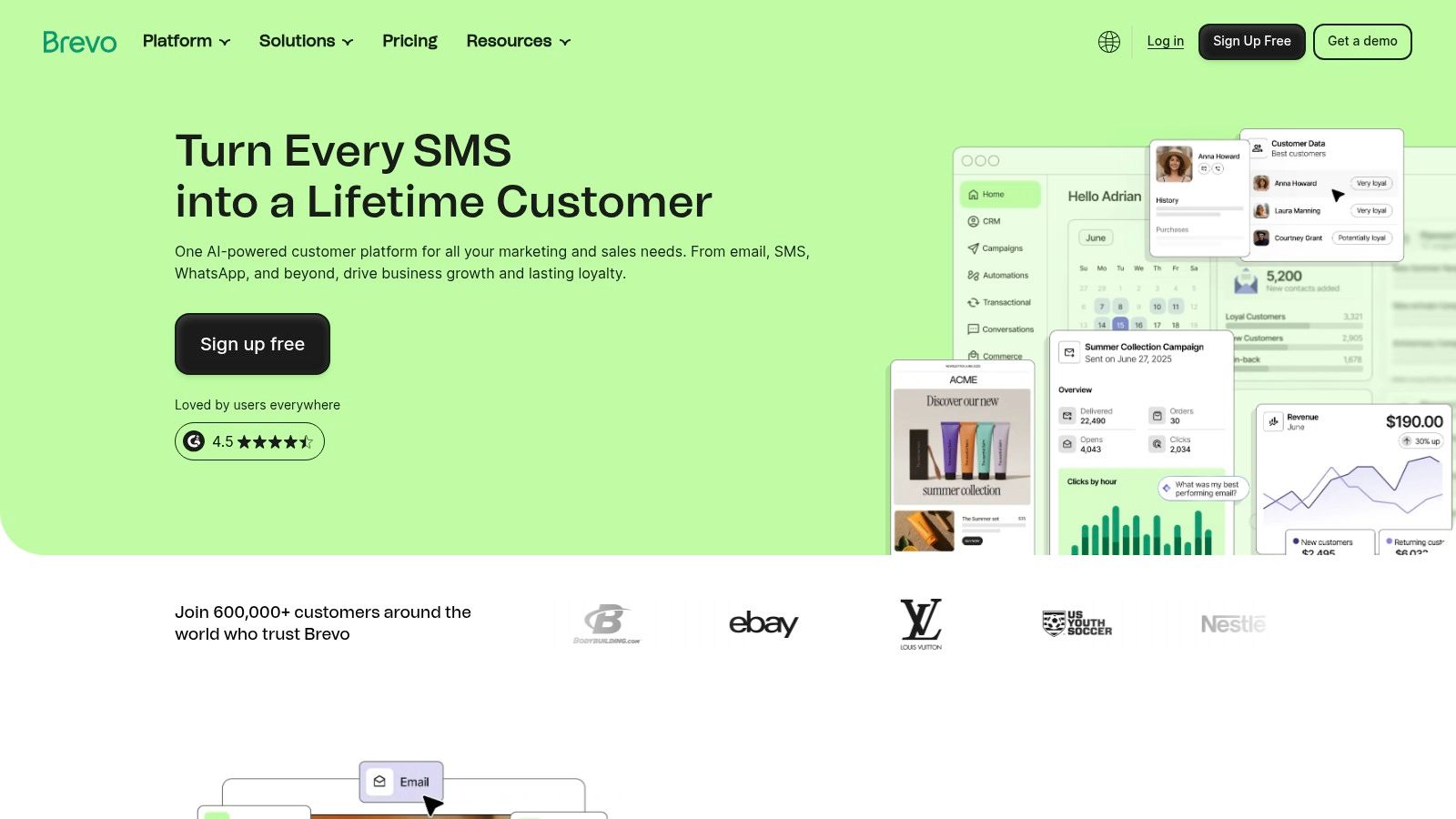
Unlike Mailchimp's contact-based pricing, Brevo's plans are primarily based on email volume, which can be significantly more cost-effective for users with large lists but infrequent sending needs. Its free tier is notably generous, offering up to 300 emails per day and access to core features like the CRM and automation for up to 2,000 contacts.
Key Features & Ideal Use Case
- Multichannel Communication: Combine email, SMS, WhatsApp, and live chat campaigns from a single dashboard.
- Integrated Sales & CRM: Manage contacts, track deals through pipelines, and schedule meetings without leaving the platform.
- Transactional Emails: A robust API and SMTP relay allow you to send order confirmations, password resets, and other automated messages.
- Generous Free Plan: The free plan’s daily sending cap (300 emails/day) and contact limit (unlimited contacts, with automation limited to 2,000) are ideal for startups and small businesses testing the waters.
Brevo is best for: Small to mid-sized businesses, e-commerce stores, and budget-conscious marketers who need a unified platform for marketing, sales, and transactional messaging without the high costs associated with large contact lists.
| Brevo vs. Mailchimp | Brevo | Mailchimp |
|---|---|---|
| Pricing Model | Based on email volume | Based on contact count |
| Free Plan | 300 emails/day, unlimited contacts | 500 contacts, 1,000 sends/month |
| Core Strength | All-in-one (CRM, SMS, Chat, Email) | Email marketing & brand building |
| Transactional Email | Included in all plans | Available as a paid add-on |
- Website: https://www.brevo.com
2. MailerLite
MailerLite focuses on providing a simple, modern, and intuitive email marketing experience, making it one of the most user-friendly Mailchimp similar services. It strips away unnecessary complexity to deliver core features exceptionally well, including a clean drag-and-drop editor and straightforward automation builder. Beyond email, it also offers a surprisingly robust suite of tools like a website builder, landing pages, and digital product sales capabilities.
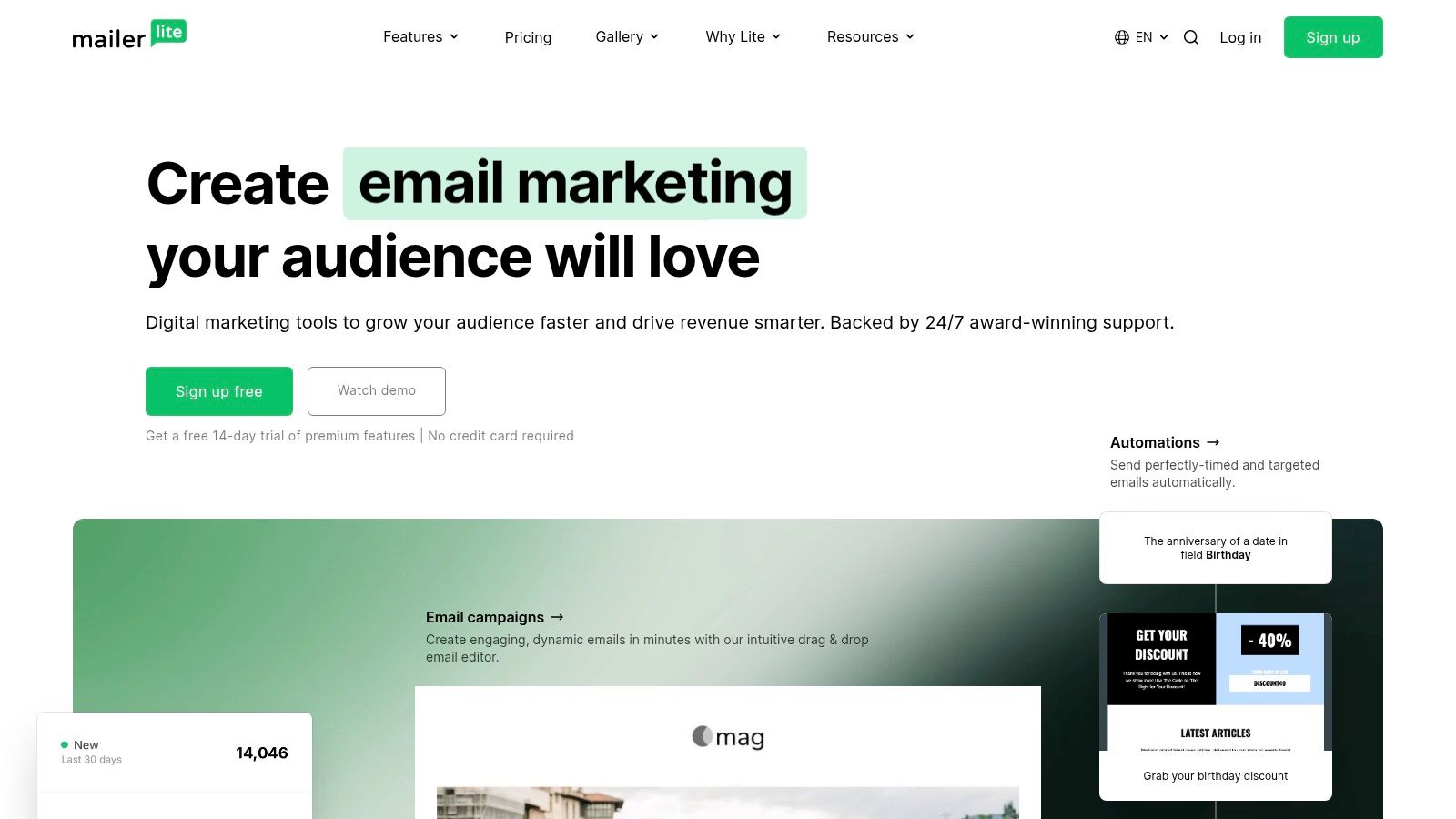
Its free plan is a major draw for new creators and small businesses, offering access to most features for up to 1,000 subscribers and 12,000 monthly emails. MailerLite’s transparent, contact-based pricing and excellent customer support create a welcoming environment for users who feel overwhelmed by more complex platforms. The platform's commitment to ease of use is evident across its entire feature set.
Key Features & Ideal Use Case
- Ease of Use: An exceptionally clean interface and intuitive drag-and-drop editor make creating beautiful campaigns simple.
- Website & Landing Page Builder: Build and host a full website, blog, or unlimited landing pages directly within the platform.
- Digital Product Sales: Sell ebooks, templates, or other digital downloads with integrated Stripe payments.
- Advanced Features: Includes A/B testing, dynamic content, and segmentation to optimize campaign performance.
MailerLite is best for: Freelancers, creators, bloggers, and small businesses who prioritize simplicity, ease of use, and a generous free plan without needing deep CRM or sales pipeline functionality.
| MailerLite vs. Mailchimp | MailerLite | Mailchimp |
|---|---|---|
| Pricing Model | Based on contact count | Based on contact count |
| Free Plan | 1,000 contacts, 12,000 sends/month | 500 contacts, 1,000 sends/month |
| Core Strength | Simplicity, ease of use, landing pages | Brand recognition & advanced testing |
| Unique Feature | Integrated digital product sales | Creative Assistant & brand kits |
- Website: https://www.mailerlite.com
3. Constant Contact
Constant Contact is one of the most established players in the email marketing space, positioning itself as a user-friendly solution specifically for small businesses, nonprofits, and individuals without deep marketing expertise. It prioritizes simplicity and robust customer support, offering live phone and chat assistance that sets it apart from many self-service-focused competitors. While it offers a full suite of tools, its core strength lies in making email and digital marketing accessible.
Unlike platforms that lead with complex automation, Constant Contact focuses on straightforward workflows for creating professional emails, managing social media posts, and running events. Its contact-based pricing is similar to Mailchimp's, making it a direct competitor for users who value guidance and ease of use over advanced, granular automation capabilities.
Key Features & Ideal Use Case
- Award-Winning Support: Direct access to live phone and chat support is a major benefit for users who want help with setup and strategy.
- Simple Automation: Provides essential autoresponders for welcome series, birthdays, and anniversaries without overwhelming new users.
- Event Marketing Tools: Includes built-in features for managing event invitations, registrations, and ticketing.
- AI Content Generation: An integrated AI assistant helps users quickly generate subject lines and email copy, a useful tool for those struggling with writer's block. For more tips on this, see our guide on how to send the perfect email.
Constant Contact is best for: Small businesses, non-technical users, and nonprofits who prioritize outstanding customer support and an easy-to-navigate platform over complex, multi-layered automation sequences.
| Constant Contact vs. Mailchimp | Constant Contact | Mailchimp |
|---|---|---|
| Pricing Model | Based on contact count | Based on contact count |
| Free Plan | 100 contacts, 100 sends/month | 500 contacts, 1,000 sends/month |
| Core Strength | User-friendliness & live support | Brand building & creative tools |
| Automation | Simple, easy-to-use workflows | More complex, multi-step journeys |
- Website: https://www.constantcontact.com
4. Campaign Monitor
Campaign Monitor carves out its niche by focusing on beautiful, design-led email marketing. It stands out as one of the best Mailchimp similar services for teams that prioritize professional aesthetics and brand consistency without needing a graphic designer on hand. The platform is built around an intuitive drag-and-drop editor and an extensive library of polished, mobile-responsive templates that make creating visually stunning campaigns straightforward.
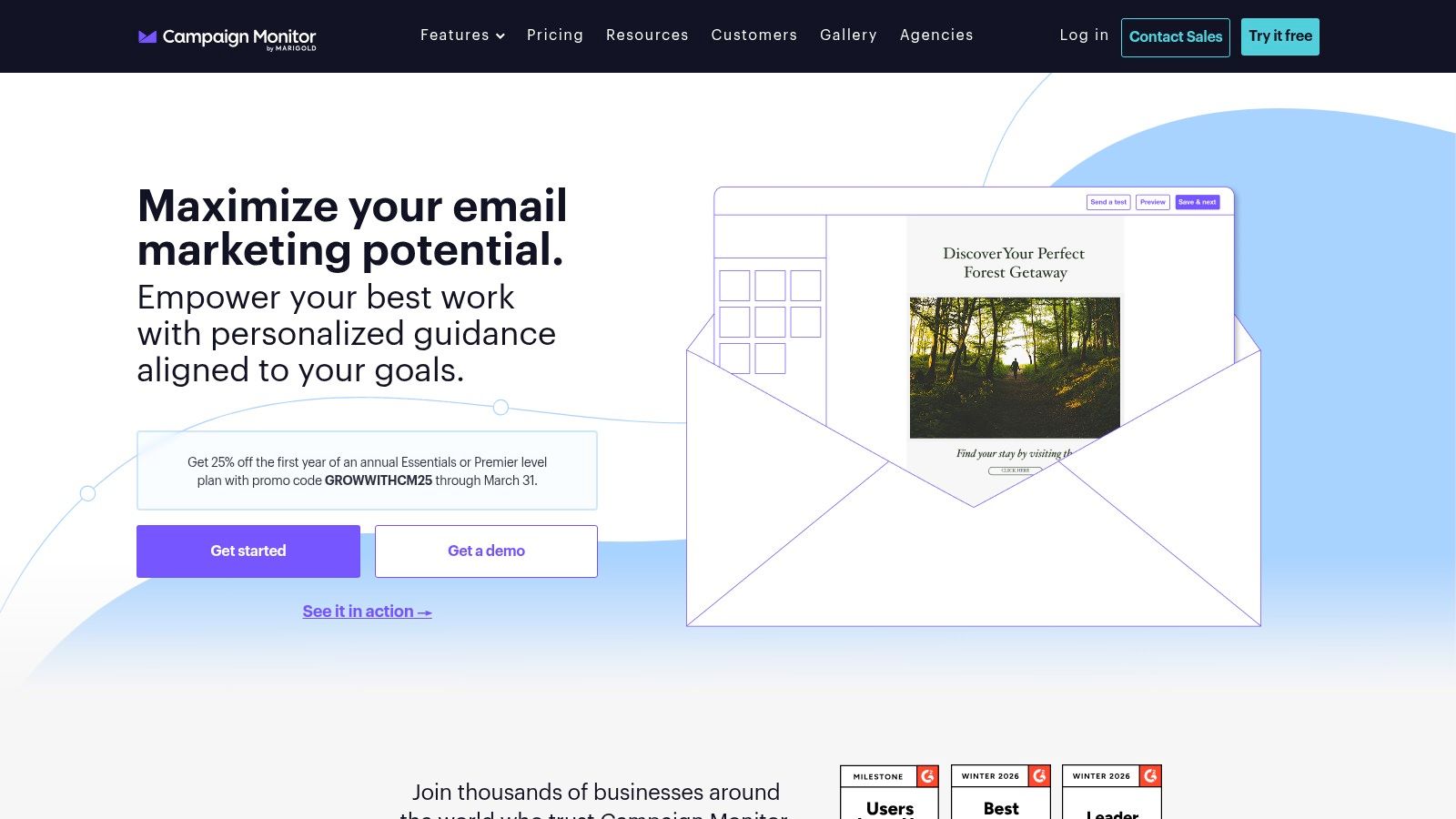
While its feature set may not be as expansive as all-in-one solutions, it excels at its core competency: email. Its user-friendly interface makes it easy to set up automated "Journeys" for welcome series or re-engagement campaigns. This simplicity, combined with robust analytics and segmentation tools, makes it a favorite among agencies and small to mid-sized businesses who value ease of use and high-quality email design above all else.
Key Features & Ideal Use Case
- Award-Winning Templates: Access a vast library of professionally designed templates that are easily customizable to match your brand.
- Intuitive Drag-and-Drop Editor: A clean, user-friendly interface allows for quick and easy creation of sophisticated email layouts.
- Visual Journey Designer: Create automated email sequences with a simple, visual workflow builder to nurture leads and engage customers.
- Link Review Tool: Automatically scans your emails for broken links before you send, helping ensure a flawless user experience.
Campaign Monitor is best for: Agencies, design-conscious brands, and marketing teams who want to produce beautiful, high-impact email campaigns with minimal technical effort and value a clean, straightforward user experience.
| Campaign Monitor vs. Mailchimp | Campaign Monitor | Mailchimp |
|---|---|---|
| Pricing Model | Tiered by contact count & features | Tiered by contact count & features |
| Free Plan | Free trial available (send to 5 contacts) | 500 contacts, 1,000 sends/month |
| Core Strength | Superior email design & templates | Brand building & audience management |
| User Experience | Clean, simple, and design-focused | Comprehensive but can be complex |
- Website: https://www.campaignmonitor.com
5. GetResponse
GetResponse has evolved far beyond a simple email tool into a comprehensive inbound marketing platform. It consolidates email marketing, conversion funnels, landing pages, webinars, and even e-commerce features, making it one of the most feature-rich Mailchimp similar services for marketers who want an all-in-one solution. Its core strength lies in bundling tools that often require separate subscriptions, like native webinar hosting and a course creator.
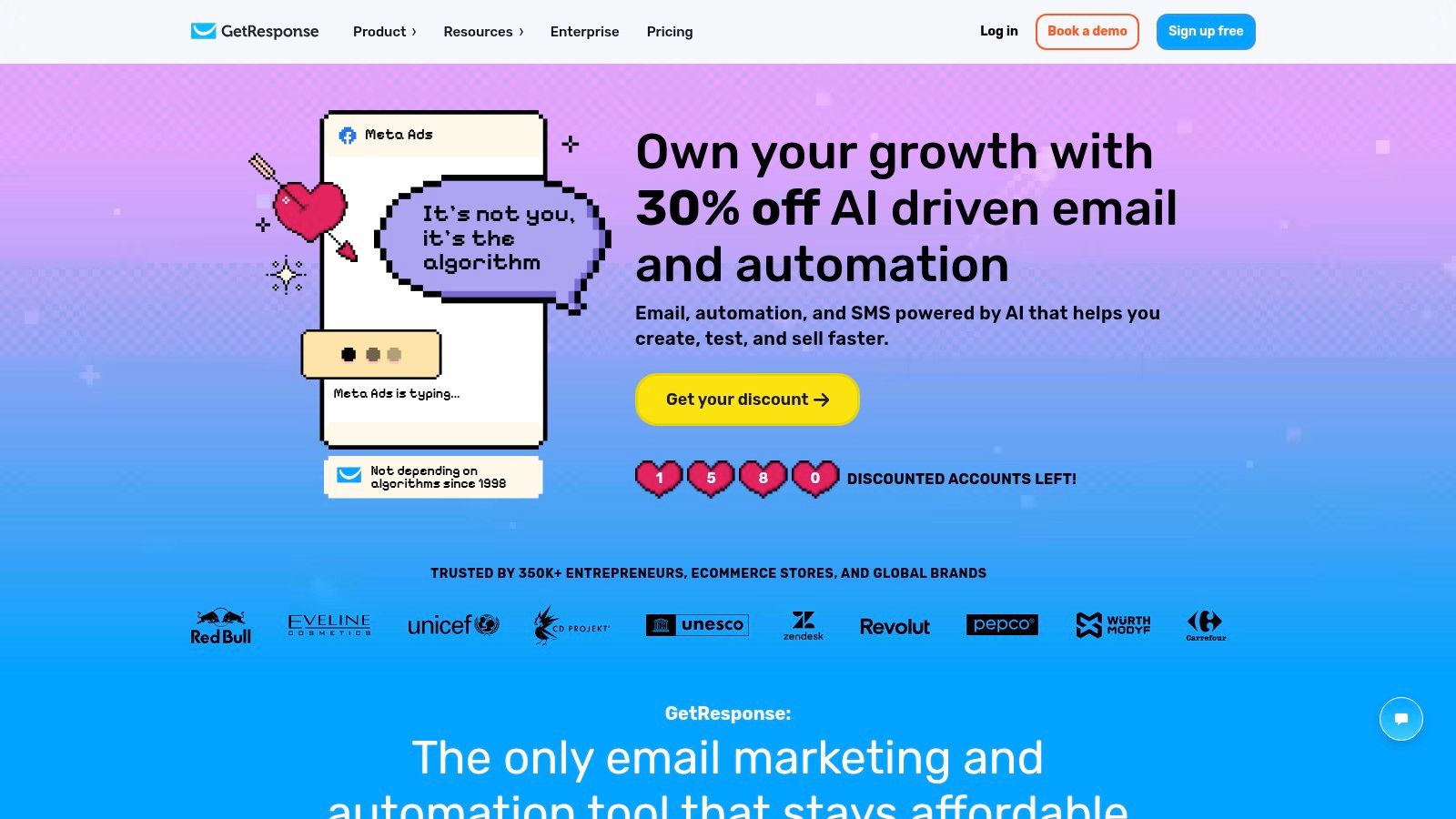
The platform is built to support the entire customer journey, from lead acquisition with landing pages and forms to nurturing with advanced automation and engagement with webinars. While its extensive feature set can present a steeper learning curve than Mailchimp's more focused interface, the value of having these tools integrated under one roof is a significant advantage for creators and online businesses.
Key Features & Ideal Use Case
- Conversion Funnels: Pre-built, automated sales, lead magnet, and webinar funnels to guide customers from awareness to purchase.
- Built-in Webinar Software: Host live and on-demand webinars directly within the platform, a unique feature among most email service providers.
- AI-Powered Tools: Includes an AI email and campaign generator to speed up content creation and subject line optimization.
- E-commerce Integration: Features like abandoned cart recovery, promo codes, and product recommendations are built to boost online sales.
GetResponse is best for: Content creators, coaches, e-commerce businesses, and marketers who need an integrated suite of tools including email, sales funnels, and webinars, and prefer a single platform to manage their entire marketing funnel.
| GetResponse vs. Mailchimp | GetResponse | Mailchimp |
|---|---|---|
| Pricing Model | Based on contact count | Based on contact count |
| Free Plan | 500 contacts, 2,500 sends/month | 500 contacts, 1,000 sends/month |
| Core Strength | All-in-one (Funnels, Webinars, Email) | Email marketing & brand building |
| Unique Feature | Native webinar and course creation tools | Creative Assistant & brand kits |
- Website: https://www.getresponse.com
6. AWeber
AWeber is one of the original players in the email marketing space, positioning itself as a reliable and user-friendly platform focused on deliverability and straightforward automation. It’s a solid choice for small businesses, freelancers, and creators who prioritize simplicity and excellent customer support over the sprawling, complex feature sets of all-in-one platforms. Its long-standing reputation is built on making core email marketing tasks accessible to everyone.
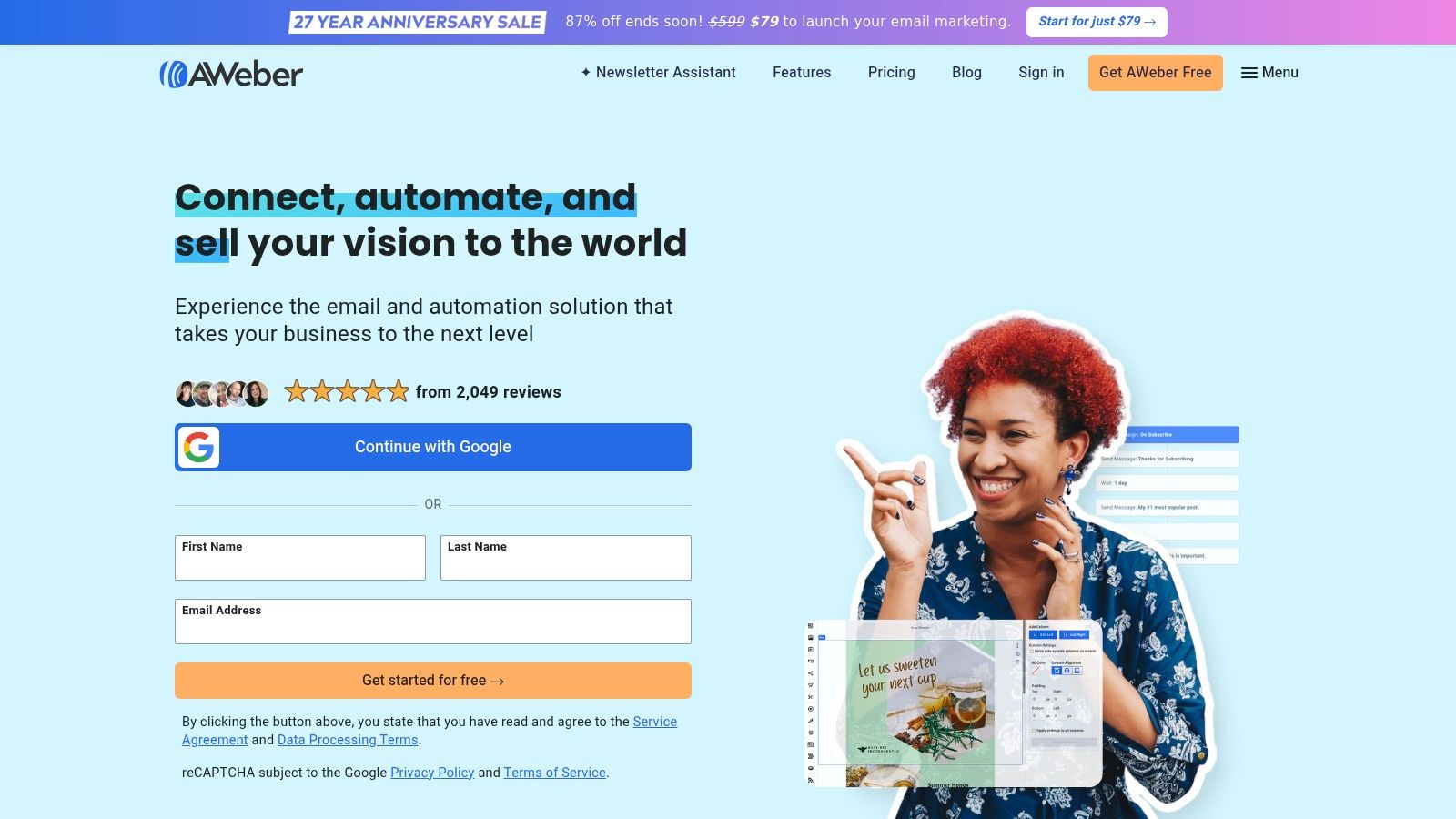
Unlike many competitors that can feel overwhelming, AWeber's interface is clean and focused. The platform offers a free plan for up to 500 contacts, making it a great entry point for those just starting to build their list. As you grow, its paid plans are transparently priced based on your number of subscribers, avoiding the complex credit systems or add-on costs found elsewhere. This makes it a dependable and predictable service for steady growth.
Key Features & Ideal Use Case
- Email Automation: Create simple yet effective autoresponder sequences to welcome new subscribers, deliver lead magnets, or run evergreen campaigns.
- Landing Pages & Sign-up Forms: Build professional-looking landing pages and embeddable forms to capture leads without needing a separate tool.
- Large Integration Library: Connects seamlessly with hundreds of popular apps and services, including WordPress, Shopify, PayPal, and Zapier.
- Strong Deliverability: AWeber has a strong industry reputation for high email deliverability rates, ensuring your messages reach the inbox.
AWeber is best for: Solopreneurs, content creators, and small businesses who need a dependable, no-frills email marketing service with excellent customer support and proven deliverability without a steep learning curve.
| AWeber vs. Mailchimp | AWeber | Mailchimp |
|---|---|---|
| Pricing Model | Based on contact count | Based on contact count |
| Free Plan | 500 contacts, 3,000 sends/month | 500 contacts, 1,000 sends/month |
| Core Strength | Simplicity, deliverability, support | Brand building & advanced design tools |
| Ease of Use | Very straightforward, beginner-friendly | Can be complex with advanced features |
- Website: https://www.aweber.com
7. ActiveCampaign
ActiveCampaign is a customer experience automation platform designed for growing businesses that need more than basic email blasts. It stands out among Mailchimp similar services by combining powerful marketing automation with a built-in sales CRM. This allows users to create deeply personalized customer journeys based on behavior, such as website visits, past purchases, or email engagement, making it a favorite for teams focused on lead nurturing and conversion.
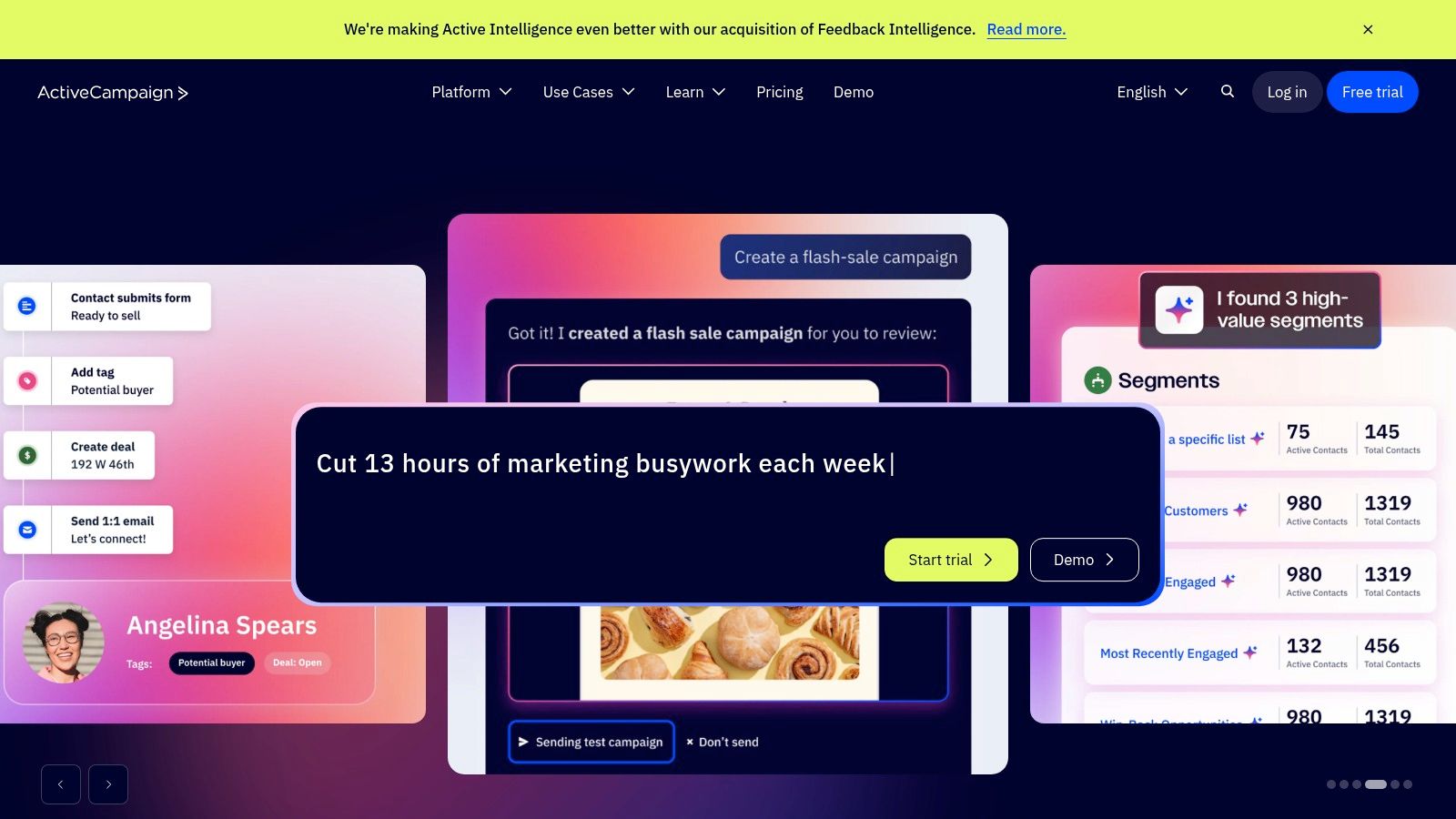
While its feature set is more advanced than Mailchimp's, this also means it has a steeper learning curve. The platform's real power lies in its visual automation builder, which allows for complex "if/then" logic and sophisticated segmentation. Pricing is contact-based and scales quickly, positioning ActiveCampaign as a premium tool for businesses that are serious about leveraging automation to drive growth and are willing to invest the time to master its capabilities.
Key Features & Ideal Use Case
- Advanced Automation: Build intricate workflows based on a wide array of triggers, including site tracking, events, and lead scoring.
- Integrated CRM: Manage sales pipelines, track deals, and automate sales follow-ups directly within the platform.
- Dynamic Personalization: Use conditional content, site messaging, and predictive sending to tailor communications to each individual user.
- Extensive Integrations: Connects with over 800 apps, including Shopify, Salesforce, and WordPress, to create a unified data ecosystem. You can learn more about how to increase your open rates with these kinds of personalized triggers.
ActiveCampaign is best for: Marketers, agencies, and sales-focused businesses that require sophisticated automation and CRM functionalities to manage complex customer journeys and sales processes.
| ActiveCampaign vs. Mailchimp | ActiveCampaign | Mailchimp |
|---|---|---|
| Pricing Model | Based on contact count & features | Based on contact count |
| Free Plan | 14-day free trial | Free plan for up to 500 contacts |
| Core Strength | Marketing & sales automation | User-friendly email marketing |
| CRM Functionality | Fully-featured, integrated CRM | Basic CRM features |
- Website: https://www.activecampaign.com
8. Omnisend
Omnisend is purpose-built for e-commerce, establishing itself as one of the most powerful Mailchimp similar services for online retailers. It tightly integrates email, SMS, and web push notifications into a single, cohesive workflow, allowing stores to create sophisticated automated messages that drive sales. Its deep integrations with platforms like Shopify and BigCommerce enable advanced features like product pickers and unique discount codes directly within the email builder.
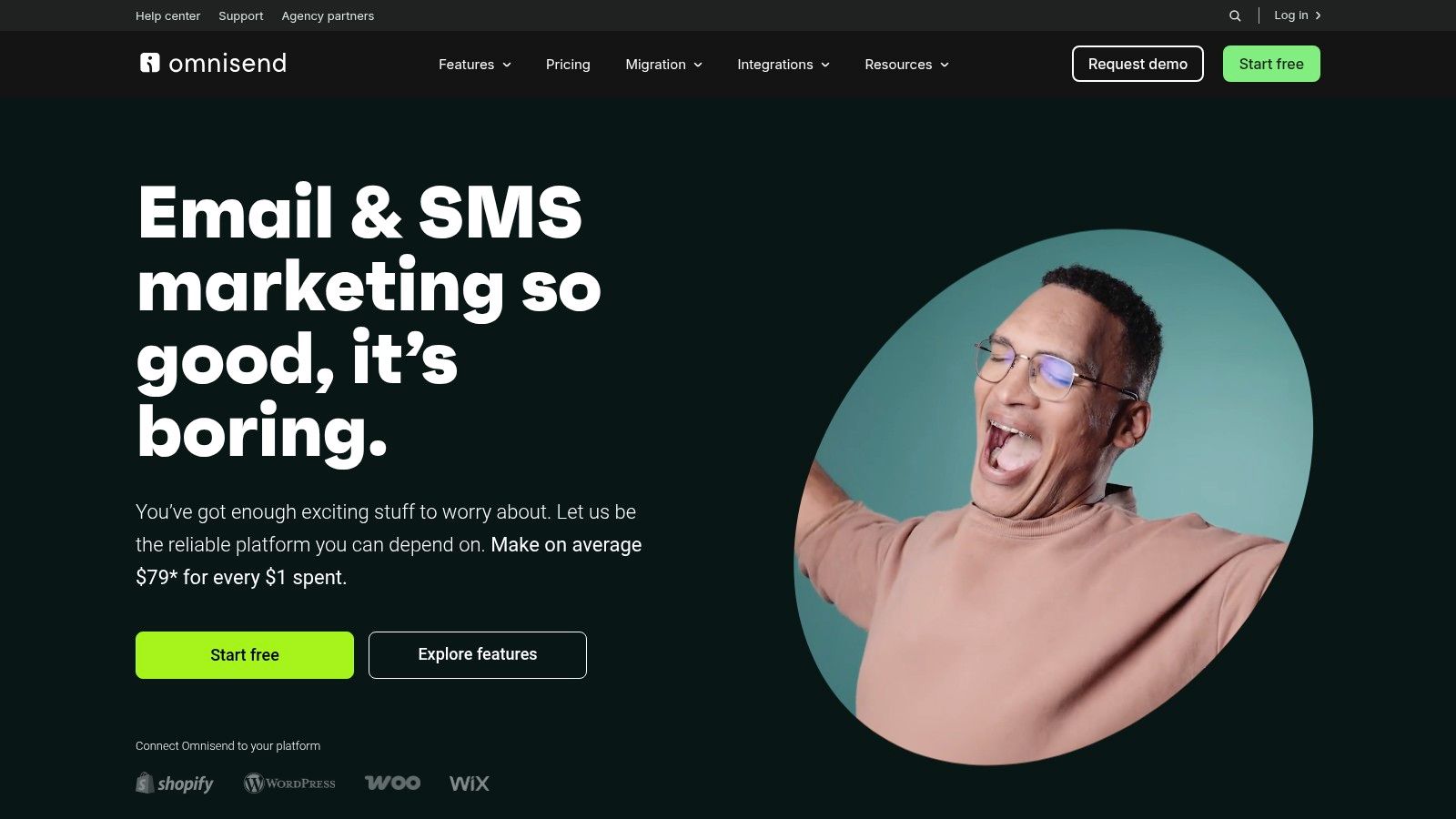
Unlike Mailchimp, whose e-commerce features often feel secondary, Omnisend’s entire platform revolves around revenue generation. Pre-built automations for cart abandonment, browse abandonment, and welcome series are designed to be deployed quickly, helping merchants see a return on investment almost immediately. The free plan allows up to 250 contacts and 500 emails per month, including access to professional templates and A/B testing.
Key Features & Ideal Use Case
- E-commerce Centric Automation: Build advanced workflows that trigger based on customer behavior like placing an order, browsing a specific product, or abandoning a cart.
- Unified Multichannel Campaigns: Combine email, SMS, and web push notifications within the same automation series for a seamless customer experience.
- Deep Platform Integration: Pull product listings, use dynamic content blocks, and generate unique discount codes from your e-commerce platform without leaving the editor.
- Revenue-Focused Reporting: Dashboards clearly attribute sales to specific campaigns and automations, making it easy to track ROI.
Omnisend is best for: E-commerce businesses of all sizes, especially those on Shopify, BigCommerce, or WooCommerce, that need a sales-driven marketing automation platform with minimal setup time.
| Omnisend vs. Mailchimp | Omnisend | Mailchimp |
|---|---|---|
| Pricing Model | Based on contact count | Based on contact count |
| Free Plan | 250 contacts, 500 emails/month | 500 contacts, 1,000 sends/month |
| Core Strength | E-commerce automation (Email + SMS) | General-purpose email marketing |
| Transactional Email | Included in all plans | Available as a paid add-on |
- Website: https://www.omnisend.com
9. Klaviyo
Klaviyo is a premium, e-commerce-centric platform designed specifically for direct-to-consumer (DTC) brands that need powerful marketing automation. It’s widely regarded as a top-tier solution in the e-commerce space, offering incredibly deep segmentation, predictive analytics, and seamless integrations with platforms like Shopify, BigCommerce, and Magento. This focus makes it one of the most revenue-driven Mailchimp similar services for online stores.
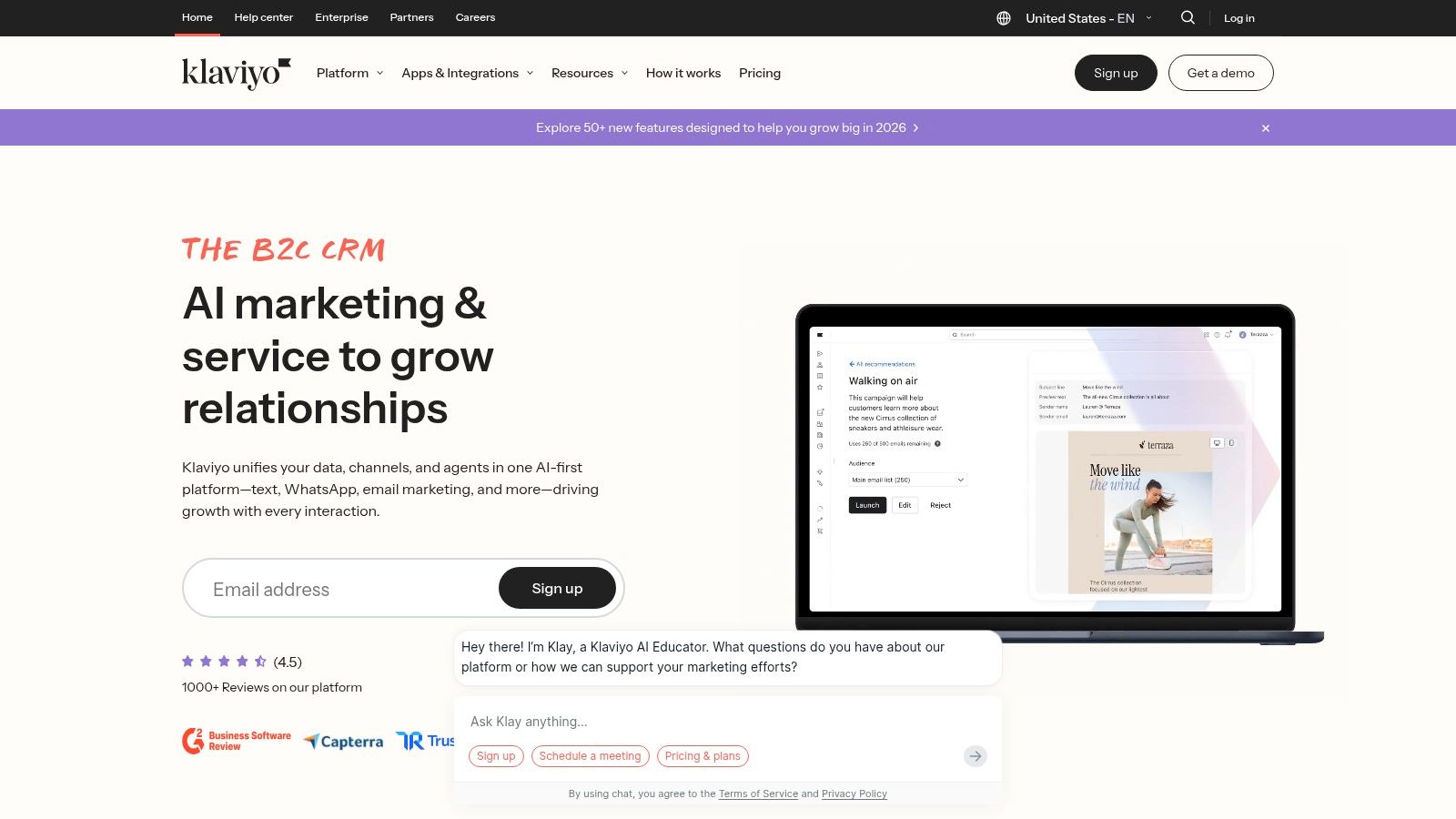
Unlike general-purpose email service providers, Klaviyo's entire feature set is built to drive sales. It pulls in rich customer data, such as purchase history, browsing behavior, and viewing frequency, allowing for hyper-personalized campaigns. Its pricing scales with your contact list and sending volume, reflecting its position as a growth partner for serious e-commerce businesses. While its free plan is limited, it provides a solid entry point for new stores.
Key Features & Ideal Use Case
- Advanced E-commerce Segmentation: Create dynamic segments based on purchasing behavior, predicted customer lifetime value (CLV), and on-site activity.
- Integrated Email & SMS Marketing: Manage and automate both channels within a single platform, creating cohesive customer journeys.
- Powerful Revenue Attribution: Built-in reporting shows you exactly how much revenue each email, flow, and campaign generates.
- Deep Platform Integrations: Unparalleled, one-click integration with Shopify and other major e-commerce platforms syncs customer and catalog data automatically.
Klaviyo is best for: Established e-commerce stores and high-growth DTC brands that want to maximize customer lifetime value through data-driven, personalized email and SMS marketing.
| Klaviyo vs. Mailchimp | Klaviyo | Mailchimp |
|---|---|---|
| Pricing Model | Based on contact count & send volume | Based on contact count |
| Free Plan | 500 contacts, 1,000 sends/month | 500 contacts, 1,000 sends/month |
| Core Strength | Deep e-commerce data & automation | General email marketing & branding |
| Transactional Email | Natively integrated for e-commerce | Available as a paid add-on |
- Website: https://www.klaviyo.com
10. Twilio SendGrid – Marketing Campaigns
Twilio SendGrid is renowned for its enterprise-grade email deliverability, primarily serving developers with its powerful Email API. Its Marketing Campaigns platform extends this technical prowess to marketers, offering a robust tool for creating, sending, and tracking email campaigns. This unique combination makes it one of the most powerful Mailchimp similar services for businesses that need both high-volume marketing sends and reliable transactional email from a single, trusted infrastructure.
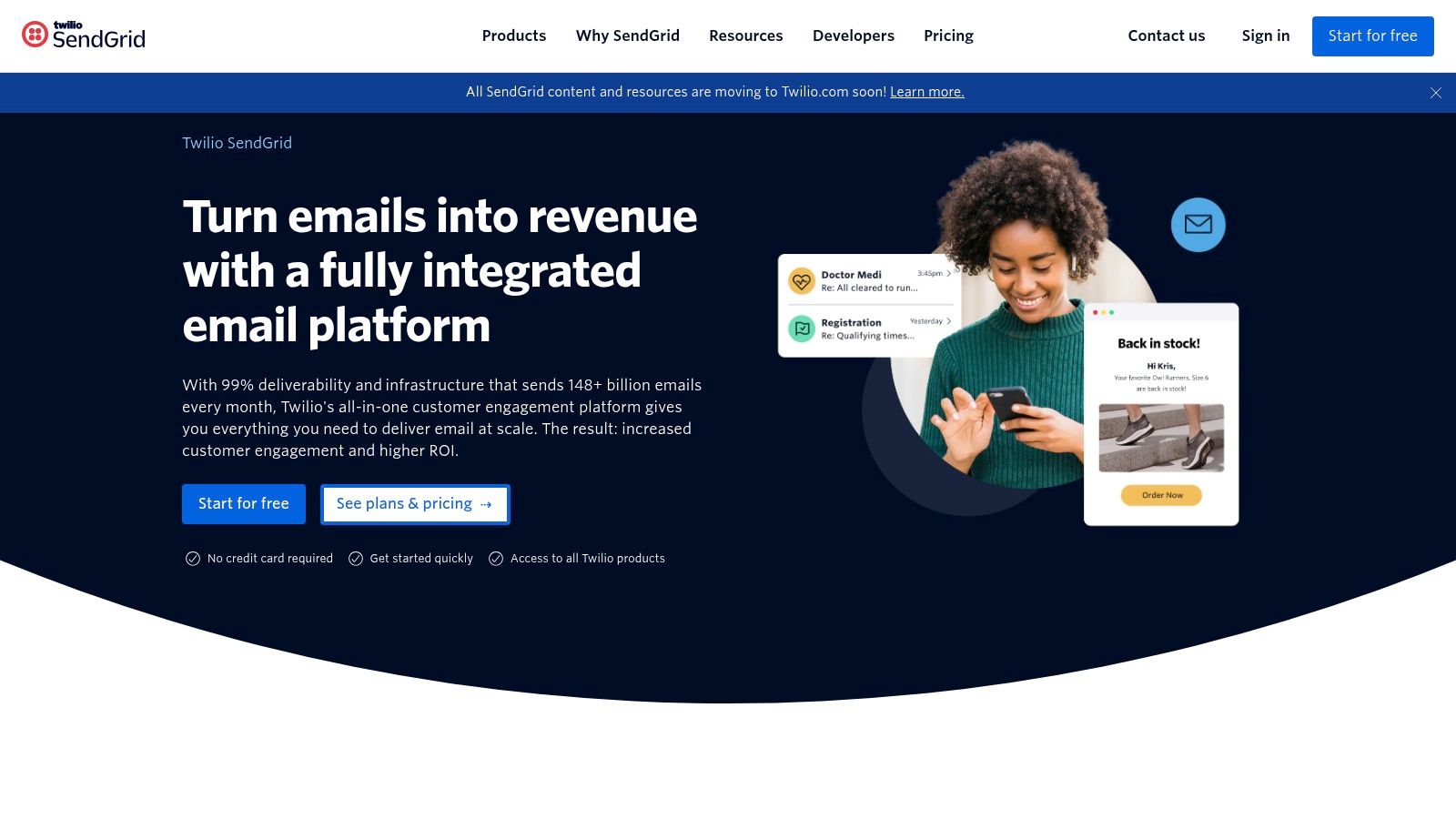
Unlike platforms built solely for marketing, SendGrid's foundation is its delivery engine, which is a major advantage for companies where inbox placement is critical. The platform offers a free plan that includes 100 emails per day and up to 2,000 contacts, allowing businesses to leverage its core sending capabilities. For those with technical teams, the ability to seamlessly integrate marketing campaigns with automated system alerts or purchase receipts via one provider is a significant workflow and billing simplification.
Key Features & Ideal Use Case
- Dual-Function Platform: Utilizes the same powerful infrastructure for both marketing blasts and transactional API-sent emails.
- Design Flexibility: Features a visual drag-and-drop editor alongside direct HTML code editing for complete creative control.
- Advanced Deliverability Tools: Offers dedicated IP addresses, reputation monitoring, and in-depth analytics to maximize inbox placement.
- Scalable Infrastructure: Built to handle billions of emails, making it ideal for businesses anticipating rapid growth in their contact lists or sending volume.
SendGrid is best for: Tech-savvy businesses, startups, and enterprises that require a unified solution for both their marketing campaigns and their application's transactional emails, prioritizing deliverability and scalability above all else.
| SendGrid vs. Mailchimp | SendGrid | Mailchimp |
|---|---|---|
| Pricing Model | Based on email volume & contacts | Based on contact count |
| Free Plan | 2,000 contacts, 100 emails/day | 500 contacts, 1,000 sends/month |
| Core Strength | Email deliverability & API integration | All-in-one marketing & brand tools |
| Transactional Email | Core product (Email API) | Available as a paid add-on |
- Website: https://www.sendgrid.com
11. Mailjet (by Sinch)
Mailjet excels by offering a powerful, collaborative email platform tailored for both marketing teams and developers. It uniquely blends a user-friendly campaign builder with robust technical features like APIs and its own markup language, MJML, for creating responsive emails. This dual focus makes it one of the more versatile Mailchimp similar services, particularly for teams that require deep customization and seamless integration between marketing and transactional email systems.
A standout feature is its real-time collaboration tool, allowing multiple users to comment on and edit an email template simultaneously, similar to Google Docs. This streamlines the review and approval process significantly. Mailjet's pricing is also competitive, based on email volume rather than contacts, offering a cost-effective solution for users with growing lists.
Key Features & Ideal Use Case
- Real-Time Collaboration: Multiple team members can work on a single email template at the same time, adding comments and making edits.
- Developer-Friendly Tools: Robust APIs, SMTP Relay, Webhooks, and the open-source MJML framework give developers precise control over email creation and delivery.
- Advanced Segmentation: Create dynamic contact lists based on user behavior, demographics, and campaign engagement to send highly targeted messages.
- A/B Testing: Test up to 10 different versions of an email to optimize subject lines, content, and sender information for the best performance.
Mailjet is best for: Growing businesses and marketing agencies where collaboration between marketers, designers, and developers is crucial for creating and managing both promotional and transactional emails.
| Mailjet vs. Mailchimp | Mailjet | Mailchimp |
|---|---|---|
| Pricing Model | Based on email volume | Based on contact count |
| Free Plan | 6,000 emails/month (200/day) | 500 contacts, 1,000 sends/month |
| Core Strength | Team collaboration & developer tools | All-in-one marketing & branding |
| Transactional Email | Integrated SMTP & API functionality | Available as a paid add-on |
- Website: https://www.mailjet.com
12. Drip
Drip is an e-commerce-first marketing automation platform designed specifically for direct-to-consumer (DTC) brands. Unlike generalist tools, its entire feature set is built around turning customer data into personalized experiences that drive sales. This focus makes it one of the most powerful Mailchimp similar services for online stores that want to move beyond basic newsletters and implement sophisticated, revenue-focused automation.
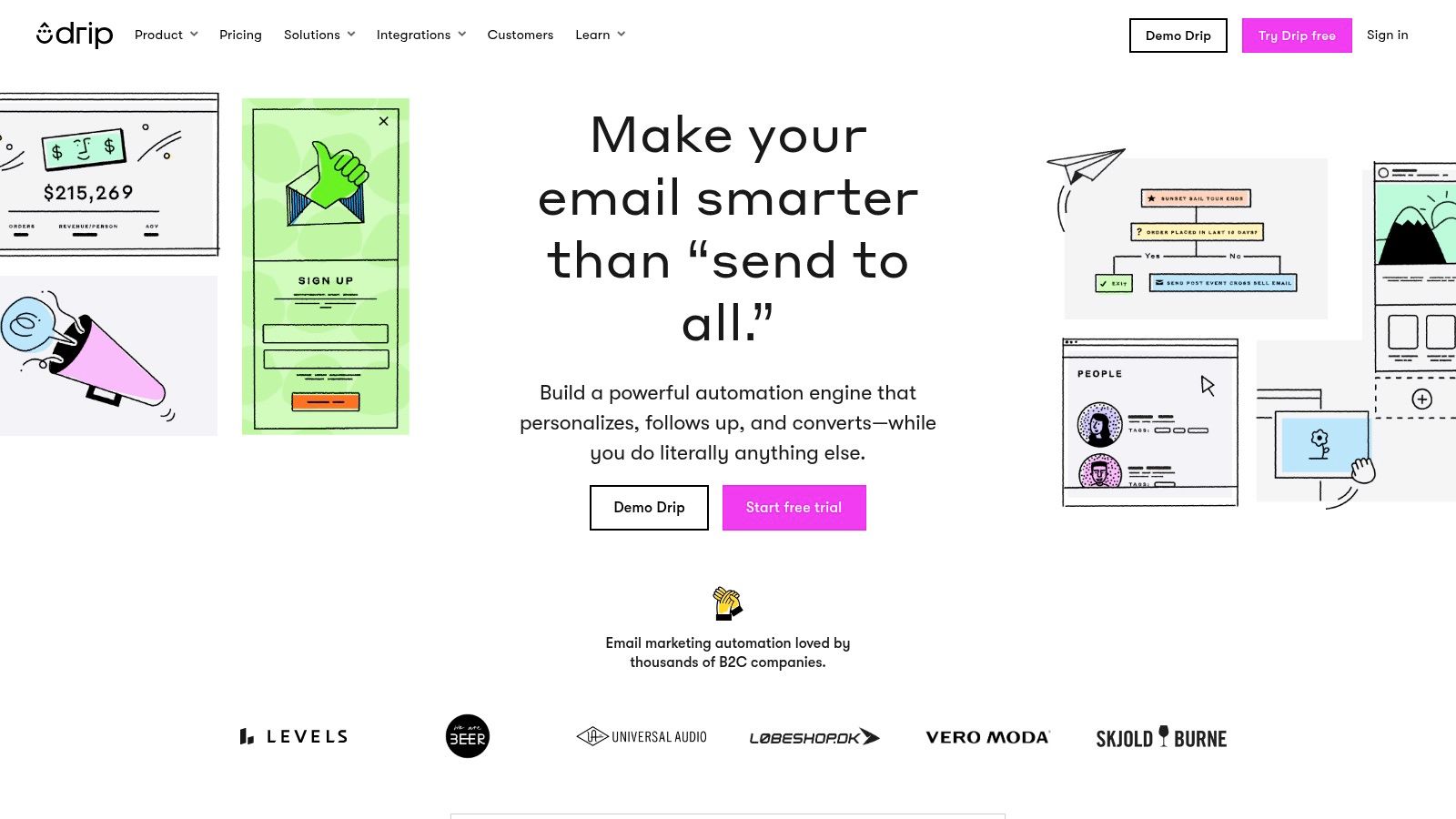
The platform’s core strength lies in its deep integrations with major e-commerce platforms like Shopify, BigCommerce, and WooCommerce. It pulls in rich customer data-like purchase history and browsing behavior-to power its visual workflows. A key differentiator is that all paid plans include unlimited email sends, allowing brands to communicate frequently without worrying about overage fees.
Key Features & Ideal Use Case
- Pre-built E-commerce Workflows: Launch proven automation sequences for abandoned carts, browse abandonment, and customer win-back campaigns in minutes.
- Deep Segmentation: Create dynamic segments based on purchase frequency, items viewed, total customer value, and hundreds of other data points.
- Revenue-Focused Dashboards: Track exactly how much revenue each email, SMS message, and automation sequence generates.
- Unlimited Email Sends: Paid plans are based on contact count, not send volume, which is ideal for high-frequency senders.
Drip is best for: Established e-commerce and DTC brands that need advanced, data-driven automation and personalization to maximize customer lifetime value.
| Drip vs. Mailchimp | Drip | Mailchimp |
|---|---|---|
| Pricing Model | Based on contact count (unlimited sends) | Based on contact count & send limits |
| Free Plan | No free plan, offers 14-day free trial | Free plan up to 500 contacts |
| Core Strength | E-commerce automation & personalization | General email marketing & brand building |
| Ideal User | Online retailers & DTC brands | All business types, content creators |
- Website: https://www.drip.com
Top 12 Mailchimp Alternatives Comparison
| Tool | Key features ✨ | UX / Quality ★ | Value / Price 💰 | Target 👥 | Standout 🏆 |
|---|---|---|---|---|---|
| Brevo (Sendinblue) | Email + SMS/WhatsApp, CRM, SMTP, automation ✨ | ★★★★ | 💰 Affordable starter & volume tiers; free tier caps | 👥 SMBs & teams sending often | 🏆 Multichannel + built-in CRM |
| MailerLite | Drag‑drop editor, landing pages, ecommerce tools ✨ | ★★★★★ | 💰 Generous free plan; transparent pricing | 👥 Small businesses & creators | 🏆 Ease of use & deliverability |
| Constant Contact | Drag‑drop + AI copy, 300+ integrations, live support ✨ | ★★★★ | 💰 Straightforward plans (cost ↑ with contacts) | 👥 Non‑marketers & SMBs | 🏆 Hands‑on onboarding & support |
| Campaign Monitor | Polished editor, templates, journeys ✨ | ★★★★ | 💰 Mid‑range; nonprofit discounts | 👥 Agencies & design‑focused teams | 🏆 Design‑first email templates |
| GetResponse | Funnels, webinars, AI content, advanced automation ✨ | ★★★ | 💰 Bundled tools; competitive discounts | 👥 Users needing all‑in‑one marketing suite | 🏆 Native webinars & course creator |
| AWeber | Automations, landing pages, large integrations ✨ | ★★★★ | 💰 Generous free tier for very small lists | 👥 Freelancers & SMBs | 🏆 Reliability & simple deliverability |
| ActiveCampaign | Advanced automations, CRM, event tracking ✨ | ★★★★★ | 💰 Powerful but pricing scales with contacts | 👥 Growth teams & advanced marketers | 🏆 Deep automation & CRM capabilities |
| Omnisend | Email + SMS + push, ecommerce workflows, revenue reports ✨ | ★★★★ | 💰 Fast ROI for stores; paid tiers unlock features | 👥 Ecommerce stores (Shopify/BigCommerce) | 🏆 Ecommerce‑first revenue reporting |
| Klaviyo | Advanced segmentation, predictive, strong ecommerce ties ✨ | ★★★★ | 💰 Premium — costly as lists grow | 👥 DTC & high‑LTV ecommerce brands | 🏆 Granular personalization & attribution |
| Twilio SendGrid | Visual + code editor, API, transactional + campaigns ✨ | ★★★ | 💰 Scalable enterprise pricing | 👥 Technical teams & app builders | 🏆 Deliverability + API scale |
| Mailjet (Sinch) | Collaborative editor, APIs, MJML templating ✨ | ★★★★ | 💰 Affordable entry; dev‑friendly APIs | 👥 Marketing + developer teams | 🏆 Real‑time collaboration & MJML |
| Drip | Visual ecommerce workflows, personalization, revenue dashboards ✨ | ★★★★ | 💰 Contact‑based pricing; unlimited sends on paid tiers | 👥 DTC brands & ecommerce marketers | 🏆 Ecommerce automations & unlimited sends |
Final Thoughts
Navigating the landscape of email marketing platforms can feel overwhelming, but as we've explored, the world of Mailchimp similar services is rich with powerful, flexible, and cost-effective options. The key takeaway is that the "best" platform isn't a one-size-fits-all solution; it's the one that aligns perfectly with your specific business model, technical comfort level, and strategic goals.
Mailchimp set a standard for user-friendly email marketing, but its evolving pricing and feature structure have pushed many users to seek alternatives. Our deep dive has shown that you don't have to compromise. Whether you need the all-in-one marketing and sales power of Brevo, the intuitive simplicity of MailerLite, or the e-commerce-centric automation of Klaviyo, there is a tool perfectly suited for your needs.
Recapping Your Options: The Right Tool for the Job
Let's distill our findings into a clear decision-making framework. Your choice will likely hinge on one of these core priorities:
- For Budget-Conscious Beginners and Small Businesses: If your primary needs are clean email design, reliable delivery, and straightforward automation without a hefty price tag, MailerLite and AWeber are outstanding starting points. They offer generous free plans and prioritize ease of use.
- For E-commerce Power Sellers: If you run an online store, your focus should be on deep data integration and revenue-driving automation. Klaviyo and Omnisend are the undisputed leaders here, providing unparalleled segmentation and pre-built workflows for Shopify, BigCommerce, and more.
- For Advanced Marketers and Sales Teams: When your strategy requires a sophisticated blend of email, CRM, and multi-channel automation, ActiveCampaign and GetResponse are your go-to platforms. Their robust feature sets justify the investment for teams focused on lead scoring, complex funnels, and sales pipeline management.
- For Developers and Tech-Savvy Teams: If you need a reliable, scalable sending infrastructure with API-first flexibility, Twilio SendGrid and Mailjet offer the technical power required to build custom solutions or handle massive transactional email volumes.
Making Your Final Decision: An Actionable Checklist
Before you commit to a new service, take these final steps to ensure a smooth transition and a successful partnership with your new platform. This isn't just about picking a tool; it's about integrating a core component of your marketing engine.
- Audit Your Current Needs: Don't just look for a "cheaper Mailchimp." Document exactly what you use, what you wish you had, and what features you pay for but never touch. How many contacts do you have? How many emails do you send? What are your most critical integrations?
- Prioritize Your "Must-Haves": Is it an integrated CRM? Advanced A/B testing? A visual journey builder? SMS marketing? Rank your feature requirements from essential to "nice-to-have." This will be your compass when comparing pricing tiers.
- Run a Trial (Seriously): Nearly every service on this list offers a free trial or a free-forever plan. Sign up for your top two or three contenders. Import a small list segment, build a test campaign, and explore the automation builder. The user experience is often the deciding factor.
- Evaluate Support and Resources: During your trial, try contacting customer support with a question. How quickly and effectively do they respond? Explore their knowledge base and tutorials. A platform with strong support can save you immense frustration down the road.
The search for Mailchimp similar services ultimately leads to a positive conclusion: the market is more competitive and innovative than ever. By moving beyond a familiar name, you open the door to platforms that can better serve your audience, streamline your workflow, and deliver a stronger return on your marketing investment.
If your workflow is deeply rooted in Notion, you know the friction of exporting data to a separate email service. NotionSender bridges that gap, allowing you to send beautiful, personalized emails directly from your Notion databases. Explore how to turn your Notion workspace into a powerful, native email marketing hub at NotionSender.