Notion Free Plan: The 2026 Ultimate Guide

You’ve probably had this moment already. Client notes are in Google Docs, deadlines are in a calendar, ideas are in a notes app, and your task list lives somewhere else entirely.
Then someone tells you to try Notion.
It looks flexible, clean, and powerful. But if you run a small business, freelance practice, or lean team, the primary question isn’t whether Notion is impressive. It’s whether the notion free plan is good enough for actual work, not just experimenting on a Sunday afternoon.
The short answer is yes, for some people. No, for others. The difference comes down to how you work, who needs access, and whether you can design around the free plan’s limits before those limits start costing you time.
Is the Notion Free Plan Right for Your Business
A freelance designer often starts with a simple need. One place for client briefs, project timelines, content drafts, meeting notes, and invoices. A small agency owner wants the same thing, just with a few more moving parts.
At first, Notion feels like the answer because it can hold all of that in one workspace. You can build pages, databases, calendars, and simple operating documents without paying upfront. For a solo operator, that’s a strong offer.
The question gets harder when your business stops being purely solo. The moment you need regular collaboration, shared systems, media files, or long-term version recovery, “free” starts to mean “carefully limited.”
That doesn’t make the notion free plan a bad option. It makes it a tool with a very specific shape.
Practical rule: Treat the free plan like a business test environment. If you’re building your own system, it’s generous. If you’re building a company workspace for active collaboration, you’ll hit guardrails much sooner.
A wedding planner working alone can run a serious operation from the free plan. She can track leads, manage event timelines, keep vendor notes, and organize templates in one place. A two-person content studio using the same workspace for production, approvals, assets, and client communication will feel the limits much faster.
That’s why the right question isn’t “Is Notion free?” It is “What kind of business am I trying to run inside the free tier?”
If you want a practical answer, look at three things:
- How many people need editing access
- How much content you’ll store directly in Notion
- Whether your workspace is a personal command center or a team operating system
If your work is mostly solo, organized, and text-first, the free plan can carry more weight than many business owners expect.
Your Digital Workshop What the Free Plan Includes
Think of the notion free plan as a personal digital workshop. You’re not getting a finished business system. You’re getting the tools to build your own.
For one person, that workshop is surprisingly capable. Notion’s Free Plan has been part of its freemium model since 2016, and it gives solo users unlimited pages and blocks for personal use, supporting databases, wikis, calendars, and task lists at no cost. That model helped fuel adoption to over 100 million users worldwide as of 2025, according to TapTwice Digital’s Notion statistics roundup.

Build pages for thinking and planning
At the most basic level, Notion lets you create pages. That sounds small until you use them well.
A freelancer might create pages for:
- Client projects with notes, timelines, and deliverables
- Standard operating procedures for repeat work
- Weekly planning with priorities and deadlines
- Content drafts for blogs, newsletters, or social posts
Each page can hold text, checklists, headings, images, links, embeds, and databases. That means one page can act like a document, while another behaves more like a dashboard.
Use databases as your business engine
The true power starts when you use databases. In plain language, these are flexible collections of information you can view as a table, board, calendar, or list.
A solo business owner could create:
- A client CRM with contact names, status, and next steps
- A content calendar with due dates and publication stages
- A task board sorted by project or priority
- An invoice tracker with payment status and due dates
This is why the free plan works so well for individual operators. You can connect different parts of your work without buying separate software for notes, planning, and documentation.
Turn it into a real operating system
The notion free plan also includes useful extras for personal productivity. The verified data notes Notion Calendar, basic forms, Notion Mail with Gmail sync, and a trial of Notion AI as part of the free experience in addition to the core workspace features already mentioned in that source.
Those features matter because they reduce app switching. Instead of keeping intake notes in one tool and planning in another, you can centralize more of your daily work.
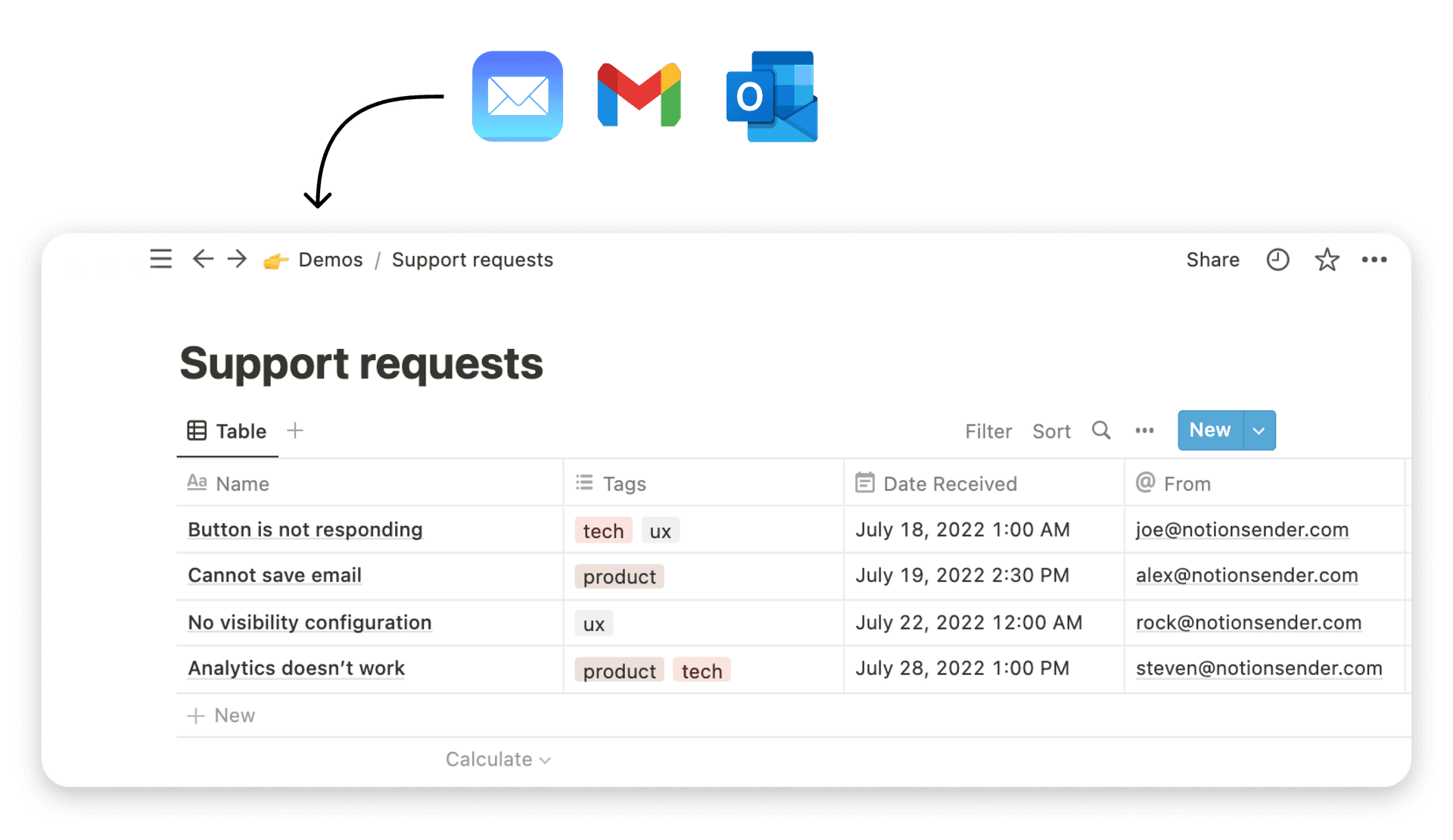
If you want examples of how people extend that setup for communication workflows, this guide on ways to use Notion to send emails and more shows the kinds of practical systems business users often build around their workspace.
Your best first Notion setup usually isn’t a giant dashboard. It’s one clean home page linked to three working databases you’ll update.
What solo users usually misunderstand
Many people assume “free” means stripped down. For solo work, that’s not the case.
The better way to think about it is this:
| Workspace use | What the free plan feels like |
|---|---|
| Solo operator | Spacious and flexible |
| Testing a workflow | Excellent for prototyping |
| Small team collaboration | Tight very quickly |
If you’re one person building your own workflow, the notion free plan can feel less like a trial and more like a complete system.
Understanding the Free Plan's Critical Limits
The notion free plan is generous for one person. For shared business use, it comes with sharp boundaries.
Those boundaries aren’t hidden. But many business owners don’t understand the practical effect until a workspace stalls in the middle of real work.

The block limit is the biggest business issue
The most important limit is collaboration-related. Notion’s pricing details state that the Free Plan applies a strict 1,000-block limit per workspace when 2+ workspace owners are added, while solo users have unlimited blocks. Notion also defines a block as the basic unit of content, such as a paragraph, image, or database row, and the same source notes that adding a second owner can force a roughly 90% reduction in content volume for similar setups compared with solo use on free: Notion pricing.
That sounds abstract until you map it to daily work.
A block can be:
- One paragraph
- One bullet list item
- One image
- One row in a database
- One toggle
- One embedded file
A small workspace with project pages, meeting notes, a task database, and a CRM can burn through blocks much faster than people expect.
Once your team workspace crosses the cap, the pain isn’t subtle. You can still organize what exists, but adding fresh content becomes the problem.
This is why many “free forever” tool decisions backfire. If you want a broader perspective on that pattern, this piece on the true costs of free platforms is worth reading. The same logic applies here. Free works well until operational friction becomes its own cost.
The file upload limit affects media-heavy work
The Free Plan also caps file uploads at 5 MB per file, according to the verified data already cited from TapTwice Digital in the earlier section.
For a consultant or writer, that may be fine. A PDF brief, meeting notes export, or lightweight document will often fit.
For a designer, video editor, photographer, or agency sharing large creative assets, it gets restrictive fast. High-resolution design files, long video clips, and presentation decks with heavy visuals often belong in Google Drive, Dropbox, or another storage tool instead of inside Notion.
Version history is short
The free plan includes a limited period of version history. The Plus plan extends that to a longer period, based on the verified data provided for this article.
That matters when someone overwrites a page, removes key instructions, or changes a database structure without realizing the downstream effect. If you catch the mistake quickly, you’re usually fine. If you discover it later, recovery gets harder.
For business use, this is less about convenience and more about risk tolerance.
Guest access is useful but limited
The free plan allows up to a certain number of guests, while Plus allows a significantly larger number of guests, according to the verified data from TapTwice Digital.
Guests are valuable because they let you share pages with clients, contractors, or collaborators without turning everyone into workspace members. But if your business regularly works with many outside people, that limit becomes a management problem.
Notion Free Plan vs. Plus Plan At a Glance
| Feature | Free Plan | Plus Plan ($8/user/mo) |
|---|---|---|
| Solo pages and blocks | Unlimited for solo use | Unlimited |
| Team block capacity | 1,000-block limit when 2+ owners are added | Unlimited team blocks |
| File uploads | 5 MB per file | Larger allowance than free |
| Version history | 7 days | 30 days |
| Guest access | 10 guests | 100 guests |
| Price | Free | $8/user/month with annual billing |
What these limits mean in practice
The easiest way to read the notion free plan is as a solo-first product.
It works well when you are:
- Building a personal operating system
- Testing a workflow before standardizing it
- Sharing selectively with a small number of outsiders
It gets strained when you are:
- Running a workspace with active co-owners
- Storing large media files
- Depending on deeper history and broader permissions
That distinction saves a lot of frustration.
Who Should Use the Notion Free Plan
The notion free plan isn’t best judged by feature count. It’s best judged by fit.
Some people can run a meaningful slice of their business on it for a long time. Others will outgrow it almost immediately, not because they failed to use it correctly, but because their workflow has different demands.
The solo freelancer
This is the cleanest fit.
If you write, consult, coach, design, or manage projects independently, the free plan gives you a strong base for planning and documentation. You can keep client notes, project pipelines, checklists, editorial calendars, and personal admin in one place.
For this user, the free plan works because the workspace is a control center, not a shared production floor.
A solo freelancer can use it for:
- Lead tracking
- Project delivery checklists
- Proposal and onboarding templates
- Meeting notes
- Simple CRM records
The biggest reason it fits is simple. Your workspace is primarily for your own decision-making.
The owner building systems before hiring
A small business owner in setup mode is another strong match.
Maybe you’re documenting repeat processes, collecting ideas, organizing service packages, and building a home for operations before adding staff. In that stage, the notion free plan works well because you’re designing the machine before other people need to use it daily.
That can include:
| Business stage | How free plan helps |
|---|---|
| Pre-team | Build SOPs and planning docs |
| Offer development | Organize research, pricing notes, and content |
| Early operations | Track priorities, vendors, and decisions |
This is often the smartest way to adopt Notion. Build solo first. Invite complexity later.
The project manager of a personal system
Some users aren’t managing a company team at all. They’re managing a complex personal workflow.
That might be a marketer tracking campaigns, a founder organizing product ideas, or a consultant building a second-brain-style workspace for notes and references. These people need structure more than collaboration.
In that case, the notion free plan can outperform many single-purpose tools because it combines documentation and planning in one place.
If your main challenge is keeping your own work visible and connected, the free plan is often enough. If your main challenge is coordinating multiple people, it usually isn’t.
Who should compare other tools first
Not everyone should start with Notion.
If your team needs heavy task assignment, broad cross-functional collaboration, or a more rigid project management structure from day one, it’s smart to compare alternatives. This roundup of other top free project management tools for B2B teams can help you evaluate where Notion fits and where another tool may be a better first choice.
The key pattern is this. Notion free works best for the person building and running the system, not for the business that already depends on many people working inside that system together.
Practical Workarounds to Maximize the Free Tier
A small business owner usually runs into free-plan frustration the same way. They start with one tidy workspace for their own work, then slowly turn it into a shared office for clients, contractors, and teammates. The setup feels efficient at first. Then the limits show up all at once.
The free plan lasts longer when you treat Notion as your operating desk, not the whole building.

Keep one owner when possible
If one person builds and maintains the workspace, the free tier is much easier to manage.
That does not mean no one else can touch the system. It means you keep one clear operator at the center, then give outside people access only where it helps. A client can review a status page. A contractor can update one deliverable. An accountant can check a finance page. Your workspace stays organized because it still has one person deciding how information is stored.
That single-owner model works especially well for:
- Clients reviewing project status
- Freelance collaborators leaving comments
- Accountants checking a limited set of records
- Contractors updating a single deliverable page
For a small business, this is often the difference between a calm system and a crowded one.
Store large files outside Notion
The 5 MB upload cap becomes manageable once you stop using Notion like a filing cabinet.
Use Google Drive, Dropbox, or another cloud storage tool for heavy assets such as:
- Design files
- Recorded calls
- Brand assets
- Presentation decks with heavy media
- Video proofs
Then place the share link inside the relevant Notion page or database.
This setup works like keeping your paperwork on a desk and your boxes in a storage room. Notion holds the instructions, context, and next steps. Your file tool holds the large assets. That keeps pages faster to load and reduces version confusion.
Design databases to reduce duplication
Many free workspaces become bloated for one reason. The same information gets recreated in three different places.
A common example is a business owner who builds a client database, then copies client details into project pages, then creates separate inline tables to track the same records again. It feels neat for a week. After that, every update becomes manual, and the block count rises faster than expected.
A cleaner structure is usually enough:
- Create one main Clients database
- Create one Projects database
- Link projects back to clients
- Use filtered views instead of duplicate tables
- Keep templates lean
Use one source of truth, then show that data in different views. That is the practical habit that stretches the free tier.
Use templates, but make them small
Templates save time only when they repeat what you need.
If every new project page includes long instructions, repeated policies, large embeds, and five checklists no one reviews, the template becomes clutter on autopilot. Keep the repeated structure light and useful.
A lean project template might include:
- Project summary
- Key dates
- Deliverables checklist
- Links to files
- Next action
That gives you consistency without building a page that feels heavier than the project itself.
Create an inbox database for intake
One intake database can prevent a surprising amount of mess.
Put new requests, ideas, follow-ups, and loose notes there first. Then sort them during a daily or weekly review. This gives your system one front door. Without that front door, information tends to pile up in random pages, temporary notes, and half-finished tables.
For a consultant or agency owner, this can act like a receiving tray on a physical desk. Everything arrives in one place before you decide where it belongs.
A free Notion workspace usually lasts longer when incoming work lands in one inbox before it gets organized into permanent systems.
Use public pages carefully
Public pages are useful when you need to share information without adding more people into the workspace itself.
They work well for:
- Client resource hubs
- Read-only FAQs
- Project briefs
- Service information
- Internal reference pages for contractors
Use them for publishing, not for day-to-day collaboration. If a page needs frequent back-and-forth editing, approvals, or private discussion, public sharing is usually the wrong tool.
Add email workflows without stuffing your workspace
Email is still where a lot of business activity begins. Leads come in there. Clients reply there. Approvals often happen there too.
The goal is not to turn Notion into a full email platform. The goal is to connect email to the parts of your system that matter, such as a lead database, client intake tracker, or follow-up queue. That is where lightweight tools can help before you pay for a larger software stack. For example, if you are exploring sending emails from Notion, tools like NotionSender can support simple outbound and workflow-driven communication while keeping Notion as the control center.
The following video demonstrates this type of setup in action:
<iframe width="100%" style="aspect-ratio: 16 / 9;" src="https://www.youtube.com/embed/Pt0FTHW6nNo" frameborder="0" allow="autoplay; encrypted-media" allowfullscreen></iframe>
A practical rule helps here. Let Notion store the record, status, and next action. Let your email tool handle delivery. That division keeps your workspace cleaner and gives you more room before an upgrade becomes necessary.
Build for your current stage, not your imagined future company
Small businesses often waste the free tier by building a workspace for a ten-person operation before the business works that way.
That usually leads to too many dashboards, too many database properties, and too much content no one maintains. A simpler setup is usually stronger because it reflects the work you are doing now, not the org chart you might have later.
For many solo business owners, a practical starting point looks like this:
| Core system | Keep it simple |
|---|---|
| Tasks | One main task database |
| Clients | One clean CRM table |
| Projects | One database linked to clients |
| Knowledge | A few core SOP and notes pages |
Start small. Keep the structure useful. Add complexity only when the business needs it.
Clear Signs It Is Time to Upgrade Your Plan
Upgrading isn’t about loyalty to Notion. It’s about whether the free tier is now creating drag in your business.
That decision gets easier when you stop thinking in terms of features and start thinking in terms of friction.

Your second person needs to work inside the system every day
This is the clearest upgrade trigger.
If a business partner, operations assistant, project manager, or regular contractor needs active workspace participation every day, you’ve moved beyond the sweet spot of the free plan. At that point, workarounds start to consume attention.
What begins as “we’ll just share a few pages” often turns into approval delays, awkward permission setups, and constant concern about workspace limits.
Your files no longer fit your work
If your work relies on larger files, linking out to cloud storage may remain sensible. But if that external-file workflow starts slowing delivery, causing version confusion, or scattering critical assets across too many tools, the free tier may be too constrained for the business you’re running now.
This is common for agencies, video teams, brand studios, and businesses with media-heavy deliverables.
Seven-day history is making you nervous
Not every business needs longer recovery windows. Some do.
If your pages contain operating procedures, client commitments, internal documentation, or decision records that must be recoverable beyond a short window, a short version history becomes a risk issue. The cost of one preventable error can outweigh the cost of the plan upgrade.
You’re managing too many outside people manually
The free plan can handle light guest sharing. It starts to feel brittle when you constantly add, remove, and monitor access for many clients or contractors.
Signs this is happening:
- You hesitate before sharing a page because access is messy
- You’ve created awkward duplicate pages just to manage permissions
- You spend time remembering who should still have visibility
- You avoid using Notion for collaboration because the setup feels fragile
That’s not a product problem. It’s a growth signal.
Your business needs cleaner systems, not more hacks
A workaround is useful when it saves money without adding stress.
A workaround becomes expensive when it creates confusion, repeated admin work, or avoidable mistakes. If your team is spending energy preserving the free plan rather than using the workspace to move work forward, the free plan has done its job. It helped you get started. Now you need a better operational fit.
Upgrading should feel like removing friction from a proven workflow, not paying to rescue a messy one.
The Decision
The best reason to upgrade is not “we hit a limit.”
It’s this: your business now benefits more from smoother collaboration, better control, and lower operational risk than it benefits from keeping the software bill at zero.
That’s the moment an upgrade starts looking less like a cost and more like infrastructure.
Your Smart Notion Strategy Starts Here
The notion free plan is strongest when you use it for what it is. A powerful solo workspace with enough flexibility to run planning, documentation, and daily operations in one place.
It’s weaker when you ask it to act like a full team platform without paying for team capacity.
If you’re a freelancer, solo consultant, or owner building systems before hiring, the free plan can do a lot. If you keep the structure lean, avoid duplicate content, store heavy files elsewhere, and share selectively, you can get serious business value from it.
If your workflow is expanding, the right move isn’t always an immediate upgrade. Sometimes it’s a better setup. Sometimes it’s a cleaner database structure. Sometimes it’s using Notion for the work it handles best.
For more practical ideas on keeping your workspace efficient, these tips to help you get the most out of Notion.so are a useful next read.
The smart approach is simple. Match the tool to your current stage, not the stage you imagine a year from now.
Frequently Asked Questions about the Notion Free Plan
Is Notion AI included in the free plan
The verified data for this article says the free plan includes a trial of Notion AI. That means you can explore it, but you shouldn’t assume the free plan gives you ongoing full AI use for business workflows.
If AI becomes central to your process, check the current product details before building around it.
Can I really use unlimited pages on the notion free plan
Yes, for solo use. The key distinction is individual versus collaborative use.
For one person, the free plan allows unlimited pages and blocks for personal work. The trouble starts when the workspace becomes a shared environment with additional owners.
What exactly is a block
A block is the basic unit of content in Notion.
That includes things like:
- A paragraph
- A checklist item
- A heading
- An image
- A database row
If you’re trying to stay efficient on the free tier, think in terms of block economy. Fewer duplicates, fewer bloated templates, and fewer unnecessary embeds usually lead to a cleaner workspace.
Does deleting content free up space in a limited team workspace
Don’t assume it will solve the problem.
The verified data provided for this article notes user reports that aggressive deletions often fail to reclaim usable space after the team block cap is reached, with support interventions confirming that trash auto-deletes after time does not reset the counter in those cases. That’s why prevention matters more than cleanup once a collaborative free workspace is near its limit.
How can I estimate whether I’m using too many blocks
There isn’t a simple universal rule shown in the verified data, but one practical method mentioned there is auditing via Markdown exports, where each export line roughly maps to one block.
You don’t need a perfect count to make better choices. If your workspace has lots of duplicated databases, repeated templates, and long archive pages, you already know where to simplify.
Is the free plan good for a small business
It can be, if the business is still mostly run by one person inside the workspace.
It’s especially useful for business owners who need one place for planning, notes, process docs, and lightweight tracking. It becomes less suitable when active collaboration is central to how the business runs.
Can I share with clients on the free plan
Yes, within the guest and sharing limits described earlier.
For many solo businesses, selective client sharing works well. The key is to share only what supports the relationship instead of exposing your whole internal workspace.
If you want to keep using Notion as your business hub while handling email more cleanly inside that workflow, NotionSender is worth a look. It helps you send and save emails directly from Notion, which is useful when you want client communication, project tracking, and database records to live in one connected system instead of being split across inboxes and pages.