Notion Windows App Guide 2026: Master Productivity

You probably have Notion open in a browser right now, buried between email, docs, chat, analytics, and the tab you meant to close an hour ago. That setup works for quick edits. It breaks down when Notion becomes your actual operating system for client work, projects, meeting notes, approvals, and follow-ups.
That’s where the notion windows app starts to feel less like a convenience and more like the right tool for the job. The browser version is still the center of Notion’s ecosystem, but the desktop app changes how the work feels. It gives you a dedicated workspace, better system-level behavior, and fewer excuses to drift into another tab.
For anyone trying to run communication-heavy workflows from Notion, especially when email, attachments, and project records need to stay connected, the Windows app is where the experience becomes practical instead of aspirational.
Why Use the Dedicated Notion Windows App
Notion grew into a mainstream work platform because the web app is accessible everywhere. By 2024, Notion reached 100 million users worldwide, with 20 to 30 million daily active users estimated across the platform, and the web app sees 150 million monthly visits according to Tool Finder’s Notion statistics roundup. That tells you two things at once. First, the browser matters. Second, people doing serious work in Notion often want something more focused than a browser tab.

Focus beats convenience
The browser is a messy multi-purpose garage. The Windows app is a dedicated workshop.
In a browser, Notion competes with everything else. Gmail pings. Slack flashes. A search for one document turns into six unrelated tabs. In the Windows app, Notion gets its own space, its own window behavior, and its own mental boundary. That matters when you're writing project briefs, reviewing linked databases, or cleaning up a CRM view with a lot of properties.
Practical rule: If you spend hours building in Notion rather than just checking tasks, use the desktop app as your default home base.
That shift sounds small until you try it for a week. You stop “visiting” Notion and start working inside it.
The Windows app is better when the work gets dense
Complex Notion work usually means one or more of these:
- Multiple open views: a task database, a project page, meeting notes, and a reference doc.
- Faster switching: jumping between search, recent pages, and linked databases without browser clutter.
- Less accidental context switching: no social tab, no analytics tab, no search rabbit hole one click away.
The browser version is fine for lightweight edits. The desktop app is better when your workspace has real depth.
A lot of users don’t need convincing on this point. They feel it once they move over. The friction isn’t dramatic. It’s cumulative.
Offline access changes how reliable Notion feels
The browser version is more fragile when your connection drops. The Windows app gives you cached access, which makes it much more usable when you're on a train, in a weak Wi-Fi office corner, or bouncing between networks. For freelancers and project managers, that alone is enough reason to install it.
This doesn’t mean every feature works offline. It means the app behaves more like a tool you can rely on when connectivity isn’t perfect. That’s a major difference from living entirely in the browser.
If you already have a solid workspace but want to tighten your habits, these practical Notion usage tips pair especially well with the desktop app.
Your Guide to Installation and Initial Setup
Installing the notion windows app is straightforward for individual users. The part that usually causes confusion isn’t the installer itself. It’s what happens right after launch, especially if you use Google sign-in, Apple sign-in, multiple workspaces, or a managed company laptop.

What to do first
Start with the standard installer from Notion. Once the app opens, sign in with the same method you use on the web. If your account was created through Google, use Google again. If it was email and password, stick with that. Most login problems come from mixing methods and assuming Notion will merge them automatically.
After login, do three things before you start real work:
- Pin your main workspace if you switch between personal and company accounts.
- Open your most-used start page such as a dashboard, command center, or inbox database.
- Turn keyboard-first navigation into a habit right away, because that’s where the Windows app starts to pay off.
Small team rollout is different from personal setup
For a solo user, installation is a quick download-and-login job. For a small business, it’s more of an IT decision.
According to Notion’s Windows deployment documentation, the installer supports command-line flags including /S for silent installation, which helps with team rollouts. The same documentation also notes an important limitation: automatic updates can’t be disabled in Notion for Windows.
That trade-off matters.
| Scenario | What works well | What needs planning |
|---|---|---|
| Solo freelancer | Fast install and simple login | Workspace cleanup after first launch |
| Small agency | Silent install helps | Auto-update control is limited |
| Internal team rollout | Consistent app setup | Governance and update timing need attention |
For managed environments, the installation is the easy part. Update behavior and support expectations are what need discussion first.
A cleaner first launch
Don’t import every habit from the browser. The desktop app works best when it opens into one deliberate workspace, not a pile of leftover tabs and random pages.
A practical first setup looks like this:
- Default landing page: a dashboard with tasks, calendar, and current projects.
- Favorites cleaned up: only pages you open daily.
- Desktop notifications reviewed: useful for reminders, not every mention.
- Secondary workspaces separated: avoid bouncing between personal and client contexts unless you need to.
That small cleanup makes the app feel intentional from day one.
Navigating Key Features Unique to Windows
A browser tab works for casual use. The Windows app works better when Notion stays open all day beside Outlook, Teams, Slack, and the files you are actively using.
That difference shows up in routine work. Search is faster to reach, window placement is easier to control, and Notion feels like part of the desktop instead of one more tab competing for attention. If you plan to use NotionSender inside Notion for outreach tracking, follow-ups, shared inbox notes, or client communication logs, that matters. The less time you spend hunting through tabs, the easier it is to keep documentation and communication in the same operating flow.
Search and window control are the real desktop advantages
The best Windows-specific gain is not a hidden feature. It is speed.
With the desktop app, I can keep a project database on one monitor, Outlook on another, and pull up a company page or meeting note without reshuffling browser tabs first. That sounds minor until you repeat it fifty times in a day. Search-heavy workflows benefit the most, especially if your workspace includes CRM-style databases, client records, campaign pages, and internal docs tied to NotionSender activity.
Common examples:
- During email work: open the related account page while drafting or reviewing messages in Outlook
- During calls: pull up call notes, decision logs, or next steps without covering the meeting window
- During task processing: jump straight to a contact, project, or deliverable instead of drilling through the sidebar
- During follow-up management: check what was sent through NotionSender and update status from the same desktop session
Where each version fits
The app, browser, and mobile version all have a place. They just serve different kinds of work.
| Version | Best for | Trade-off |
|---|---|---|
| Windows app | Daily operations, search-heavy work, side-by-side communication and project tracking | Advanced actions still depend on a live connection |
| Web app | Quick access from any computer | Easier to lose focus in a crowded browser |
| Mobile app | Capture, review, and small edits | Poor fit for database maintenance and detailed page building |
The browser version remains useful on shared or temporary machines. Mobile is fine for checking status and capturing notes. The Windows app is where teams usually do the heavier maintenance work, especially once Notion starts holding both project records and communication context.
File handling still follows your plan
Desktop use can make Notion feel like a full local app, but storage rules do not change. File upload limits still follow your Notion plan.
That matters if your workspace holds proposal PDFs, screenshots, sales collateral, exported reports, or attachments tied to client communication. For a light notes setup, the limit may not matter much. For a workspace that supports NotionSender campaigns, handoff docs, and account history, it can shape how you store assets and what belongs in Notion versus a separate file system.
What feels different after a week of real use
The value of the Windows app comes from repeated small wins:
- Taskbar presence: Notion is always one click away
- Cleaner multitasking: easier to keep beside Outlook, Teams, or a browser research window
- More reliable work habits: keyboard shortcuts and app switching become muscle memory
- Less tab churn: fewer context switches while updating docs and communication records
None of that is flashy. It is practical.
For power users, that practical difference is the point. The Windows app gives Notion a more stable place in daily work, and that becomes more useful when NotionSender is part of the setup. Documentation, outreach context, and project tracking can stay in one desktop workflow instead of being split across tabs all day.
Mastering Offline Access and Synchronization
Offline use in Notion confuses people because the app is cloud-first, but the Windows client also caches content locally. The easiest way to think about it is a briefcase. Before you leave the office, you pack the documents you’re likely to need. If a page is cached, it’s in the briefcase. If it isn’t, you may not have it when the connection disappears.
According to Notion’s app help category, the desktop version provides caching for offline access, but the exact limits aren’t always clearly documented. The important part is simple: basic access can work offline, while advanced features such as Notion AI and third-party integrations require a live connection and won’t queue tasks offline.
What usually works offline
Cached content is the safe zone. In practice, that often means pages you opened recently, notes you were actively editing, and some database content that the app has already loaded.
That makes the Windows app useful for:
- Reviewing notes during travel
- Editing text on pages you opened earlier
- Checking previously loaded project information
- Capturing rough updates to sync later
It doesn’t make the app fully self-contained. It just makes it less brittle than a browser tab.
What doesn’t work well without internet
Anything that depends on live services is where offline use breaks down.
- AI actions: these need connectivity.
- Third-party integrations: they won’t complete tasks offline.
- Fresh database pulls: if the content wasn’t cached, don’t count on it.
- Workflow automations: they won’t line up and wait.
Before you go offline, open the pages you’ll need. Don’t assume the app will fetch them later without a connection.
How to avoid sync messes
Most sync frustration comes from a mismatch between expectation and reality. People assume the desktop app is fully local because it has a native shell. It isn’t.
A safer way to work looks like this:
- Open critical pages while connected before travel or field work.
- Keep offline edits focused to text updates and straightforward changes.
- Reconnect before doing structural work like reorganizing databases or relying on automations.
- Pause for sync confirmation before closing the app after reconnecting.
If you treat offline mode like a temporary working copy instead of a complete parallel workspace, you’ll avoid most surprises.
Integrating Email with NotionSender on Windows
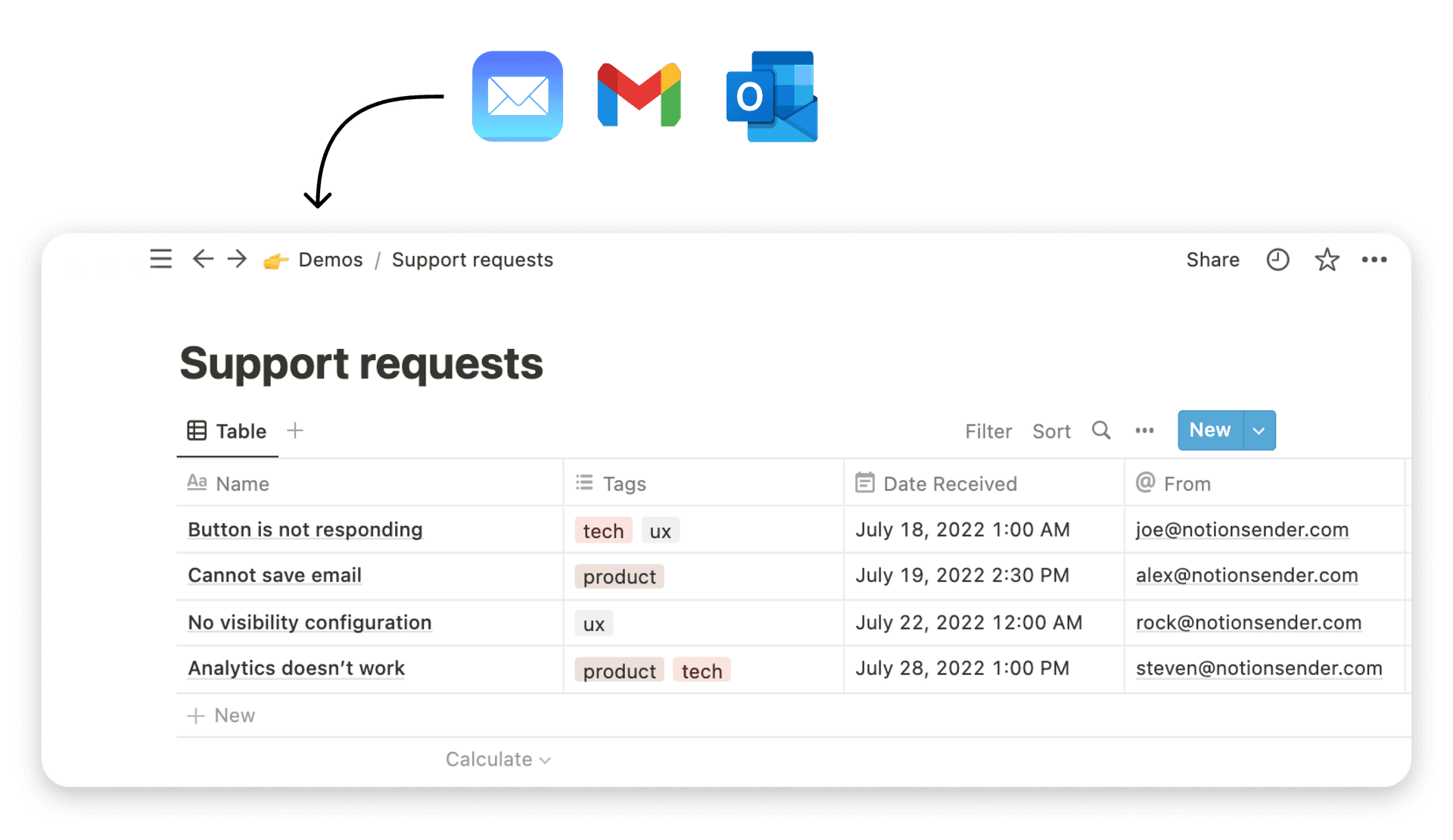
The biggest missed opportunity with the notion windows app is using it only for notes and docs. On Windows, Notion can become the place where communication and execution stay connected. That matters when email drives the work, which is still true for client approvals, invoices, meeting coordination, sales follow-ups, and marketing outreach.
A good setup doesn’t try to replace every inbox habit at once. It starts by tying email activity to the pages and databases where work already lives.

A practical Windows workflow
Take a project manager handling client delivery, internal approvals, and billing support. In the browser, that usually means constant switching between inbox, docs, and task tracking. In the Windows app, the workflow feels tighter because Notion gets a dedicated screen presence.
A useful pattern is to keep a project database, a communications log, and a meeting notes page linked together. Email records become part of the project history rather than something trapped in another tool.
The daily rhythm looks like this:
- A client message comes in about a deadline shift.
- The project manager logs or routes that communication into the relevant workspace record.
- Follow-up tasks are created next to the source conversation.
- The next status update goes out from a structured record instead of a memory-based reply.
That changes the quality of project coordination. Fewer details get stranded in personal inboxes. More context stays with the work.
Where the Windows app helps most
The browser can do this too, but the desktop environment makes it easier to sustain.
The difference shows up in three places:
| Workflow moment | Browser habit | Windows app habit |
|---|---|---|
| Reviewing client communication | Jump between inbox and tabs | Keep Notion open as the control layer |
| Updating project records | Copy and paste into pages manually | Update records in a dedicated workspace window |
| Sending structured follow-ups | Draft from memory or old threads | Draft from the project page with current context |
Email integration stops being “nice to have”; it becomes operational hygiene.
Building a communication hub inside Notion
A strong setup usually includes:
- A mailing or communications database: one row per message thread, campaign, or contact event.
- Relations to projects or clients: so every message lives in context.
- Status properties: drafted, queued, sent, replied, waiting.
- Template-based pages: for proposals, check-ins, onboarding notes, invoice reminders, or campaign sends.
If you want a walkthrough on the sending side, this guide to sending emails from Notion is a useful reference point.
Keep the communication record close to the work record. That’s the difference between a searchable system and an inbox scavenger hunt.
A realistic example
A freelancer managing retainers can use the Windows app as the day’s main workspace. Morning starts with a dashboard showing open projects, unpaid invoices, pending responses, and this week’s meetings. Instead of opening three or four browser tabs and trying to mentally stitch them together, the work happens from one anchored workspace.
When a client sends revised scope details, the update gets attached to the relevant project record. If an invoice reminder needs to go out, it can follow the same pattern. If a meeting summary needs to be shared, the notes already sit next to the project timeline.
The value isn’t just speed. It’s continuity.
For a visual walkthrough of this style of workflow, the video below is worth a watch.
<iframe width="100%" style="aspect-ratio: 16 / 9;" src="https://www.youtube.com/embed/cLojEjVHvVc" frameborder="0" allow="autoplay; encrypted-media" allowfullscreen></iframe>
What works and what doesn’t
What works well:
- Client communication tied to project records
- Shared visibility across teams
- Cleaner follow-up processes
- Less copy-paste friction between tools
What doesn’t work well:
- Treating Notion like a full inbox clone
- Ignoring attachment size constraints on your plan
- Expecting communication actions to keep working offline
- Building the system before defining the database structure
The Windows app is at its best when it acts as the command center. Let your project records, communication logs, and action items live together there. That’s the setup that turns Notion from a repository into an active operations layer.
Boosting Performance and Solving Common Problems
A slow Notion Windows app usually points to workspace load, sync behavior, or app state before it points to weak hardware. In day-to-day use, I see the biggest gains from cleaning up how the workspace is used on Windows, especially once NotionSender is part of the setup and the app becomes a live operations hub instead of a place to store notes.

What improves performance
Start with the parts you can control.
- Keep active views narrow: filtered project views load and update more cleanly than one dashboard stuffed with every task, email log, and client record.
- Close unused app windows: the Windows app handles focused work better when you are not keeping extra workspaces open in parallel.
- Restart after heavy editing sessions: long sessions with lots of page switching, database edits, and attachments can leave the app feeling sticky.
- Reduce page weight: large embeds, huge linked databases, and crowded home pages slow down day-to-day work more than many teams expect.
- Separate operational views from archive views: current work should stay light. Historical records can live in a separate database view.
Teams also get better results when the desktop environment is maintained before issues pile up. The benefits of proactive IT show up clearly here. Stable devices, fewer background conflicts, and predictable network performance reduce support tickets more than reactive troubleshooting.
Common problems and practical fixes
| Problem | Likely cause | What to do |
|---|---|---|
| App feels slow | Heavy workspace views or too many open windows | Simplify the current view, close extra windows, then relaunch the app |
| Changes appear late | Sync delay or unstable connection | Wait for sync to settle before making more structural edits |
| Blank blocks or partial page loads | Temporary app state issue | Fully quit the Windows app and reopen the affected page |
| Attachments fail to upload | File size or workspace limits | Check the file against your plan limits and retry from a stable connection |
| NotionSender activity feels inconsistent | Database design or integration setup issue | Review the linked records, required properties, and event flow before blaming the app |
One pattern shows up often in Windows deployments. Teams blame Notion itself when the underlying problem is a bloated workspace design. A single home view that mixes project tracking, large databases, embedded references, and communication logs will feel slow no matter how good the machine is.
That matters more once you start using NotionSender inside the desktop app. If email activity is tied to project records, invoices, follow-ups, and meeting notes, every database relation and filtered view needs to stay intentional. The app performs better when each team works from role-specific views instead of one master control panel that tries to do everything.
If you are building custom workflows around message events or record-based communication, the NotionSender API documentation for workflow configuration is the right place to verify how the pieces should connect.
The practical fix is simple. Keep the Windows app focused, keep views lighter than you think they need to be, and treat structure as part of performance.