The 12 Best Apps for Bloggers to Streamline Your Workflow in 2026

Blogging successfully today is about more than just good writing. It's a business that demands efficiency across content creation, search engine optimization, promotion, and monetization. Juggling dozens of tasks, from drafting posts and optimizing for search engines to designing graphics and managing an email list, can quickly become overwhelming. The right technology stack is the secret weapon of productive bloggers, automating repetitive work and centralizing an entire operation. This guide moves beyond surface-level lists to provide a curated selection of essential apps for bloggers.
We'll dive deep into each tool, analyzing its specific strengths, weaknesses, and ideal use cases. You'll learn not just what these apps do, but how to integrate them into a cohesive system that saves you time, amplifies your reach, and helps you focus on what truly matters: creating valuable content for your audience.
Inside this resource, you will find:
- Detailed breakdowns of tools for writing, SEO, email, and social media.
- Actionable tips for integrating platforms like NotionSender into your workflow.
- Honest pros and cons to help you make informed decisions.
- Direct links and screenshots for every app we cover.
Forget the guesswork. This is your blueprint for building a powerful and efficient blogging toolkit, moving from a chaotic process to a controlled, effective system. Let's find the right apps for your specific needs.
1. NotionSender
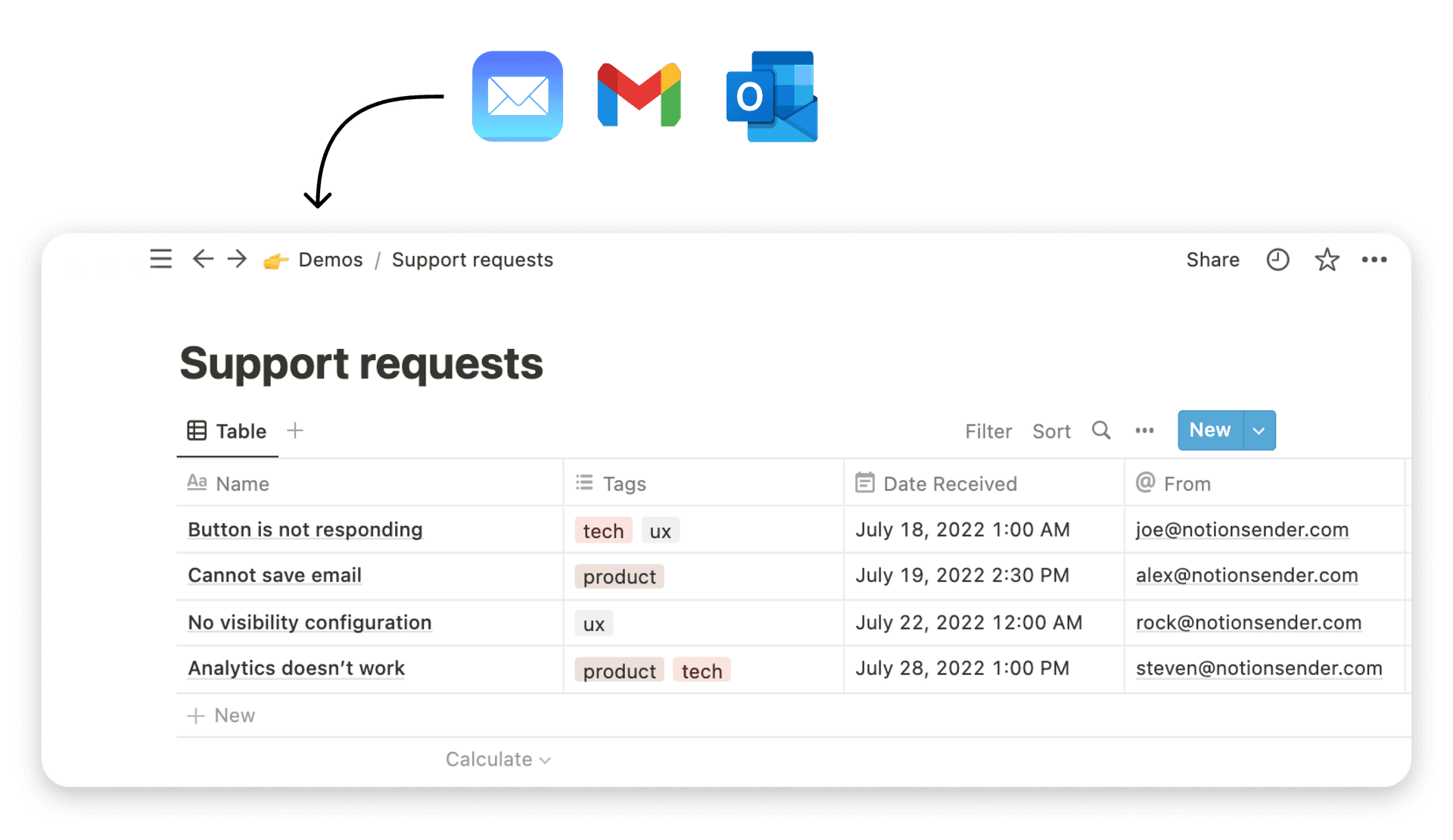
NotionSender stands out as a powerful integration for bloggers who have already centralized their content planning and operations within Notion. It transforms your workspace into a functional email client, eliminating the constant back-and-forth between your project hub and a separate email application. This tool is a prime example of effective workflow consolidation, making it one of the most practical apps for bloggers aiming for maximum efficiency.
Its core function is to assign a unique email address to any Notion database. This simple yet potent feature allows you to automatically save incoming emails directly into Notion as structured data. Instead of manually copying information from invoices, guest post inquiries, or collaboration requests, NotionSender parses and populates this data into your database properties, complete with attachments and sender details.

Key Strengths and Use Cases
The real advantage lies in its two-way communication. You can not only receive but also compose and send emails directly from a Notion page. By using dynamic templates that pull from page properties (like {{page.property}}), you can automate personalized outreach, follow-ups, or even newsletter dispatches. Imagine a "Guest Posts" database where changing a page's status from "Pitched" to "Accepted" automatically triggers a pre-written thank you email to the editor.
AI-powered property extraction further solidifies its value. The system can identify and pull key data like invoice numbers, meeting links, or contact details from an email body and place them into the correct Notion properties. This converts unstructured email content into an organized, searchable, and actionable database, perfect for managing freelance finances or coordinating project timelines. For a detailed guide, you can learn how to create and send email from Notion to see the workflow in action.
Pricing and Limitations
| Tier | Price | Key Features & Limits |
|---|---|---|
| Free | $0/month | Up to 100 saved emails & 50 sent emails per 31 days. |
| Premium | $19/month | Up to 10,000 saved & 5,000 sent emails, scheduling, AI extraction, custom sender, unlimited inboxes. |
Pros:
- Centralizes all email communication directly within your Notion workspace.
- AI-powered data extraction automates the tedious task of manual data entry.
- Allows sending emails with dynamic templates and scheduling based on database triggers.
- Extremely fast, no-code setup that takes less than a minute.
Cons:
- The free plan is quite restrictive, making the Premium plan necessary for active bloggers.
- Advanced features like scheduling and custom sender verification are behind the paywall.
- Attachment size is currently capped at 10 MB.
Website: https://www.notionsender.com
2. WordPress.org
While not a standalone "app" in the traditional sense, WordPress.org is the foundational platform upon which millions of successful blogs are built. It’s an open-source Content Management System (CMS) that grants you complete ownership and control over your digital presence. Unlike hosted platforms like WordPress.com or Squarespace, this self-hosted version means you choose your own web host, giving you the freedom to build a truly custom blogging machine.

The primary reason WordPress.org is essential for serious bloggers is its unparalleled flexibility. The massive ecosystem of plugins allows you to add nearly any functionality imaginable, from advanced SEO with tools like Yoast SEO to e-commerce storefronts with WooCommerce. This makes it one of the most powerful apps for bloggers who have a long-term growth strategy. You are never locked into a specific feature set or design limitation.
Key Features & Considerations
- Pricing: The WordPress software itself is free. However, you are responsible for costs associated with domain registration (around $10-$20/year) and web hosting (starting from $3-$15/month and up).
- Pros: Its key advantages are near-infinite customization, a massive support community, and complete data ownership. You control your content, design, and monetization without platform-imposed restrictions.
- Cons: The biggest downside is the learning curve. You must manage your own hosting, security updates, and backups, which can be intimidating for beginners. The quality of third-party plugins and themes can also vary widely.
Website: https://wordpress.org
3. Ghost (Ghost.org)
Ghost is a fast, modern publishing platform built for writers and creators who want to build a direct relationship with their audience. It combines a clean, minimalist blog with powerful, natively integrated newsletter and membership functionalities. This all-in-one approach is its main draw, allowing you to launch a blog, build an email list, and offer paid subscriptions without needing to piece together multiple third-party tools.

Unlike traditional platforms that require plugins for monetization, Ghost has this functionality at its core. Every blog post can be sent as an email newsletter, and you can easily gate content for free members or paying subscribers. This makes it one of the most effective apps for bloggers focused on building a membership-based business or a paid newsletter. Its focus on speed and a clean writing experience removes distractions, helping you concentrate on creating great content.
Key Features & Considerations
- Pricing: Ghost offers a managed hosting service, Ghost(Pro), starting at $9/month (billed annually) for up to 500 members. It can also be self-hosted, where the software is free, but you pay for your own server.
- Pros: The primary benefits are the built-in membership and newsletter system, excellent site performance, and a beautiful, distraction-free editor. It provides a simple, direct path to monetizing an audience.
- Cons: The customization options are more limited than WordPress. Its theme and integration ecosystem is smaller, and achieving complex designs or functionalities might require a developer.
Website: https://ghost.org
4. Squarespace
For bloggers who prioritize sophisticated design and ease of use over deep customization, Squarespace is a top-tier choice. This all-in-one, hosted website builder removes the technical headaches of managing a server, allowing you to focus purely on creating content. Its reputation is built on award-winning, designer templates that ensure your blog looks professional and mobile-responsive right out of the box, with minimal effort.

Squarespace stands out by offering a curated, closed ecosystem. This means every feature, from the blogging engine and basic SEO tools to its built-in analytics and email marketing add-ons, is designed to work together seamlessly. While it doesn't have the vast plugin library of WordPress, this streamlined approach makes it one of the best apps for bloggers seeking a quick launch and low-maintenance platform. You trade infinite flexibility for reliability and a polished, consistent user experience.
Key Features & Considerations
- Pricing: Plans that include blogging features start at around $16/month (billed annually). This fee includes hosting, security, and a custom domain for the first year.
- Pros: It is exceptionally fast to get a site live and incredibly easy to maintain. The visual editor is intuitive, and the mobile-ready design system provides a consistent, high-quality look. You never have to worry about server updates or plugin conflicts.
- Cons: The platform is less extensible than an open-source CMS like WordPress. The app and extension ecosystem is much smaller, and you have less control over underlying code or specific functionality.
Website: https://www.squarespace.com
5. Substack
Substack positions itself as a newsletter-first publishing platform, making it an excellent choice for bloggers who want to build a direct relationship with their audience through email. It combines a simple blog-like interface with powerful newsletter and subscription tools, removing the technical friction often associated with setting up a paid membership. This focus on monetization through subscriptions makes it a standout platform for writers and creators looking for a direct revenue stream.

The platform's primary appeal is its simplicity and built-in network. You can start a publication, import an existing email list, and begin publishing free or paid content in minutes. Unlike building a membership on a self-hosted site, Substack handles the payment processing and delivery infrastructure for you. Its integrated recommendation system can also help new readers discover your work, making it one of the most accessible apps for bloggers focused on community building and direct monetization.
Key Features & Considerations
- Pricing: Free to publish. For paid newsletters, Substack takes a 10% platform fee from subscription revenue, in addition to Stripe’s standard processing fees.
- Pros: The setup for paid subscriptions is incredibly easy, with no monthly platform fees for free publications. The network effect can significantly help with discovery and audience growth.
- Cons: You have limited control over design and branding compared to a full CMS. The 10% platform fee on paid subscriptions can become a substantial cost as your revenue grows, and you don't fully own the platform your business is built on.
Website: https://substack.com
6. Kit (formerly ConvertKit)
Kit, which many bloggers know by its former name ConvertKit, is a powerful email marketing platform designed specifically for creators. Its main purpose is to help you turn casual blog readers into a loyal audience and paying customers. It moves beyond simple newsletters, offering a suite of tools to manage your audience, sell digital products, and automate your communication, all from one central hub.

What makes Kit one of the essential apps for bloggers is its creator-centric approach. Instead of complex, corporate-focused features, it provides intuitive visual automation builders, simple landing page creators, and built-in commerce options. This focus allows you to build sophisticated email funnels and monetize your audience without needing a dozen different tools. To expand its capabilities and connect it with other platforms in your blogging stack, you can explore ConvertKit integrations to sync data with your CMS, e-commerce stores, and other apps.
Key Features & Considerations
- Pricing: Offers a free plan for up to 1,000 subscribers with limited features. Paid plans (Creator and Creator Pro) start at $9/month and scale up based on your subscriber count, unlocking automations, free migrations, and advanced reporting.
- Pros: The platform is known for its user-friendly interface, powerful tagging and segmentation, and built-in sales tools for digital products and paid newsletters. The visual automation builder is a standout feature for creating personalized subscriber journeys.
- Cons: The price can become a significant expense as your email list grows. While it offers landing pages, it lacks the full website-building capabilities of a dedicated CMS.
Website: https://kit.com
7. Canva
Professional-looking visuals are non-negotiable for a successful blog, but not every blogger has the budget for a graphic designer or the time to master complex software like Adobe Photoshop. Canva fills this gap perfectly. It’s a user-friendly, browser-based design platform that empowers you to create stunning blog graphics, featured images, social media posts, infographics, and even simple videos with a simple drag-and-drop editor.

The core strength of Canva lies in its accessibility and speed. You can start with a professionally designed template, customize it with your brand colors and fonts, and produce a polished asset in minutes. This makes it one of the most indispensable apps for bloggers who need to consistently produce high-quality visual content for their posts and promotional channels. Features like the Brand Kit and Magic Resize (Pro) further speed up the workflow by keeping your assets on-brand and ready for any platform.
Key Features & Considerations
- Pricing: Canva offers a robust free version with plenty of templates and design assets. Canva Pro (starting around $12.99/month) unlocks premium templates, a larger stock media library, the background remover, Brand Kits, and the content planner.
- Pros: It’s incredibly fast for producing on-brand visuals with a minimal learning curve. The massive template library is a huge time-saver, and collaboration features make it great for teams.
- Cons: Advanced design control is limited compared to professional suites like Adobe Illustrator. Users must also pay close attention to asset licensing rules, especially when using free elements for commercial purposes.
Website: https://www.canva.com
8. Grammarly
No blogger’s toolkit is complete without a powerful editor, and Grammarly serves as an AI-powered safety net for your writing. It goes far beyond basic spell-checking to offer real-time suggestions on grammar, punctuation, clarity, and tone. For bloggers juggling multiple articles, it’s an essential final check before hitting publish, ensuring your content is professional and error-free.

What makes Grammarly one of the most effective apps for bloggers is its seamless integration. It works directly within your browser, email client, and even desktop apps like Google Docs and Microsoft Word. This means you get consistent editing support whether you’re drafting a blog post, writing a newsletter, or replying to comments. The ability to set a desired tone (e.g., "confident," "informative") helps maintain a consistent voice across all your content.
Key Features & Considerations
- Pricing: A robust free version provides critical grammar and spelling corrections. Premium plans (starting around $12/month) unlock advanced features like tone adjustments, clarity rewrites, and plagiarism detection.
- Pros: Its primary strengths are its powerful proofreading capabilities and its ability to work across almost any platform you write on. The tone detector is especially helpful for keeping your brand voice consistent.
- Cons: It is not a replacement for human editing, especially for subject-matter accuracy or complex narrative flow. Some users may find the AI-driven sentence rewrites to be too assertive or unnatural without careful review.
Website: https://www.grammarly.com
9. Surfer SEO
Surfer SEO moves beyond basic keyword suggestions and provides a data-driven blueprint for creating content that ranks. It analyzes the top-ranking pages for your target keyword and generates a detailed set of guidelines for your article. This includes recommended word count, key terms and phrases to include, heading structure, and more, all within a real-time content editor. It essentially reverse-engineers what Google is already rewarding for a specific search query.

The primary power of Surfer SEO lies in taking the guesswork out of on-page optimization. Instead of just hoping your content is thorough enough, you get a measurable score and actionable feedback. For bloggers who are serious about competing in search results, it's one of the most effective apps for bloggers to ensure their content meets the standards set by top competitors. Integrations with Google Docs and WordPress also mean you can optimize directly within your existing workflow.
Key Features & Considerations
- Pricing: Plans start at around $89/month for the Essential plan, with higher tiers offering more features, team seats, and content editor credits.
- Pros: It provides actionable, measurable on-page recommendations that are easy to follow. This significantly speeds up the creation of content briefs and the optimization process. Helpful integrations for common writing platforms are a major plus.
- Cons: The platform's effectiveness still relies on human editorial judgment to create quality content; you can't just "stuff" the recommended terms. The credit-based system for content editors and audits can become costly for prolific content teams.
Website: https://surferseo.com
10. Yoast SEO (for WordPress)
For bloggers using WordPress, managing Search Engine Optimization (SEO) can feel like a daunting technical challenge. Yoast SEO simplifies this process by integrating a powerful suite of SEO tools directly into your WordPress dashboard. It acts as an on-page guide, analyzing your content in real-time and providing actionable feedback to improve its visibility on search engines like Google. This makes it one of the most essential apps for bloggers looking to drive organic traffic without needing a deep technical background.

The plugin's standout feature is its "traffic light" system, which gives you clear, color-coded scores for both SEO and readability. Yoast checks for focus keyphrase usage, meta description length, internal links, and image alt attributes, among other factors. It also automatically generates XML sitemaps and adds schema markup to your site, helping search engines understand your content's structure. This built-in guidance is invaluable for ensuring every post is optimized before you hit "publish."
Key Features & Considerations
- Pricing: The core plugin is free and offers substantial functionality. Yoast SEO Premium starts at $99/year per site, adding features like a redirect manager, internal linking suggestions, and support for multiple keyphrases.
- Pros: Its clear traffic-light guidance for posts is very intuitive for beginners. The plugin reduces the need for separate tools to handle technical SEO basics like sitemaps and schema. It also offers excellent documentation and training resources.
- Cons: Relying solely on its checklist can lead to a formulaic approach; a genuine SEO strategy still requires more than just green lights. The premium version is licensed per site, so costs can accumulate if you manage multiple blogs.
Website: https://yoast.com/wordpress/plugins/seo/
11. Buffer
Once your blog post is published, the work isn't over; promotion is the next critical step. Buffer simplifies this process by providing a clean, straightforward platform for social media scheduling, analytics, and engagement. It allows bloggers to plan and queue up content across multiple channels like X (formerly Twitter), Facebook, LinkedIn, Instagram, and Pinterest from a single dashboard, ensuring a consistent promotional cadence without being tethered to your accounts 24/7.
The platform’s core strength lies in its simplicity and efficiency. For solo bloggers or small teams who don't need the complexity of an enterprise-level suite, Buffer offers the perfect balance of features and usability. Its browser extension makes it easy to share content you find online, while the built-in analytics provide clear insights into post performance. This makes it one of the most accessible apps for bloggers looking to build a social media presence around their content.
Key Features & Considerations
- Pricing: Buffer offers a free plan for up to 3 channels and 10 scheduled posts per channel. Paid plans start at $6/month per channel, unlocking more features and a larger post queue.
- Pros: The user interface is exceptionally clean and easy to adopt. It provides solid, post-level analytics and scales well as you add new social media channels to your strategy. The built-in URL shortener and mobile apps are also great for on-the-go management.
- Cons: It lacks the deep competitor analysis or social listening features found in more advanced tools like Sprout Social. The per-channel pricing model can become expensive if you manage a large number of accounts.
Website: https://buffer.com
12. Google Analytics (GA4)
If you don’t measure your blog’s performance, you can’t improve it. Google Analytics is the industry-standard tool for understanding exactly how readers find and interact with your content. It provides critical data on traffic sources, user behavior, and audience demographics, allowing you to make informed decisions about your content strategy instead of just guessing what works.
The latest version, GA4, shifts the focus from pageviews to an event-based model, which is better suited for tracking modern user journeys across devices. For bloggers, this means you can see which posts drive newsletter sign-ups, how many users read a full article, or which referral channels bring the most engaged audience. Integrating it with Google Search Console is a must, as it combines behavioral data with search performance insights, making it one of the most powerful apps for bloggers looking to achieve sustainable growth.
Key Features & Considerations
- Pricing: The standard version of Google Analytics is completely free. Enterprise-level sites may require the paid Google Analytics 360, but this is unnecessary for the vast majority of bloggers.
- Pros: It provides professional-grade analytics at no cost, integrates deeply with other Google products like Search Console and Ads, and offers a wealth of community support and free training resources.
- Cons: GA4 has a significant learning curve compared to its predecessor, Universal Analytics. Properly configuring privacy settings and understanding the new event-based reports can be a challenge for beginners.
Website: https://analytics.google.com
12 Blogging Apps — Quick Comparison
| Product | Core features ✨ | UX / Quality ★ | Price / Value 💰 | Best for 👥 | Key USP |
|---|---|---|---|---|---|
| NotionSender 🏆 | Send/receive/save emails in Notion; unique inbox per DB; AI property extraction | ★★★★☆ seamless, Notion-native | 💰 Free / $19‑mo Premium | 👥 Notion users, SMEs, PMs | ✨ No-code inbox per DB + AI parsing |
| WordPress.org | Open-source CMS, themes & plugins, full control | ★★★★☆ powerful but DIY | 💰 Free core + hosting & maintenance | 👥 Developers, publishers, agencies | ✨ Unlimited customization & portability |
| Ghost (Ghost.org) | Publishing + built-in newsletters & memberships | ★★★★☆ fast, minimalist | 💰 Self‑host free / Ghost(Pro) paid | 👥 Writers, paid-content creators | ✨ Native newsletter + monetization |
| Squarespace | Hosted site builder, templates, commerce | ★★★★☆ polished, low maintenance | 💰 Plans from ~$16/mo | 👥 Creatives, small businesses | ✨ Designer templates + managed hosting |
| Substack | Newsletter-first platform with payments & discovery | ★★★★☆ extremely simple | 💰 Free (platform fees on paid subs) | 👥 Indie writers, newsletter creators | ✨ Built-in audience discovery & paywalls |
| Kit (ConvertKit) | Email marketing, automations, landing pages | ★★★★☆ creator-centric | 💰 Free tier; pricing by subscribers | 👥 Creators, bloggers selling products | ✨ Simple automations + commerce tools |
| Canva | Drag-and-drop design, templates, brand kits | ★★★★☆ very easy to use | 💰 Free / Pro ~$12‑$15‑mo | 👥 Marketers, bloggers, teams | ✨ Fast on-brand visuals & templates |
| Grammarly | Real-time grammar, tone, clarity suggestions | ★★★★☆ reliable across apps | 💰 Free / Premium ~$12‑$30‑mo | 👥 Writers, editors, professionals | ✨ Instant writing clarity & tone fixes |
| Surfer SEO | Content editor, topic research, audits | ★★★★☆ data-driven guidance | 💰 Paid plans / credit usage | 👥 SEO/content teams | ✨ Competitor-based on-page recommendations |
| Yoast SEO (WP) | On-page checks, sitemaps, schema | ★★★★☆ clear, actionable | 💰 Free / Premium per-site | 👥 WordPress bloggers & SEOs | ✨ Traffic‑light on-page guidance |
| Buffer | Social scheduling, analytics, queueing | ★★★★☆ simple & reliable | 💰 Free / paid tiers | 👥 Social managers, small teams | ✨ Easy multi-channel scheduling |
| Google Analytics (GA4) | Event-based analytics, cross-device reports | ★★★☆☆ powerful, steeper learning | 💰 Free (standard) / enterprise paid | 👥 Marketers, analysts, site owners | ✨ Industry-standard analytics & integrations |
Building Your Perfect Blogging Stack
Navigating the crowded market of apps for bloggers can feel overwhelming, but the goal is not to adopt every tool available. Instead, the real power lies in building an integrated, efficient system, or what we call a "blogging stack." This involves selecting a core set of applications that work together to support your specific goals, turning a collection of disconnected software into a cohesive content engine.
The apps we've detailed, from foundational platforms like WordPress.org and Ghost to specialized tools like Surfer SEO and Grammarly, each solve a distinct problem. The key is to see them as interconnected parts of a larger workflow. For example, your process might begin with content planning in Notion, move to writing in a distraction-free editor, and then involve optimization with Yoast SEO before you even hit publish. This structured approach prevents wasted time and reduces the friction of context switching between different tasks.
How to Choose Your Core Apps
Your ideal stack depends entirely on your objectives and resources. There is no one-size-fits-all solution. To find your perfect fit, start by answering a few critical questions:
- What is my primary goal? Are you focused on maximizing organic search traffic (a WordPress + Surfer SEO stack might be best), building a dedicated community through a paid newsletter (Ghost + Kit could be your core), or establishing a personal brand with visually rich content (Squarespace + Canva may be ideal)? Your main objective should dictate your most important tool investments.
- What is my budget? Many of the most powerful apps for bloggers come with a subscription fee. Be realistic about your budget. Start with free versions or trials to validate a tool's usefulness before committing financially. Tools like Google Analytics and the free version of Canva offer immense value without any cost.
- How important is integration? The most effective stacks feature tools that connect seamlessly. Before choosing an app, check its integration capabilities. Does it work with your content management system? Can it connect to your email provider? A well-integrated system saves hours of manual work. A tool like NotionSender, for instance, shines by bringing email communication directly into your Notion workspace, connecting your content planning with your outreach and subscriber management.
Putting It All Together: An Actionable Plan
Once you've identified your needs, it's time to build. Don't try to implement everything at once. Start with a foundational platform (like WordPress or Ghost) and add one or two essential tools for writing and analytics. Get comfortable with this core setup first.
As you grow, you can strategically add more specialized apps for SEO, social media scheduling, or advanced email marketing. Always test a new tool's impact on your workflow before fully committing. Remember, the purpose of these apps is to empower your creativity and efficiency, not to complicate your process. When constructing your ultimate toolkit, it's helpful to consider a broader range of options, such as the 12 Best Tools for Content Creators.
The journey of a successful blogger is one of continuous improvement, both in your content and in the systems you use to create it. The right stack of apps for bloggers will grow with you, providing the support you need to turn your ideas into impactful content that connects with your audience.
Ready to build a more connected and efficient blogging workflow? NotionSender bridges the gap between your content planning in Notion and your email communication. Send and receive emails directly from your Notion pages to manage guest post pitches, subscriber feedback, and outreach campaigns without ever leaving your workspace. Try NotionSender today and consolidate your content operations.