Your Ultimate Article About Blogging for Success in 2026

If you've ever wondered whether starting a blog in 2026 is a waste of time, I get it. With a constant barrage of 30-second videos and disappearing social media stories, it’s easy to think the written word has lost its punch.
But the opposite is true. A blog isn't just relevant; it's the single most powerful asset you can own for your brand, business, or freelance career.
Why Blogging Is Still Your Strongest Asset in 2026
Think of social media platforms as rented apartments in a massive, noisy complex. You're at the mercy of the landlord's (the algorithm's) whims, the rules can change overnight, and you're constantly fighting for attention.
Your blog? That's your own piece of digital real estate. You own it. You build it. You control the entire experience, from the welcome mat to the back office. It's the strategic headquarters for your voice and expertise.
The Evolution from Journal to Powerhouse
Blogging has come a long, long way from its early days as a simple online diary. What started as personal logs has transformed into a cornerstone of modern business strategy. The numbers alone tell a staggering story. Back in mid-2006, the web was home to about 70 million blogs. Today, that number has skyrocketed to over 600 million active blogs.
This isn't just noise. Bloggers publish a mind-boggling 2.7 billion articles each year, and an incredible 83% of internet users (that's roughly 4.4 billion people) are actively reading them. You can dive deeper into these stats over at the Blog Herald. This shift proves why blogging is a non-negotiable for anyone serious about building a presence online.
A well-crafted blog is the engine for consistent organic traffic, deep authority, and genuine audience relationships that short-form content simply can't replicate. It elevates your visibility, fosters real connections, and drives meaningful action.
The Unmatched Benefits of Owning Your Platform
So, what makes a blog such a critical asset? It's about building a central hub that feeds every other part of your marketing.
-
Builds Lasting Authority: Publishing thoughtful, in-depth articles consistently positions you as an expert. It's the difference between shouting in a crowd and delivering a keynote speech. Trust and credibility are built here.
-
Drives Organic Traffic: A blog is your secret SEO weapon. Every article is another fishing line in the vast ocean of Google, catching people who are actively searching for the solutions you provide. It’s a machine that brings a steady stream of free, qualified traffic to your digital doorstep.
-
Generates High-Quality Leads: The data doesn't lie: companies with active blogs generate a whopping 67% more leads than those that don't. Your content attracts people who are already problem-aware and solution-seeking, making them far more likely to become customers.
-
Creates Genuine Connection: A blog is where you can move beyond superficial interactions. It’s the space to share your brand's personality, tell compelling stories, and explain your mission. This is how you turn casual readers into a loyal community of fans and advocates.
How to Find Your Niche and Build a Content Strategy
Starting a blog without a niche is like setting up a shop in a giant mall with no sign on the door. You might have fantastic stuff inside, but nobody knows what you're selling or why they should walk in. A niche is your specialty; it’s what turns a generic stall into a focused boutique that pulls in the right kind of customer.
Think about it. A "food blog" is incredibly broad. But what about a "vegan baking blog for busy parents"? Now you're talking. That specificity immediately tells a particular group of people, "This is for you," helping you build a dedicated audience from day one.
Validating Your Niche Idea
Before you dive in, you need to make sure your niche has legs. A solid niche usually lives at the crossroads of three things. Here’s a simple framework to test your idea.
-
Passion and Expertise: You have to be genuinely interested in this. Blogging is a marathon, and your own excitement is the fuel that will keep you going. You don't need to be the world's top expert, but you need enough knowledge—or at least enough curiosity—to create solid content for the long haul.
-
Audience Demand: Are people actually looking for information on this topic? Use free tools like Google Trends or AnswerThePublic to see if there's a conversation happening. If nobody is searching for what you’re writing about, finding readers will be an uphill battle.
-
Monetization Potential: How could this blog eventually make money? Think about whether there are products you could recommend (affiliate marketing), services you could sell (like consulting or coaching), or digital goods you could create (ebooks, templates, etc.). A clear path to making money is what makes a blog sustainable.
Building Your Content Strategy Foundation
Okay, so you've nailed down a promising niche. What's next? Building your content strategy. This is more than just a list of blog post ideas; it's your plan for how you'll attract, engage, and keep your ideal reader coming back for more. It's what turns random articles into a predictable growth machine.
This is the process that shifts your blog from being a simple hobby to a real business asset. The flowchart below maps it out, showing how everything flows from your content to generating traffic and, finally, building authority.

As you can see, it all starts with your blog. That’s the engine. From there, you drive traffic and establish yourself as an expert. This is why a well-planned blog is so powerful.
The numbers back this up, especially for businesses. Companies with active blogs generate 67% more leads, see 55% more website traffic, and pull in 97% more inbound links. The ROI is there, too—marketers who make blogging a priority see a 13x better return on their investment. Popular niches like food, which accounts for 42.8% of high-traffic blogs, are a testament to how well a focused strategy can work.
Your content strategy is the roadmap that guides your readers from being strangers to becoming loyal fans. It ensures every article you publish has a clear purpose and contributes to your long-term goals.
Creating Content Pillars and Keyword Clusters
To give your strategy some structure, start by defining 3-5 core content pillars. These are the big, overarching topics within your niche. For our "vegan baking blog for busy parents," the pillars might be:
- Quick 30-Minute Desserts
- Lunchbox-Friendly Snacks
- Allergy-Friendly Baking
Next, you'll want to do some basic keyword research for each pillar to create keyword clusters. These are just groups of related search terms that your audience is using. For the "Quick 30-Minute Desserts" pillar, you might find clusters around terms like "easy vegan mug cake," "no-bake vegan cookies," and "quick plant-based brownies."
This pillar-and-cluster approach does two things. First, it ensures you cover your topic from all angles, making your blog the go-to resource. Second, it signals your expertise to search engines, which helps you rank higher over time. For more tips on putting together great articles, check out the other guides on our blog.
The Recipe for Writing High-Ranking Blog Posts
Alright, let's move from planning your blog to actually writing it. This is where your ideas start to take shape. Writing a blog post that both people and search engines love isn't some dark art; it's more like following a recipe. Every ingredient matters.
Think of it like this: a great post starts with a killer headline, delivers real value in the body, and wraps up in a way that leaves the reader satisfied. Get the formula right, and you’ll create content that not only reads well but also performs brilliantly in search results.

This recipe approach is your key to consistent, high-quality content.
Writing Headlines That Get Clicks
Your headline is everything. It's the first thing anyone sees, and its only job is to earn that click. You could write the most amazing article in the world, but a weak headline will make it invisible.
The numbers don't lie. On average, 8 out of 10 people read a headline, but only 2 out of 10 click through to read the rest. That’s how much power your title holds.
Good headlines are specific, promise a clear benefit, and spark a little curiosity. If you're stuck, try starting with one of these proven formats:
- The "How-To" Post: "How to Start a Blog and Make Money in 6 Months"
- The List Post: "15 Common Blogging Mistakes You Need to Avoid"
- The "Why" Post: "Why Long-Form Content Still Dominates SEO in 2026"
- The Question Post: "Are You Making These Email Marketing Errors?"
Structuring Your Post for People and Search Engines
Once you’ve hooked them with the headline, your article needs to be easy to read. People don't read online; they scan for information. Your job is to make your content as scannable as possible.
This is where on-page SEO comes in. Don't worry, it's not as technical as it sounds. On-page SEO is just about adding clear signposts so search engines like Google can understand what your article is about and who it’s for.
Think of on-page SEO as organizing your content for both humans and search engine robots. When you make your article easy to navigate, you give it a much better chance of ranking.
The table below breaks down the key components of a well-structured post that performs well.
Anatomy of a High-Performing Blog Post
This table shows you the key pieces of a great blog post. Think of it as your checklist for making sure every article you publish is set up for success, both for your readers and for SEO.
| Component | Purpose | Best Practice |
|---|---|---|
| Introduction | Hooks the reader and sets the stage. | Start with a relatable problem or surprising stat. Tell the reader exactly what they'll learn. |
| H2/H3 Subheadings | Breaks up text and creates a scannable outline. | Use descriptive, keyword-focused headings to guide the reader through the article's main points. |
| Short Paragraphs | Improves readability by creating white space. | Keep paragraphs to 1-3 sentences. This makes the text feel less overwhelming on a screen. |
| Internal & External Links | Provides more context and builds authority. | Link to other relevant articles on your blog and to credible, outside sources to add depth. |
| Visuals (Images, Tables) | Enhances understanding and keeps readers engaged. | Use quality images, charts, and tables to illustrate concepts and break up long sections of text. |
By building your posts with these elements, you create a much better experience for everyone, which is exactly what search engines want to see.
The Power of In-Depth, Fresh Content
So, how long should a blog post be? The simple answer: as long as it needs to be to cover the topic completely. Time and again, data shows that longer, in-depth articles—often over 2,000 words—tend to rank higher in search results.
These comprehensive guides are seen as more authoritative and attract more links from other websites, which are huge signals for Google.
Also, your job isn't over when you hit publish. Go back and update old content. Adding new information, updating stats, and fixing broken links tells Google your content is still fresh and relevant, which can give it a serious rankings boost.
As you plan your content, a crucial first step is to learn how to find low competition keywords. Targeting the right topics from the start gives your articles the best possible chance to rank.
Effective Strategies to Promote Your Blog and Grow Your Audience
<iframe width="100%" style="aspect-ratio: 16 / 9;" src="https://www.youtube.com/embed/GPz42m1kr84" frameborder="0" allow="autoplay; encrypted-media" allowfullscreen></iframe> Hitting ‘publish’ on a fantastic article is a huge win, but your job is only half done. Think of it this way: a chef can perfect an incredible new recipe, but if they never open their restaurant doors, nobody will ever get to taste it. Blog promotion isn't about just yelling into the internet; it's about putting your content right where your ideal readers are already hanging out.
Without a solid promotion plan, even the most brilliant post will just get lost in the noise. And there's a lot of noise. With over 7.5 million blog posts going live every single day, you need a real strategy to get noticed and build momentum.
Build Your Most Valuable Asset: Your Email List
From the moment your blog is live, your number one priority should be building an email list. Seriously. Social media algorithms can change overnight, but your email list is a direct line to your biggest fans—it's the one audience you truly own.
These are people who willingly gave you their email and said, "Yes, I want to hear more from you." That level of permission is priceless.
An email list is the bedrock of a successful blog. It lets you skip the unpredictable social media game and talk directly to people who are genuinely interested in your work.
The best way to get started is by offering something valuable for free in exchange for an email address. We call this a "lead magnet."
- A Simple Checklist: A one-page PDF can be incredibly useful, like a "Blog Post Pre-Publish Checklist."
- An Exclusive Template: Offer a Notion or Google Docs template, like a "Beginner's Content Calendar."
- A Mini-Email Course: Set up a 3-5 part automated email series that teaches a specific, valuable skill.
This approach gives new readers an instant win and makes them happy to subscribe. As your list gets bigger, you’ll want to learn how to increase your open rates with smart email marketing tricks to make sure your messages get read.
Develop a Multi-Channel Promotion Checklist
Consistency is everything in promotion. If you create a simple checklist to run through every time you publish, you'll turn promotion from a stressful chore into a repeatable system for growth.
Here’s a basic checklist you can steal and make your own:
-
Email Your Subscribers: This is always step one. Send a newsletter to your list announcing the new article. Don't just drop the link—tell them why it's valuable and what they'll get out of reading it.
-
Repurpose for Social Media: Never just post a link and call it a day. Pull out the key ideas from your article and create native content for each platform. That might be a carousel for Instagram, a short video for TikTok, a thread for X (formerly Twitter), or a polished post for LinkedIn.
-
Engage in Niche Communities: Find relevant Facebook groups, Slack channels, or subreddits where your audience spends time. Share your article as a genuinely helpful resource to solve a problem or answer a question, not as spam.
-
Conduct Blogger Outreach: Make a list of other bloggers in your niche who aren't direct competitors. Shoot them a friendly email to let them know about your new post. If it’s a great resource, they might just share it with their own audience or link back to it in the future. This is how you build real industry relationships and earn powerful backlinks.
How to Monetize Your Blog Sooner Than You Think
Let's bust the biggest myth in blogging: you do not need a massive audience to start making money. Too many new bloggers think earning their first dollar is a far-off dream, something reserved for sites with tens of thousands of readers. That’s just not how it works.
You can actually start generating revenue way earlier than you might expect. The secret is to pick a monetization strategy that fits your blog's current size and the trust you’ve built with your readers. It's a step-by-step process where different income streams open up as you grow.
Start Earning with Services and Expertise
The absolute fastest way to make money from a new blog—even one with less than 1,000 monthly visitors—is to sell your skills. Your first few articles are more than just posts; they’re a live portfolio that proves you know what you're talking about. This is a great way to attract clients for high-value services.
For instance, if you write about productivity for small businesses, you can immediately start offering one-on-one consulting. A food blogger could sell personalized meal plans. The blog content does the hard work of warming up potential clients, showing them your value before they even contact you.
Your first 100 loyal readers are more valuable than 10,000 passive visitors. Monetizing through services allows you to capitalize on that deep initial trust long before you have the numbers for other methods.
Selling your expertise directly like this has the highest earning potential for each client. It doesn't require huge traffic numbers—just a clear offer and an easy way for people to get in touch.
Graduate to Affiliate Marketing and Digital Products
Once your readership starts to pick up, you can introduce more scalable ways to earn. Affiliate marketing is the next logical step. It’s simple: you recommend products or tools you actually use and love, and you get a commission when someone buys through your unique link.
This only works if you’re authentic. Don't just pepper your posts with random links. Write helpful reviews, detailed tutorials, or comparison guides that help your audience solve a real problem. A tech blogger, for example, could create a definitive guide on "The Best Project Management Tools," with affiliate links to the software they recommend. It's effective because blogs are a trusted resource—in fact, nearly 40% of consumers report buying something after an influencer recommended it.
After you get a solid feel for your audience's biggest challenges, you can start creating your own digital products. This is when your blog really begins to feel like a business.
- Ebooks: Bundle your best articles into a single, comprehensive guide.
- Templates: Sell things like Notion dashboards, spreadsheet formulas, or design kits.
- Workshops or Courses: Offer a premium video course that goes much deeper than your free content.
When you sell your own products, you keep 100% of the profit and build incredible authority in your niche.
Scale with Ads and Sponsorships
Display ads and sponsored posts are what most people picture when they think of blog monetization, but they really only make sense at scale. Sure, you can put ads on your site from day one, but the income is tied directly to your traffic. You'll only see significant earnings once you hit at least 25,000-50,000 monthly pageviews.
- Display Ads: These are the banner ads you see on websites, managed by ad networks. You get paid based on every thousand views (what's known as CPM).
- Sponsored Posts: This is when a brand pays you to write an article featuring their product. It can pay very well, but you need a strong, engaged audience to land good partnerships.
Looking into various content monetization methods will show you all the possibilities out there. By starting with services, then slowly layering in affiliate links, digital products, and eventually ads, you build a realistic and sustainable path to turning your blog from a hobby into a real business.
Streamlining Your Workflow with a Blogging Command Center
Consistency is the absolute bedrock of a successful blog. But if you’re a busy entrepreneur or freelancer, you know the feeling—burnout is always just around the corner. Trying to juggle content ideas, scattered research notes, draft revisions, promotion schedules, and outreach emails is a recipe for overwhelm. The answer isn't to work longer hours; it's to build a smarter system.
Imagine a single, central hub where every task related to your blog has a home—a digital command center. This isn't just about tidying up; it's about creating a sustainable workflow where nothing important slips through the cracks. For a growing number of modern bloggers, that command center is built inside a flexible tool like Notion.
Building Your Blogging Hub in Notion
By using a tool like Notion, you can build an all-in-one dashboard to run your entire blogging operation. This brings everything together, transforming a chaotic process into a clear, manageable one.
Your command center can easily house several key parts:
- Content Calendar: See your whole publishing schedule at a glance, track posts from “Idea” to “Published”, and map out future content with ease.
- Research Repository: A place to clip articles, save links, and store stats in a database you can actually search. Your best ideas will always be right where you need them.
- Drafting Space: Write your articles directly inside your workspace, keeping them connected to all your research and outlines.
- Promotion Tracker: Set up simple checklists for every new post so you never forget a step in your promotion plan.
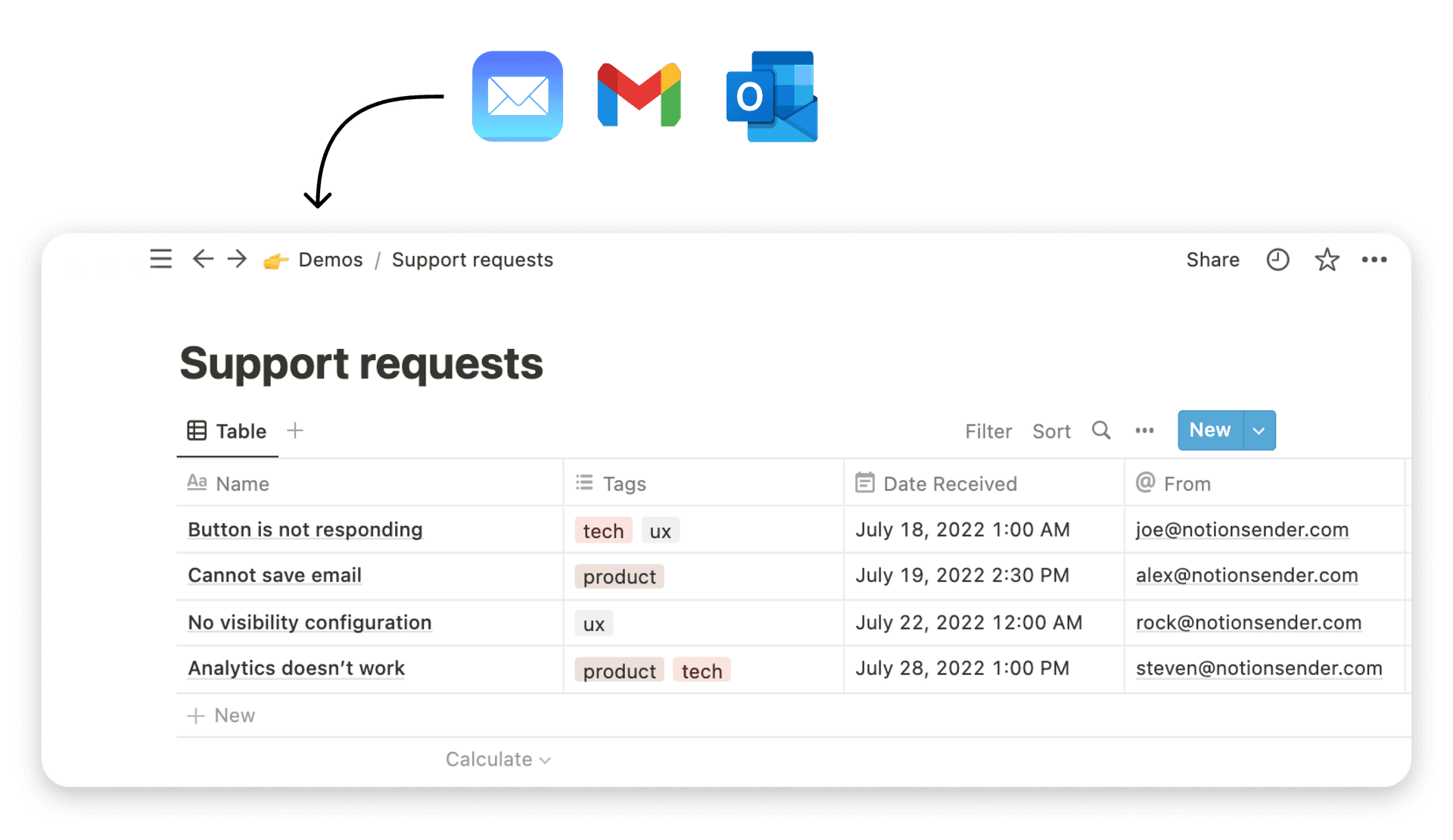
Here’s what a clean, integrated workspace can look like, pulling all your blogging tasks into a single view.

This unified setup stops the endless switching between dozens of apps, saving you a ton of time and mental energy.
Automating Communication from Your Command Center
The real magic starts when you can automate tasks right from your command center. This is where tools designed to plug into your workspace, like NotionSender, completely change the game. Instead of exporting lists and manually sending emails, you can handle all your blog-related communications without ever leaving Notion.
Integrating your email workflow directly into your Notion command center transforms it from a static organizational tool into a dynamic productivity engine. It bridges the gap between content management and audience engagement.
Think about the possibilities. You finish an amazing article about blogging, and with just a few clicks inside your dashboard, you can schedule a newsletter blast to your entire email list. Need to pitch a guest post? Just pull up a template and send a personalized email right from your outreach tracker.
You can even dive into the 7 ways to use Notion to send emails to really dial in your process. This kind of integration turns a bunch of separate tasks into a smooth, automated system. That frees you up to focus on what you do best: creating great content.
Your Top Blogging Questions, Answered
Even with the best guide in hand, a few practical questions always pop up when you're getting started. Let's tackle some of the most common hurdles you might run into as you build out your blog.
Can I Really Make Money Blogging?
You absolutely can, but think of it as a long-term investment, not a get-rich-quick scheme. While some bloggers see a trickle of income in the first few months, it realistically takes 1-2 years to build a significant, reliable income stream.
In fact, most bloggers who earn over $50,000 a year have been consistently publishing for at least two years. Their first priority was building trust and establishing themselves as an authority. Your income is tied directly to the value you offer, so if you want to earn faster, consider offering a high-value service like consulting or freelance work instead of waiting for ad revenue to build up.
How Often Should I Publish New Posts?
Here’s the simple truth: consistency crushes frequency every time. It’s far better to publish one fantastic, in-depth article each week than it is to churn out three shallow posts that don't truly help anyone.
When you're just starting, pick a schedule you know you can stick with. For most new bloggers, that means publishing one or two posts per week. This rhythm helps you build a loyal audience and shows search engines that your site is a reliable source of fresh content.
Once you’re in a good groove, you can always adjust your publishing cadence based on your analytics and what your audience seems to want.
How Long Does It Take for a Blog Post to Rank on Google?
Patience is a blogger's best friend. For a brand-new site, it can easily take 3 to 6 months for a new post to start gaining any traction and ranking for its main keywords. Google needs time to find your content, figure out what it's about, and decide if it's a quality resource.
Several things can speed up (or slow down) this process:
- Website Authority: Older sites with a solid reputation tend to rank faster.
- Keyword Competition: It takes much longer to rank for popular, high-volume keywords.
- Content Quality: Google's main goal is to help users, so truly helpful and comprehensive content gets a major boost.
- Backlinks: When other reputable websites link to your post, it's a huge vote of confidence that can speed up ranking.
Your job is to focus on creating the single best resource on the internet for your chosen topic. The rankings will eventually follow that effort. Don't get discouraged by the initial silence; real success in blogging comes from showing up consistently and building a library of value over time.
Ready to stop juggling apps and build your own blogging command center? NotionSender integrates seamlessly with your Notion workspace, letting you manage your content and communications all in one place. Streamline your workflow and reclaim your focus by checking out NotionSender today.