A Profitable Write to Publish Content Workflow

The secret to a solid "write to publish" workflow is having a single source of truth. You need one central hub where every piece of content lives, from the initial spark of an idea all the way to the published article. This approach ends the chaos of scattered documents and messy cloud folders, creating a clear, predictable path for your work.
Build Your Content Command Center in Notion
Stop juggling Google Docs, spreadsheets, and random note-taking apps. The first move toward building a reliable publishing engine is to set up a master content database in Notion. This isn't just a digital filing cabinet; it's a dynamic workspace that brings much-needed structure and clarity to your entire content process.

Think of this as your operational headquarters for content. When you set it up right, you guarantee every idea is captured, developed, and perfectly aligned with your strategy before you even type the first sentence.
Setting Up Your Database Properties
A Notion database gets its real power from its properties. These are the columns that organize and add context to every single content idea, turning a simple list of titles into a rich, sortable dashboard.
Here are the properties I find essential for my own workflow:
- Status: This is the most important one. Use a
SelectorStatusfield with options like Idea, Outlining, Drafting, Ready for Review, and Published. It gives you a quick, at-a-glance view of your entire pipeline. - Target Keywords: I assign a primary and a few secondary keywords to each piece. This keeps my SEO efforts locked in and helps make sure the content actually gets found.
- Audience Persona: Who is this for? I use tags like Small Business Owner, Project Manager, or Freelancer to make sure my tone and message hit the mark every time.
- Publish Date: A simple
Dateproperty is crucial for planning your schedule. To really get the most out of this, you’ll want to learn how to create a social media content calendar to visualize all your deadlines.
By making these properties standard, you shift from being reactive to proactive. Every piece of content gets a clear purpose and a plan. For a deeper dive on this, check out our guide on the different ways to use Notion for email management and content sharing.
A well-structured Notion database is more than a list; it's a strategic tool. It forces you to think through the "why" behind each piece of content, not just the "what."
From Idea to Detailed Outline
With your database structure in place, you can start dropping in ideas. The real magic, though, happens when you take a simple idea and build it into a full-blown outline—all inside the same Notion page.
I’m a big fan of using Notion's toggle and checklist features for this.
I'll start by brainstorming the main talking points as a simple checklist. From there, I convert each point into a toggle heading. Inside each toggle, I can stash sub-points, research notes, statistics, or important links. This method keeps my outlines incredibly clean and lets me expand or collapse sections as I work. It’s a critical pre-writing step that ensures the final draft is coherent, valuable, and perfectly aligned with my original goal.
Alright, you've got your outline locked in. Now comes the fun part: turning that skeleton into something that breathes. This is where we shift from structure to substance and actually start writing.
My philosophy is simple: write to publish. Every single word should be there for a reason, either to help your audience or to cement your expertise. This is also where you really let your voice shine through.
Your brand voice is more than just the words you choose; it's the feeling behind them. Are you the straight-shooting technical expert, or are you the friendly guide? It all depends on who you're talking to.
When I'm writing for startup founders, for example, my tone is direct and encouraging. But if the audience is enterprise marketers, I switch gears. The approach becomes much more data-heavy, focusing on ROI and tangible outcomes.
The goal is consistency. Someone should be able to read a paragraph and know, "Ah, this is from [Your Brand]." That's how you build trust and become memorable.
Structure for Scannability and Retention
Let's be real: people don't read online articles word-for-word. They scan. If they hit a massive wall of text, they're gone.
That’s why structuring your draft for scannability isn't just a nice-to-have; it's a must.
Break your ideas into short, punchy paragraphs—one to three sentences is the sweet spot. Use subheadings to create a clear path for the reader, guiding them from one point to the next.
Key Takeaway: Your job isn't just to share information. It's to make that information incredibly easy to absorb. Good formatting is just as important as the words you write.
Think of it as creating a visual rhythm. Using blockquotes for key ideas, bullet points for lists, and bold text for important terms helps draw the eye to the good stuff. This shows you respect your reader's time and helps your message stick.
My Three-Stage Editing Workflow
Getting the first draft down is a huge milestone, but the real magic happens during editing. A truly polished, professional article is born from a solid revision process.
Over the years, I’ve landed on a simple but incredibly effective three-pass system to get my own work ready for the world.
-
First Pass: Flow and Clarity. I read the entire draft out loud. Seriously, try it. You'll immediately catch awkward sentences, clunky phrasing, or spots where your argument just doesn't connect. The goal here isn't to hunt for typos; it's all about making sure the story flows and the main point is impossible to miss.
-
Second Pass: Polish with Tools. Once the flow feels right, I let technology do some heavy lifting. I run the text through a tool like Grammarly. It's a lifesaver for catching those sneaky grammar mistakes, spelling errors, and punctuation goofs I might have glazed over. This pass is all about technical cleanup.
-
Third Pass: The Fresh Eyes Review. Finally, I hand it off. I send the draft to a colleague or a friend in the industry whose opinion I trust. A fresh set of eyes will always find something you missed, whether it's a tiny typo or a bigger gap in your logic. This step is priceless for catching those last few issues before hitting publish.
Bridge Content and Distribution with NotionSender
You’ve poured hours into getting that draft just right. It’s been polished, reviewed, and it’s finally ready to go. The absolute last thing you want is for all that hard work to get stuck in a messy, chaotic distribution process.
We’ve all been there—juggling guest post submissions, tracking feedback, and managing pitches across a dozen different email threads. It’s a fast track to burnout and, worse, missed opportunities. This is where you need to connect your pristine content hub in Notion to the outside world, turning your workspace from a static library into a dynamic publishing engine.
The goal is simple: stop chasing down information. Instead, you build a system that pulls all that crucial communication right into the same database where your content lives. This closes the loop between creation and distribution, forming the backbone of an effective write to publish strategy.
Before your content even gets to the distribution stage, it has to go through a solid editing cycle.

Think of it this way: every piece of content gets drafted, then polished, and finally reviewed. Only then is it truly ready for outreach and publishing.
Capture Opportunities Directly into Notion
Imagine a guest post opportunity lands in your inbox. What’s the usual routine? You probably copy the editor’s name, paste the submission guidelines into a note, create a task in your to-do list, and set a reminder. It’s a tedious, manual process just begging for something to get missed.
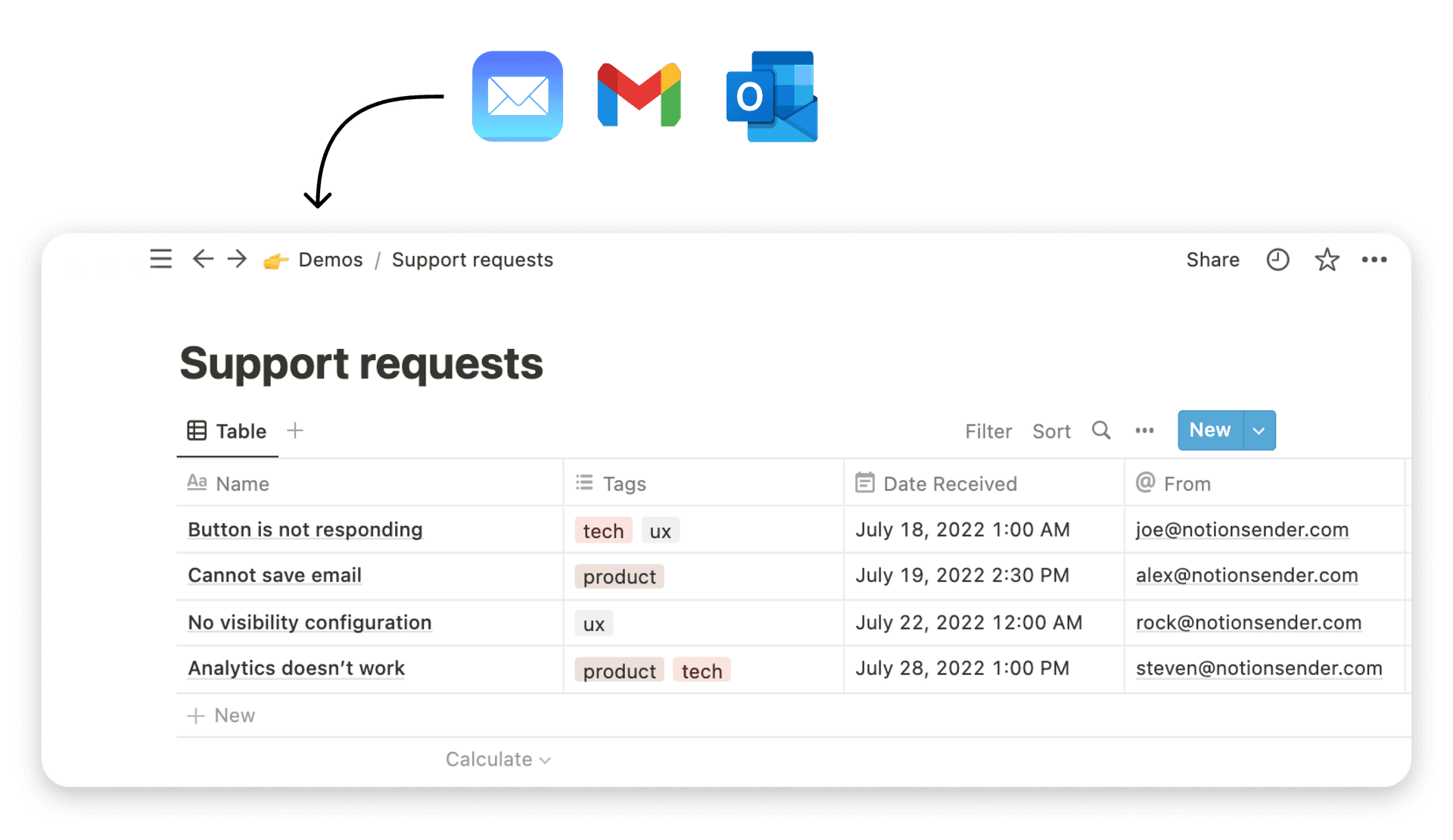
This is where a tool like NotionSender changes the game. By giving your content database its own unique email address, you can simply forward any relevant email straight to it. NotionSender then works its magic, automatically creating a new page in your database with the entire email thread captured inside.
This simple shift transforms your inbox from a source of constant stress into a pipeline for new opportunities. Every pitch, collaboration offer, or piece of feedback gets logged and organized without you lifting a finger.
Put Your Data to Work with Smart Extraction
Just capturing an email is a good start, but the real power comes from pulling the key details out of that email and organizing them for you. This is where smart data extraction saves you a massive amount of time.
You can set up rules to find specific information inside an email and automatically fill in your Notion properties.
- Contact Name: It can grab the sender's name and drop it into a "Contact" property.
- Submission Deadline: It will find phrases like "deadline is" or "due by" and populate your "Due Date" field.
- Publication: It can identify the blog or website's name and add it to a "Publication" property.
This means when you forward that guest post inquiry, you don’t just get a wall of text. You get a perfectly structured, actionable task with the contact info, deadlines, and publication details all sorted and ready to go. You can dive deeper into the specifics by checking out our guide on how to create and send emails directly from Notion.
The difference this automation makes is huge. Take a look at how it compares to handling everything by hand.
Manual vs. NotionSender Email Management
| Task | Manual Process | Process with NotionSender |
|---|---|---|
| Log a New Opportunity | Copy-paste email content into a new Notion page or task manager. | Forward the email to your database; a new page is created instantly. |
| Record Key Details | Manually find and enter the contact name, deadline, and publication. | Key details are automatically extracted and populate the correct properties. |
| Track Submissions | Switch between your email client and Notion to check on status updates. | All communication lives within the Notion page, creating a single source of truth. |
| Risk of Human Error | High. It's easy to mistype a date, forget to copy a detail, or lose an email. | Low. The process is automated, ensuring consistent and accurate data entry. |
This isn't just about saving a few minutes here and there. This system reclaims hours of admin work every month and, more importantly, makes sure nothing critical ever slips through the cracks. It turns your write to publish process into a well-oiled machine, freeing you up to focus on what actually matters: creating great content.
Automate Your Outreach and Distribution
<iframe width="100%" style="aspect-ratio: 16 / 9;" src="https://www.youtube.com/embed/cLojEjVHvVc" frameborder="0" allow="autoplay; encrypted-media" allowfullscreen></iframe>
Great content is only half the battle. If you've poured hours into your work, the last thing you want is for it to sit unnoticed. Getting it in front of the right audience is the other, equally important, half of the job.
But manual outreach is a classic bottleneck. It's slow, incredibly repetitive, and frankly, it pulls you away from the creative work you actually enjoy. This is where you can stop working in your content process and start working on it.
The answer is to automate your distribution, and this is where your Notion setup, supercharged by NotionSender, becomes a game-changer. You can build, personalize, and schedule your entire outreach strategy without ever leaving your content command center.
Build Personalized Email Templates in Notion
Tired of drafting the same pitch email over and over? You can build an entire library of go-to email templates right inside your Notion database, ready for any scenario.
Think about all the different kinds of outreach you do:
- Guest Post Pitches: A ready-made template to introduce your article idea to editors.
- New Content Alerts: A quick email to notify your subscribers that a new post is live.
- Collaboration Requests: A message to connect with potential partners or industry experts for joint projects.
The real magic happens when you use template expressions. These are just simple placeholders, like {{contactName}} or {{articleTitle}}, that NotionSender uses to pull data directly from your Notion database properties. When the email goes out, it automatically injects the correct information, so every single message feels personal and tailored, not like a generic blast. You can dig into the NotionSender API documentation to see just how deep the personalization can go.
Don't underestimate the power of this. Email is still one of the most effective channels out there, delivering a staggering $36 ROI for every $1 spent. It’s a non-negotiable part of any serious content strategy.
Schedule and Send Without Leaving Notion
Once your templates are set, the final piece of the puzzle is sending everything out without the manual busywork. You can schedule emails to be delivered at the perfect moment—whether that's landing a pitch in an editor's inbox first thing in the morning or sending your newsletter during peak engagement hours.
Your goal is to move from manual, one-off tasks to a repeatable, automated system. This frees up your creative energy and ensures your content consistently reaches the widest possible audience.
For example, you could set up a simple automation: when an article's status in your Notion database changes to "Published," it triggers an email campaign to your entire subscriber list. That's it. You’ve just closed the loop on your workflow, guaranteeing every piece you publish gets the promotion it deserves.
This systematic approach is what separates good content from impactful content. If you're creating long-form content, a solid webinar repurposing strategy can feed this automated engine for months. By building these systems, you execute your write to publish strategy with precision, squeezing maximum value out of every article.
Measure What Matters to Optimize Your Strategy
If you want to build a content engine that actually drives business, you have to stop guessing and start measuring.
Creating content without tracking its performance is like shouting into the void. You might be making noise, but you have no idea if anyone is listening or if you’re headed in the right direction. A solid write to publish workflow absolutely needs a feedback loop.

This is where your data comes into play. By keeping an eye on the right numbers, you can get a clear picture of what your audience really cares about. This lets you sharpen your strategy, put more effort into what works, and stop wasting time on content that falls flat.
Key Performance Indicators to Track
Your email service provider and website analytics are sitting on a goldmine of data. The real trick is knowing which numbers actually matter. Focusing on vanity metrics like follower counts won’t tell you much about real business impact.
Instead, zero in on these essential KPIs for your content and email campaigns:
- Open Rate: This is the percentage of subscribers who opened your email. It's a great indicator of how effective your subject lines are and how much your audience trusts you.
- Click-Through Rate (CTR): This tells you how many people clicked a link in your email or on your blog post. A healthy CTR means your content and call-to-action were genuinely compelling.
- Conversion Rate: This is the big one. It tracks how many people took the action you wanted them to take—signing up for a demo, downloading a guide, or buying a product.
These numbers are much more useful when you have benchmarks for comparison. For instance, some industry reports suggest healthy email lists can see 30-40% open rates. Top-tier automated campaigns can even hit a 3% conversion rate on a global scale. Seeing how your own numbers stack up is a crucial part of fine-tuning your entire system.
Your data tells a story. A high open rate but a low CTR might mean your subject line was fantastic, but the content inside didn't quite deliver on its promise.
Building Your Performance Dashboard in Notion
The best place to track all these metrics? Right where your content lives—inside your Notion database. By adding just a few new properties, you can turn your content calendar into a seriously powerful performance dashboard.
For each piece of content, create properties to log your results. I always recommend adding these as Number fields so you can sort and analyze the data with a single click.
Open Rate (%)CTR (%)Conversions (#)Page Views
Now, when you check the performance of a published article or an email blast, you can plug those numbers directly into its page in Notion. This simple habit creates a single source of truth for what’s working and what isn’t.
Over time, this data becomes your secret weapon. You can sort your database by CTR to see which topics drive the most engagement or filter by Conversions to pinpoint your most profitable posts. This data-driven feedback loop is what allows you to make smarter decisions and turn content creation into a predictable engine for growth.
Common Questions About This Workflow
Whenever you introduce a new process, even one built for simplicity, questions are bound to come up. As you start to build out your own write to publish system, you'll probably run into a few common sticking points. Let's get them sorted out.
Think of this workflow as a flexible framework, not a set of rigid rules. The goal is to adapt these ideas to your specific situation, whether you're a solo creator trying to find your first followers or part of a busy marketing team.
How Can I Start Building an Email List with No Audience?
This is the classic chicken-and-egg scenario, but the answer is more straightforward than you think. You need to start by creating a high-value "lead magnet." This could be a free checklist, an ebook, or even a Notion template that solves a very specific problem for your target reader.
Once you have that, promote it everywhere—on your website, in your social media bio, and within your content. A simple landing page is all you need to start collecting signups. From there, a tool like NotionSender can feed new subscribers right into your Notion database and kick off an automated welcome email to start building that connection.
Your first 100 subscribers are always the hardest to get, but they're also the most crucial. Focus on solving one problem exceptionally well, and people will happily give you their email in exchange for the solution.
Is This Workflow Better for Teams or Solo Creators?
The best part about this system is how well it adapts. It works just as effectively for both.
- For Teams: A central Notion workspace becomes the single source of truth for your entire content pipeline. You can assign articles to writers, see the status of every piece at a glance, and leave feedback, all in one spot.
- For Solo Creators: This workflow brings much-needed order to the creative chaos. It puts your planning, writing, and distribution into a single, organized process, which drastically cuts down on the admin work that can drain your creative energy.
For both, the result is the same: less time spent trying to stay organized and more time actually creating great work.
What Content Types Work Best with This Model?
This system really shines when you're creating "pillar" content. These are your big, comprehensive guides, original research reports, or in-depth tutorials that position you as an expert. These are the perfect kinds of substantial assets to pitch for guest posts or to promote heavily to your email list.
It’s also great for supporting the "cluster" content that surrounds your main pillars. Think shorter blog posts or newsletters that all link back to those bigger pieces. Using automation to get these high-effort assets out there ensures you get the most visibility and impact from your hard work.
How Much Time Does It Take to Set Up?
Plan to spend a few hours on the initial setup. This will involve building your master content database in Notion, creating your basic email templates, and getting the integration with NotionSender configured.
It definitely requires an upfront time investment. But the long-term payoff is huge. Once this system is up and running, it can save you hours every single week by eliminating manual data entry and disorganized communication. That frees you up to focus on what really matters: creating excellent content.
Ready to stop juggling a dozen tabs and start building a powerful, automated content engine? With NotionSender, you can connect your Notion workspace to your email, turning your content hub into a dynamic publishing machine. Get started with NotionSender today.