The Top 10 Best Way to Organize Emails for Peak Productivity in 2026

Your inbox is more than just a list of messages; it's a command center for your professional life. Yet, for many, it's a source of constant stress and disorganization. The endless stream of notifications, client requests, and internal memos can quickly become an unmanageable digital avalanche.
This clutter doesn't just look messy. It actively sabotages your productivity, buries critical information, and creates a persistent feeling of being overwhelmed. A disorganized inbox is a barrier to deep work and strategic thinking. What if you could transform it from a chaotic liability into a powerful asset? What if there was a system, or several, that could finally bring order to the chaos?
This guide explores the absolute best way to organize emails, moving beyond generic advice to offer 10 distinct, actionable methods tailored for different workflows and needs. We'll break down each strategy, from timeless classics like the folder system to modern, integrated approaches that turn your email directly into actionable tasks within platforms like Notion.
To truly escape inbox overload and usher in a new era of efficiency, exploring best practices for email management can provide invaluable insights.
Prepare to reclaim your focus, master your communications, and build an email management system that works for you, not against you. We will cover a range of effective systems, including:
- The GTD (Getting Things Done) Method
- The Priority-Based Inbox System
- The Project-Based Centralization Method
- The Hybrid Integrated Workspace System
Let's dive into the specific methods that will help you conquer your inbox for good.
1. The Folder and Label System
The Folder and Label System is a foundational method for organizing your email, acting like a digital filing cabinet. It relies on a hierarchical structure where you manually or automatically sort messages into specific categories. This traditional approach provides a clear, directory-like view of your inbox, making it one of the best ways to organize emails for people who appreciate a tidy and predictable workspace.

The core principle is simple: every email has a designated home. Whether you use folders in Outlook or labels in Gmail, you categorize correspondence by project, client, department, or urgency. This method brings order to chaos, transforming a cluttered inbox into a structured archive that is easy to search and reference.
Why This Method Works
This system is effective because it forces a decision for each email, preventing them from piling up unanswered in your main inbox. It’s particularly useful for project managers tracking multiple workstreams or freelancers managing different clients. For example, a marketing professional could create folders for "Q4 Campaign," "Social Media Analytics," and "Vendor Communications," ensuring all related conversations are grouped together.
Actionable Tips for Implementation
To get the most out of this system, discipline and structure are key.
- Limit Main Categories: Start with 3-5 top-level folders (e.g., "Clients," "Internal," "Finance," "Projects"). This prevents the system from becoming too complex.
- Use Consistent Naming: Adopt a clear naming convention, such as
ClientName-ProjectNameorDept-Subject, to find folders quickly. - Automate with Rules: Set up filters to automatically move incoming emails. For instance, all emails from
invoices@company.comcan go directly into your "Finance" folder. - Keep Sub-folders Shallow: Avoid deep, nested hierarchies. Stick to a maximum of two levels of sub-folders to prevent confusion and lost emails.
Key Insight: The goal of a folder system isn't just to move emails out of the inbox; it's to create a reliable, searchable knowledge base that supports your workflow. Regular archiving of completed project folders keeps the system efficient.
2. The GTD (Getting Things Done) Method
The GTD (Getting Things Done) method, created by productivity expert David Allen, reimagines your inbox as a processing station rather than a storage unit. It’s a complete workflow that treats every email as an item to be clarified and organized based on its purpose. This systematic approach is one of the best ways to organize emails because it connects your inbox directly to your overall task management system, ensuring no important message gets lost.
At its heart, GTD is about making quick, decisive actions on every piece of information that enters your life, including emails. Instead of letting messages linger, you process them into specific categories: actionable items, reference material, or trash. This transforms your email client from a source of stress into a tool for clear, focused work.
Why This Method Works
This approach is powerful because it stops you from rereading the same emails multiple times without taking action. It’s ideal for freelancers managing communications from various clients or teams in a corporate setting aiming for unified productivity. For instance, a freelancer could immediately process a client email by adding a task to their '@Next Actions' list, filing the contract details into a 'Reference' folder, and archiving the original message, all in one swift motion. The goal is to touch each email only once.
Actionable Tips for Implementation
Discipline in processing is essential for GTD to be effective.
- Apply the 2-Minute Rule: If an email requires a task that takes less than two minutes to complete (like a quick reply), do it immediately.
- Create Action-Based Folders: Use specific folders like
@Next Actionsfor tasks you need to do,@Waiting Forfor delegated items, and@Someday/Maybefor non-urgent ideas. - Process in Batches: Instead of constantly checking your inbox, schedule specific times (e.g., morning, noon, and late afternoon) to process emails in focused sessions.
- Schedule a Weekly Review: Dedicate time once a week to review your
@Next Actionsand@Waiting Forlists, ensuring nothing has been forgotten and your system remains current.
Key Insight: The GTD method’s primary function is to get tasks and information out of your head and into a trusted system. By processing your inbox to zero, you clear mental clutter and can focus entirely on the task at hand.
3. The Priority-Based Inbox System
The Priority-Based Inbox System organizes emails based on urgency and importance rather than by sender or topic. This strategy requires you to categorize messages into distinct priority levels (e.g., Critical, High, Medium, Low) and then process them accordingly. This approach is an effective way to organize emails because it ensures your most critical communications receive immediate attention.
At its core, this method shifts your focus from "who sent this?" to "how quickly does this need a response?" By assigning a priority level to each incoming message, you can triage your inbox efficiently. Less urgent emails are batched and handled during designated times, preventing them from distracting you from high-impact work.
Why This Method Works
This system is powerful because it aligns your email management directly with your goals and deadlines. It’s ideal for roles where response time is critical, such as customer service teams flagging urgent client issues or sales teams prioritizing hot leads. For example, an executive assistant managing an executive's inbox can use priority flags to separate board-level communications from routine internal updates, ensuring the executive’s time is spent on what matters most.
Actionable Tips for Implementation
Discipline and clear definitions are essential for making this system function correctly.
- Establish Clear Priority Criteria: Define what makes an email "Critical" versus "Medium." For instance, "Critical" could be a server-down alert, while "Medium" could be a weekly team check-in.
- Use Flags and Filters: Combine your email client’s flags or stars with automated rules. You can create rules that automatically flag emails from key clients or containing words like "Urgent" or "Deadline."
- Time-Block by Priority: Dedicate specific times of the day to handle different priority levels. Check for "Critical" emails every hour, but only process "Low" priority emails once at the end of the day.
- Review and Adjust: Re-evaluate your priority criteria and assignments weekly. A sender's importance may change, or a project's urgency may increase, requiring adjustments to your system.
Key Insight: The main goal of a priority-based system is to manage your attention, not just your emails. It creates a clear framework for making decisions, ensuring your energy is always directed toward the most important tasks first.
4. The Sender-Based Organization Method
The Sender-Based Organization Method focuses on who an email is from, rather than what it's about. It organizes your inbox by creating dedicated spaces for specific clients, colleagues, or vendors. Every message from a particular contact or company is routed to its designated folder or label, making it simple to review all communications with that entity at once. This approach offers a relationship-centric view of your inbox, making it one of the best ways to organize emails for roles where contact management is paramount.
The main idea is that the source of an email provides the most important context. Instead of sorting by project or date, you sort by people and organizations. Whether you’re a freelancer managing multiple clients or a sales professional tracking prospects, this system groups conversations logically around the individuals and companies you interact with.
Why This Method Works
This system is effective because it mirrors how many people naturally think about their work: in terms of relationships. It’s perfect for client service firms, sales teams, and HR departments. For example, a law firm could create a folder for each client, ensuring all correspondence, documents, and case updates are consolidated. Similarly, a sales representative might have folders for each prospect company, making it easy to track the entire conversation history before a follow-up call.
Actionable Tips for Implementation
To make this system work efficiently, consistency and automation are your best friends.
- Group Senders Logically: Don't create a folder for every single contact. Instead, create top-level categories like "Clients," "Vendors," and "Internal," then create sender-specific folders within them.
- Use a Clear Naming Convention: Keep folder names predictable, such as
ClientName - ProjectorVendor - CompanyName. This makes searching and manual filing much faster. - Automate with Rules: The real power of this method comes from automation. Set up rules in your email client to automatically file incoming messages from specific email addresses or domains into their correct folders.
- Schedule Regular Reviews: Once a quarter, review your sender folders. Archive folders for completed projects or inactive clients to keep your system clean and relevant.
Key Insight: This method transforms your inbox from a random list of messages into a structured CRM-like database. Its value lies in providing a complete, easily accessible communication history for every important relationship.
5. The Time-Based Archival System
The Time-Based Archival System treats your inbox like a conveyor belt, organizing emails by date and automatically moving them out of view as they age. This method focuses on keeping the primary inbox lean and current by processing messages into categories like "recent" and "archived" based on a set schedule. It’s an effective way to organize emails for industries with strict compliance rules or anyone dealing with a high volume of time-sensitive messages.
The core principle is that an email's relevance decreases over time. Instead of manually filing every message, you let automated rules handle the lifecycle of your correspondence. This approach reduces daily inbox clutter while ensuring older emails remain accessible for historical reference, audits, or legal discovery.
Why This Method Works
This system is powerful because it automates decluttering, preventing the accumulation of outdated information in your active workspace. It's particularly beneficial for organizations with legal and regulatory obligations, such as financial services firms that must retain communications for a specific period. For example, a law firm can set up rules to automatically archive case-related emails after a project concludes but keep them in a secure archive for a mandated seven-year retention period.
Actionable Tips for Implementation
Discipline in defining rules is essential for this system’s success.
- Establish a Retention Policy: Define how long emails should remain in the active inbox (e.g., 30, 60, or 90 days) before being archived. Align this policy with your business or legal requirements.
- Automate Archiving: Create rules in your email client to automatically move emails older than your set threshold into an archive folder. For instance, a rule could be "move all emails received more than 60 days ago to the 'Archive' folder."
- Create Yearly Archives: For long-term storage, create separate archive folders for each year (e.g., "Archive-2023," "Archive-2022"). This simplifies retrieval and helps manage data deletion schedules.
- Rely on Search: Instead of browsing folders, master your email client’s advanced search functions to find archived messages using keywords, senders, or date ranges.
Key Insight: A time-based system shifts the focus from manual categorization to automatic maintenance. Its goal is to maintain a clean, current inbox while building a compliant, searchable historical record with minimal daily effort.
6. The Project-Based Centralization Method
The Project-Based Centralization Method moves beyond a simple inbox-only approach by creating a unified workspace for every project. Instead of letting project-related emails, files, and discussions scatter across different platforms, this system consolidates all communications into a single, shared hub. This approach is one of the best ways to organize emails for teams that need complete project visibility and context at all times.
At its core, this system treats each project as a mini-database. All relevant correspondence is funneled into its designated project space, allowing team members to access a complete, chronological record of communications. This is especially powerful for creative agencies managing client work, software teams organizing by sprints, or construction firms tracking project phases.
Why This Method Works
This approach is effective because it organizes information around outcomes (projects) rather than by sender or date. It eliminates the need to hunt for that one critical email or attachment, as everything is already contextualized. For a marketing team launching a new campaign, this means all vendor emails, creative approvals, and performance data live in one accessible location, giving every stakeholder a single source of truth.
Actionable Tips for Implementation
Discipline and consistency are vital to making project-based centralization succeed.
- Standardize Your Structure: Create a template for your project workspaces or folders. This ensures every new project starts with the same organizational logic.
- Establish Clear Guidelines: Define exactly what type of communication belongs in the project hub. For example, all client feedback emails must be forwarded or moved to the project space immediately.
- Use Consistent Naming Conventions: Adopt a clear naming scheme, such as
ProjectName-Task-Date, for all files and communications to make searching intuitive. - Archive Completed Projects: Once a project is finished, move its entire workspace to an archive. This keeps your active dashboard clean and focused on current work. You can explore different ways to use Notion to send and manage emails to build these centralized hubs.
Key Insight: The power of this method isn't just about organizing emails; it's about building a contextual, living archive for each project that improves collaboration and preserves institutional knowledge long after the project ends.
7. The Smart Filters and Automation Rules
The Smart Filters and Automation Rules method moves beyond manual sorting, using intelligent rules to organize your inbox automatically. This approach relies on setting predefined criteria that your email client or connected tools use to sort, label, prioritize, archive, and even act on incoming messages without you lifting a finger. It's the best way to organize emails for those who want their system to work for them, not against them.

The principle is to create an email workflow that runs on its own. Tools like Gmail's Priority Inbox or Outlook's Focused Inbox use machine learning to guess what's important, but true automation comes from custom rules. You can build powerful workflows that trigger actions based on sender, subject keywords, or specific content, transforming your inbox into a self-managing command center.
Why This Method Works
This system is effective because it drastically reduces the manual effort and cognitive load required to manage email. It’s perfect for professionals who receive high volumes of predictable email types, like invoices, notifications, or reports. For instance, a small business owner can create a rule that automatically forwards all emails containing "receipt" or "invoice" to their accounting software and archives them, keeping their main inbox clear for client communication.
Actionable Tips for Implementation
To build a reliable automation system, start small and be precise with your conditions.
- Start with 5 Core Rules: Begin by automating your most frequent and repetitive tasks, such as filtering newsletters or internal updates.
- Combine Conditions for Precision: Create more specific rules by using multiple conditions. For example, filter emails from
support@company.comAND containing the wordurgentto a high-priority folder. - Test Rules Carefully: Before deploying a rule on your entire inbox, test it on a small batch of emails to ensure it functions as expected and doesn't misfile important messages.
- Review and Refine Quarterly: Your needs will change, so revisit your rules every few months to delete outdated ones and create new ones that match your current workflow. For more practical advice on building efficient workflows, explore these simple email management tips.
Key Insight: Automation isn't just about filing emails; it's about building a system that executes tasks. The goal is to touch only the emails that require your personal attention, letting your rules handle the rest.
8. The Spam/Newsletter Isolation Strategy
The Spam/Newsletter Isolation Strategy is a powerful method for reclaiming your inbox from the flood of promotional content. It focuses on separating low-priority communications like marketing emails and newsletters from your essential business and personal correspondence. This approach offers one of the best ways to organize emails by creating a clean, focused primary inbox while keeping bulk mail accessible but out of the way.
The core idea is to divert non-critical messages to a separate area for batch processing. Instead of letting every new subscription disrupt your workflow, you create a system where these emails are automatically filtered and stored. This allows you to review them on your own schedule, preventing them from cluttering the space reserved for high-priority, actionable messages.
Why This Method Works
This strategy is effective because it directly addresses the sheer volume of modern email. Most people receive dozens of promotional messages for every one truly important email. By isolating this "noise," you can focus your attention where it matters most. It’s ideal for anyone who subscribes to industry news, marketing updates, or e-commerce deals but doesn't want them mixed with client communications or project updates. For example, a freelancer can keep their primary inbox clear for client work while a separate folder collects industry trends for review on Friday afternoon.
Actionable Tips for Implementation
To make this system work, proactive filtering and regular maintenance are crucial.
- Automate with Filters: Use your email client’s features, like Gmail's "Promotions" tab or Outlook's "Focused Inbox," to automatically sort incoming mail. You can also create manual rules to send emails from specific senders or with words like "unsubscribe" directly to a "Newsletters" folder.
- Schedule a Review Time: Dedicate a specific time slot, such as 30 minutes at the end of the week, to go through your newsletters and promotional emails. This batch-processing approach is far more efficient than dealing with them as they arrive.
- Unsubscribe Aggressively: Use tools like Unroll.Me or simply make it a habit to unsubscribe from any newsletter you haven't opened in the last month. A leaner subscription list is easier to manage.
- Secure Your Inbox: Part of isolating spam is also ensuring your inbox is protected from malicious threats that often masquerade as promotions. Following essential email security best practices helps you identify and handle phishing attempts and dangerous attachments safely.
Key Insight: The goal isn't to stop receiving newsletters but to control when and how you engage with them. By creating a dedicated space and time for this content, you transform it from a constant distraction into a valuable, on-demand resource.
9. The Unified Inbox with Search Strategy
The Unified Inbox with Search Strategy flips traditional organization on its head. Instead of meticulously filing messages into folders, this modern approach keeps most emails in a single, unified inbox or archive and depends on powerful search functions to retrieve them. This method is based on the idea that modern search algorithms are faster and more efficient than manual sorting, making it one of the best ways to organize emails for those who value speed and simplicity.
The core principle is to "archive everything, search for anything." Rather than spending time deciding where an email belongs, you simply process it and move it to a single archive. This keeps your active inbox clean and focused on immediate tasks, while treating the rest of your email as a searchable database. Gmail was built on this philosophy, but services like Hey and Mailbox.org also champion this search-first model.
Why This Method Works
This system is effective because it minimizes the cognitive load associated with managing a complex folder structure. It’s ideal for people in fast-moving environments who receive a high volume of diverse emails and need to find information quickly without navigating directories. For example, a startup founder can archive all investor, developer, and marketing emails and then use a simple search like from:investor@vcfirm.com has:attachment to instantly find a specific pitch deck.
Actionable Tips for Implementation
To successfully adopt a search-first strategy, you need to trust your email client's search capabilities and develop good habits.
- Master Search Operators: Learn the advanced search commands for your platform (e.g.,
from:,to:,subject:,has:attachment,before:,after:in Gmail). This is the key to finding exactly what you need. - Archive Aggressively: The moment you've finished with an email, archive it. Don't let it linger in the inbox. The goal is to keep your main view clear for new and active items only.
- Use Flags and Stars Sparingly: Mark emails that require a follow-up with a star or flag. This creates a small, temporary to-do list that stands out from the archived mass.
- Create Saved Searches: If you frequently run the same query, such as looking for all emails from a specific project, save it as a "smart folder" or "saved search" for one-click access.
Key Insight: This method isn't about neglecting organization; it's about outsourcing it to technology. By relying on search, you trade the time spent filing for the time spent doing, making your email a tool for action, not a chore for administration.
10. The Hybrid Integrated Workspace System
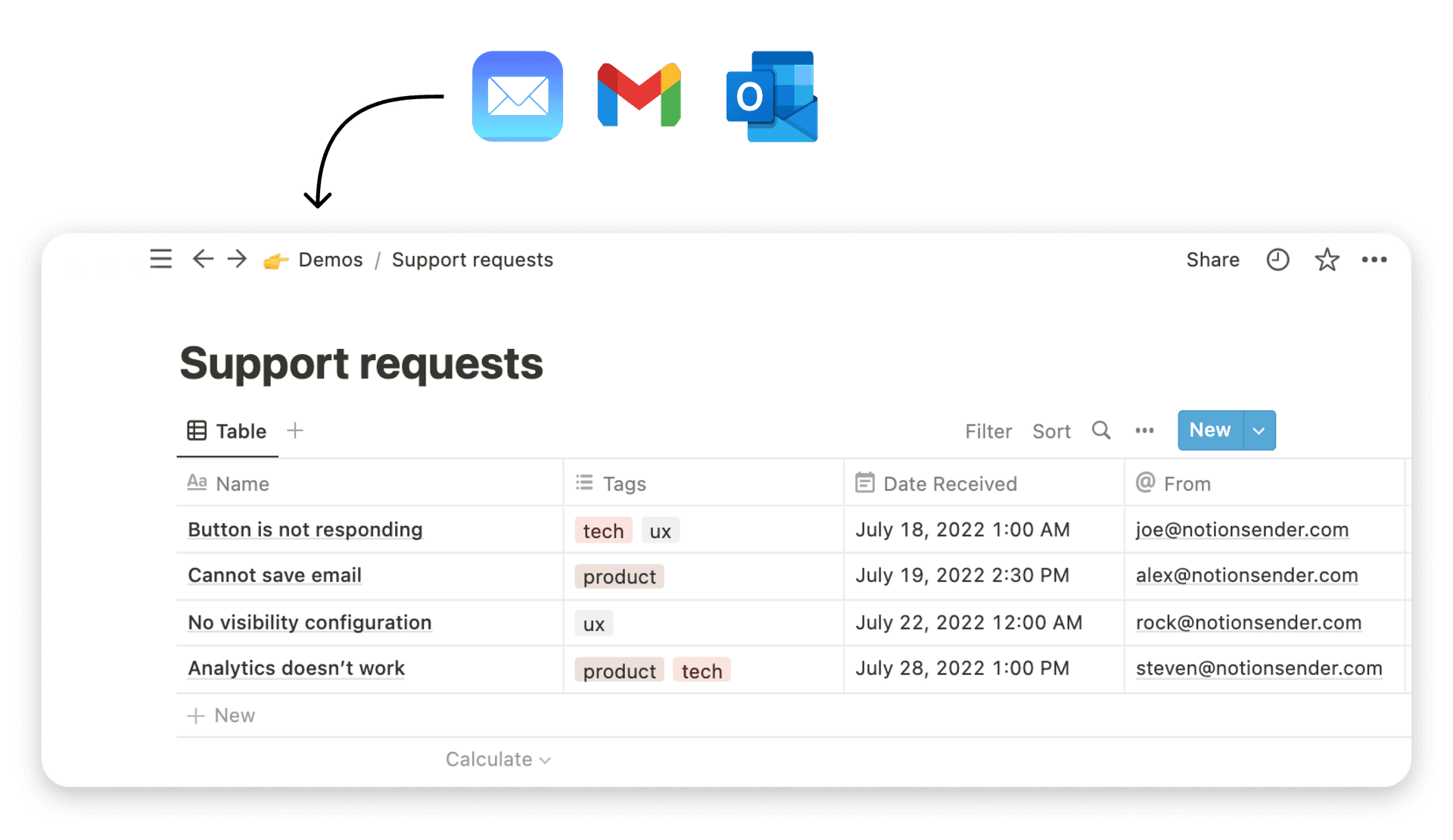
The Hybrid Integrated Workspace System is a modern method that merges your email directly into a primary productivity hub like Notion, Asana, or Monday.com. Instead of treating email as a separate silo, this approach converts messages into actionable tasks, database entries, or project assets. This integration makes communication a native part of your project management workflow, offering a single source of truth and representing one of the best ways to organize emails for teams seeking total work unification.
<iframe width="560" height="315" src="https://www.youtube.com/embed/7M6bIeVbCqA" frameborder="0" allow="accelerometer; autoplay; clipboard-write; encrypted-media; gyroscope; picture-in-picture" allowfullscreen></iframe>
The core principle is to stop managing email and start processing it. Communications become components of larger projects rather than isolated conversations. For instance, a client feedback email can be transformed into a task in your project board, a sales inquiry can populate a CRM database, and an important update can be archived in a knowledge base, all without leaving your central workspace.
Why This Method Works
This system is effective because it connects communication directly to action, eliminating the need to switch between your inbox and project management tool. It’s perfect for agile teams, small business owners, and freelancers who need to ensure every message is tracked and addressed within a project's context. A product team, for example, could use a tool like NotionSender to send bug reports from Gmail directly into their "Bugs & Issues" database in Notion, complete with attachments and context. You can explore different techniques for saving emails to Notion to optimize this process.
Actionable Tips for Implementation
Success with this system depends on selecting the right tools and establishing clear workflows.
- Start with a Pilot Project: Choose one specific project or team to test the integration. This allows you to work out kinks before a company-wide rollout.
- Create Clear Templates: Design templates for common email-to-task conversions, such as "New Client Request" or "Bug Report," to ensure consistency.
- Establish Workflow Standards: Document how and when emails should be integrated. For example, all client-facing communication must be added to the corresponding project database.
- Provide Team Training: Schedule regular sessions to train your team on the new workflow and the tools involved to encourage adoption and proper use.
Key Insight: The goal of an integrated system is not just to clear your inbox but to make email a productive asset. It transforms passive information into active, trackable work items inside the environment where work actually happens.
10-Method Email Organization Comparison
| Method | 🔄 Implementation Complexity | 💡 Resource Requirements | 📊 Expected Outcomes | ⭐ Key Advantages |
|---|---|---|---|---|
| The Folder and Label System | Low — simple setup, manual sorting required | Built-in email folders/labels, time for maintenance | Clear visual organization; easy retrieval for small–medium volumes | Simple and compatible across platforms; ⚡ quick visual scanning; 💡 use automatic rules |
| The GTD (Getting Things Done) Method | Medium–High — process design and daily habit formation | Task manager integration, time investment, discipline | Inbox zero potential; actionable items captured and prioritized | Ensures follow-through on tasks; ⭐ strong accountability; 💡 scheduled processing |
| The Priority-Based Inbox System | Medium — rules and calibration for priorities | Flagging tools, defined priority criteria, regular review | Faster response to critical items; improved SLA adherence | Focuses attention on urgent matters; ⚡ reduces response time; 💡 define priority rules |
| The Sender-Based Organization Method | Low–Medium — create sender rules/folders | Contact lists, automation rules per sender | Easy history lookup per contact; client-centric views | Excellent for client-focused workflows; ⭐ quick context retrieval; 💡 group senders |
| The Time-Based Archival System | Low–Medium — set retention/archival rules | Archive storage, retention policy, search tools | Lean inbox with compliant historical archives | Reduces clutter and supports compliance; ⚡ automates aging; 💡 set clear retention windows |
| The Project-Based Centralization Method | Medium–High — project hubs and integrations | Project workspace (Notion/etc.), team adoption, integrations | Unified project context; reduced context-switching | Complete project visibility; ⭐ improves collaboration; 💡 standardize project templates |
| Smart Filters and Automation Rules | High — complex rule design and ongoing tuning | Automation platforms, technical setup, monitoring | Scalable automated sorting; minimal manual categorization | Highly consistent and scalable; ⚡ significant efficiency gains; 💡 start small and test rules |
| Spam/Newsletter Isolation Strategy | Low — basic filters and unsubscribe workflows | Unsubscribe tools, filtering apps, periodic maintenance | Dramatically reduced inbox noise; batchable low-priority reading | Keeps focus on important mail; ⭐ lowers clutter; ⚡ batch-friendly; 💡 schedule newsletter review |
| Unified Inbox with Search Strategy | Low — minimal setup, relies on search skills | Powerful search engine, saved queries, tagging | Minimal filing overhead; fast retrieval when search is strong | Very low maintenance; ⭐ effective at scale if search mastered; 💡 learn advanced operators |
| Hybrid Integrated Workspace System | High — platform selection, integrations, change management | Workspace platform, automation tools, training, budget | Single source of truth; emails become actionable project items | Eliminates context-switching; ⭐ centralized knowledge; ⚡ streamlines workflows; 💡 pilot with one team first |
Build Your Ultimate Email Workflow Today
The journey through these ten distinct methods for email organization reveals a fundamental truth: there is no single "best way to organize emails" that works for everyone. Your ideal system is a personal construct, built from the components that best suit your specific workflow, professional role, and cognitive style. The most significant barrier to inbox control isn't a lack of options, but rather a failure to commit to a single, intentional strategy.
We've covered a wide spectrum of approaches, from the classic and structured to the modern and automated.
- For those who crave order and categorization, the Folder and Label System provides a time-tested foundation.
- Productivity purists often find their rhythm with the action-oriented principles of the GTD (Getting Things Done) Method.
- If your day is a constant battle against competing urgencies, the Priority-Based Inbox helps you focus on what truly matters.
- Client-facing professionals, like freelancers and project managers, can gain immense clarity by adopting a Sender-Based Organization Method, which groups all communication by its source.
The most profound shift, however, comes from recognizing that the inbox is not the final destination. It's merely the starting point.
From Reactive Inbox to Proactive Workspace
True mastery over email involves moving critical information out of the siloed environment of your email client and into a centralized, actionable workspace. This is the core principle behind the more advanced strategies we explored, such as the Project-Based Centralization Method and the Hybrid Integrated Workspace System.
Instead of letting your inbox dictate your priorities, you actively pull emails into a system where they become tangible assets. An email from a client isn't just a message; it's a task to be completed, a document to be filed in a project folder, or a key piece of information for your team's knowledge base. This is where the real power lies, transforming communication from a constant interruption into a structured, integrated part of your operations.
Key Takeaway: The goal isn't just to have a tidy inbox. The goal is to create a reliable system where no task, deadline, or important piece of information gets lost in the digital shuffle.
Your Action Plan for Inbox Control
Feeling overwhelmed by the options is normal. The key is to start small and build momentum. Don't try to implement everything at once. Instead, follow these steps to build a system that sticks:
- Choose Your Foundation: Review the ten methods. Which one resonates most with your current pain points? Are you drowning in tasks (GTD)? Are your projects a mess (Project-Based)? Pick one as your starting point.
- Commit for Two Weeks: Give your chosen method a fair trial. Consistency is crucial. It will feel awkward at first, but resist the urge to revert to old habits.
- Integrate and Automate: Once you have a foundational method, identify the most repetitive part of your process. This is where tools like Smart Filters and a central hub like Notion truly shine. Automate the filing, sorting, and task creation.
- Refine and Adapt: No system is perfect forever. As your projects or role changes, revisit your workflow. Perhaps you combine the Priority-Based Inbox with a Sender-Based folder structure. Your system should evolve with you.
Ultimately, finding the best way to organize emails is about reclaiming your time and mental energy. It's about ensuring your inbox serves your goals, not the other way around. By choosing a deliberate strategy and leveraging modern tools to connect email to your wider workflow, you build a resilient system that supports focus, clarity, and sustained productivity. Your journey to a stress-free inbox starts not with a grand overhaul, but with a single, intentional choice.
Ready to move your emails from a chaotic inbox into an organized Notion workspace? NotionSender makes it simple. With just a few clicks, you can send important emails directly to your Notion databases, turning messages into actionable tasks, project resources, or CRM entries. Stop copying and pasting and start building your single source of truth today at NotionSender.