Build the Ultimate Notion Meal Planner

You already know the failure pattern. Recipes live in bookmarks, screenshots, newsletters, text messages, and half-remembered tabs. The grocery list sits in one app, your budget in another, and dinner decisions get made when you're already tired.
A good notion meal planner fixes that by turning meal planning into one connected system instead of a pile of disconnected notes. Notion is especially good at this because databases, relations, and views let you manage recipes, meals, groceries, and costs in the same workspace you already use for work and life.
The difference isn't cosmetic. It's operational. You stop asking, "Where did I save that recipe?" and start working from a clean dashboard that tells you what to cook, what to buy, and what you've spent.
Escape the Chaos of Meal Planning
Most meal planning problems aren't really cooking problems. They're system problems.
People usually have enough ideas for what to eat. What they don't have is a reliable place to collect recipes, turn those recipes into a weekly plan, and convert that plan into a useful shopping list. That's why planning feels heavier than it should. You're not just deciding what to cook. You're hunting for information every single time.
A well-built notion meal planner removes that friction. It centralizes recipes, ingredients, meal slots, and shopping into one workspace. That matters because the key benefit isn't having a prettier template; it's reducing the number of decisions and copy-paste tasks you have to repeat every week.
That payoff is practical, not theoretical. By centralizing recipes and automating grocery lists, users can reduce weekly planning time to 30 minutes for meal selection and under 2 hours for the full process including prep, as Marie Poulin reports in her write-up on using Notion for food and meal prep.
If your current process also has to work for kids, a partner, or a chaotic work calendar, it's worth studying examples of effective family meal planning because the same pressure points show up fast. Repeated meals, forgotten staples, and last-minute shopping are usually symptoms of weak structure, not lack of discipline.
Practical rule: Build for low-energy days, not ideal days. If your system only works when you have extra time, it doesn't work.
The smartest way to start is simple. Build the core databases first. Then connect them. Then shape the dashboard around how you plan your week. If you want better general habits inside Notion before building the planner, these tips to get more out of Notion are useful because meal planning systems break down for the same reasons work systems do. Too much clutter, weak structure, and no repeatable input process.
Building Your Core Meal Planning Databases
The strongest notion meal planner starts with three databases. Not five. Not ten. Three.
You need a Recipes database, a Meal Plan database, and an Ingredients database that can also support grocery workflows. This structure follows the methodology used in advanced meal planner setups built around relations and rollups, which can cut manual data entry by up to 80% according to the advanced meal planner methodology. That same source also notes that copy-paste formatting errors affect 70% of initial setups, which is why plain-text pasting with Ctrl+Shift+V is worth using from day one.

Build the Recipes database first
This is your source of truth. Every other part of the system depends on it.
Create a new full-page database called Recipes. Don't make this a simple notes page. It needs structured properties so Notion can filter, sort, and roll up useful information later.
Start with these properties:
- Name as the title property. Use the recipe name only.
- Meal Type as a select property. Options like breakfast, lunch, dinner, snack keep planning views clean.
- Cuisine as a select or multi-select property if that matters to how you choose meals.
- Prep Time as a select property. The common setup is things like <20 min and 20-40 min because those are easier to filter than free text.
- Rating as a number property.
- Ingredients as a relation to your Ingredients database.
- Instructions inside the page body.
- Source URL as a URL property if you collect recipes from the web.
- Calories, Protein, Carbs, and Fat as number properties if you want nutrition tracking.
- Favorite as a formula or select field later, once the system is stable.
Use select fields where consistency matters. Free text feels flexible at first, but it creates avoidable mess. "Dinner," "dinner," and "main meal" become three different filters.
Build each recipe page like a reusable card
A recipe entry should be fast to scan and fast to update. That's more important than making it look impressive.
Inside the recipe template, add sections for:
- Ingredients
- Directions
- Notes
- Substitutions
- Batch prep or freezer notes
If you're pasting recipes from websites, use Ctrl+Shift+V so junk formatting doesn't break the layout. That's a small habit, but it prevents a surprising amount of cleanup later.
Keep the top of the recipe page structured and the lower half flexible. Properties for data. Page content for cooking context.
Create the Meal Plan database next
Recipes transform into an actual week.
Create a second database called Meal Plan. Use a calendar-capable layout, even if you prefer list views later. The point is to give each meal a date and a clear slot in time.
These properties work well:
| Property | Type | Why it matters |
|---|---|---|
| Name | Title | Use a label like "Tuesday Dinner" or keep it simple |
| Date | Date | Powers calendar and weekly planning views |
| Meal Slot | Select | Breakfast, lunch, dinner, snack |
| Recipe | Relation to Recipes | Pulls the selected meal into the plan |
| Status | Select | Planned, prepped, cooked, skipped |
| Notes | Text | Useful for leftovers, guests, or schedule conflicts |
A lot of people try to cram breakfast, lunch, and dinner into one daily record with multiple fields. That can work, but it usually becomes clunky. One record per meal is cleaner because you can sort, filter, and reschedule individual meals without rewriting the whole day.
Build the Ingredients database with grocery use in mind
Call the third database Ingredients or Pantry & Groceries depending on how broad you want it to be.
If you want one database to support both pantry tracking and shopping, include these properties:
- Name as title
- Category as select, such as produce, dairy, pantry, frozen
- Unit as select, such as each, bag, oz, gram
- Quantity Needed as number
- On Hand as checkbox
- Buy This Week as checkbox
- Estimated Cost as number if you track spending
- Recipes as the reciprocal relation back to Recipes
This database doesn't need to be perfect on day one. The main thing is that ingredients exist as structured entries, not buried inside recipe paragraphs. Once ingredients live in a database, your shopping list can become dynamic instead of manual.
What works and what doesn't
There are a few trade-offs worth calling out early.
What works
- Structured select fields
- Recipe templates with consistent page sections
- One meal per plan entry
- An ingredients database that supports both pantry and shopping views
What doesn't
- Storing ingredients only in long text blocks
- Building too many tags before you've planned a few real weeks
- Making the meal plan visually fancy before the data model works
- Copying recipes from the web with messy formatting intact
The right test is simple. Can you add a recipe in a few minutes, place it on a date, and identify what needs to be bought? If yes, your foundation is solid.
Weaving It All Together with Relations and Rollups
Separate databases are organized. Connected databases are useful.
This is where a notion meal planner starts doing work for you. The moment Recipes, Meal Plan, and Ingredients talk to each other, you stop maintaining three lists and start running one system.
Create the Recipe relation inside Meal Plan
Open the Meal Plan database and add a Relation property that links to Recipes.
Name it Recipe. Keep it singular unless you plan to attach multiple recipes to one meal entry. For most busy professionals, one planned entry tied to one recipe is cleaner and easier to review in a calendar.
Now test it:
- Open a meal entry for a specific date.
- Click the Recipe relation field.
- Select one of your saved recipes.
- Confirm the linked recipe appears in the entry.
That one link is the trigger for everything else. Once the meal entry knows which recipe it belongs to, Notion can pull related data into the plan.
Use rollups to surface useful details
A relation creates the connection. A Rollup shows information from that connected record.
Inside Meal Plan, add rollups for the details you want visible without opening the recipe page. Good candidates are:
- Prep Time
- Calories
- Protein
- Carbs
- Fat
- Ingredients
Configure each rollup to point to the Recipe relation, then choose the matching property from the Recipes database.
This is a major quality-of-life improvement. Your calendar can show not just what you're cooking, but how demanding that meal is and what nutrition it contributes. That helps when you're planning around workdays, travel, or late meetings.
If a rollup feels confusing, remember the sequence. First connect the record with a relation. Then choose which property from that connected record you want to display.
Connect Recipes to Ingredients
Now open the Recipes database and verify the Ingredients relation points to the Ingredients database. If you skipped that earlier, set it up now.
For each recipe, link the ingredient records it needs. This takes some upfront work, but it's what makes grocery generation possible. For example, a chili recipe might link tomatoes, onions, beans, garlic, and olive oil as ingredient records.
Keep ingredient naming tight. Don't create "red onion," "onions," and "yellow onion" without a reason. Database systems reward consistency and punish creative labeling.
Turn ingredients into a shopping workflow
Once recipes are linked to ingredients, you can surface those ingredients from the Meal Plan side in a few different ways.
The cleanest approach is to use the linked relationships as the engine and then create filtered views in the Ingredients database that show only the items tied to meals you've planned for the week. In practice, that means your ingredient records become candidates for the grocery list as soon as their recipes appear on the calendar.
A practical setup looks like this:
- Plan the week by adding meals in Meal Plan.
- Select recipes for each planned meal.
- Let recipe links carry ingredient relationships into your working views.
- Filter Ingredients to show items tied to current or upcoming plans and not yet marked as on hand or purchased.
This is the point where the system starts saving time. You aren't writing a new list from scratch. You're reviewing an already-generated one.
Use linked views instead of duplicating data
Don't create a separate groceries page full of copied ingredient names. That's where many builds go wrong.
Instead, create a linked database view of Ingredients on your meal planning dashboard and filter it for the current planning window. Depending on your setup, you might filter by:
- recipes linked to planned meals
- items not marked On Hand
- items marked Buy This Week
- specific ingredient categories like produce or pantry
That keeps one source of truth. If you check off an ingredient in the grocery view, the status updates everywhere because it's the same database.
A simple relation map
Here's the model to keep in your head:
| Database | Connects to | Why |
|---|---|---|
| Recipes | Ingredients | Defines what each recipe requires |
| Meal Plan | Recipes | Assigns meals to dates |
| Ingredients | Recipes | Supports shopping and pantry visibility |
The cause-and-effect relationship is the whole point. Add a recipe to a date, and the system can expose the ingredients tied to that recipe. Remove the recipe, and those needs disappear from the plan.
Trade-offs that matter in real use
The elegant version of this system isn't always the most complex one.
If you overbuild with too many nested relations and niche views, you'll spend more time maintaining the planner than using it. Keep the logic visible. If you can't explain why a rollup exists, remove it.
What works best in practice is a short chain:
- recipe stores the source data
- meal plan schedules the recipe
- ingredient view helps you shop
That's usually sufficient. You can always add cost tracking, pantry counts, or nutrition summaries once the weekly workflow feels effortless.
Designing Your Command Center Dashboard
A strong backend won't help if the interface is annoying to use.
The dashboard is where a notion meal planner becomes practical on a Tuesday afternoon. It should show the week, the recipes you use, and a grocery list that only displays what still needs action.
Keep the layout narrow and scannable
Create a page called Meal Planning Dashboard. Add linked views of your existing databases instead of embedding the full databases directly. That gives you clean, purpose-built views without changing the underlying structure.
A useful top-to-bottom layout looks like this:
- a weekly calendar view of Meal Plan
- a gallery or board view of Recipes
- a filtered grocery list from Ingredients
- a small section for notes, leftovers, or upcoming events
Don't make the mistake of putting every possible view on one page. Dashboards become noisy very quickly. If you need a deep admin area for data cleanup, keep that on a separate page.
Set up the weekly planning view
Your first linked database should be a Calendar view of the Meal Plan database.
Filter it to the current week or a near-term planning range. Show the properties that influence decisions fast, such as Meal Slot, Recipe, and Status. Hide anything that creates visual clutter.
If your week changes often, a board grouped by day can also work. But the calendar generally remains the clearest way to see gaps. Empty slots become obvious, and rescheduling feels natural.
The best dashboard view isn't the prettiest one. It's the one that makes missing meals and duplicate effort obvious in a few seconds.
Make recipe browsing frictionless
Add a second linked view for Recipes. Gallery works well if you use cover images, while board view works well if you group by Meal Type or Prep Time.
The dashboard's role is to facilitate real decision-making, beyond mere storage. A filtered recipe view like Quick Meals is useful on work-heavy days. A separate Favorites view helps when you need reliable meals without extra thinking.
If you're trying to tighten your weekly planning habits, resources on how to master your week with meal planning can help you decide which views belong on the dashboard and which ones should stay buried in the database.
Show only the grocery items that still matter
The grocery section should feel like an action list, not a pantry archive.
Use a linked view of the Ingredients database and apply filters such as:
- On Hand is unchecked
- Buy This Week is checked
- category sorted for easier shopping flow
List view is usually best here. You want quick toggles and clean scanning on desktop and mobile. Board view looks nice, but it adds drag-and-drop behavior you probably don't need while shopping.
Add one utility block that saves time
A dashboard isn't complete until it handles exceptions.
Add a compact section for:
- leftovers you want to use up
- meals to reschedule
- notes tied to your week
- a quick link to recipe intake or communication workflows
If you use Notion beyond food planning, this article on using Notion to send emails and share information gives useful ideas for how linked operational pages can sit next to personal planning systems without creating chaos.
The dashboard should feel calm. If it doesn't, hide more properties.
Automating Your Workflow with NotionSender and Formulas
Most notion meal planner tutorials stop too early. They show how to link a recipe to a date, then call it automation.
That isn't enough if you're a freelancer, project manager, or business owner juggling meal planning alongside meetings, invoices, and a crowded inbox. The biggest gap in current meal planner content is external-tool integration. In forum discussions over the last 12 months, 65% of small business users asking how to automate tasks like email recipe import receive incomplete answers, according to Notion's meal planner template context on automation gaps in meal planning workflows.

The practical fix is to automate in layers. Start with internal shortcuts. Then connect your planner to the outside world.
Start with template buttons and recipe templates
The first layer of automation is simple and effective.
Create a recipe template inside your Recipes database with:
- a consistent page layout
- pre-filled headings for Ingredients, Directions, Notes, and Source
- default properties like Meal Type prompt, Rating field, and nutrition fields
Then add a button on your dashboard that creates a new recipe entry using that template. This removes the small points of friction that cause people to save recipes in random notes instead of the dedicated database.
A few formula ideas also pay off quickly:
- Favorite formula based on rating, such as marking recipes rated at or above your preferred threshold
- Quick Meal label based on Prep Time
- Needs Review if a recipe is missing ingredients, instructions, or cost fields
These formulas aren't flashy. They're useful because they reduce sorting and decision-making.
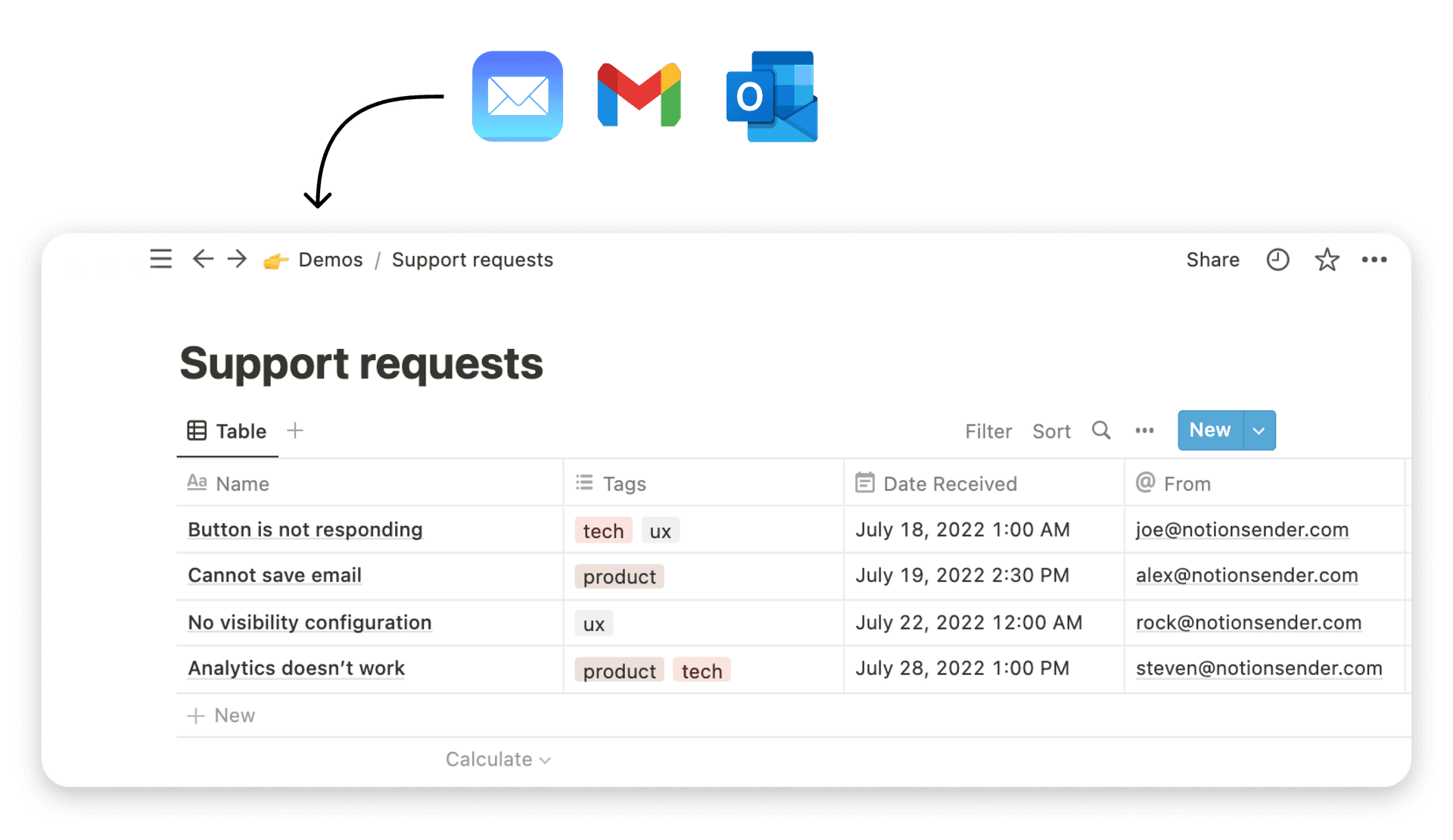
Use email capture for recipe intake
Recipe collection usually breaks the system. That's because inspiration arrives in email newsletters, brand promotions, creator updates, and forwarded messages, not when you're sitting inside Notion.
An email-to-database workflow matters. Set up a unique email address tied to your recipe intake process so you can forward recipe emails directly into your recipe database. When done well, this gives you a controlled inbox-to-Notion pipeline instead of a cluttered bookmark graveyard.
A strong setup includes:
- A dedicated intake view in Recipes for unprocessed entries.
- A source property so you know whether the recipe came from email, a website, or manual entry.
- A processing status such as Inbox, Reviewed, Added to Rotation.
- A standard cleanup step where you assign Meal Type, add ingredient relations, and archive irrelevant promotional text.
This matters for busy professionals because collection and processing are different jobs. Capture first. Clean up later in batches.
"Fast capture beats perfect capture." A recipe system survives when intake is easy and cleanup is optional until planning time.
If you're building email-connected workflows inside Notion more broadly, this guide on how to create and send email from Notion is useful background because the same logic applies to food planning. Centralize the communication, then structure the database around what action needs to happen next.
Forward receipts into your expense workflow
Meal planning isn't just about what you'll cook. It's also about what the plan costs.
A practical automation layer is forwarding digital grocery receipts and order confirmations into a database tied to your meal planning workspace. You can keep this in a separate Expenses database or extend your Ingredients database with cost fields if your system is lightweight.
The workflow is straightforward:
- buy groceries online or receive a digital receipt by email
- forward the receipt into your Notion-connected expense intake
- tag it to the relevant week or meal plan period
- review actual spend against your planned meals
This is especially helpful if you want a clearer connection between recipes, grocery frequency, and spending habits. It also reduces the common problem of planning meals in one place and storing receipt records somewhere else entirely.
Add a review layer so automation doesn't create junk
Automation can create noise if you don't define a review rule.
Use one short weekly admin block to process:
- imported recipes that still need cleanup
- receipts that need week tags
- ingredients created by email intake but not yet standardized
- duplicate recipe submissions
Without that review pass, your system becomes efficient at collecting clutter. With it, the planner becomes a reliable operating system.
Here's a simple comparison that helps:
| Workflow | Result |
|---|---|
| Manual bookmarking and note copying | Fast at first, messy later |
| Database template only | Structured, but still dependent on manual entry |
| Email capture plus review routine | Best balance of speed and control |
Later in the week, when you're ready to see an automation workflow in action, this walkthrough gives visual context:
<iframe width="100%" style="aspect-ratio: 16 / 9;" src="https://www.youtube.com/embed/R8IOW72zfMY" frameborder="0" allow="autoplay; encrypted-media" allowfullscreen></iframe>
The bigger point is simple. A meal planner shouldn't be an island. If recipes, receipts, and meal ideas already arrive through email, your Notion system should meet them there.
Pro Tips for a Flawless Meal Planning System
Once the planner works, the next job is making it resilient. That's what turns a decent notion meal planner into one you keep using.
The most overlooked improvement is designing for shared use. That's especially relevant because Notion's 2025 data showed 40% growth in shared food and nutrition templates among small groups, as noted in Notion's top free meal planner templates collection. Demand for collaborative meal planning is clearly there, even though most setups still assume one user.

Share the right view, not the whole workspace
If a spouse, roommate, or assistant only needs the grocery list, don't hand over full access to every recipe and admin page.
Create a clean shared page with:
- a linked grocery view
- a filtered weekly meal calendar
- a simple notes block for substitutions or requests
That keeps collaboration focused. It also reduces accidental edits to formulas, templates, or archived views.
Use lightweight macro tracking
You don't need a bodybuilding spreadsheet to make nutrition tracking useful.
Notion meal planners can support macro tracking with number properties and calculations. In one tutorial example, ingredient calories and meal calories are summed to daily totals such as 60 calories from ingredients and 1043 from meals, producing 1103 calories for the day, then displayed with a progress bar in the planner as shown in this meal tracker walkthrough. The practical lesson is that simple numeric fields and formulas are enough for most personal nutrition goals.
Track only what you'll review consistently:
- calories
- protein
- carbs
- fat
If you never act on fiber, sodium, or micronutrient data, don't clutter the interface with them.
Prevent lag before it starts
Complex Notion builds often slow down because people try to show everything everywhere.
A few habits keep the planner responsive:
- use filtered linked views instead of giant all-record views
- avoid stacking too many heavy databases on one dashboard
- archive old meal plan periods
- keep tags limited and purposeful
When mobile performance matters, simplify even further. Shopping views should be list-based, low-friction, and property-light.
Clean systems stay fast because they show less, not because they contain less.
Add one maintenance habit
Set a recurring weekly reset:
- clear completed grocery items
- archive expired meal entries
- review duplicate ingredients
- update favorites based on what you enjoyed cooking
That small maintenance loop keeps the planner accurate. Accuracy matters more than sophistication. A modest planner you trust beats an advanced one you avoid.
Your Blueprint for Effortless Meal Management
A solid notion meal planner doesn't need to be complicated. It needs to be dependable.
When Recipes, Meal Plan, and Ingredients are structured well, linked properly, and surfaced through a clean dashboard, meal planning stops feeling like a separate part-time job. You get one place to store recipes, schedule meals, review grocery needs, track nutrition if you want it, and keep spending visible enough to make better decisions.
The biggest improvement usually isn't visual. It's mental. Fewer repeated decisions. Less searching. Less retyping. Less friction between "I found a good recipe" and "it's on this week's plan."
That's the value of building your own system in Notion. You aren't adapting your life to a rigid meal-planning app. You're shaping the tool around your schedule, your work, your home, and your priorities.
Keep the structure lean. Refine only what's useful. If a view doesn't help you cook, shop, or decide faster, remove it.
If you want your Notion meal planner to go beyond manual entry, NotionSender is worth a look. It gives your databases a practical email layer, which makes it easier to capture recipe ideas, organize receipts, and keep your planning workflow inside Notion instead of scattered across inboxes and apps.