Blog Post Formatting: Boost Readability & SEO in 2026

Blog post formatting is simply how you structure and style your content. The goal is to make it readable, engaging, and easy to navigate for both people and search engines. It's less about making things pretty and more about making them easy to read.
Why Smart Blog Post Formatting Isn't Optional

Think of your blog like a bookstore. If you walk in and find the aisles cluttered, signs missing, and books thrown into random piles, you'll probably just walk right back out. But if the store is well-lit, the sections are clearly marked, and everything is neatly organized, you'll stick around and browse.
That's exactly what good formatting does for your blog. It takes a wall of text and turns it into a clean, organized experience that guides your reader from one idea to the next.
Improve Reader Experience and Dwell Time
When someone clicks on your article, you've only got a few seconds to prove it’s worth reading. A huge block of text is an instant turn-off. Most people don't read online; they skim to see if the article has the answers they're looking for.
Key Takeaway: Great formatting makes your content skimmable. Things like short paragraphs, bold text, and bullet points act like signposts, showing readers where to find the most important information.
This has a direct effect on your SEO. When people find your content easy to scan and digest, they stay on the page longer. This increased "dwell time" tells search engines like Google that your page is high-quality, which can help your rankings.
Make Long-Form Content Digestible
There’s a lot of debate about content length, but the data is pretty clear. A study of 912 million posts showed that long-form articles get 77.2% more backlinks than shorter ones. Deeper content tends to perform better over time.
The trick is making a 2,500-word guide feel approachable. Without smart formatting, it’s just an intimidating wall of text nobody wants to read. Breaking it up with clear headings, lists, and images makes the information accessible enough to earn those valuable backlinks and social shares.
By focusing on structure, you create a better experience for your audience and help your best content get the attention it deserves. For more tips on building great content, you can check out our other posts on the NotionSender blog.
Creating Your Content's Architectural Blueprint
A great blog post isn't just thrown together; it's built on a solid plan. Think of it like a blueprint for a house. Without one, you just have a messy pile of bricks. A clear structure is the foundation of blog post formatting, making sure your readers—and search engines—can easily find their way around.
It all begins with a magnetic title. This is your first and sometimes only shot to grab someone's attention. A good title promises value. In fact, research shows titles with 6-13 words generally get the most traffic because they're descriptive but still quick to read.
Right after the title, your introduction needs to hook the reader fast. The first few sentences must convince them they’re in the right place and that your article is worth their time.
Crafting a Logical Post Hierarchy
Once you have their attention, you need to keep it. This is where a logical hierarchy using headings and subheadings (H2s and H3s) comes into play. You’re essentially creating a roadmap for your content.
These headings act as signposts. They let people who skim quickly find the sections that matter most to them. For search engines like Google, this structure makes it crystal clear what your article is about, which can give your visibility a real boost.
Pro Tip: Your main keyword should be in your main title (H1) and at least one H2 subheading. Weave related keywords and questions throughout your H3s and body paragraphs to build relevance without sounding robotic.
A well-organized structure makes even a massive article feel digestible and prevents readers from getting overwhelmed. For more ideas on how to organize complex information, check out our guide on getting the most out of Notion.
The Inverted Pyramid Principle
There’s a reason journalists have sworn by the "Inverted Pyramid" for over a century: it just works. The idea is simple: put the most important, need-to-know information right at the top.
From there, you follow up with supporting details and background info, working your way down in order of importance.
For a blog post, this means you answer the reader's biggest question immediately. Don’t bury the good stuff. If your title is "How to Bake the Perfect Sourdough Loaf," your intro should get straight to the key outcome, not the history of ancient grains. This respects your reader's time and gives them a reason to stick around for the details.
The Core Components of a Well-Structured Blog Post
To build a solid structure every time, it helps to know what each piece is for. An architect uses different materials for the foundation, walls, and roof, and a writer uses different structural elements for different jobs.
Here’s a quick breakdown of the essential parts of a post and what they do.
| Element | Purpose | Best Practice |
|---|---|---|
| H1 Title | Grabs attention and sets the core promise of the post. | Keep it between 6-13 words and include your main keyword. |
| Introduction | Hooks the reader and confirms the article will solve their problem. | State the problem and hint at the solution in the first few sentences. |
| H2 Subheadings | Breaks content into major, easy-to-skim sections. | Use descriptive, action-oriented language with related keywords. |
| H3 Subheadings | Organizes the points within a larger H2 section. | Drill down into specific details or steps for a broader topic. |
| Conclusion | Summarizes the key takeaways and gives a clear call-to-action. | Never introduce new information; just reinforce the main message. |
Once you master this blueprint, you'll be able to make sure every article you publish is clear, logical, and set up for success. It's the most reliable way to turn your ideas into content that people actually want to read and share.
With your blog's skeleton in place, it’s time to focus on the details that make an article a pleasure to read. This is where we move from the big picture to the small tweaks that turn a wall of text into an inviting, easy-to-scan experience.
The quickest win? Shorten everything. Long, winding sentences make your readers work too hard. Keep them short and punchy to create a rhythm that pulls people down the page.
The same goes for paragraphs. A giant block of text is a stop sign for a reader. By keeping your paragraphs to 2-3 sentences max, you create whitespace. This breathing room for the eyes makes your content feel instantly more approachable and less overwhelming.
This simple diagram shows how to think about the hierarchy of your content.

Think of it this way: your title and intro are the front door. The subheadings are the hallways. And the rest of your formatting helps people navigate the rooms.
Master the Art of Micro-Formatting
Beyond your paragraphs, you have a whole toolbox of tiny but powerful formatting tricks to help readers scan your work. These elements are the visual signposts that guide your reader to the most important information.
A well-known study found that 79% of web users scan a new page. Only 16% read it word-for-word. If your content isn't scannable, you're invisible to the vast majority of your audience.
That statistic is everything. It shows why just writing well isn't enough—you have to format well, too. Let's dig into the best tools for the job.
Use Lists and Emphasis Strategically
Lists are your best friend for readability. They break up dense text and serve information in a way that’s incredibly easy for our brains to process.
- Bullet points are your go-to for items that don't need a specific order, like tips, features, or examples.
- Numbered lists are for when the sequence is crucial, like in step-by-step instructions or rankings. They create a clear path for the reader to follow.
Another key tool is bold text. It’s a powerful visual tap on the shoulder that says, "Hey, look at this!" But use it carefully. If everything is bold, nothing is.
Stick to bolding just a few key things:
- Key Statistics: Making a number like "50% more effective" pop is a no-brainer.
- Important Terms: Use it to define a new concept the first time you introduce it.
- Actionable Takeaways: If there's one sentence you absolutely need them to read in a paragraph, bold it.
Italics can add a subtle touch of emphasis, but they can also be harder to read, so use them even more sparingly than bold.
Refine Your Paragraphs and Flow
Every paragraph should have one job—to explain a single idea. It also needs to connect smoothly to the one before it and the one after it. Using transition words helps create this seamless flow.
This approach turns a collection of facts into a smooth, logical argument. For a deeper dive into making your writing flow, our guide on how to write better paragraphs has some great advanced tips.
When you bring all these elements together—short paragraphs, smart lists, and purposeful emphasis—you create a piece of content that respects your reader's time. That’s how great blog post formatting makes your work not just helpful, but truly memorable.
Using Visuals and Media to Boost Understanding

While your words lay the groundwork, it’s the visuals that truly make a blog post come alive. Think of images, videos, and other media not as decorations, but as powerful tools that help you communicate. They break up the sea of text and make even the most complicated ideas feel intuitive.
Strategically placed visuals are a cornerstone of good blog post formatting. They give your reader’s eyes a place to rest, which is a lifesaver for long-form content. A well-placed image can make a 2,000-word article feel far less daunting.
This isn’t about just grabbing any old stock photo. The most effective visuals are those that directly back up what you’re saying, illustrate a specific point, or simply offer a welcome change of pace for the reader.
Image Optimization Best Practices
Before you even think about uploading an image, you need to get it ready for the web. Optimizing your images is a quick process that pays huge dividends in page speed, SEO, and the overall user experience.
First off, always resize your images to the right dimensions before you upload them. A common mistake is uploading a huge, high-resolution file and letting your website shrink it. This seriously bogs down your page load time. A good target to aim for is keeping your image files under 150 KB.
Next, let's talk about file names and alt text. These might seem like minor details, but they’re crucial for search engines and accessibility.
- File Names: Ditch the generic
IMG_8451.jpg. Instead, use a descriptive, keyword-rich name likeblog-post-formatting-visuals.jpg. This gives search engines a clear signal about what the image contains. - Alt Text: This is the text that describes your image to screen readers and search engines. Be clear and concise. Something like, "Laptop on a desk showing a blog post with good visual formatting" is perfect. It’s a simple step that makes your content accessible to everyone.
Key Insight: Articles that include images pull in 94% more total views on average. Visuals aren't just a nice-to-have; they are absolutely fundamental to getting your post seen and read.
Using Screenshots and Code Snippets
If you’re writing tutorials or technical guides, screenshots are your best friend. They can transform a dense, multi-step process into a simple game of follow-the-leader. An annotated screenshot with a few arrows or highlights is often worth a hundred words.
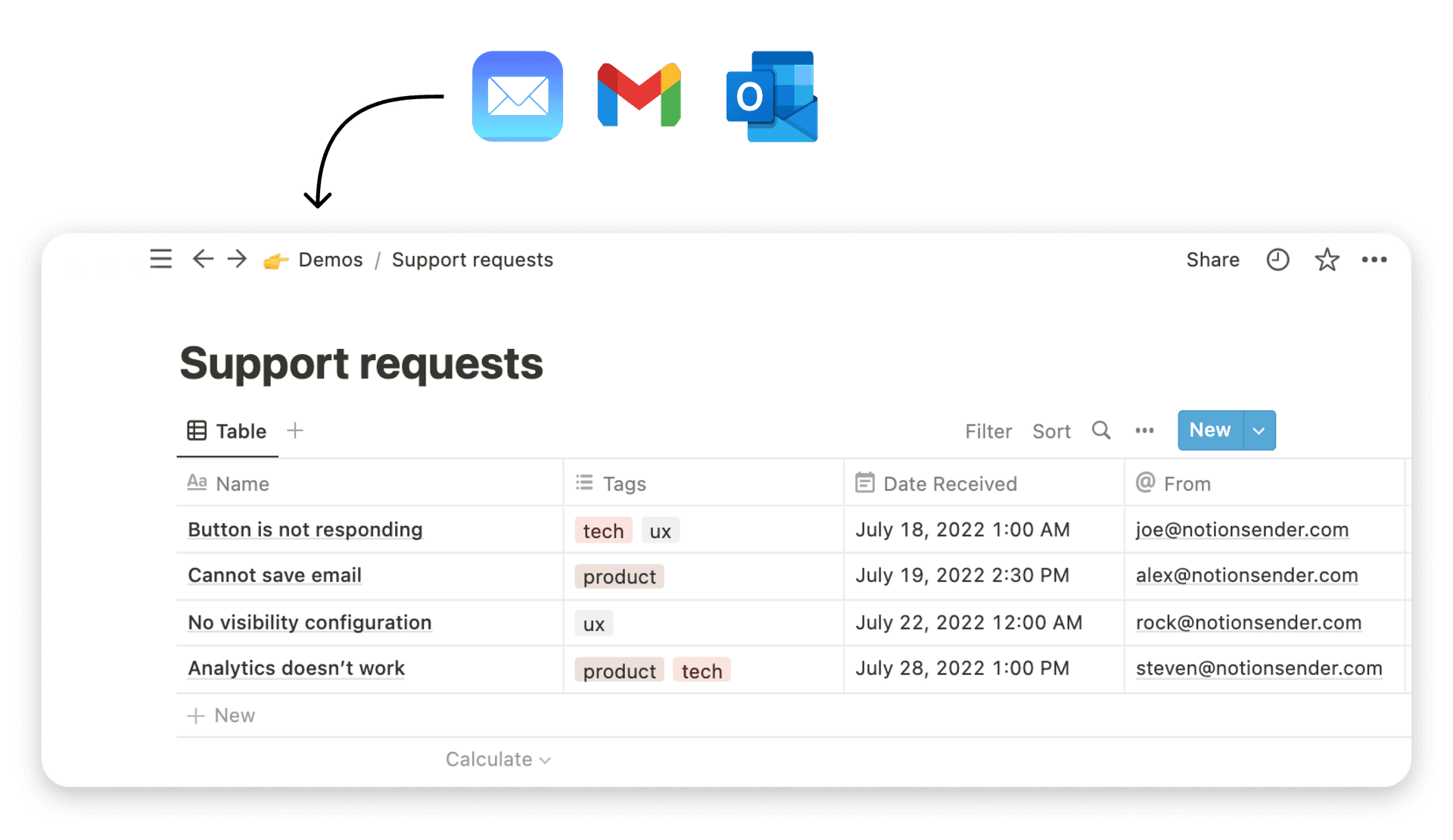
For example, a quick screenshot can instantly show how a Notion database can be used to manage a content pipeline—a concept that takes much longer to explain with text alone. It immediately clarifies how you can track posts by status, publish date, and author.
Likewise, if you're writing for a developer audience, how you format your code snippets is non-negotiable. Just pasting in raw code is a quick way to look unprofessional and make the content nearly impossible to read.
Use a plugin or your editor's built-in tools to add syntax highlighting. This simple touch adds color and proper indentation, making the code readable and easy to copy, just like it would look in a real code editor. It shows you know your audience and respect their time.
Connecting Formatting to SEO and Conversion Goals
<iframe width="100%" style="aspect-ratio: 16 / 9;" src="https://www.youtube.com/embed/H61eF8yMysA" frameborder="0" allow="autoplay; encrypted-media" allowfullscreen></iframe>
Great blog post formatting does more than just create a nice reading experience. It's a straight line to better search engine rankings and can gently nudge your readers toward becoming customers. When you start treating formatting as a strategic part of your process, you turn your content into an asset that actually drives business.
Think of it this way: every formatting decision you make sends a signal. For a reader, it signals that your content is clear and professional. For a search engine, it signals quality and relevance. Both of these signals have a direct impact on how well your content performs.
One of the most powerful ways to send these signals is by using structured data. This is basically special code you add to the backend of your blog post that tells search engines exactly what your content is all about.
Boost Your Visibility with Schema Markup
Schema markup is a form of structured data that acts like a translator between your content and a search engine. It helps clarify what your post is for, which helps search engines feature it in more interesting ways—like in rich snippets or interactive FAQ sections in the search results.
For instance, using "Article" schema tells Google that your content is a blog post, which might help it show up in news carousels. If you add "FAQ" schema to a Q&A section, your answers can appear right on the search results page. This builds your authority before a person even clicks on your link.
Using structured data can give your page an edge. While it’s not a direct ranking factor, the rich results it helps create can seriously increase your click-through rate, sending more traffic your way.
Good formatting isn't just for human readers; it's also critical for LLM SEO and AI Search Ranking, making sure that advanced algorithms can understand your content. Getting this alignment right between human readability and machine comprehension is a cornerstone of modern SEO.
Guide Readers Toward Conversion
Attracting visitors is only half the battle. Your formatting should then guide them. This is where placing calls-to-action (CTAs) strategically comes into play. A CTA isn't just a "Buy Now" button; it's any prompt that encourages your reader to take that next logical step.
Don't just stick a CTA at the very end of your post and call it a day. Weave them in where they feel natural. Use formatted elements to make them pop without being obnoxious.
- Styled Boxes: A colored box with a simple border is a great way to highlight a key takeaway or a special offer.
- Buttons: For your primary conversion goal, like getting someone to sign up for a trial or download a guide, a bright, clickable button is hard to ignore.
- Text Links: For secondary actions, like suggesting a related article, a simple and descriptive text link is perfect for keeping readers on your site longer.
These small touches improve user experience metrics like dwell time and engagement, which search engines view as positive signals. By turning plain text into an interactive journey, your blog post formatting becomes a tool for growth, connecting great content to real business goals.
Using a Notion Template to Tame Your Blog Formatting

Let's be honest, getting your blog post formatting right on every single post can be a real grind. When you’re doing everything manually, it’s not just slow—it’s a recipe for mistakes and inconsistencies. A master template, especially one you build in a flexible tool like Notion, changes the game completely.
Think of it as setting up an assembly line for your articles. Instead of hunting for your tools and parts every time, you start with a ready-made framework. This lets you stop worrying about the setup and pour all that creative energy into what really matters: the content itself.
With a good template, every post gets the same high-quality treatment, from its basic structure to the final checks before you hit "publish." Let's walk through how to build a blog post template in Notion that will seriously speed up your entire writing process.
First, Build Your Content Database
Before you make the template, your articles need a place to live. In Notion, that means starting with a database. This becomes your mission control—a content calendar and pipeline all in one, showing you the status of every article at a glance.
Kick things off by creating a new database. From there, you’ll add "properties" to track all the important details. These are just labels that keep everything tidy.
- Status: A “Select” or “Status” property is perfect for tracking whether a post is just an Idea, In Progress, In Review, or Published.
- Publish Date: Use a “Date” property so you can schedule your content and see your calendar visually.
- Author: The “Person” property lets you assign articles to different writers on your team.
- Keyword: A simple “Text” property is great for noting the main SEO keyword you're targeting.
This database gives you a bird's-eye view of your whole content operation. Planning becomes a breeze, and you can easily see what’s coming up next.
Key Takeaway: A Notion database isn’t just a glorified to-do list; it’s a living project management tool. When you track properties like status and publish dates, you transform scattered ideas into a smooth, manageable workflow.
Now that your database is set up, it’s time to design the template that will power every new article.
Designing Your Master Post Template
Inside your new content database, you’ll see an option to create a "New Template." This is where the magic happens. You’re about to build the perfect skeleton for all your future blog posts. The idea is to make a fill-in-the-blank document where all the formatting is already done.
Start by dropping in placeholders for the main parts of an article.
- Introduction: Pop in an
H2heading for your intro. You could even add a little note in italics below it, like "Hook the reader and state the problem here." - Main Body with Placeholder Headings: Create a few
H2andH3placeholder headings. This gives you a visual outline to follow and serves as a great reminder to break your content into easy-to-read, scannable sections. - Conclusion: Add a final
H2for the conclusion, maybe with a note to yourself to sum up the key takeaways and drop in a compelling call-to-action.
With the basic structure in place, the final touch is a pre-publish checklist at the very bottom. Think of it as your final quality check before takeoff—it’s amazing how a simple list can boost the quality and consistency of your blog post formatting.
Here’s a sample checklist to get you started:
- [ ] Is the main keyword in the H1 title and at least one H2?
- [ ] Did I add alt text to all the images?
- [ ] Are all paragraphs short and punchy (under 3 sentences)?
- [ ] Did I include at least two internal links?
- [ ] Is there a clear call-to-action (CTA) at the end?
This standardized system doesn't just make drafting faster; it builds best practices right into your process. And if you want to take it even further, you can explore using Notion to send emails to manage outreach directly from your new content hub.
Common Questions About Blog Post Formatting
Even after you get the hang of the basics, a few common questions always seem to surface. It's one thing to know the rules, but it's another to apply them in the real world.
Let's tackle some of the nitty-gritty questions I hear all the time about blog post formatting.
How Long Should My Blog Posts Be In 2026?
Honestly, there’s no magic number. The real goal is to match what the reader wants with a complete, satisfying answer.
For really competitive topics, you'll see that long-form content—think 1,500-2,500 words—tends to pull in more backlinks and climb higher in search results. But don't just write to hit a word count.
A perfectly formatted 800-word post that solves a specific problem will always beat a rambling 3,000-word article that doesn't. The key is to deliver total value, then use great formatting to make any length feel easy and scannable.
Key Insight: Focus on quality and completeness first. A well-structured long post will always outperform a short, incomplete one, but length for length's sake is a losing game.
Is It Okay to Use AI for Formatting My Content?
Absolutely. Think of AI as a smart assistant, not a replacement for your own judgment. AI tools are fantastic for brainstorming outlines, catching grammar mistakes, and suggesting ways to improve your structure. It's no shock that by 2024, 80% of bloggers were already weaving AI into their process.
The secret is to always be the final editor. Go through every AI suggestion and ask: Does this fit my brand? Does it actually help the reader? Use AI to handle the tedious stuff. That frees you up to pour your energy into the creative, strategic side of blog post formatting.
How Much Time Should I Spend Formatting a Blog Post?
A lot of successful bloggers I know spend a good chunk of their time on post-production. A solid rule of thumb is to dedicate 25-30% of your total effort to formatting, polishing, and reviewing your article after the writing is "done." This isn't just about making things look nice; it's a powerful signal of quality to both your readers and to search engines.
This time is where you add and optimize images, double-check your headings, review readability, and place your calls-to-action. We know that bloggers who spend more than six hours on a single post consistently report better results. That extra time spent on formatting is what makes your content actually perform.
Ready to turn your content workflow into a well-oiled machine? NotionSender lets you manage everything from drafting in Notion to sending polished emails, all from one place. Streamline your content process with NotionSender today.