10 Blog Topic Suggestions for 2026

Are you filling a content calendar by brainstorming broad ideas, skimming keyword tools, and hoping something sticks?
That approach is why so many blogs publish regularly and still say their content doesn’t pull its weight. The gap isn’t usually effort. It’s topic selection. Strong blog topic suggestions don’t start with what you want to say. They start with what your audience is already trying to organize, fix, route, approve, or follow up on inside their daily workflow.
That matters because blogging is still a massive channel. There are over 600 million blogs worldwide, about 7.5 million new posts go live each day, and 77% of internet users regularly read blogs to learn something new, according to these blogging statistics. In a crowded space like that, generic “productivity tips” won’t do much. Useful, operations-level content will.
For teams working inside Notion, the opportunity is better than most content plans make it look. Instead of writing another recycled post about brainstorming with autocomplete or scanning Reddit threads, you can build articles around real operational systems. That gives you a sharper angle, better reader intent, and a cleaner path to conversion.
These 10 blog topic suggestions are built that way. Each one maps directly to a workflow your audience already cares about, especially if they run projects, clients, support, sales, or admin inside Notion. Each topic can become a high-value article that shows readers how to centralize work, reduce manual handling, and turn email into structured action.
If you’re still building your publishing process, this Blog Beginner Tips guide is a useful companion. For now, skip the blank page. Start with topics that already have operational gravity.
1. Email Management Workflows Centralizing Communications in Notion
Most email advice is still folder-first. Create labels. Clean your inbox. Archive aggressively.
That’s fine for an individual inbox. It breaks down when a team needs shared visibility.

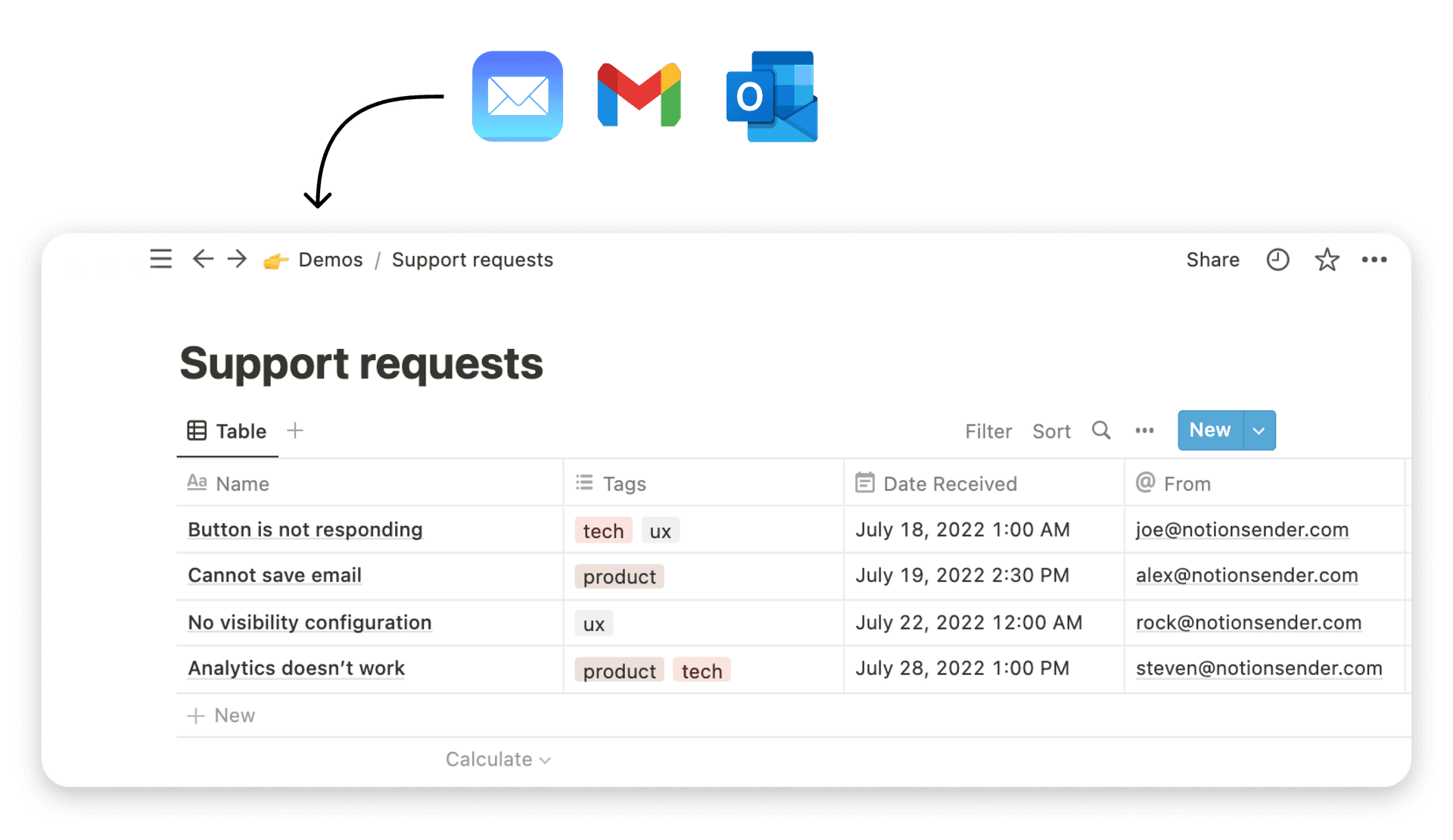
A better article angle is showing how companies turn Notion into the operating layer for communication. Client questions, internal approvals, stakeholder replies, and vendor updates stop living in scattered inboxes and start living in databases tied to actual work.
What makes this topic strong
A post on centralized email management works because the pain is obvious. Marketing teams lose context across campaign threads. Project managers can’t see the latest stakeholder reply without asking someone to forward it. Support leads end up rebuilding history manually.
That makes this one of the most practical blog topic suggestions for a Notion-centered audience. The article can show readers how to create:
- Separate communication databases: One for client-facing email, one for internal requests, and one for vendor or finance correspondence.
- Clear routing rules: Send sales replies to a pipeline database, support messages to a ticket database, and project updates to a delivery workspace.
- Consistent properties: Use fields like owner, status, related project, sender type, and next action so emails become trackable records instead of static messages.
A useful example is a small agency managing campaign approvals. The account manager doesn’t want feedback buried in Gmail while task execution lives in Notion. Centralizing those replies inside the campaign database removes that split.
Practical rule: If an email requires action from more than one person, it shouldn’t live only in someone’s inbox.
Use the article to show naming conventions, filtered views, and assignment rules. Then connect it to day-to-day productivity with these simple email management tips. That internal link fits naturally because the reader already cares about reducing communication sprawl.
2. Automated Email-to-Database Capture Never Miss Important Information
Manual copy-paste is where good systems go to die.
If someone has to read an email, identify the useful fields, open a Notion database, and enter the data by hand, the workflow won’t hold up for long. That’s why this topic has strong practical value. It solves a specific bottleneck and shows the reader an immediate upgrade.
The article angle that works
Don’t frame this post as “automation for automation’s sake.” Frame it around missed information. Invoices get forgotten. Lead details stay trapped in messages. Meeting requests never become structured records. Job applications sit in a shared inbox with no owner.
That gives you concrete scenarios:
- Invoice capture: Pull sender, amount reference, due context, and attachment links into a finance database.
- Lead intake: Convert inbound inquiry emails into CRM records with company, contact, service interest, and follow-up status.
- Support intake: Turn incoming problem reports into triage-ready entries with category and assignee.
- Meeting coordination: Save request details directly into a scheduling database instead of re-reading threads later.
The strongest version of this article includes setup trade-offs. Standardized inbound formats make extraction easier. Messy email bodies create exceptions. Back-up text fields help when the message doesn’t fit your template. That kind of advice sounds real because it is.
Where readers usually get it wrong
Many teams overbuild on day one. They try to extract every possible field before confirming the workflow is stable.
Start smaller.
- Begin with high-value fields: Capture only what drives the next action.
- Test with live samples: Use actual inbound emails, not idealized examples.
- Keep the raw message accessible: Extracted data helps, but the original email still matters for edge cases.
For a freelancer, this post can center on inquiry emails becoming project leads. For a small business, it can focus on order requests or invoice handling. For either audience, the natural next step is learning how to send email to Notion, which makes the article feel actionable instead of theoretical.
3. Email Marketing Automation in Notion Template Expressions and Personalization
A lot of email marketing content assumes you need a full standalone marketing stack for every campaign. That’s often overkill for freelancers, agencies, and lean internal teams.
This topic works when you position Notion as the system of record and email as the delivery layer. The draw isn’t “send more emails.” It’s “send better-timed, more relevant emails without bouncing between tools.”

A practical post structure
The article should focus on template expressions, segmentation, and operational use cases. Not abstract strategy.
Examples make this topic land:
- A consultant sends onboarding sequences from a client database.
- A marketing team schedules milestone reminders from a campaign tracker.
- A finance admin sends invoice follow-ups from an accounts table.
- A small SaaS team sends targeted updates based on account status.
Personalization is the hook, but discipline is the lesson. Subject lines should pull from database fields only when the source data is clean. Audience segments should be explicit. Follow-up timing should map to real workflow states, not arbitrary delays.
Why this topic earns attention
Readers care because email still connects directly to buyer intent and action. Average blog conversion rates can reach 5% when content aligns with that intent and includes clear calls to action, according to the same blogging statistics reference. That makes a post about email workflows especially relevant when it ties content, segmentation, and outreach together.
Personalization fails when the database is messy. Clean fields beat clever copy.
A good article should also be honest about what doesn’t work. Don’t encourage readers to blast one template to every contact. Don’t imply merge fields can rescue weak targeting. Show them how to create separate templates for warm leads, active clients, newsletter readers, and overdue accounts.
For readers trying to improve message performance, this article can naturally point to how to increase your open rates with these 10 email marketing tricks. That supports the topic without dragging the post off course.
4. Invoice Management and Payment Reminders Using Email Integration for Financial Workflows
This is one of the easiest topics to write well because the pain is expensive and familiar.
Freelancers forget who’s been reminded. Small agencies can’t tell whether a client replied to the last invoice thread. Contractors waste time searching old messages to reconstruct what happened before a payment dispute.
That makes invoice workflow content more useful than broad “get paid faster” advice.
The angle readers want
Build the post around a Notion invoice system that logs every related email inside the same operational view. The invoice record isn’t just a line item. It becomes the timeline.
A strong article can describe a setup like this:
- Invoice database: Client name, project, issue date, status, payment stage, and owner.
- Email capture: Every reply, reminder, dispute note, and payment confirmation saved to the record.
- Reminder logic: Trigger follow-up messages based on status instead of memory.
- Audit trail: Keep the communication history attached to the invoice for quick review.
The practical examples are easy to visualize. A freelance designer tracks late retainers. A small video agency manages deposits and final payments. A consultant saves all billing replies under each engagement.
What works and what doesn’t
What works is simple sequencing. Use clear invoice categories. Link invoice records to client and project databases. Store the original message context so anyone reviewing the account can see the full chain.
What doesn’t work is building a finance system that depends on perfect inbox habits. It also doesn’t help to schedule reminders with no status check. If a client already replied with a question, a generic “payment overdue” email can create friction.
Better approach: Trigger reminders from the database status, not from a calendar reminder sitting in one person’s head.
You don’t need hard numbers to make this topic persuasive. The use case speaks for itself. Readers who bill clients already understand the cost of disorganized follow-up. Your article should show them the operational fix.
5. Customer Support and Ticketing Systems Building a Service Desk in Notion
Support content usually gets trapped between two extremes. It’s either too enterprise-heavy or too lightweight to help.
A better post sits in the middle. Show how a small business or product team can create a service desk in Notion by capturing support emails into structured tickets with clear ownership.

Why this topic has staying power
Customer support isn’t one workflow. It’s triage, categorization, response tracking, escalation, and documentation. That gives you plenty to work with in one article without sounding repetitive.
A strong version of the post can show readers how to build:
- Ticket categories: Billing, bug report, onboarding help, account request, and product question.
- Priority fields: Urgent issues route differently from routine asks.
- Linked records: Connect tickets to customer accounts, products, or internal tasks.
- Response templates: Use saved replies for common issues while leaving room for human handling.
This is also where embedded analytics becomes relevant. BARC reports that embedded BI drives 38% of usage growth among leading adopters, and active use of BI and analytics tools remains around 25% of employees across organizations in long-term tracking, based on this BARC infographic on adoption strategies. In practice, that means support teams often get more value from analytics inside their working system than from a separate reporting tool nobody opens.
The useful trade-off to discuss
Readers need to hear that Notion can serve as a strong support hub for many teams, but only if the structure is disciplined. If everything gets dumped into one giant database, triage slows down fast.
Use the article to explain status rules, owner assignment, and resolution logging. A SaaS team might route product bugs to engineering while keeping account questions with customer success. An ecommerce shop might separate shipping issues from returns.
The strongest insight in this post is simple. Support gets better when the message, the owner, and the next action live in one record.
6. Lead Management and Sales Pipeline Optimization Through Email Integration
A lead pipeline usually breaks long before the CRM does. Failure happens earlier, when inquiry emails stay unstructured, follow-ups are inconsistent, and nobody can see the last meaningful interaction.
That’s why this topic works. It connects inbound email behavior to pipeline quality.
Make the post operational, not motivational
Skip generic sales advice. Show how teams capture inbound interest and turn it into trackable movement inside Notion.
Use examples that feel close to real work:
- A consulting firm receives inquiries through email and routes each one into a lead database with service type, deal owner, and next call date.
- A real estate advisor logs buyer questions and seller requests in separate views.
- A wholesale ecommerce team stores account inquiries, quote requests, and follow-up threads in one pipeline.
The article should emphasize one core idea. A lead is not the email. A lead is the record created from the email.
Add the strategy layer
This topic gets stronger when you explain how readers can segment by source, interest, urgency, or stage. Large organizations reached up to 60% adoption rates for big data analytics by 2019, and the global big data analytics market was valued at $271.83 billion in 2022, according to this big data analytics adoption overview. Smaller teams don’t need enterprise analytics stacks to benefit from that shift. They need practical, embedded visibility into who contacted them, what they asked for, and what happened next.
A short comparison works well here:
- Weak pipeline: Email sits in a sales inbox until someone remembers to respond.
- Usable pipeline: Inquiry becomes a lead record with owner, stage, and scheduled follow-up.
- Strong pipeline: Email history, notes, opportunities, and outbound replies stay attached to the same account trail.
For readers thinking beyond spreadsheets, it also makes sense to point them toward a lightweight crm concept. That complements the article’s angle without pulling it away from Notion-centered workflows.
7. Team Collaboration and Project Communication Centralizing Stakeholder Emails
Plenty of project delays aren’t caused by missing work. They’re caused by missing context.
A stakeholder approved one version in email. The task board reflects another. Someone on the team didn’t see the change request. A client asks why a decision was made and nobody has the full thread on hand.
That makes this topic one of the most practical blog topic suggestions for project managers and service teams.
The strongest angle for this article
Don’t frame it as “better collaboration.” That’s too broad. Frame it as communication traceability inside project execution.
The post should show how to connect stakeholder emails directly to projects, tasks, deliverables, or meetings inside Notion. A marketing team can attach approval emails to campaign records. A product team can save feature feedback under roadmap items. A client services team can keep every major request under the account workspace.
You can make the post more useful by describing specific database relationships:
- Project to email relation: Every project shows the latest communication trail.
- Task to email relation: Each task can reference the message that created or changed it.
- Owner fields: One person is responsible for responding, even if everyone can see the thread.
- Archive logic: Closed conversations stay accessible without cluttering active views.
Where teams overcomplicate things
The biggest mistake is turning every email into a permanent, equal-priority record. Not all communication deserves the same visibility.
“Store what changes the work, not every message that mentions it.”
That single rule helps readers avoid bloated databases. Internal chatter that doesn’t affect scope or delivery can stay out. Decisions, approvals, blockers, and requirement changes should stay in.
This article is especially strong for agencies, internal ops teams, and cross-functional departments. It gives them a structure for preserving project memory without relying on one person’s inbox search skills.
8. Database-Specific Email Addresses Building Unique Workflows for Different Business Needs
This topic has a cleaner product tie-in than most because it highlights a feature people can immediately understand and use.
One database. One dedicated email address. One clear intake path.
That sounds simple, but it enables an entire family of workflow articles.
Why this topic stands out
Instead of one generic inbox feeding every process, readers can build separate intake channels around business functions. Applications go to one database. Customer feedback goes to another. Vendor messages route somewhere else. That makes categorization easier before anyone opens a dashboard.
The post should show concrete examples:
- Hiring intake: Candidates send materials to the recruiting database address.
- Customer feedback: Product comments arrive directly in a feedback repository.
- Order handling: Purchase or fulfillment emails route into an order operations database.
- Supplier coordination: Vendor notices flow into procurement or finance records.
This angle is underserved in most generic content about finding blog ideas. A stronger approach is to use internal operations as the source of content. The gap is especially noticeable for Notion users trying to turn saved emails, client requests, or support messages into recurring content themes, as discussed in this underserved angle on workflow-based topic ideation.
Make the article more than a feature tour
Readers don’t need a list of possible addresses. They need design rules.
- Name addresses by function: The purpose should be obvious from the address itself.
- Document ownership: Every intake channel needs a responsible person or team.
- Review for sprawl: Too many niche addresses create confusion instead of clarity.
A practical example is a small studio that uses separate addresses for briefs, approvals, billing, and support. That structure reduces sorting work and improves how information lands inside Notion from the start.
9. Meeting Coordination and Calendar Management Email-to-Notion Integration for Scheduling
Meeting coordination is a good content topic because it looks simple until you map the actual labor involved. Requests come in by email. Dates shift. Agendas get buried in reply chains. Notes live somewhere else. Action items disappear after the call.
A useful article can fix that whole sequence.
Turn the inbox into a meeting intake system
The key is to show readers how inbound scheduling emails become meeting records inside Notion. Once the request becomes a record, the team can attach status, meeting type, attendees, project links, notes, and follow-up tasks.
This works well for:
- Remote teams handling recurring planning calls
- Sales teams tracking discovery and proposal meetings
- Leadership teams preserving board or stakeholder discussion history
- Agencies logging client review sessions and next steps
The practical value is obvious. Instead of revisiting old threads to find date changes or decisions, the meeting database becomes the source of truth.
A smart editorial angle
This post gets even stronger when you tie meeting workflows to broader content and operations trends. Blogging remains a priority channel for 53% of marketers, and the content marketing industry is projected to reach $107.5 billion by 2026, up from $63 billion in 2022, according to these content marketing and blogging figures. Teams publishing at that pace need better systems for turning calls, stakeholder replies, and decision trails into reusable knowledge.
Meeting coordination content speaks directly to that need. Sales calls generate objections worth documenting. Client review meetings reveal repeat questions that can become future articles. Internal planning threads expose process gaps.
A strong post should explain how to extract dates, attach agendas, save notes under the same record, and create follow-up reminders from action items. That makes scheduling less about calendar admin and more about preserving operational context.
10. Compliance and Record Keeping Maintaining Email Archives in Notion for Regulatory Requirements
Compliance content can get dry fast. The fix is to keep it tied to actual retrieval problems.
When a team needs to prove what was sent, when it was sent, who handled it, and what changed after that, “we think it’s in someone’s inbox” isn’t a process. It’s a risk.
The article should focus on searchable records
This topic is strongest when written for firms that already feel the pain of documentation. Financial services teams need communication trails. Legal professionals need message history. Healthcare, government, and ecommerce teams all deal with records that can’t stay scattered.
The article can show a structure built around:
- Retention logic: Define what stays, what’s archived, and who can access it.
- Original plus extracted record: Keep the raw message alongside structured fields.
- Access controls: Sensitive correspondence belongs in restricted workspaces or views.
- Audit preparation: Save capture procedures so the team can explain its process, not just produce messages.
Keep the advice grounded
Don’t overpromise with language like “fully compliant” unless the organization has verified that setup itself. The post should help readers create stronger records and better retrieval discipline. It shouldn’t pretend software alone resolves regulatory interpretation.
There’s also a content angle here. More teams are working with data-rich workflows, but not all of them know how to structure that information for action. While few teams are described as lacking data, some still struggle with strategy adoption, according to the cited analytics overview. That gap is a reminder that collecting information isn’t enough. Organizing it for reliable use matters just as much.
A practical compliance article earns trust when it’s precise about limits, access, retention, and audit trails. That is what readers in regulated or documentation-heavy environments need.
10-Topic Comparison: Email & Notion Blog Ideas
| Item | Implementation Complexity 🔄 | Resource Requirements ⚡ | Expected Outcomes ⭐📊 | Ideal Use Cases | Key Advantages 💡 |
|---|---|---|---|---|---|
| Email Management Workflows: Centralizing Communications in Notion | Medium - database setup, forwarding rules, team training | Moderate - Notion + NotionSender, config time | ⭐⭐⭐⭐ Improved collaboration; reduced context switching; searchable archives | Marketing inquiries; support teams; project stakeholder comms | Centralized inbox; team visibility; fewer missed emails |
| Automated Email-to-Database Capture: Never Miss Important Information | Medium-High - field mapping and extraction rules | Medium - templates, testing, periodic maintenance | ⭐⭐⭐⭐ Saves manual entry; real-time capture; accuracy varies by format | Invoice processing; lead capture; support ticket creation | Automated parsing; consistent formatting; time savings |
| Email Marketing Automation in Notion: Template Expressions and Personalization | High - learn template expressions and scheduling workflows | Medium - template creation, list management, possible volume limits | ⭐⭐⭐⭐ Personalized campaigns; reduced manual sending; limited advanced segmentation | Newsletters; personalized outreach; reminder sequences | End-to-end in Notion; field merges; cost-effective for small teams |
| Invoice Management and Payment Reminders: Using Email Integration for Financial Workflows | Medium - reminder sequences, invoice templates, project linking | Low-Medium - templates, optional payment gateway integration | ⭐⭐⭐⭐ Faster collections; clear payment records; audit trails | Freelancers; small agencies; service providers | Automated reminders; payment tracking; simplifies accounting |
| Customer Support and Ticketing Systems: Building a Service Desk in Notion | Medium-High - ticket hierarchies, escalation and SLA rules | Medium - workflow design, team training, possible integrations | ⭐⭐⭐⭐ Faster response; full interaction history; better collaboration | SaaS support; e‑commerce customer service; tech support teams | Email-to-ticket conversion; preserved threads; prioritization |
| Lead Management and Sales Pipeline Optimization Through Email Integration | Medium-High - lead scoring, enrichment, pipeline stages | Medium - CRM fields, enrichment rules, reporting setup | ⭐⭐⭐⭐ Improved lead response and pipeline visibility; may need advanced reporting | B2B sales; real estate; consulting; e‑commerce wholesale | Unified CRM; automated follow-ups; lead scoring |
| Team Collaboration and Project Communication: Centralizing Stakeholder Emails | Medium - routing, notifications, project relations | Low-Medium - project DBs, notification automations, training | ⭐⭐⭐⭐ Better team alignment; reduced silos; accessible comms | Marketing campaigns; product feedback; client services | Centralized project emails; accountability; efficient reviews |
| Database-Specific Email Addresses: Building Unique Workflows for Different Business Needs | High - system design, multiple addresses, routing logic | Medium - address management, documentation, audits | ⭐⭐⭐⭐ Precise routing; higher data quality; upfront design required | Applications, feedback streams, department inboxes | Purpose-specific inboxes; automated routing; clearer capture |
| Meeting Coordination and Calendar Management: Email-to-Notion Integration for Scheduling | Medium - calendar DB setup, RSVP extraction, agenda templates | Low-Medium - templates, possible calendar integration | ⭐⭐⭐ Improved scheduling efficiency; centralized meeting records | Remote teams; project meetings; client appointments | Auto-capture requests; action item extraction; RSVP tracking |
| Compliance and Record Keeping: Maintaining Email Archives in Notion for Regulatory Requirements | High - retention policies, access controls, legal alignment | Medium-High - secure storage, backups, audit processes | ⭐⭐⭐⭐ Strong auditability; reduced compliance risk; storage considerations | Financial services; healthcare; legal; government contractors | Searchable archives; timestamped audit trails; retention enforcement |
Turn Ideas Into Actionable Content
Content creation shouldn’t feel like you’re pulling random titles from a generator and hoping one lands. The strongest blog topic suggestions usually come from operational friction your audience already recognizes. That’s why workflow-first topics work so well.
If you look at the ten ideas above, none of them depend on novelty for novelty’s sake. They’re grounded in problems teams deal with every week. Email clutter. Lost lead context. Missed invoice follow-up. Support threads with no owner. Meeting requests that never become structured records. Compliance needs that expose weak documentation habits. Those are the topics people search for because they’re trying to fix something real.
That’s also the strategic advantage of writing for a Notion-centered audience. Notion users don’t just want inspiration. They want systems. They want to know how to route incoming information, how to reduce duplicate work, how to connect communication to projects and records, and how to keep the whole thing usable as the team grows. When your article shows that clearly, it does more than attract clicks. It proves you understand how the work happens.
There’s another reason this approach matters. The publishing environment is crowded, and broad advice gets buried fast. Generic posts about “best productivity tools” or “how to stay organized” rarely give readers enough specificity to act. A stronger article narrows the scenario and increases the practical payoff. “How to centralize stakeholder emails in Notion” is better than “how to collaborate better.” “How to build invoice reminder workflows from captured email” is better than “tips for managing invoices.” The narrower headline usually leads to a more useful page.
This is also where product-led content gets better. Too many posts force the tool into the article after the fact. That’s when content starts sounding like a feature sheet with extra paragraphs. A better method is to start with the workflow problem, then show where the product removes friction inside that process. NotionSender fits naturally into that model because its value sits close to real work. Sending and receiving emails in Notion, saving messages to databases, using dedicated email addresses, extracting key data, scheduling outbound communication, and personalizing templates are all capabilities that map directly to tasks readers already care about.
When you write from that position, your call to action doesn’t feel bolted on. It feels earned.
One more thing matters. Don’t treat these ideas as one-off posts. Treat them as content pillars. A post on support ticketing can branch into articles on triage rules, database design, response templates, and internal reporting. A post on invoice workflows can branch into payment reminders, dispute handling, audit trails, and client communication systems. A post on lead capture can expand into qualification, pipeline views, outbound follow-up, and database hygiene. That’s how you turn a list of blog topic suggestions into a durable editorial plan.
The simplest next move is usually the best one. Pick the workflow your audience complains about most. Write the article that solves that problem in plain language. Use examples that resemble actual work. Show the setup choices, the trade-offs, and the mistakes that make systems fail. Then connect the solution to a tool that helps readers implement it inside the environment they already use.
That’s how useful content gets made. Not from guessing. From structured observation, clear workflows, and practical execution.
If you want to turn these ideas into publishable, product-led content, NotionSender gives you a practical foundation. It lets you send and receive emails directly in Notion, route messages into databases with dedicated email addresses, extract useful data from incoming emails, and build workflows around the records your team already manages. For small business owners, project managers, freelancers, and marketers, that means less time jumping between inboxes and tools, and more time building systems you can write about, teach, and scale.