Blogspot vs WordPress The Definitive 2026 Professional Guide

Choosing between Blogspot and WordPress really boils down to what you’re trying to achieve. If you're just looking for a no-fuss digital diary with zero cost and zero maintenance, Blogspot is a perfectly fine place to start.
But for any serious business, freelancer, or creator focused on growth, control, and building a professional brand, self-hosted WordPress is the clear winner. It’s the industry standard for a reason—it gives you complete ownership and truly unlimited potential.
Choosing Your Foundation: Blogspot vs WordPress
Before we get into the nuts and bolts, it’s important to grasp the fundamental difference here. This isn't just about comparing features; it's about deciding on your project's trajectory and who's ultimately in control.
Blogspot is a product owned and managed by Google. You're essentially renting space on their platform. WordPress.org, on the other hand, is open-source software that you own outright. You install it on your own hosting, and it's yours to command.
This handy flowchart puts the core decision into perspective: are you building a serious business asset or a personal side project?

As you can see, the path is pretty clear. Professionals aiming for real growth need the foundation WordPress provides, while casual bloggers can get by just fine with Blogspot. This choice has major implications for your ability to scale and monetize down the road.
Quick Look: Blogspot vs WordPress Key Differentiators
Let’s put the most critical factors side-by-side to see how they stack up. The market share data alone tells a powerful story about which platform professionals trust for their online presence.
WordPress powers a staggering 42.6% of all websites on the internet. In contrast, Blogger comes in at just 0.4%. That massive difference shows a global consensus on the value of the control and power that WordPress delivers.
This table breaks down the essential differences at a glance.
| Feature | Blogspot (Blogger) | WordPress (Self-Hosted) | Best For |
|---|---|---|---|
| Ownership | Rented (Owned by Google) | Owned (You control the software) | Professionals needing asset control |
| Cost | Free (with limitations) | Requires hosting (~$3-$30/mo) | Businesses investing in growth |
| Customization | Very limited templates | Thousands of themes/plugins | Brands needing a unique identity |
| Monetization | Restricted (Mainly AdSense) | Unlimited (Any ads, e-commerce) | Entrepreneurs aiming for revenue |
Ultimately, Blogspot offers simplicity but sacrifices control. WordPress demands a small learning curve and a minor monthly investment, but in return, you get total freedom. This trade-off is the heart of the Blogspot vs WordPress debate.
Your final decision hinges on your goals. For those still weighing their options, comparing other popular builders like Wix vs WordPress can provide even more context.
As you move forward, remember that building a professional presence starts with a solid foundation. Our blog has tons of resources to help you, including tips for integrating your new site with powerful workflow tools to manage your content and communications. You can find more guides like this one over at https://www.notionsender.com/blog.
Before you can even start comparing Blogspot vs WordPress, you need to get one thing straight: the names themselves can be misleading. Picking the right platform is a huge decision, and it all starts with understanding who you're getting into business with.
Let's clear up the biggest point of confusion right away—the two different flavors of WordPress.
WordPress.org: The Open-Source Powerhouse
When you hear web professionals talk about "WordPress," this is almost always what they mean. WordPress.org offers free, open-source software that you download and install on your own web hosting. Think of it like buying a plot of land. You own it, and you can build whatever you want, however you want.
This is the version that gives you total ownership. You can install any of the thousands of available themes and plugins to build a truly custom site. There's a reason it powers over 42% of the web. The catch? You're responsible for arranging your own hosting and handling security. But that’s a small price to pay for complete freedom from someone else's rules.
WordPress.com: The Hosted Service
On the other side, you have WordPress.com. This is a for-profit company that uses the core WordPress software but packages it as an all-in-one service. It's more like renting a fully-furnished apartment. Moving in is a breeze, but you can't exactly start knocking down walls or rewiring the electricity.
WordPress.com has a free plan, but it comes with some serious limitations. To get more features, you'll need to upgrade to one of their paid plans. It's built for convenience, but that convenience means giving up a lot of control over customization, monetization, and the tools you can use.
Blogspot (Blogger): Google’s Free Blogging Tool
Finally, there’s Blogspot, also known as Blogger. This is Google's free, hosted blogging platform. It’s been around forever—launched way back in 1999 and bought by Google in 2003—and was one of the original tools that brought blogging to the masses.
The entire philosophy behind Blogger is simplicity. It gives you a dead-simple, no-cost way to get your thoughts online with zero technical fuss.
The trade-off for that simplicity, however, is a major one. You get fewer professional features, less control, and, most importantly, you don't truly own your digital space. Your content is on Google's servers, subject to its terms.
Understanding this fundamental difference—renting versus owning—is the first and most critical step in deciding which platform truly fits your goals.
The Core Difference: Ownership, Control, and Data Security
When you’re weighing Blogspot vs. WordPress, the most critical factor isn't features—it's ownership. Think of it this way: are you renting an apartment, or are you buying your own house? This single choice defines the foundation of your entire online presence.
With Blogspot, you’re essentially a tenant on Google's property. It's free, and they handle the major maintenance, but you have to live by their rules. Your content, your design, and your entire digital footprint exist at their discretion.
This means your site could be suspended or even deleted overnight if you unknowingly trip over a term of service. For a hobby blogger, that's a bummer. For a business, it's a catastrophic risk that puts your brand's future completely in someone else's hands.
Who Truly Owns Your Content?
Self-hosted WordPress (from WordPress.org) flips this dynamic on its head. Here, you own the house and the land it sits on. You pick your hosting provider, you have full ownership of all your data, and you control every single pixel of your website.
This is more than just a technicality; it's a fundamental strategic advantage. Owning your platform means:
- You can never be shut down because of a platform's policy change.
- You have total control over monetization, without the restrictions you'll find on platforms like Blogger.
- You own your data and can move it to a different host or platform anytime you want.
The core principle is this: with WordPress, your website is a tangible asset that you control. With Blogspot, you're building value on borrowed land, which can be reclaimed at any time.
This distinction gets even sharper when you start thinking about security and professional credibility. With WordPress, you have the power to put advanced security measures in place, tailored specifically to your needs.
The Power of an Open Ecosystem
For small business owners and project managers, this control is a game-changer. A self-hosted site carries a weight of credibility, backed by sheer market dominance. WordPress runs a staggering 29.14% of the top 10,000 websites, a statistic that builds immediate trust in competitive US and EU markets. Marketers can install powerful security tools like Wordfence, which has over five million active installations, whereas Blogger offers nothing comparable. This gap exists because the WordPress open-source ecosystem gives you limitless choice, while Blogger’s closed-off nature keeps you walled in. Discover more about the platform's market dominance and what it means for your business.
This open environment also unlocks far superior integrations. Freelancers who rely on tools like NotionSender find that a WordPress blog syncs perfectly for creating powerful email-to-database workflows. This lets them manage everything from client communications to marketing campaigns right from a central hub. This level of professional integration and security just isn't on the table in the closed world of Blogspot, making self-hosted WordPress the only serious choice for building a secure, scalable, and truly owned digital asset.
4. Comparing Customization, Design, and Functionality
A website's design isn't just window dressing. It's the first impression you make and directly impacts how people see your brand. This is where the gap between Blogspot and WordPress isn't just a crack—it's a canyon. When we talk Blogspot vs WordPress, customization is a huge deciding factor.
Blogspot gives you a handful of basic templates to start with. Sure, you can mess with the colors, change a few fonts, and shuffle some layout pieces around. But the core structure is locked in. It’s a bit like being handed a starter LEGO set—you can build what's on the box, but you'll hit a creative wall pretty fast.
WordPress is the complete opposite. It’s less like a LEGO set and more like the entire LEGO factory. You get a virtually infinite supply of every piece ever made, plus the tools to create your own. This is all thanks to its massive world of themes and plugins.

Themes: The Visual Foundation
With WordPress, you have thousands of free themes right at your fingertips, plus a whole market of premium, professionally built ones. These aren't just simple skins; they're powerful frameworks that let you customize everything, often with drag-and-drop page builders like Elementor or Divi baked right in.
What does this mean for you? You can get a truly unique, polished website that matches your brand perfectly, all without touching a line of code. A small business could spend around $60 on a premium theme and end up with a site that looks like it cost thousands. That level of design polish is just not on the table with a standard Blogspot site.
Plugins: Unlocking Limitless Functionality
If themes are the look and feel, plugins are the engine that makes your WordPress site do things. There are over 60,000 free plugins in the official directory alone, not to mention thousands of premium options. These little bits of software let you add pretty much any feature you can dream up.
Here’s what that looks like in the real world:
- For a Small Business: Want to sell things online? Pop in the WooCommerce plugin, and your blog is now a full-blown e-commerce store.
- For a Freelancer: Need to show off your portfolio? There are plugins for that. Need clients to book appointments? There are plugins for that, too.
- For a Marketer: Trying to capture leads? You can install advanced form builders to create slick forms, quizzes, and surveys that hook right into your email marketing tools.
The bottom line is this: WordPress lets you build the exact website you need for your goals. Blogspot makes you fit your goals into its very limited box.
The sheer scale of the WordPress ecosystem is its biggest advantage. You have access to some of the best WordPress plugins that are built and maintained by entire companies. For marketers, this means battle-tested tools for growth.
Think about it—plugins like Akismet for stopping spam and WPForms for contact forms each have over 6 million active installations. That’s a level of trust and third-party development that Blogspot can’t even begin to match. This mature, reliable ecosystem is a key reason why WordPress powers 36% of the top 10,000 websites and is the platform of choice for project managers who need something secure and scalable. Learn more about the market share trends that solidify WordPress's position.
For anyone using tools like NotionSender to centralize their email workflows, a WordPress site is the clear winner. You can build a powerful content hub that grows with you, and all your communications—from customer emails to internal updates—can be managed from one place. While Blogspot is fine for a personal journal, WordPress is the engine that drives serious online projects.
Evaluating SEO and Monetization Potential
A great-looking blog is nice, but for any serious project, two things matter more: can people find it, and can it make money? When it comes to the blogspot vs wordpress debate, this is where the platforms truly diverge. Your ability to rank on Google and earn revenue is tied directly to the tools and control your platform gives you.
Blogspot gives you a basic, out-of-the-box SEO setup. Since it’s a Google product, it handles fundamentals like title tags and meta descriptions just fine. For a casual hobbyist who just wants their thoughts to be discoverable, it’s a perfectly acceptable starting point.
But "acceptable" won't cut it in a competitive space. Blogspot’s settings are rudimentary, offering almost no deep control. You can’t easily add advanced schema markup to stand out in search results, fine-tune how search engines crawl your site, or analyze content performance with the depth needed to really compete. You’re essentially working with a pre-set toolkit with no room for custom attachments.

Unlocking Advanced SEO with WordPress
WordPress, on the other hand, is built to be an SEO powerhouse. Its open-source foundation has given rise to incredibly powerful SEO plugins that hand you the keys to every single aspect of your site's visibility.
Plugins like Yoast SEO or Rank Math, with millions of users, are the industry standard for a reason. They provide real-time content feedback, generate sophisticated XML sitemaps, and make managing technical SEO a breeze. It’s like moving from a simple point-and-shoot camera to a professional DSLR with a full bag of lenses—the level of control is just in a different league.
With a WordPress plugin, for instance, you can:
- Implement Schema Markup: Effortlessly add structured data for reviews, recipes, or products. This helps you earn "rich snippets" in Google search results, which can seriously boost your click-through rates.
- Control Indexing: Tell search engines exactly which pages to look at and which to ignore, ensuring only your best content gets ranked.
- Optimize Social Previews: Customize the image, title, and description that appear when your content is shared on Facebook or Twitter.
WordPress doesn't just let you do SEO; it empowers you to master it. The platform provides the tools to compete at a professional level, an advantage that Blogspot simply cannot offer.
This degree of control is absolutely essential for any business, marketer, or freelancer who relies on organic traffic. It’s the difference between crossing your fingers and hoping to be found, and strategically engineering your own success.
Comparing Monetization Strategies
When it's time to make money, the story is pretty much the same. Blogspot’s monetization path is a narrow one, heavily controlled by its parent company, Google. The main route is integrating Google AdSense, which is simple to set up but also very restrictive. You're stuck with one ad network and have to play by its rules and accept its revenue share.
WordPress completely demolishes those walls. With a self-hosted WordPress site, you're in charge. You have total freedom to monetize your content in any way that makes sense for your business, allowing you to build a diverse and resilient income stream.
This freedom opens the door to a much wider array of strategies. You can run sophisticated affiliate marketing campaigns, sell your own digital or physical products using a plugin like WooCommerce, or even launch an entire membership site with exclusive, paid-only content. WordPress gives you the tools to build your business model, whatever it may be.
Ultimately, Blogspot is a closed garden with one path for earning revenue. WordPress is an open field where you can build whatever commercial enterprise you can dream up, making it the clear choice for any serious monetization effort.
Integrating WordPress Into Your Professional Workflow
 A great website is just the starting point. Its true power is unlocked when it works for you, automating the tedious parts of your day-to-day operations. While the blogspot vs wordpress debate often gets stuck on features, WordPress really shines when you make it the core of your content and client communication.
Think of it less like a simple blog and more like an active part of your business. By connecting your public-facing site with your private workspace, you can stop manually copying data and let your website handle the heavy lifting.
Connecting Your Site to Your Central Workspace
What if every form submission or client inquiry from your site automatically organized itself in your project management tool? This isn't some far-off dream; it's entirely possible with the right setup. The key is to build a bridge between what your customers see and where you actually get work done.
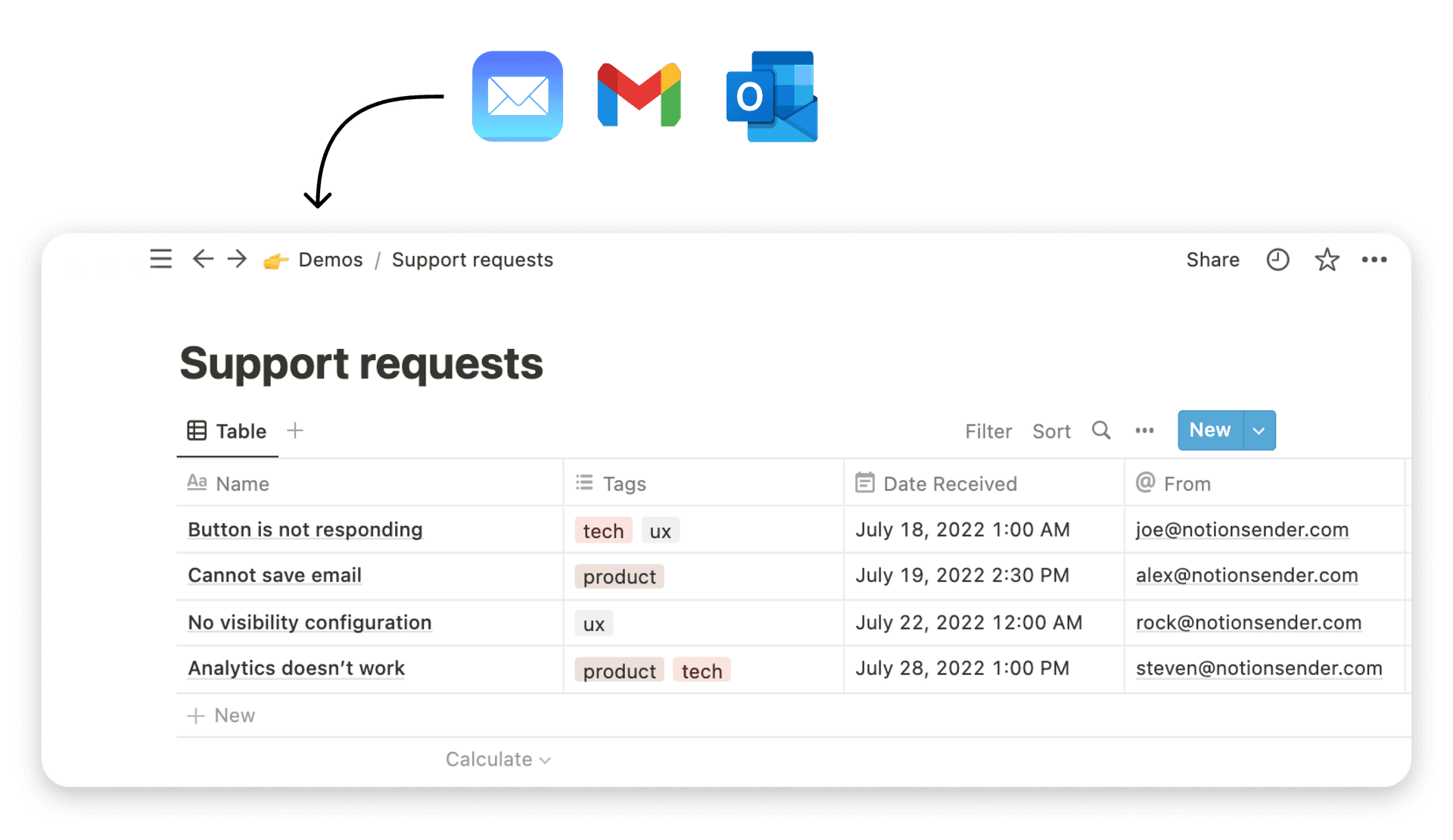
For professionals who live in Notion, this kind of integration is a game-changer. Tools like NotionSender act as that bridge, funneling interactions from your WordPress site straight into your Notion databases. This turns your website into an automated machine for capturing leads and managing projects. If you're curious about the mechanics, our guide on how to create and send email from Notion breaks it down.
By linking a WordPress contact form to a Notion database, you instantly create a self-populating CRM. Every new lead lands exactly where you need it, details and all, ready for you to follow up.
This single piece of automation cuts out the soul-crushing task of copying and pasting info from emails into your project boards. It ensures nothing gets lost and frees you up to focus on the actual work.
Workflow Integration Use Cases for WordPress and NotionSender
Seeing this in action makes the benefits click. We've put together a few practical examples showing how different professionals can use this WordPress-to-Notion workflow to run a tighter ship.
| Professional Role | WordPress Action | NotionSender Automation | Business Outcome |
|---|---|---|---|
| Freelancer | A prospect fills out your project inquiry form. | A new client page is created in your Notion sales pipeline with a "New Lead" status. | Never miss a lead. Your pipeline is always up-to-date without manual entry. |
| Marketer | A user signs up for an ebook on a landing page. | The user's email is added to a specific "Ebook Campaign" database in Notion. | Easily track campaign sign-ups, measure ROI, and manage follow-up email sequences. |
| Project Manager | A client submits a change request via a dedicated form. | A new task is created in the project's Notion board and assigned to the right team member. | Streamline client communication and ensure all requests are tracked and actioned. |
| Small Business | A customer submits a support ticket through the website form. | A new ticket is generated in the support team’s Notion board, prioritized, and assigned. | Faster response times and a clear, organized system for handling customer support. |
This level of integration is what sets WordPress apart. It allows your website to do more than just display content—it actively supports your business goals and makes your job a whole lot easier.
Common Questions About Blogspot and WordPress
Once you start digging into the Blogspot vs. WordPress debate, the practical questions always pop up. It’s one thing to compare features, but it's another to think about the real-world costs and effort. Let's get straight to the answers for the most common concerns.
Is Blogspot Truly Free for a Business?
Technically, yes, Blogspot’s platform won't cost you a dime. But calling it a zero-cost option for a serious business just isn’t accurate. You'll at least want to buy a custom domain to look professional, which is an immediate, ongoing expense.
The real hit, though, is the opportunity cost. Think about what you're giving up. With Blogspot's heavy limits on customization, SEO, and monetization, you're essentially capping your own growth. A business that can't build a unique brand, rank for valuable keywords, or set up diverse revenue streams will quickly learn that "free" can be incredibly expensive.
How Difficult Is Migrating from Blogspot to WordPress?
The thought of moving a whole blog can seem overwhelming, but shifting from Blogspot to WordPress is a very common procedure. It does involve a few technical steps, like exporting your content and redirecting your old URLs, but it's completely manageable.
Honestly, the one-time headache of migration is almost always worth it for the long-term freedom of a professional platform. You’re trading a few hours of focused work for years of limitless potential.
Plenty of automated plugins and step-by-step guides exist to walk you through the entire thing. If your site is huge or you'd rather not deal with it, professional migration services can handle everything for a pretty reasonable fee, making the switch totally painless.
Which WordPress Hosting Is Best for Beginners?
After you've decided on self-hosted WordPress, you have to pick a hosting provider. For anyone just starting out, Managed WordPress Hosting is hands-down the best way to go.
These hosts are WordPress specialists and handle all the technical grunt work for you:
- Automatic Backups: Your site is saved daily, so you can easily restore it if anything breaks.
- Security Monitoring: They're always scanning for threats and blocking attacks to keep your site secure.
- Performance Optimization: They manage all the behind-the-scenes stuff to make sure your site loads fast.
When you're comparing providers, look for excellent 24/7 customer support, a solid uptime guarantee, and clear options for scaling up. That way, you know you have help when you need it and your hosting can grow right along with your site.
At NotionSender, we’re all about making your tools work together without friction. By linking your WordPress site to Notion, you can automate your workflows, manage communications in one place, and turn your blog into a real business hub. Learn more about how you can send and receive emails directly in Notion and take your productivity to the next level.