Cms Systems Compared: Compare Top CMS Platforms in 2026

Picking the right Content Management System (CMS) isn't just a technical choice; it's a core business decision that shapes how you work. What's "best" is entirely dependent on your team and your goals.
Some swear by the endless flexibility of a traditional system like WordPress. Others need the pixel-perfect control of a visual builder like Webflow. And for those building complex digital products, headless platforms offer a totally different approach. This guide will cut through the noise and compare the top contenders to help you land on the perfect fit.
Understanding Your Content Management System Options

Think of a CMS as the engine under your website’s hood. It’s what lets you create, manage, and hit "publish" on all your content without having to be a developer. With over 68.7% of all websites running on a CMS, it's clear they've become essential. The market itself was valued at $30.91 billion in 2026 and is only getting bigger as businesses double down on their digital presence.
The problem is, "CMS" doesn't mean just one thing anymore. The options today are incredibly diverse, built for everything from a simple personal blog to a sprawling enterprise ecosystem. To get your bearings in this crowded field, a good Content Management System Comparison is a great place to start.
Core CMS Categories Explained
Before you can pick one, you need to understand the main flavors they come in. Each category takes a fundamentally different approach to managing content, with its own set of trade-offs.
-
Traditional (Monolithic) CMS: These are the all-in-one workhorses like WordPress and Drupal. They bundle everything together—the content database, the admin dashboard, and the customer-facing website. They’re known for their massive feature sets and even bigger communities.
-
Visual & SaaS CMS: This group includes platforms like Webflow and Shopify. They handle the hosting for you and put powerful visual design tools right at your fingertips. They're often built for specific jobs, like e-commerce or high-end marketing sites.
-
Headless CMS: This is the modern, decoupled approach. Systems like Contentful and Sanity separate your content backend from the frontend. Your content lives in one place and is delivered via an API to any destination—a website, a mobile app, a smart-fridge screen, you name it.
-
Unconventional CMS: There's a growing trend of using tools you already know and love, like Notion, as a simple but surprisingly effective CMS. It's a fantastic option for teams who want to keep their content and project management all in one place.
The biggest mistake you can make is choosing a CMS just because it's popular. The right choice hinges entirely on your team's tech skills, your budget, how much you need to scale, and what you're actually trying to accomplish.
Here’s a quick breakdown of how these categories stack up.
| CMS Category | Primary Focus | Technical Skill Needed | Best For |
|---|---|---|---|
| Traditional | All-in-one functionality & flexibility | Low to High | Blogs, small business sites, forums |
| Visual & SaaS | Design control & specific functions | Low to Medium | E-commerce, marketing sites, portfolios |
| Headless | Multi-channel content delivery | High | Apps, large enterprises, IoT devices |
| Unconventional | Simplicity and workflow efficiency | Very Low | Knowledge bases, internal portals, simple blogs |
When you think about building a website, three names have dominated the conversation for more than a decade: WordPress, Drupal, and Joomla. These open-source platforms are the bedrock of the modern web. Each one has a distinct philosophy on how to build and manage digital content, so choosing between them means really understanding their strengths and the real-world commitments they demand.
WordPress is, hands down, the most recognized name in the CMS game. Its immediate appeal is just how easy it is to use. For bloggers, freelancers, and small businesses, the path from a fresh installation to a live, working website is dramatically faster and more intuitive than with the other two.
This accessibility gets a massive boost from its legendary plugin ecosystem. With over 60,000 plugins up for grabs, you can bolt on almost any feature you can dream up—from e-commerce stores and booking systems to sophisticated SEO tools—often in just a few clicks. But that convenience has a catch: the maintenance overhead. Juggling multiple plugins, checking for compatibility, and running constant security updates becomes a non-stop responsibility.
The Power and Price of Flexibility
While WordPress wins on user-friendliness, Drupal carves out its niche with raw power and security. It was engineered from the ground up for complexity. This makes it the go-to for government agencies, universities, and large enterprises that need incredibly robust, scalable, and secure web applications.
Drupal's core strength is its approach to structured data. It gives you granular control over every single piece of content, letting developers build intricate relationships between different content types. For instance, a university website can seamlessly connect professor profiles, course listings, and student publications in a way that would be a nightmare to replicate in WordPress without heavy custom work. The learning curve is steep, and finding an experienced Drupal developer can be pricey, but for complex, mission-critical projects, it's an investment that pays off.
Joomla tries to be the powerful middle ground in this classic CMS showdown. It offers more features right out of the box than WordPress, like multilingual support and advanced user management, which makes it a great fit for community-driven sites, social networks, or complex membership portals.
It gives you a more structured environment than WordPress but with a much gentler learning curve than Drupal. Sure, its library of extensions and templates is smaller than what WordPress offers, but it provides a solid foundation for sites that need more than a simple blog but don't require Drupal's enterprise-level architecture.
The real cost of an open-source CMS isn’t the software—it’s free. The true expense is the total cost of ownership. This includes hosting, development, ongoing maintenance, and security management, all of which vary wildly between WordPress, Drupal, and Joomla.
WordPress's market position gives it a massive advantage. As of March 2026, WordPress holds a staggering 62.8% of the CMS market share and powers 43.2% of all websites on the internet. This huge user base means you have access to the largest talent pool of affordable developers, endless online tutorials, and more third-party support than any other platform. You can explore more about these market dynamics to understand its competitive edge.
Making the Right Choice for Your Team
Ultimately, your decision boils down to what your project needs and what your team can handle technically. Here’s a practical breakdown to help you decide.
-
Choose WordPress if: You need to get online quickly and affordably. It’s perfect for standard business websites, blogs, and small e-commerce stores where having a massive selection of themes and plugins is a top priority. Just be ready for the regular maintenance grind.
-
Choose Drupal if: Security, scalability, and handling complex data are your absolute top priorities. It's the undisputed champion for large-scale institutional or enterprise sites that have specific technical needs and the budget for specialized development talent.
-
Choose Joomla if: You're looking for a balance of power and usability. It’s a strong contender for building online communities, membership sites, or when you simply need more built-in features than WordPress offers without the steep learning curve and high development costs of Drupal.
The Great Divide: Design-Led vs. Commerce-First Platforms

Beyond the traditional, code-heavy systems, a new class of CMS has emerged, capturing the hearts of designers, marketers, and entrepreneurs alike. These modern SaaS tools tend to fall into two distinct camps: those that prioritize visual freedom and those built for streamlined e-commerce.
The two undisputed leaders here are Webflow and Shopify. Deciding between them often boils down to one fundamental question: is your primary goal to craft a stunning visual experience, or is it to sell products efficiently? This distinction is a critical piece of any cms systems compared analysis for modern businesses. At its core, Webflow is a visual web development tool that includes a CMS, whereas Shopify is a pure e-commerce engine with content features built around it.
Webflow: The Designer's Playground
Webflow gives designers and marketing teams the power to build completely custom, production-ready websites without ever touching a line of code. It brilliantly translates what you build in its visual interface into clean, professional HTML, CSS, and JavaScript. The upshot is absolute creative control over every single pixel, interaction, and animation.
Think of a creative agency that needs a jaw-dropping interactive portfolio. With Webflow, they can build complex scroll-based animations, delightful micro-interactions, and a pixel-perfect layout that’s a true extension of their brand. The integrated CMS is more than capable of handling their case studies, blog posts, and team bios, all presented within that beautiful front-end.
This platform is a perfect fit for:
- Marketing Websites: Building gorgeous, high-performance corporate sites and landing pages.
- Creative Portfolios: Crafting visually rich showcases for designers, agencies, and artists.
- Interactive Web Experiences: Developing sites with sophisticated animations and user interactions.
The key thing to remember is that Webflow always puts design first. It’s built for teams who view their website as the ultimate expression of their brand’s visual identity and simply won't compromise that vision for an off-the-shelf template.
Shopify: The E-commerce Engine
On the flip side, Shopify is the undisputed king for anyone whose main objective is selling products online. The entire platform is engineered to eliminate friction from the e-commerce journey—from inventory management and product variations to secure payments and shipping logistics. It just works.
Imagine a new direct-to-consumer (DTC) brand launching. Using Shopify, they can get a fully functional, beautiful online store up and running in a few hours, not weeks. The backend makes managing thousands of SKUs surprisingly simple, and its integrated payment gateways handle transactions flawlessly. When it's time to grow, the massive Shopify App Store provides thousands of add-ons for everything from email marketing to advanced analytics.
Shopify’s incredible growth is proof that the market was starved for a truly integrated e-commerce solution. As a CMS, it's become a powerhouse competitor by focusing on what sellers actually need.
This growth isn't just a small blip; it's a massive market shift. The platform's global CMS market share rocketed from just 3.4% in 2020 to a projected 7.1% in 2025—an incredible leap of 3.7 percentage points in only five years. This trend highlights how many businesses now want a single, unified platform for both their content and their commerce. You can dig into the numbers yourself in this in-depth CMS market share report.
While you can definitely customize a Shopify theme, your creative freedom operates within the guardrails of its commerce-first architecture. It’s the go-to choice for:
- Direct-to-Consumer Brands: Launching and scaling online stores quickly.
- Retail Businesses: Taking a brick-and-mortar store into the online world.
- Subscription Box Services: Managing recurring billing and customer accounts with ease.
To make the choice even clearer, let's put these two head-to-head on the features that matter most to businesses weighing this decision.
Webflow vs. Shopify Feature Deep Dive
| Criterion | Webflow | Shopify | Best For |
|---|---|---|---|
| Primary Goal | Visual Design & Branding | E-commerce & Sales | Teams prioritizing brand expression vs. those focused on selling products. |
| Design Flexibility | Total control. Build anything from scratch with no code. | Template-based. Customization is possible but within the theme's structure. | Designers and agencies vs. merchants who need a store up quickly. |
| E-commerce | Basic. Good for simple stores or digital products via integrations. | Comprehensive. Built-in inventory, payments, shipping, and POS. | Small-scale sellers vs. businesses of any size, from startups to enterprise. |
| Ease of Use | Steeper learning curve. Powerful but requires learning the interface. | Very easy. Intuitive backend for managing products and orders. | Users with design experience vs. absolute beginners in e-commerce. |
| App Ecosystem | Growing. Integrates with many tools via Zapier and APIs. | Massive. Thousands of apps for marketing, shipping, analytics, etc. | Custom workflows vs. plug-and-play functionality. |
| Hosting & Security | Included. Managed, fast, and secure hosting with SSL. | Included. Fully managed, PCI compliant, and secure hosting with SSL. | Teams who want a hands-off hosting solution. |
Ultimately, when comparing these two leading CMS systems, your choice should be straightforward. If your website's success is defined by its aesthetic and unique user experience, Webflow provides the canvas. If your success is measured in sales, orders, and operational efficiency, Shopify is the purpose-built machine for the job.
Understanding the Headless CMS Revolution

While traditional platforms have their place, the biggest shake-up in content management has been the pivot to a “headless” architecture. This approach completely detaches your content from its presentation, giving you a level of flexibility that older, monolithic systems just can't touch. When we compare CMS systems, getting your head around this model is crucial for making a future-proof decision.
With a headless setup, the CMS is nothing more than a content repository. There's no built-in front-end or theme. Instead, it serves up your content through an API (Application Programming Interface). This lets developers pull that content into any platform or device you can dream up—a website built with a modern JavaScript framework, a native mobile app, a digital kiosk, or even a smartwatch.
This decoupled strategy is incredibly powerful, but it demands a different mindset and, more importantly, dedicated development resources. You’re on the hook for building and maintaining the "head" (the presentation layer), which is a serious technical commitment.
Comparing the Headless Heavyweights
The headless market is blowing up, but three platforms really showcase its different philosophies: Contentful, Sanity, and Ghost. Each one targets a different audience and solves a different problem, making them perfect for a side-by-side comparison.
- Contentful: The market-leading, enterprise-friendly choice.
- Sanity: The developer-first, infinitely customizable backend.
- Ghost: The specialized, opinionated platform just for publishers.
Let's dig into where each one really shines with some real-world examples.
Contentful: The User-Friendly Enterprise Choice
Contentful is usually the first stop for big companies going headless. Its main advantage is a slick, intuitive interface that lets non-technical marketing teams manage content across tons of channels without bugging a developer for every tiny update.
Picture a global retail brand. They've got a main website, a shopping app for iOS and Android, and in-store digital displays. Using Contentful, their marketing team can create a single "Summer Sale" promotion. Developers then pull that same content—the title, description, and hero image—and render it perfectly across all those different front-ends.
Contentful’s core value is empowering content teams within a structured, API-first environment. It hides a lot of the backend complexity, so marketers can focus on creating content while developers build the experiences.
This makes it an ideal fit for businesses that need to push consistent content to many digital touchpoints and have separate teams for content and code.
Sanity: The Developer-First Content Backend
Sanity comes at it from the complete opposite direction. It’s built by developers, for developers. Instead of a one-size-fits-all content model, Sanity gives you a totally open-source, customizable "content studio" that you can mold to your exact data structure.
Think about a tech company building a complex web app with deeply connected data. They might need to manage users, API docs, product features, and tutorials, all linking back and forth. With Sanity, developers define these content schemas in code, creating a bespoke editing experience that’s a perfect match for the app's logic. For a deeper dive into this, you can learn more about how to leverage API documentation for building custom solutions.
This makes Sanity the go-to for projects where the content structure is unique and developers need absolute control over the backend and editing studio. It’s less about a friendly out-of-the-box UI and more about giving you the ultimate toolkit to build one yourself.
Ghost: The Focused Publisher's Platform
Ghost stands apart from the other two. It began as a simple blogging platform and has grown into a powerful, opinionated headless CMS built specifically for professional publishers who want to run a membership or subscription business.
Imagine an independent writer launching a paid newsletter. Ghost gives them everything they need right away: a clean writing interface, member management, subscription billing through a Stripe integration, and email newsletter delivery. While you can use its API to feed content into a custom front-end, its real power is as an all-in-one solution for turning an audience into a business.
It isn’t trying to be a general-purpose CMS for every company out there. Ghost’s laser focus is its greatest strength, making it the best option for creators, journalists, and media brands who put content and monetization first. When comparing CMS systems for publishing, Ghost is really in a league of its own.
When we talk about comparing CMS systems, the conversation usually sticks to the big names. But there's a fascinating, under-the-radar trend bubbling up from the world of productivity: teams are starting to use apps like Notion as a surprisingly nimble content management system. This isn't your typical CMS—it's an approach that throws out the bloated feature set and puts workflow first.
The appeal is all about radical simplicity. For a lot of teams, especially those without a developer on standby, the learning curve and sheer overhead of a traditional or even a headless CMS is just too much. They don't need all the bells and whistles. They just need one central place to write, edit, and organize content for a blog or a knowledge base. Notion gives them exactly that, using an interface they already live in every day. The learning curve is practically zero.
This simple shift creates a powerful "single source of truth." Think about it: no more drafting in Google Docs, managing edits in a separate CMS, and tracking it all in a project tool. Everything happens in one spot. Your content calendar, your rough drafts, your approved articles—it all lives together inside the same Notion workspace, neatly linked and organized.
The Power of a Unified Workflow
The real magic happens when you stop thinking of Notion as just a place to stash text and start seeing it as your team's operational hub. Since Notion is built on structured databases, you can build out some seriously sophisticated content pipelines that mirror your actual workflow, step-by-step.
A marketing team, for instance, could set up a content database with properties for:
- Status: (e.g., Idea, Drafting, In Review, Published)
- Author: (A "Person" property that links right to team members' profiles)
- Publish Date: (A "Date" property you can use for scheduling)
- Target Keyword: (A simple "Text" property for your SEO plan)
Suddenly, your content library isn't just a folder of documents; it's an active, visual project management board. You can see your entire pipeline at a glance, drag articles from one stage to the next, and filter everything by author or status. Getting this kind of integrated organization in most other CMS platforms would mean coughing up cash for expensive add-ons or calling in a developer.
The biggest win with a Notion-based CMS is how much it cuts down on "context switching." When you manage content and team communication in the same place, you reclaim a ton of focus and can speed up your publishing schedule in a big way.
This is a game-changer for freelancers and small businesses. Imagine a writer juggling blogs for several clients. They can set up a secure, separate Notion database for each one, handling everything from content creation to invoicing from a single, unified dashboard. It's a lean and efficient way of working that traditional CMS platforms just aren't built for.
Connecting Content to Communication
The final piece of the puzzle is plugging your Notion content hub directly into your communication channels. This is where integrations become absolutely critical. Instead of the soul-crushing routine of copying and pasting from Notion to your email marketing tool, you can automate the whole process.
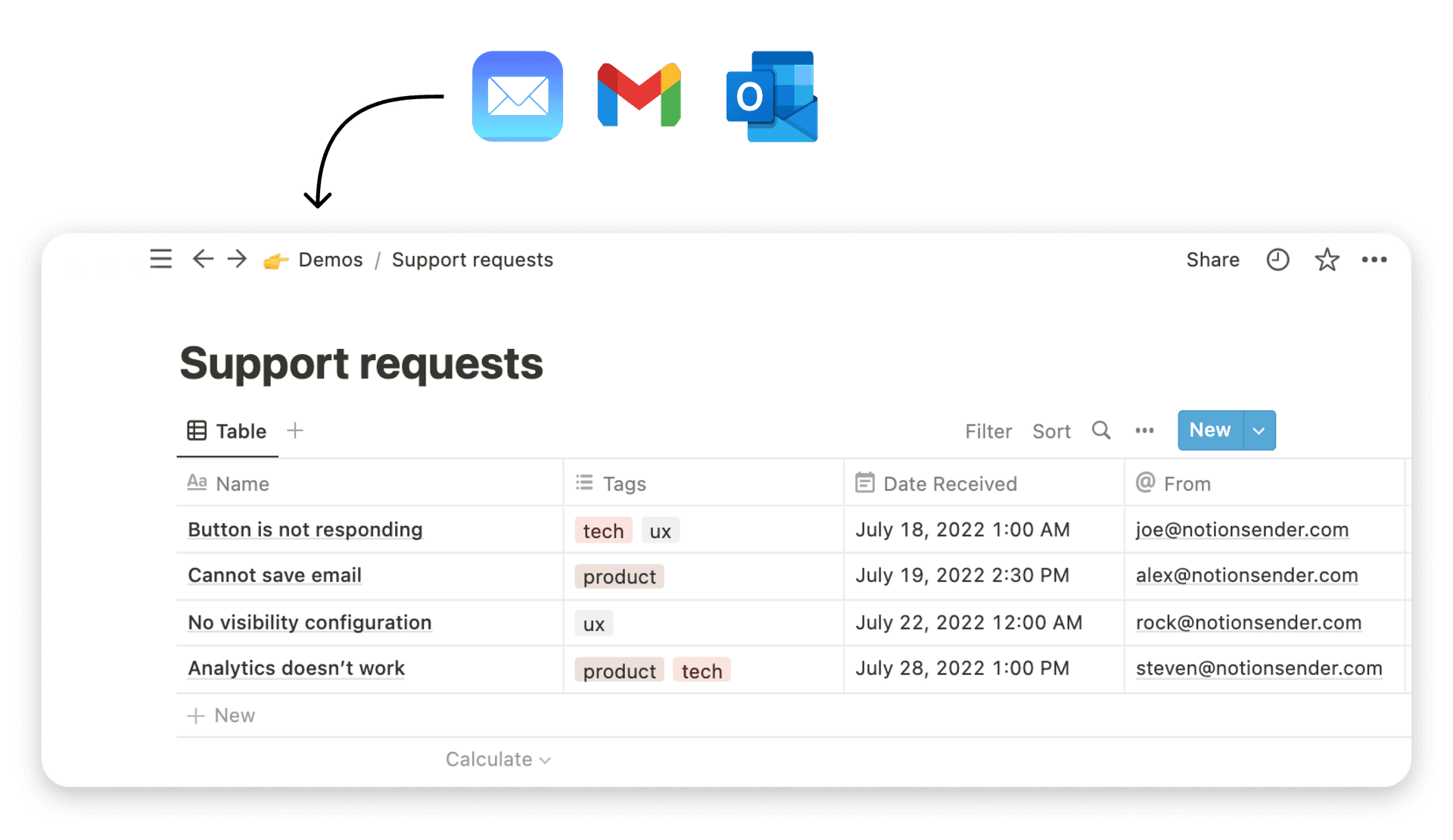
Tools like NotionSender are built to bridge this exact gap. By connecting your Notion databases to your email, you can effectively turn your workspace into a command center for all your outreach. We've got a whole guide on the different ways you can use Notion for sending emails. This kind of setup lets you manage contact form submissions that feed directly into a Notion database, draft newsletters from your approved blog posts, and even automate email campaigns—all without ever leaving Notion.
For teams who are comparing CMS systems based on pure efficiency, this integrated approach makes a compelling case. It pulls content creation, project management, and audience communication into one cohesive system, offering a uniquely agile and cost-effective alternative to the more conventional players.
How to Choose the Right CMS for Your Business
We've covered a lot of ground comparing traditional, visual, headless, and even some unconventional CMS platforms. Now comes the hard part: making a choice. The secret isn't finding the single "best" platform—it's about finding the one that truly fits your business goals, your team's skillset, and your budget.
For a lot of small business owners, the main goal is just to get online fast without breaking the bank. If you value ease of use and a massive support community, WordPress is almost always the most practical choice. Its incredible library of plugins lets you add functionality without having to call a developer for every little thing.
Matching the Platform to Your Primary Goal
But what if your business lives and breathes design? A marketing team at a creative agency has a completely different set of needs. They need total, uncompromising control over the brand's visual identity. For them, a tool like Webflow provides that essential creative freedom, letting them build stunning, custom websites without being boxed in by templates.
Then there's the e-commerce world. If your entire business model is built around selling products, the choice becomes even more straightforward. A direct-to-consumer brand needs airtight inventory management, secure payment processing, and an engine that can handle sales at scale. Here, Shopify is the purpose-built solution, taking care of the commerce complexities so you can just focus on growing your business.
This decision tree helps visualize how your main goal—whether it's efficiency, creative control, or commerce—naturally points you toward different kinds of CMS platforms.

As you can see, platforms like Notion, Webflow, and Shopify are designed from the ground up to solve fundamentally different problems.
Finally, what if raw operational efficiency is your north star? For a freelancer or a small, nimble team, the overhead of a full-blown CMS can feel like a distraction. This is where an unconventional Notion-based system becomes a seriously compelling option. It centralizes everything—content creation, project management, you name it—into a single workflow. By connecting it with tools like NotionSender, you can run everything from blog posts to email campaigns without ever leaving your Notion workspace.
Your ideal CMS is the one that solves your biggest problem. Whether that problem is budget, design limitations, sales logistics, or workflow friction, let your primary business need guide your final choice.
To give you one last high-level reference, I've put together a matrix that scores each major CMS category on the factors that tend to matter most to teams like yours.
CMS Category Recommendation Matrix
This table breaks down which type of CMS is generally best suited for different needs and team profiles, giving you a quick way to narrow down your options.
| CMS Category | Best For | Ease of Use (1-5) | Scalability (1-5) | Typical Cost |
|---|---|---|---|---|
| Traditional | All-in-one flexibility for blogs and standard sites. | 4 | 3 | Low-Medium |
| Visual & SaaS | Marketing teams and designers needing creative control. | 3 | 4 | Medium-High |
| Headless | Enterprises needing multi-channel content delivery. | 2 | 5 | High |
| Unconventional | Teams prioritizing workflow efficiency over features. | 5 | 2 | Very Low |
Think of this as your starting point. Use it to identify the category that aligns with your top priority, then revisit the specific platforms within that group to make your final call.
Frequently Asked Questions
When you're comparing different CMS platforms, it's easy to get bogged down in technical jargon. Let's clear up some of the most common questions we hear to help you feel confident in your decision.
What Is The Main Difference Between A Traditional And A Headless CMS?
Think of a traditional CMS like WordPress as an all-in-one package. It bundles the backend—where you create and manage content—with the frontend, which is the website your visitors see. It handles everything from content creation to final presentation.
A headless CMS, on the other hand, is only a backend content repository. It doesn't care what the final product looks like. Instead, it delivers your content via an API to any frontend you want—a website, a mobile app, a smart display, you name it. This gives you incredible flexibility, but it absolutely requires development resources to build and connect that frontend.
The core trade-off is control versus convenience. Traditional systems are easier to start with, while headless systems offer superior flexibility for complex, multi-channel projects but demand more technical expertise.
Can I Migrate From One CMS To Another Later On?
Yes, but it's rarely a walk in the park. The difficulty and cost can vary wildly. Moving between similar platforms—say, from one open-source traditional CMS to another—is usually doable with existing tools, though it's almost never a simple one-click process.
But moving from a traditional system like WordPress to a headless one like Contentful, or from an e-commerce platform like Shopify to a visual builder like Webflow, is a massive undertaking. It's less of a "migration" and more of a complete website rebuild. When you're trying to figure out how to choose a CMS, thinking about the long term is critical. It’s always best to pick a platform that can grow with you to avoid a painful and expensive migration down the road.
How Does A Tool Like NotionSender Fit Into A CMS Strategy?
NotionSender acts as a bridge, connecting your content management workflow directly to your communication strategy. It creates a much more unified, efficient system.
Here’s how it works in a couple of common scenarios:
- For external CMS users: Let's say you run your site on Webflow but manage all your projects and tasks in Notion. You can use NotionSender to pipe contact form submissions directly into your Notion project boards, keeping everything in one place.
- For Notion-as-CMS users: If you're one of the many people using Notion as your actual CMS, NotionSender becomes the engine for your outreach. It lets you send email campaigns, manage contacts, and automate communication, all without ever leaving your workspace. It's a uniquely streamlined setup.
By turning your Notion workspace into a central command hub, NotionSender closes the gap between managing content and actually talking to your audience. Learn how NotionSender can make your workflow more efficient.