10 Essential Project Risk Management Strategies for 2026

In project management, what you don't know can hurt you. Unforeseen issues, from budget overruns and timeline slips to resource conflicts and stakeholder misalignment, can derail even the most well-planned initiatives. True success isn't about avoiding risks entirely; it's about anticipating, understanding, and preparing for them with a clear plan.
Effective project risk management strategies transform uncertainty from a threat into a manageable variable. This approach provides a structured framework to navigate challenges proactively rather than reactively, building resilience into your project from day one. To grasp the full scope of this discipline, exploring comprehensive guides on managing risk in project management can provide a solid foundational understanding.
This guide moves beyond theory, offering a practical roundup of 10 essential strategies that you can implement today. You will learn to:
- Identify and document potential threats before they materialize.
- Assess and prioritize risks based on their potential impact.
- Mitigate issues with clear, actionable response plans.
- Monitor risks continuously throughout the project lifecycle.
We will explore each strategy in detail, focusing on how to operationalize these practices within your daily workflow. This includes specific guidance on using tools like Notion and NotionSender to create an integrated and automated risk management system. By mastering these approaches, you can build projects that not only survive challenges but thrive in the face of them.
1. Risk Identification and Documentation
The most fundamental of all project risk management strategies is the systematic identification and documentation of potential threats. This foundational practice involves proactively brainstorming and cataloging any event or condition that could negatively affect your project's timeline, budget, or scope. By creating a centralized repository for these risks, you build a single source of truth that informs all subsequent management activities.
A well-documented risk is one that can be understood, tracked, and acted upon. This process isn't a one-time activity at the project's start; it's a continuous cycle of observation and recording. Early and consistent documentation gives teams the visibility needed to address issues before they escalate into full-blown crises, providing a clear audit trail for stakeholder communication and decision-making.
When to Use This Strategy
This strategy is non-negotiable and should be implemented at the very beginning of every project, regardless of size or complexity. It is the bedrock upon which all other risk management efforts are built. A marketing agency launching a new campaign, a software team developing a new feature, or a freelancer juggling multiple client deadlines all benefit from a formal process to capture potential pitfalls.
How to Implement It
- Establish a Central Risk Register: Your first step is to create a dedicated space to log risks. For teams using Notion, this means building a new database titled "Project Risk Register."
- Standardize Risk Entries: Create a template within your Notion database to ensure consistent data capture for every risk. Essential fields should include a Risk Description, Potential Impact (e.g., High, Medium, Low), Probability of occurrence, an Assigned Owner responsible for monitoring it, and its current Status (e.g., Open, Mitigated, Closed).
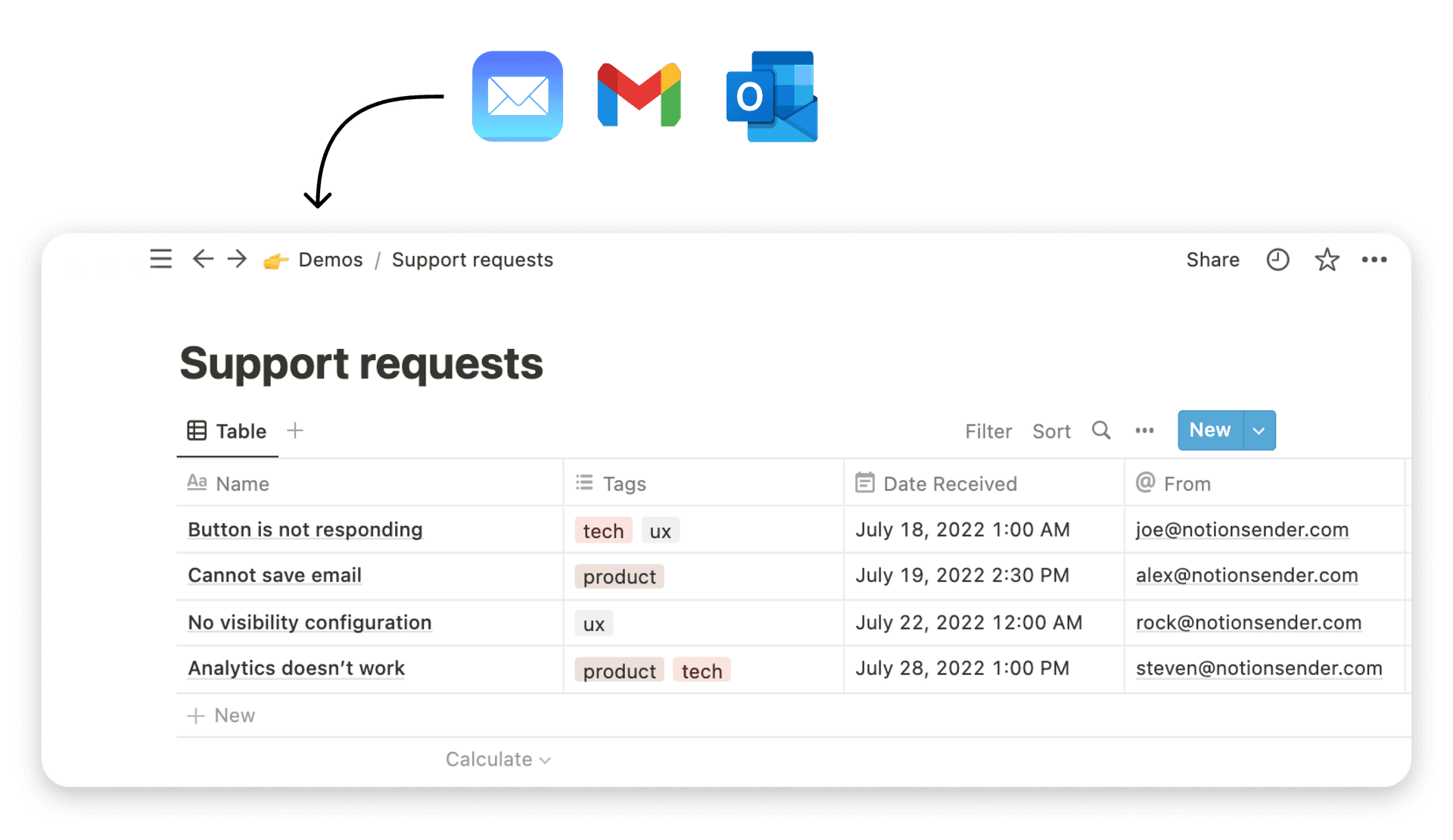
- Automate Risk Capture and Communication: Connect your Notion workspace with NotionSender. This allows team members to email new risks directly to a specific address, which then automatically creates a new entry in your risk register. You can also configure NotionSender to send automated email summaries of high-priority risks to key stakeholders on a weekly basis, keeping everyone informed without extra manual effort.
- Link Risks to Project Tasks: Within Notion, use relation properties to link specific risks directly to the project tasks or deliverables they might affect. This creates a powerful, interconnected view of your project, showing how potential issues tie into your team's day-to-day work.
2. Risk Assessment and Prioritization Matrix
Once risks are identified, the next step is to understand which ones demand your immediate attention. This is where a Risk Assessment and Prioritization Matrix becomes an invaluable project risk management strategy. This quantitative method involves evaluating each risk based on its probability of occurring and its potential impact on the project, allowing you to rank threats by severity and focus your resources effectively.

The matrix visually plots likelihood against impact, creating clear priority zones (e.g., high, medium, low). This prevents teams from spreading their efforts too thin or focusing on low-impact issues. For instance, a construction project might rank a potential safety hazard as a top priority regardless of its low probability, because the impact would be catastrophic. Similarly, a marketing campaign might prioritize a risk to brand reputation over a minor budget overrun. This approach brings objectivity to a process that can otherwise be driven by guesswork.
When to Use This Strategy
This strategy is crucial for any project with more than a handful of identified risks, especially when resources like time, budget, and personnel are limited. It is most effective after the initial risk identification phase is complete but before you begin developing mitigation plans. It's the essential bridge between knowing what could go wrong and deciding what to do about it. Teams managing software development, marketing launches, or complex client deliverables need this clarity to make smart, data-informed decisions.
How to Implement It
- Define Scoring Criteria: Before assessing risks, establish clear, measurable criteria for your probability and impact scores. For example, a 1-5 scale where Impact '5' means "Project Failure" and Probability '5' means ">80% chance of occurring."
- Build the Matrix in Notion: Create fields for Probability and Impact in your Notion risk register, using a "Select" or "Number" property. This allows for easy sorting and filtering.
- Calculate a Risk Score: Add a Formula property to your Notion database to automatically calculate a Risk Score for each entry. A simple and effective formula is
prop("Impact") * prop("Probability"). This gives you a single, quantifiable metric to rank every risk. - Automate Prioritized Reporting: Configure NotionSender to send a weekly email digest of all risks with a "High" impact or a Risk Score above a certain threshold (e.g., >15). This report can go directly to project leadership, ensuring they are always aware of the most critical threats without needing to check the database manually.
3. Risk Mitigation Planning and Response Strategies
Beyond just listing potential problems, effective project risk management strategies involve creating specific, actionable plans to address them head-on. This is where mitigation planning comes in, a proactive approach to developing concrete responses for identified risks before they materialize. The goal is to reduce either the probability of the risk occurring or the severity of its impact, ensuring your team is prepared, not paralyzed.

This process involves choosing from four primary responses: avoiding the risk entirely, mitigating its effects, transferring the risk to a third party, or consciously accepting it. For example, a freelancer might require a 50% deposit to mitigate non-payment risk, or a marketing team might vet backup vendors to avoid dependency on a single supplier. Having these predetermined responses ready prevents scramble-mode decision-making and keeps the project on track.
When to Use This Strategy
This strategy should be applied to all identified risks that are deemed significant enough to warrant a response. Once you've completed your initial risk identification, you should immediately begin planning responses for any risk with a medium or high potential impact. It's not necessary for every minor risk, but it's crucial for any threat that could genuinely derail your budget, timeline, or objectives.
How to Implement It
- Add Response Fields to Your Risk Register: Enhance your Notion risk register by adding a "Response Strategy" field. Use a
Selectproperty with the options: Avoid, Mitigate, Transfer, and Accept. This allows for quick categorization and filtering. - Create Actionable Mitigation Tasks: For each risk assigned a "Mitigate" strategy, create a specific action item. In Notion, you can create a separate "Mitigation Tasks" database and use a
Relationproperty to link these tasks directly back to the corresponding risk in your register. - Automate Task Assignment and Updates: Configure NotionSender to automatically email the assigned owner of a mitigation task the moment it's created. You can also set up a rule where updating the status of a mitigation task in Notion (e.g., to "Completed") triggers an email notification to the project manager.
- Document and Review Lessons Learned: Create a "Lessons Learned" database in Notion. After a risk is resolved or a project is completed, document which mitigation strategies were effective and why. Link these insights back to specific risks to build a knowledge base that informs future planning.
4. Continuous Risk Monitoring and Tracking
Effective project risk management strategies extend far beyond a one-time setup; they require constant vigilance. Continuous risk monitoring and tracking is the dynamic process of regularly reviewing and updating the status of identified risks throughout the project lifecycle. Instead of a static list, your risk register becomes a living document that reflects the current reality of your project, ensuring potential threats are never allowed to fall through the cracks as circumstances evolve.

This ongoing analysis involves tracking key risk indicators, re-evaluating probability and impact, and scanning the horizon for new, emerging threats. By maintaining this rhythm of review, you empower your team to adapt swiftly to changing conditions. This active approach ensures that risk management remains a relevant and valuable part of your project's operational cadence.
When to Use This Strategy
This strategy is essential for any project lasting more than a few weeks or operating in a volatile environment. It is particularly critical for agile software teams who review risks during sprint ceremonies, marketing campaigns monitoring social media sentiment for brand reputation risks, or freelancers tracking client communication frequency as an early warning sign of project derailment. Continuous monitoring transforms risk management from a preliminary checkbox into a powerful, real-time navigation tool.
How to Implement It
- Schedule Regular Risk Reviews: The foundation of monitoring is consistency. Set a recurring weekly or bi-weekly risk review meeting in your team’s calendar. Use Notion’s built-in reminders to automatically notify the assigned owner and key stakeholders ahead of time.
- Create a Risk Dashboard in Notion: Build a dedicated page in Notion that serves as a risk dashboard. Use a linked view of your Risk Register database, creating filtered views for "High-Priority Risks," "Risks Nearing Threshold," and "Recently Closed." Use Notion's board view to display risks by their Status (e.g., Active, Monitoring, Mitigated) for a clear, visual overview.
- Define Escalation Triggers: Don't wait for a risk to become a crisis. Define clear trigger conditions within your Notion database. For example, a formula property could change a risk’s status to "Escalate" if its probability is updated to "High" and its impact is also "High." This provides an objective signal for leadership attention.
- Automate Stakeholder Summaries: Configure NotionSender to send an automated email digest every Friday. This email can pull all risks with the "High" priority status or those updated in the past week from your Notion register and send the summary directly to project sponsors and senior leadership, ensuring consistent visibility without manual report creation.
5. Stakeholder Communication and Transparency
One of the most effective project risk management strategies is to establish clear, consistent, and honest communication about project risks with all stakeholders. This approach moves beyond simple status updates to foster a culture of transparency where potential threats are discussed openly. It involves regular reporting, candid conversations about risk impacts, and the setting of realistic expectations from the outset.
Transparent communication builds trust and empowers stakeholders with the information they need to make better, more informed decisions. When clients, executives, and team members are aware of the risks, they are less likely to be surprised or frustrated when issues arise. This strategy turns risk management into a collaborative effort, reducing conflict and ensuring everyone is aligned on the path forward, even when that path includes navigating around obstacles.
When to Use This Strategy
This strategy should be applied throughout the entire project lifecycle, especially in projects with high stakes, complex dependencies, or multiple key stakeholders (e.g., clients, investors, executive leadership). It is critical for consultants managing client relationships, startup founders reporting to investors, and project managers overseeing cross-functional teams where alignment is paramount. Any project where a surprise could damage a key relationship will benefit from this proactive communication.
How to Implement It
- Segment Stakeholder Views: In your Notion risk register, create different database views for different audiences. You can create a "Technical Risk View" filtered for the development team and a "Business Impact View" for leadership, ensuring each group sees the most relevant information without unnecessary noise.
- Create Custom Communication Templates: Use NotionSender templates to design customized email summaries for different stakeholder groups. For example, send a weekly digest of high-level business risks to executives and a more detailed, technical risk summary to the project team. Learning how to send the perfect email ensures your updates are read and acted upon.
- Automate Regular Reporting: Configure NotionSender to automatically send scheduled risk reports from your Notion database. Set up a monthly email that pulls risks with high financial impact and sends them to the finance committee, or a weekly email of timeline-related risks to the project sponsor.
- Communicate Uncertainty Honestly: Add a "Confidence Level" field (e.g., a percentage or a "High/Medium/Low" tag) to your Notion risk register. This allows you to transparently communicate the degree of uncertainty around a risk's probability or impact, managing expectations more effectively. Use NotionSender to send immediate alerts when critical risks are identified, ensuring rapid awareness.
6. Contingency Planning and Reserve Management
One of the most practical project risk management strategies is to build a safety net directly into your project's foundation. Contingency planning involves setting aside extra resources, typically time and money, to absorb the impact of identified risks. These dedicated buffers, known as contingency reserves, are allocated for specific "known unknowns" and provide the flexibility needed to handle problems without derailing the entire project.
This strategy acknowledges that even the best plans encounter friction. A construction project might budget a 10% reserve for material price increases, or a freelancer might add a 20% timeline buffer to a client deadline. It distinguishes between contingency reserves for identified risks and management reserves, which are held for truly unforeseen "unknown-unknown" events, giving leaders multiple layers of defense against disruption.
When to Use This Strategy
This strategy is essential for any project with significant budget or timeline constraints where the cost of a delay or overage is high. It should be applied when you have identified specific risks with a measurable potential impact. It's a key practice for software projects allocating a schedule buffer for complex integrations, event planners setting aside funds for potential venue issues, or marketing teams reserving ad spend for underperforming channels.
How to Implement It
- Create a Dedicated Budget Database: In Notion, build a database to track your project budget. Create separate line items or properties to clearly distinguish the Baseline Budget from the Contingency Reserve and Management Reserve.
- Link Reserves to Risks: Use a relation property in Notion to link specific contingency amounts directly to the risks they are meant to cover in your "Project Risk Register." For example, a $5,000 contingency can be linked to the risk of "Unexpected Third-Party API Fees." This creates complete traceability.
- Establish a Usage Workflow: When a risk materializes and you need to use the reserve, document the withdrawal in your budget database. You can create a simple approval process where a manager must change a "Status" field from "Pending" to "Approved" before funds are officially considered spent.
- Automate Stakeholder Reporting: Configure NotionSender to automatically email a monthly "Contingency Burn-Down Report" to financial stakeholders. This email can summarize the remaining reserve balance and list all withdrawals made during the period, ensuring transparent financial oversight without manual report-building.
7. Risk Owner Assignment and Accountability
One of the most effective project risk management strategies is to ensure that no risk is left an orphan. This governance practice involves assigning clear ownership for each identified risk to a specific individual. The designated "risk owner" becomes responsible for monitoring the risk, developing a response plan, and reporting on its status, preventing critical threats from being ignored due to diffused responsibility.
This approach creates a powerful chain of accountability. When a person knows they are directly answerable for a potential problem, they are far more likely to give it consistent attention. Risk owners are typically chosen based on their expertise and authority to act. For instance, the CTO is the natural owner for technical architecture risks, while a freelancer, acting as their own project manager, takes personal ownership of all client-related risks.
When to Use This Strategy
This strategy is essential for any project involving more than one person. It should be implemented as soon as the initial risk register is populated. Assigning owners is crucial in team settings to prevent the bystander effect, where everyone assumes someone else is handling a problem. It’s particularly important for complex projects with multiple workstreams, where risks can easily get lost between departments.
How to Implement It
- Create a Dedicated "Owner" Field: In your Notion risk register, add a "Person" property named Risk Owner. This allows you to assign a specific team member from your workspace to each risk entry, making accountability instantly visible.
- Establish Backup Owners: For critical risks that could derail the entire project, add a second "Person" property called Backup Owner. This ensures continuity if the primary owner is unavailable, providing an essential layer of redundancy for your most significant threats.
- Automate Accountability Reminders: Use NotionSender to create a personalized, automated workflow. Configure it to send a weekly email to each risk owner that contains a summary of only the risks assigned to them. This targeted communication keeps their responsibilities top-of-mind without cluttering their inbox with irrelevant information.
- Build an Accountability Dashboard: In Notion, create a new page and set up a linked view of your risk register. Group the database by the Risk Owner property. This creates a clear, at-a-glance dashboard showing who is responsible for what, making it easy to review workloads and track accountability during team meetings.
8. Risk Categorization and Root Cause Analysis
This diagnostic strategy moves beyond simply listing threats by organizing them into logical groups and digging deep to find their true origins. Risk categorization and root cause analysis involve sorting risks by type-such as technical, organizational, or budget-and then systematically investigating why they exist. Instead of just treating symptoms, this approach helps you address the core problems that create risk in the first place.
By understanding the underlying sources of potential issues, your team can develop much more effective preventive measures and correct systemic weaknesses. For example, identifying that frequent budget overruns consistently stem from uncontrolled scope creep, rather than poor initial estimates, allows you to fix the change request process. This method transforms reactive problem-solving into proactive, sustainable problem prevention, making it one of the most powerful project risk management strategies.
When to Use This Strategy
This strategy is most effective on projects that experience recurring issues or on larger, more complex initiatives where risk patterns are difficult to spot. If your team finds itself fighting the same fires from one project to the next-such as missed deadlines or quality issues-categorization and root cause analysis are essential. It helps you break the cycle of repeated failures by uncovering the foundational reasons they keep happening.
How to Implement It
- Create a Risk Category Database: In Notion, build a simple database to define your risk categories. You might include types like Technical, Schedule, Budget, External, and Organizational, each with a brief description.
- Tag Risks with Categories: In your main "Project Risk Register" database, create a relation property that links to your new category database. This allows you to tag each risk with one or more relevant categories, creating a structured classification system.
- Perform Root Cause Analysis: For each significant risk, use the "5 Whys" technique. Add a text property to your risk register called "Root Cause Analysis" and document your investigation. Ask "Why?" repeatedly until you uncover the fundamental cause. For instance, a missed deadline (the symptom) might be traced back to unclear requirements gathering (the root cause).
- Create Grouped Views: Use Notion's database views to group your risk register by category. This instantly creates dashboards that show you risk clusters. You can see at a glance if you have a high concentration of technical risks or if most of your high-impact risks are organizational.
- Automate Pattern Reporting: Configure NotionSender to send a weekly digest of risks grouped by category to team leads or department heads. An automated email showing that 70% of new risks this month are related to "Scope Creep" provides data-driven evidence that the change management process needs immediate attention, helping teams spot and act on systemic patterns.
9. Lessons Learned and Organizational Knowledge Management
One of the most powerful project risk management strategies is creating a system for learning from the past. This approach transforms project completion into an opportunity for growth, capturing insights and building a knowledge base that informs future endeavors. By systematically documenting what worked, what failed, and why, your organization develops institutional memory that makes risk assessment, estimation, and mitigation more effective over time.
This strategy establishes a virtuous cycle of continuous improvement. Instead of starting each new project from scratch, teams can draw upon a well of collective experience. A software company can consult a playbook of previously encountered bugs, while a marketing agency can use templates based on past campaign risks. This practice turns reactive problem-solving into proactive, data-informed planning.
When to Use This Strategy
This strategy is essential for any organization that runs recurring or similar types of projects and aims for long-term improvement. It should be formally implemented at the conclusion of every project or major project phase. It is especially valuable for growing teams, as it helps standardize processes and accelerate the onboarding of new members by giving them access to a repository of organizational wisdom.
How to Implement It
- Create a 'Lessons Learned' Database: In Notion, build a central database dedicated to capturing these insights. This repository will serve as your organization's memory bank for project outcomes and risk management effectiveness.
- Link Lessons to Realized Risks: Use a relation property in Notion to connect entries in your 'Lessons Learned' database directly to the specific risks in your 'Project Risk Register' that actually occurred. Document which mitigation strategies were effective and which were not, providing context for future teams. You can find more tips on getting the most out of Notion databases on our blog.
- Standardize Documentation with Templates: Develop a Notion template for 'Lessons Learned' entries. Key fields should include Project Name, Related Risk, What Happened, What We Learned, and Actionable Recommendations for future projects. This ensures consistency and makes the information easy to digest.
- Automate Knowledge Sharing: Use NotionSender to operationalize your knowledge management. Configure it to email a summary of key lessons learned from a completed project to relevant department heads or to new team members as part of their onboarding package. This actively pushes crucial knowledge to the people who need it, when they need it.
10. Integrated Risk Management Tool Adoption and Automation
One of the most effective project risk management strategies involves moving away from disconnected spreadsheets and embedding risk management directly into the platforms your team uses every day. This integrated approach emphasizes making risk tracking a natural part of the project workflow, rather than a separate, cumbersome administrative task. By bringing risk data into your central work hub, you reduce friction, improve visibility, and ensure that potential threats are considered alongside daily project activities.
This systems-level strategy keeps risk management from becoming an afterthought. When risks are visible within project boards, task lists, and team communications, they remain a priority. For effective integrated risk management and streamlined workflows, investing in the right project management software is crucial. This integration ensures that data is accurate, up-to-date, and directly connected to the work it impacts, fostering a culture of proactive risk awareness.
When to Use This Strategy
This strategy is ideal for teams of any size that are already using a central project management or collaboration tool like Notion, Jira, or Monday.com. It is particularly powerful for organizations seeking to improve risk management adoption and consistency. If your current risk process feels siloed or is often neglected because it requires logging into a separate system, integrating it into your primary workspace is the solution.
How to Implement It
- Centralize Risks in Your Project Hub: Instead of a separate spreadsheet, build your risk register directly within your primary work tool. In Notion, this means creating a dedicated database for risks within your main project workspace.
- Connect Risks to Project Work: Use the platform’s features, like Notion's relation property, to link individual risks directly to the specific projects, tasks, or team members they affect. This provides immediate context for anyone working on a related item.
- Automate Risk Capture and Escalation: Implement automation to make risk logging and communication effortless. Connect your Notion workspace with NotionSender to allow team members to email new risks directly to your register. You can also create rules that automatically send an email alert to a project lead or stakeholder whenever a risk is created or updated with a "High" priority status.
- Embed Risk Summaries in Communications: Use automation to keep stakeholders informed without adding manual work. With NotionSender, you can configure automated weekly or bi-weekly emails that pull a summary of open, high-priority risks from your Notion database and send it to the project team. Learn more about automating email workflows from Notion to keep everyone aligned.
<iframe width="560" height="315" src="https://www.youtube.com/embed/tLabykkGbEw" frameborder="0" allow="accelerometer; autoplay; clipboard-write; encrypted-media; gyroscope; picture-in-picture" allowfullscreen></iframe>
10-Point Project Risk Management Comparison
| Item | Implementation Complexity (🔄) | Resource Requirements (⚡) | Expected Outcomes (⭐📊) | Ideal Use Cases | Key Advantages (💡) |
|---|---|---|---|---|---|
| Risk Identification and Documentation | Medium 🔄🔄 | Medium ⚡⚡ | ⭐⭐⭐⭐ — Early detection & audit trail | Teams needing centralized risk logs (software, marketing, freelancers) | Centralized visibility; improves team awareness |
| Risk Assessment and Prioritization Matrix | Medium 🔄🔄 | Medium ⚡⚡ | ⭐⭐⭐⭐⭐ — Objective prioritization & focused effort | Projects that must prioritize limited resources (construction, software) | Data-driven ranking; clear visual communication |
| Risk Mitigation Planning and Response Strategies | High 🔄🔄🔄 | High ⚡⚡⚡ | ⭐⭐⭐⭐ — Reduced impact and faster recovery | Projects requiring pre-planned responses (client contracts, critical releases) | Predefined actions, assigned owners, faster response |
| Continuous Risk Monitoring and Tracking | High 🔄🔄🔄 | High ⚡⚡⚡ | ⭐⭐⭐⭐⭐ — Adaptive management & early warnings | Long-lived or agile projects with changing conditions | Real-time visibility; trend data for decisions |
| Stakeholder Communication and Transparency | Medium 🔄🔄 | Medium ⚡⚡ | ⭐⭐⭐⭐ — Increased trust & better decisions | Client-facing projects and executive reporting | Builds trust; reduces surprises and conflict |
| Contingency Planning and Reserve Management | Medium 🔄🔄 | High ⚡⚡⚡ | ⭐⭐⭐⭐ — Financial/schedule buffers preserved | Budget-sensitive projects (construction, large software efforts) | Protects timeline/profitability; faster approvals |
| Risk Owner Assignment and Accountability | Low–Medium 🔄🔄 | Low ⚡ | ⭐⭐⭐⭐ — Clear responsibility & quicker action | Teams needing governance and clear decision rights | Ensures ownership; prevents overlooked risks |
| Risk Categorization and Root Cause Analysis | High 🔄🔄🔄 | Medium ⚡⚡ | ⭐⭐⭐⭐ — Systemic fixes & fewer recurring issues | Organizations addressing recurring failures or process issues | Identifies root causes; enables bulk mitigation |
| Lessons Learned and Organizational Knowledge Management | Medium 🔄🔄 | Medium ⚡⚡ | ⭐⭐⭐⭐ — Improved future estimates & onboarding | Organizations focused on continuous improvement | Preserves institutional knowledge; prevents repeats |
| Integrated Risk Management Tool Adoption and Automation | High 🔄🔄🔄 | High ⚡⚡⚡ | ⭐⭐⭐⭐⭐ — Single source of truth & automated workflows | Mature teams wanting integration and automation (Notion + tools) | Boosts adoption; automates routine risk tasks and reporting |
Turn Risk Management from a Chore into a Competitive Advantage
Navigating the complexities of modern projects without a solid framework for risk is like setting sail without a compass. The ten project risk management strategies detailed in this guide are not just theoretical concepts; they are practical, field-tested approaches designed to give you control in the face of uncertainty. From the foundational act of Risk Identification to the advanced practice of Integrated Tool Adoption, each strategy builds upon the last, creating a comprehensive system for protecting your projects, your budget, and your reputation.
The journey from a reactive, firefighting mode to a proactive, strategic posture begins with a change in mindset. Project risk management isn't about creating burdensome administrative tasks or endless spreadsheets. Instead, it’s about embedding a culture of awareness and preparedness into the very fabric of your project execution. It's about asking "what if" not out of fear, but out of a desire to build resilience and agility.
Key Takeaway: The goal is not to eliminate all risk, which is impossible, but to intelligently manage it. Effective risk management turns potential threats into managed outcomes and even uncovers hidden opportunities for improvement and innovation.
Bridging Strategy and Daily Operations
The true power of these strategies is unlocked when they are integrated directly into your team's daily workflow. This is where many initiatives fail; a risk register is created with enthusiasm only to gather digital dust in a forgotten folder. The key is to make risk management a living, breathing part of your project.
Consider the following actionable steps to begin:
- Start Small, Gain Momentum: Don't try to implement all ten strategies at once. Begin with Risk Identification and a simple Risk Assessment Matrix. Use a shared Notion database as your central risk log.
- Assign Clear Ownership: For every identified risk, immediately assign a Risk Owner. This single step dramatically increases accountability and ensures that someone is actively thinking about the problem and its potential solutions.
- Make it Visible: Integrate your risk log directly into your main project dashboard. If the risks are not visible, they do not exist in your team's day-to-day consciousness.
The move toward more sophisticated strategies like Continuous Monitoring and Lessons Learned becomes much more natural once the basic habits are in place. By using tools like Notion, you create a single source of truth that connects risks to tasks, meeting notes, and project timelines. This connectivity is what transforms risk management from a standalone activity into an integral component of successful project delivery.
From Defense to Offense: The Ultimate Advantage
Ultimately, mastering these project risk management strategies provides a powerful competitive edge. It allows small business owners, freelancers, and marketing professionals to deliver work with greater predictability and confidence. When your clients and stakeholders see that you have a structured process for handling potential problems, their trust in you deepens. This confidence is invaluable, leading to stronger relationships, repeat business, and a reputation for reliability.
By systematically identifying, assessing, and planning for risks, you protect your profit margins from budget overruns and your timelines from unexpected delays. You empower your team to focus on delivering high-quality work, secure in the knowledge that a safety net is in place. This is not just about avoiding failure; it is about engineering success.
Ready to automate a critical piece of your risk management communication? NotionSender allows you to send emails and alerts directly from your Notion risk database, ensuring stakeholders are notified the moment a risk's status changes. Try NotionSender today and turn your static risk log into an active communication hub.