10 Great Content Marketing Examples to Inspire You in 2026

Tired of hearing that you need “great content” when what you need is a clear example you can borrow, trim down, and ship this month? That's where teams often get stuck. They don't need more inspiration. They need patterns that connect content to leads, trust, and revenue.
The good news is that strong content marketing examples aren't mysterious anymore. They're usually built on repeatable formats, solid distribution, and clear measurement. In 2025, 89% of marketers said they use generative AI tools, while 92% of B2B marketers use short articles/posts, 76% use videos, and 75% use case studies/customer stories. That tells you something important. The best programs aren't relying on one brilliant campaign. They're combining educational content, proof assets, and efficient workflows.
This list is built for small teams that need practical direction, not brand mythology. You'll see what made each example work, which metrics matter, and how to adapt the approach without copying a giant company's budget. If your goal is to achieve business growth with content, start with patterns you can maintain.
1. HubSpot's Educational Blog & SEO Strategy
HubSpot didn't build authority by acting like a software company first. It acted like a teacher. The blog, Academy, templates, and reports all work because they solve real problems before asking for a signup.
That's the part organizations often miss when they study HubSpot. They copy the publishing volume, but not the usefulness. HubSpot's content works because each asset matches a practical intent. Someone searches for a tactic, lands on a guide, learns something usable, and then discovers the product ecosystem naturally.
Why it worked
HubSpot turned broad topics into structured learning paths. A basic search query could lead to a blog post, which could lead to a template, which could lead to a course, and eventually to a product trial.
For a small team, the lesson isn't “publish more.” It's “build depth around one problem.” If you serve email marketers, for example, one strong cluster around open rates can outperform a random stream of disconnected posts. A useful example is this guide on how to increase your open rates with these 10 email marketing tricks.
What to track
- Search intent fit: Measure whether the page answers the query well enough to keep readers moving deeper into the site.
- Internal pathing: Track which posts lead readers to templates, demos, newsletters, or product pages.
- Lead quality: Don't stop at traffic. Watch whether blog-driven signups are relevant buyers.
Practical rule: A pillar post should lead to a next step that feels like help, not a trap.
Small-budget version: pick three customer problems you hear constantly. Build one definitive article for each. Then create one email, one short social post, and one downloadable asset from each article. That's a real content system. Not a one-off post with no follow-through.
2. Dollar Shave Club's Viral Video Campaign

Dollar Shave Club is one of the clearest examples of personality beating polish. The launch video worked because it felt like a real point of view, not a committee-approved ad.
A lot of brands study this example and conclude they need to “be funny.” That's usually the wrong takeaway. Humor was the wrapper. The engine was clarity. The video made the offer simple, the brand memorable, and the category feel stale by comparison.
Why it worked
The message was easy to repeat. Cheap, convenient razors delivered with a voice people remembered. That combination matters more than production budget.
This approach is still relevant in crowded markets because generic content gets ignored. One industry analysis on content marketing examples argues that saturated markets reward more niche, authentic, and platform-native content over volume-heavy sameness. You can see that strategic shift in this analysis of why differentiation matters more than generic output.
How to adapt it without chasing virality
- Define one sharp promise: Your audience should understand the offer in seconds.
- Use a founder, operator, or customer voice: Real delivery often beats polished delivery.
- Write for sharing, not for everyone: If nobody disagrees or laughs or nods, the piece probably won't travel.
What doesn't work is forcing “viral energy” onto a brand with no clear personality. If your team is naturally calm and expert-led, lean into that. A dry, precise demo can outperform a joke-filled script if that's what your buyers trust.
A good follow-up move is email capture. If video creates attention, email turns that attention into a relationship. Don't leave viewers with a view count and no next step.
3. Slack's Product-Focused Content & Use Case Documentation
Slack's strongest content doesn't read like feature copy. It reads like workflow advice. That distinction is why it works. Buyers don't care about a feature list until they can picture the feature inside their own day.
The smart move here is contextual content. Slack has long framed the product through department needs, team habits, and specific collaboration problems. That makes the product easier to buy and easier to adopt after purchase.
Why it worked
Instead of saying “here's what Slack does,” the content answers “how would marketing use this?” or “how would engineering use this?” That turns abstract software into a practical operating model.
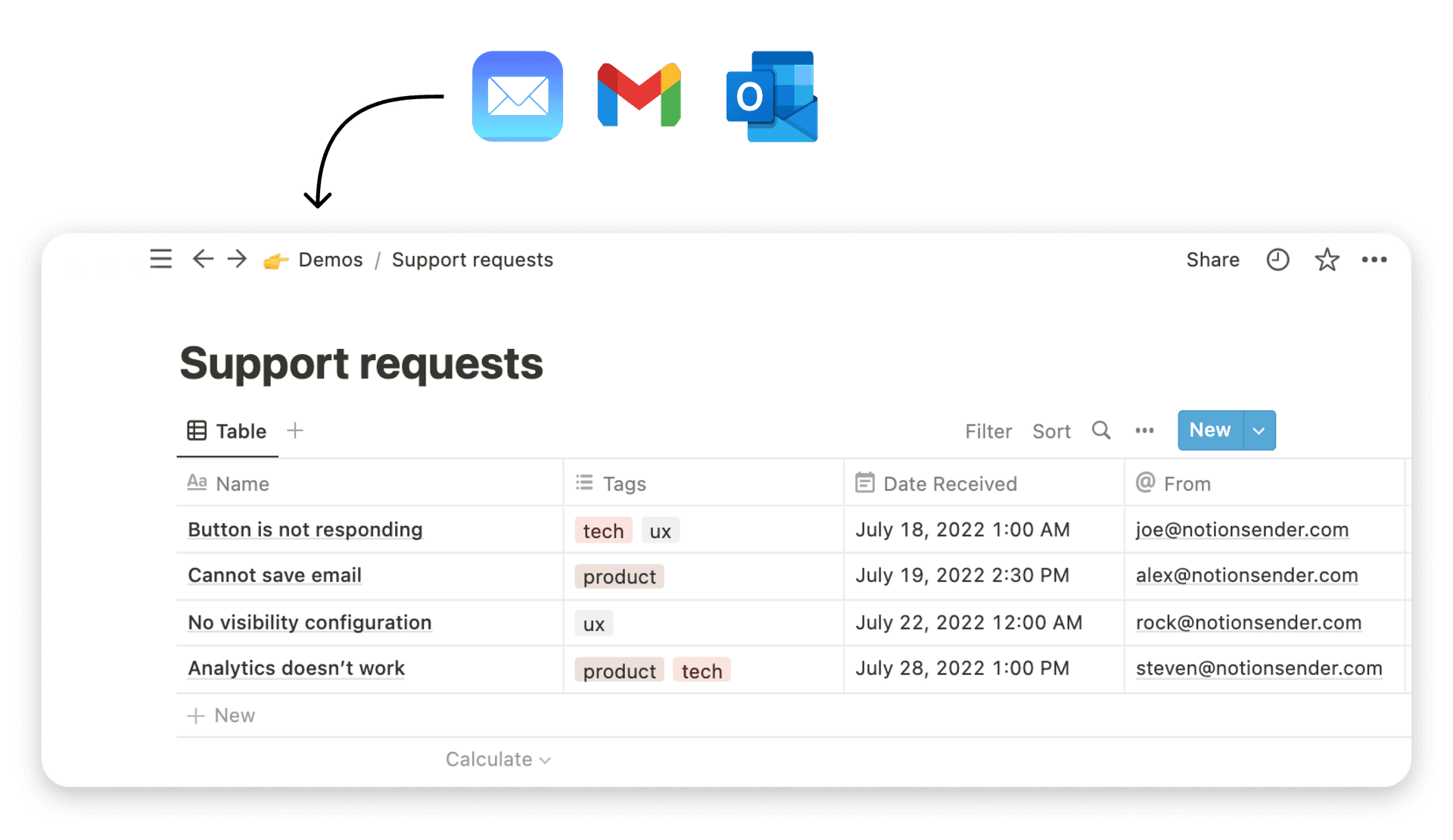
This is especially effective for workflow tools. If you sell something flexible, you need examples that remove ambiguity. One helpful angle is to show exactly how the tool fits into a repeatable process, like this walkthrough on ways to use Notion to send emails and more, write, schedule, and share.
What to measure in this kind of content
A strong product-use-case program should track behavior across the funnel, not just pageviews. In one B2B campaign case study, the team reported a 10% shift from “unaware” to “aware,” along with 13 million impressions, a $10 average CPM, and 429,000 completed audio listens at $0.03 each. The lesson isn't that every team needs those exact channels. It's that serious content programs measure awareness movement, engagement quality, and cost efficiency together.
Buyers adopt workflow software faster when they can see their own team in the example.
For a smaller team, build three use-case pages tied to three buyer types. Add screenshots, sample workflows, and a short “when to use this” section. Skip broad product pages until the use cases are strong.
4. Airbnb's User-Generated Content & Community Storytelling

Airbnb succeeded by moving the story away from inventory and toward people. Listings matter, but belonging, hosting, and travel identity made the brand bigger than the product interface.
That's the core advantage of user-generated content. It gives you emotional range that brand copy usually can't. Hosts, guests, and neighborhoods create texture. The company becomes a platform for stories instead of just a catalog.
Why it worked
The best community storytelling makes the audience feel seen. Airbnb's approach gave customers a way to participate in the brand narrative, not just consume it.
This matters even more today because many audiences are tired of polished-but-generic brand output. Authenticity and real user stories tend to carry more trust than overproduced messaging, especially in saturated spaces where every brand says roughly the same thing.
Small-team playbook
- Prompt specific stories: Ask users about a moment, challenge, or result. Don't ask for “feedback” and hope for magic.
- Feature contributors visibly: Put names, photos, context, and a real setting behind the story.
- Reuse community content carefully: Turn one customer story into a testimonial, email feature, short video, and landing page quote if you have permission.
What usually fails is lazy UGC strategy. A hashtag alone isn't a system. You need prompts, moderation, approval, and a clear standard for what gets featured. Otherwise you just create noise.
If you're a service business or software company, your version of Airbnb-style storytelling can be customer spotlights, project recaps, or “how I use this” posts from clients.
5. Buffer's Transparent Content & Real-Time Social Media Insights
Buffer built trust by sharing what many companies hide. That transparency made the content feel useful, not performative. Readers weren't just getting opinions about social media. They were getting operating insight from a team working in public.
This model works because transparency lowers the distance between brand and audience. People trust brands that show how they think, what they tested, and what happened next.
Why it worked
Buffer's content became credible because it paired advice with visible experience. If a tactic worked, readers could see the reasoning. If something didn't go well, the company could still publish the lesson.
For small teams, this is one of the easiest high-impact content marketing examples to adapt. You likely already have useful internal material. Process changes, campaign lessons, content experiments, customer questions, and channel observations can all become publishable content if you write them clearly.
What to track
- Repeat readership: Are the same people coming back for updates and insights?
- Shares and saves: Transparent posts often travel because they feel honest and practical.
- Sales conversations influenced by content: Ask leads which posts shaped their trust.
One caution. Transparency without judgment can backfire. Don't publish raw internal data just because it exists. Publish what helps your audience make a better decision. Readers want interpretation, not a spreadsheet dump.
A good transparent post usually includes the setup, what the team expected, what happened, what changed, and what others should borrow or avoid.
6. Moz's Whiteboard Friday & Educational Video Series
Moz proved that consistency can become a brand asset on its own. Whiteboard Friday wasn't just educational video. It was a reliable ritual. That predictability trained the audience to expect useful teaching in a recognizable format.
A lot of teams underestimate how powerful format memory is. When people know what they'll get, they come back with less friction. You don't have to reintroduce your style every time.
Why it worked
Each episode focused on one concept. That kept the series accessible and reusable. One video could serve as a blog post, newsletter feature, YouTube asset, and social clip.
Educational video is especially relevant because visual formats remain central to content mix. Many marketers already rely heavily on video alongside articles and proof content, which is why a repeatable series still makes sense for brands that want authority without constantly reinventing production.
How to use this if your team is tiny
Start with one recurring question your audience always asks. Record a short answer every week or every two weeks. Keep the frame simple. One host, one topic, one takeaway.
Consistency beats novelty when your audience is still deciding whether to trust you.
Then repurpose aggressively:
- Turn the transcript into a blog post: Clean it up and add examples.
- Clip a single insight for social: Pull the strongest thirty seconds.
- Send it by email: Use the episode as the anchor for your newsletter.
What doesn't work is launching a “series” that demands too much production. If your format takes a week to make, you won't sustain it. Choose a format your team can repeat for months.
7. GoPro's User-Generated Content & Community Ecosystem

GoPro is a classic case of product-led content that doesn't feel like product marketing. The camera is always present, but the content is really about what people do with it.
That shift matters. When customers become the main creators, the brand gets scale, authenticity, and endless variation. But it only works because GoPro built a clear ecosystem around submission, curation, and recognition.
Why it worked
The content doubles as proof. Every great clip demonstrates the product in real conditions without needing a scripted brand pitch.
This is one of the strongest content marketing examples for companies whose products produce visible outputs. If customers can show a transformation, a workflow, a design, a performance, or a result, the product can travel through their stories instead of your ad copy.
Practical adaptation for smaller brands
- Create submission rules: Tell users what to send, in what format, and how permission works.
- Reward participation: Recognition, reposts, or small perks can motivate consistent contribution.
- Curate hard: Not every customer contribution should go live. Standards matter.
The common mistake is asking for UGC before there's a reason to contribute. People participate when they get attention, status, or a sense of belonging. Build that loop first.
For B2B brands, your GoPro version might be customer-built templates, implementation walkthroughs, dashboard screenshots, or campaign examples. It doesn't need mountain footage. It needs visible proof that users are doing something valuable with the product.
8. Shopify's Entrepreneurship Content & Success Stories
Shopify's content works because it serves the ambition behind the purchase. People don't just want an ecommerce platform. They want a business that works. Shopify speaks to that larger goal.
That creates a stronger relationship than product content alone. When a brand helps customers think like owners, operators, and marketers, it becomes harder to replace.
Why it worked
Shopify teaches adjacent skills. Business setup, marketing, operations, and merchant stories all make the platform more useful without making every article a sales pitch.
This is a good model for any company whose product sits inside a larger journey. Your software, service, or tool is rarely the customer's true end goal. They want growth, control, speed, confidence, or revenue. Content should address that bigger mission.
What to borrow from this model
Start by mapping customer aspiration, not just customer pain. Pain gets clicks, but aspiration builds loyalty.
A few strong content formats here are:
- Foundational guides: Help beginners start correctly.
- Operator interviews: Show how real customers think and act.
- Success stories with context: Explain the path, not just the outcome.
For proof-focused pieces, before-and-after framing matters. One case study source highlighted outcomes such as 2000% ROI from marketing automation, and another documented 931 unique domain links plus 23,000 monthly organic visits from an earned-media campaign. The transferable lesson is simple. Good case studies show the mechanism behind results, not just the headline.
If you use this approach, include obstacles, decisions, and channel choices. That makes the story credible and useful.
9. Red Bull's Lifestyle & Experience-Based Content Marketing
Red Bull rarely leads with the can. It leads with the world around the customer. Adventure, risk, performance, spectacle. The brand became a media producer because that was the best way to own a cultural position, not just a shelf position.
This is a powerful strategy, but it's also one of the easiest to misuse. Most brands should not try to become mini media empires. The useful lesson is narrower. Build content around the identity your audience wants to live out.
Why it worked
Red Bull aligned itself with a lifestyle so tightly that the content became bigger than traditional product messaging. Events, athlete stories, and film-style production all reinforced the same brand meaning.
For smaller teams, the version to copy is not “sponsor extreme sports.” It's “choose a scene, community, or behavior your audience already values, then contribute something worth following.”
A leaner way to apply it
You can do this without event-scale production.
- Own a niche theme: Pick a recurring territory your audience cares about.
- Partner with credible voices: Borrow relevance through creators, experts, or practitioners.
- Create recurring experiences: A live session, challenge, interview series, or field report can work.
A lifestyle strategy fails when the content drifts too far from the product's real place in the customer's life. If the connection feels fake, people notice. The brand needs earned relevance in that world.
The best small-brand versions are often local, specialized, and community-driven. Narrow beats broad here.
10. Asana's Implementation Guides & Productivity Template Content
Asana's content is useful because it doesn't stop at software education. It teaches teams how to work better. Methodology content, templates, and implementation guides all reduce the gap between interest and actual use.
That's why this strategy converts and retains. Teams don't buy project management software because they love software. They buy because work is messy. Content that helps them fix the mess has immediate value.
A practical companion to this idea is a Notion-focused guide like 10 tips to help you get the most out of Notion.so, which shows how education around process and setup can support adoption.
Why it worked
Asana packaged expertise into usable assets. Templates and process guides help readers implement something immediately, even before they commit fully to the platform.
Here's the embedded example content format many teams can learn from:
<iframe width="100%" style="aspect-ratio: 16 / 9;" src="https://www.youtube.com/embed/2CPcky1KQJo" frameborder="0" allow="autoplay; encrypted-media" allowfullscreen></iframe>
How small teams can adapt it
One missed strategic layer in many content marketing examples is audience maturity. A format isn't enough on its own. It has to match buyer awareness. A practical framework is outlined in this buyer-awareness stage explanation: problem-unaware content should surface symptoms, problem-aware content should explain the issue, solution-aware content should compare options, product-aware content should show use cases and features, and most-aware content should rely on proof like testimonials or success stories.
That's exactly why implementation content works so well near conversion. The reader already knows the category. They need confidence, clarity, and evidence that rollout won't become a mess.
Use this structure:
- Method: Teach the process or framework first.
- Template: Give them something they can use immediately.
- Proof: Show a real scenario where the method fits.
Comparison of 10 Content Marketing Examples
| Strategy | 🔄 Implementation & Resources (complexity + resources) | ⚡ Speed / Efficiency | 📊 Expected Outcomes | ⭐ Key Advantages (effectiveness / quality) | 💡 Ideal Use Cases |
|---|---|---|---|---|---|
| HubSpot's Educational Blog & SEO Strategy | High complexity, requires dedicated content, SEO expertise, and consistent publishing team | Slow to ramp (months) but efficient long-term | Sustained organic traffic and lead generation | Establishes strong domain authority and evergreen ROI | Inbound marketing, SaaS lead generation, thought leadership |
| Dollar Shave Club's Viral Video Campaign | Low production complexity but needs creative talent and social amplification | Very fast potential reach; unpredictable efficiency | Rapid awareness spikes and sudden subscriber/customer growth | Exceptional short-term ROI and distinct brand voice | Early-stage brands seeking rapid awareness and personality-driven campaigns |
| Slack's Product-Focused Content & Use Case Documentation | Moderate–high complexity, product experts, writers, and documentation upkeep | Medium, accelerates onboarding and adoption once published | Increased feature adoption, reduced support requests, better retention | Directly ties content to product value and user workflows | Product-led SaaS, onboarding, cross-department adoption |
| Airbnb's User-Generated Content & Community Storytelling | Moderate complexity, community management, curation, and moderation required | Medium, content volume scales via community participation | High engagement, authentic social proof, scalable content volume | Builds emotional connection and community-driven trust | Marketplaces, platforms, travel & hospitality brands leveraging UGC |
| Buffer's Transparent Content & Real-Time Social Media Insights | High complexity, original research, data analysis, and regular reporting | Medium, time-intensive to produce but highly shareable | Thought leadership, backlinks, press coverage, trust growth | Differentiates through proprietary data and transparency | B2B thought leadership, PR-driven SEO, social media research |
| Moz's Whiteboard Friday & Educational Video Series | Moderate complexity, consistent production cadence and subject experts | Gradual growth; efficient for audience retention over time | Loyal audience, steady organic search traffic, education-driven leads | Low-cost, repeatable format that builds long-term authority | Educational content for technical communities, SEO training |
| GoPro's User-Generated Content & Community Ecosystem | Moderate complexity, submission systems, curation, and rights management | Scales efficiently with community participation | Large volume of authentic content and strong brand advocacy | Cost-effective content scale and passionate creator base | Action-sports, experiential products, brands with visual UGC focus |
| Shopify's Entrepreneurship Content & Success Stories | High complexity, diverse editorial formats and subject-matter expertise | Medium, multi-format investment with broad reach | Merchant acquisition, long-term trust, widened audience reach | Positions brand as partner to customers' business success | Platforms targeting SMBs, ecommerce enablement, educational marketing |
| Red Bull's Lifestyle & Experience-Based Content Marketing | Very high complexity, events, production teams, sponsorship logistics | Slow to build; high ongoing investment required | Deep brand loyalty and cultural relevance over time | Creates aspirational lifestyle positioning and high-impact experiences | Brands aiming for lifestyle positioning and large-scale experiential marketing |
| Asana's Implementation Guides & Productivity Template Content | High complexity, requires methodology experts and template development | Medium, speeds customer ROI and adoption when applied | Faster user onboarding, improved process adoption, reduced support | Practical, actionable guidance that drives product value | Productivity and PM tools, enterprise onboarding, process transformation |
Your Next Move: Turning Inspiration Into Action
These content marketing examples don't point to one perfect formula. They point to a few patterns that keep working. Teach clearly. Show proof. Match content to buyer readiness. Build formats your team can repeat without burning out.
If you're running a small team, don't try to copy all ten. Pick one model that fits your strengths. If you have strong operators and lots of internal knowledge, borrow from HubSpot or Asana. If your customers create interesting outcomes on their own, lean toward Airbnb or GoPro. If your advantage is candor and insight, Buffer is the better template.
The main trade-off is always the same. Broad content can attract attention, but specific content usually converts better. Personality can help distribution, but only if the offer is clear. Educational content builds trust, but it needs internal links, email capture, and proof assets to move people deeper into the funnel.
There's also a production trade-off. Some strategies need consistency more than creativity. Moz is a good reminder that a reliable format can outperform constant reinvention. Other strategies depend on curation, not heavy creation. GoPro and Airbnb show how much advantage you can get when customers help tell the story. For many small brands, that's more realistic than trying to produce polished campaigns every week.
The strongest move now is to turn one example into one system. Choose a topic. Pick a format. Define the next step. Then track a few useful signals instead of drowning in vanity metrics. If you publish educational content, look at search intent fit, email signups, and assisted conversions. If you publish case studies, look at sales usage, reply quality, and pipeline influence. If you publish video or community content, watch for engagement that leads somewhere meaningful.
For email-centric teams, operations matter as much as ideas. If you're planning campaigns, newsletters, and follow-ups inside Notion, a tool like NotionSender can help you connect content planning with email execution inside that workspace. That's useful when you want one place to manage ideas, schedules, and outbound communication without adding a messy handoff between tools.
Good content marketing doesn't start with “what should we post?” It starts with “what does our audience need to believe, understand, or do next?” Answer that well, and the format becomes much easier to choose.
If you want to turn these content marketing examples into actual campaigns, NotionSender can help you manage email workflows directly from Notion, including scheduled sends, templates, and database-based outreach so your content plan is easier to execute consistently.