10 Powerful Content Repurposing Strategies to Maximize Your Workflow in 2026
In a world saturated with content, the key to standing out isn't just creating more. It's about working smarter. Content repurposing is the ultimate leverage for busy professionals, allowing you to transform a single asset into a dozen different pieces that reach wider audiences and drive deeper engagement. But most guides offer generic advice like "turn a blog post into a tweet." We're going beyond the basics.
This guide unveils ten powerful, email-centric content repurposing strategies designed for a modern workflow. You'll learn how to convert everyday communications, from client inquiries to meeting notes, into structured, valuable assets. We provide step-by-step mini-workflows, real-world examples, and show you how to execute these strategies seamlessly using Notion and NotionSender. The goal is to turn your inbox from a chaotic time-sink into an organized content engine.
These techniques are more than just simple recycling; they represent a fundamental shift in how you view and manage information. By treating every email and document as a potential building block, you create a system that continually generates value with minimal extra effort. To truly unlock peak efficiency in content repurposing, understanding the broader principles of workflow automation is key, as it provides the framework for turning these manual tasks into automated systems. This article will show you the specific tactics needed to get started, demonstrating how to extract maximum value from the content you already produce every single day. Let's dive into the strategies that will help you amplify your impact without multiplying your workload.
1. Email-to-Database Content Conversion
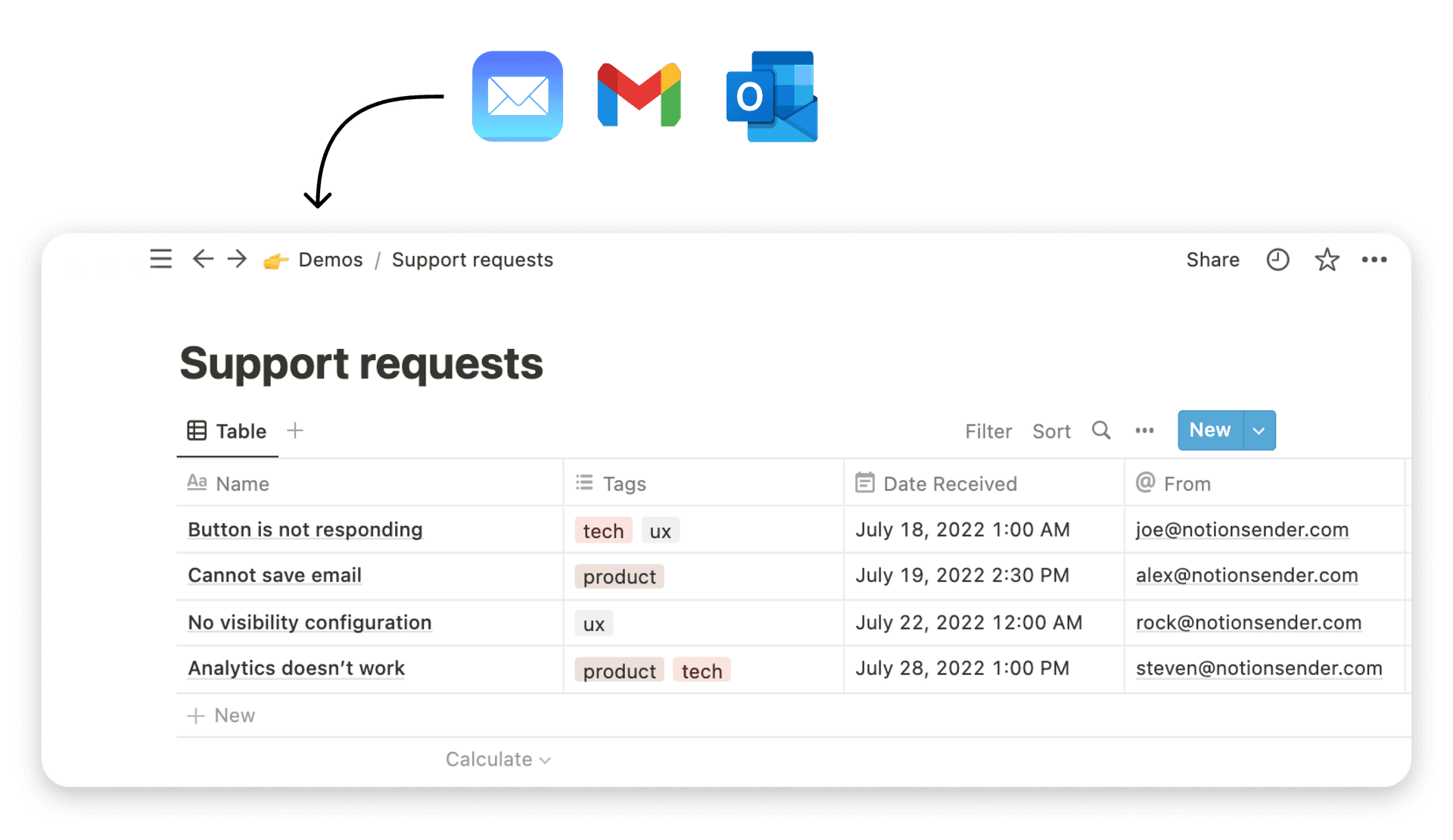
One of the most powerful content repurposing strategies transforms a constant stream of unstructured data into a highly organized asset. Email-to-Database Content Conversion is the process of automatically parsing incoming emails and converting their contents into structured entries in a database, such as Notion. This turns your inbox from a chaotic task list into a pipeline for organized, actionable information.
Instead of manually copying client details, project updates, or feedback, this system extracts key information and populates specific database fields. For teams using Notion as a central hub, this means a client inquiry email can instantly create a new record in your CRM, a forwarded invoice can log itself in your finance tracker, or a bug report can generate a new ticket in your project board, complete with attachments.
Why This Strategy Works
This approach excels at capturing valuable "passive content" that would otherwise be lost or require tedious manual entry. It ensures consistency, reduces human error, and makes crucial information instantly searchable and linkable within your workspace. By treating each email as a potential piece of structured content, you build a robust, interconnected knowledge base from communications that are already happening.
Key Insight: Your inbox contains a wealth of raw data. Automating its conversion into a structured database doesn't just save time; it creates a single source of truth that empowers better decision-making and operational efficiency.
How to Implement Email-to-Database Conversion
Executing this strategy is straightforward with the right tools. Here’s a mini-workflow using NotionSender as an example:
- Assign a Unique Email: In your NotionSender dashboard, generate a unique email address for a specific Notion database (e.g.,
projects.acme@ntsn.io). - Define Your Structure: In your email's subject line, use simple syntax to map information to your database properties. For instance, a subject like
New Project @ClientName #Highcould automatically populate the "Project Name," "Client," and "Priority" fields. - Forward or Send: Simply send or forward relevant emails to this unique address. The body of the email becomes the content of the Notion page, and attachments are uploaded automatically.
This method streamlines the process of getting information from your inbox into your system of record. To get started, you can explore a detailed guide on how to send any email directly to a Notion database.
Actionable Tips for Success
- Standardize Email Formats: For internal teams, create simple email templates to ensure information is captured predictably.
- Use Unique Addresses: Assign a different email address to each database (e.g., one for tasks, one for invoices) to automate categorization.
- Document Your Mappings: Keep a reference guide for your team that outlines the syntax for tagging properties (like
@for client or#for priority). - Regularly Audit: Periodically check the extracted data to ensure your rules are working correctly and the information remains accurate.
2. Template-Based Email Campaign Repurposing
This strategy streamlines communication by transforming a single, well-crafted email into a versatile template that can be endlessly adapted for different campaigns and customer segments. Template-Based Email Campaign Repurposing is the practice of creating a master email design that automatically pulls in personalized data from a Notion database. This allows one core piece of content to serve countless purposes without manual edits.
Instead of writing a new invoice notification, meeting reminder, or product update from scratch every time, this system uses a master template that populates unique data for each recipient. For instance, a single invoice template can automatically insert specific transaction details for hundreds of clients, or a quarterly report email can pull company-specific metrics directly from your Notion CRM, ensuring every communication is both consistent and highly personalized.
Why This Strategy Works
This approach maximizes the value of your best-performing email content while drastically reducing the time spent on repetitive communication tasks. It ensures brand consistency, eliminates errors from manual data entry, and scales personalization effortlessly. By treating your email designs as reusable assets powered by dynamic data, you create an efficient system that delivers tailored messages to the right audience at the right time.
Key Insight: A single email template is not just one piece of content; it's a dynamic communication engine. Connecting it to a structured database like Notion turns it into an infinitely reusable asset that saves hours while boosting engagement.
How to Implement Template-Based Email Repurposing
Tools like NotionSender make this strategy highly accessible. Here’s a mini-workflow demonstrating how to set it up:
- Create a Master Template: In NotionSender, design your email using variables that correspond to properties in your Notion database (e.g.,
{{Name}},{{Invoice_ID}},{{Amount}}). - Connect Your Database: Link the template to your Notion database containing the relevant information, such as your client list or finance tracker.
- Trigger the Campaign: When you're ready to send, NotionSender will automatically cycle through each row in your database, populating the template with the correct data for each recipient and sending a unique, personalized email.
This method is one of the most effective content repurposing strategies for high-volume communications. For more ideas on improving your outreach, explore these strategies to send more emails, faster and better.
Actionable Tips for Success
- Start with High-Volume Emails: Begin by creating templates for your most frequent communications, like welcome emails or payment reminders, to see the greatest immediate ROI.
- Maintain a Template Library: Keep your master templates in an organized library with clear descriptions of their purpose and the data they require.
- Use Conditional Logic: Implement smart variations in your content, such as showing a specific block of text only if a customer is in a certain segment.
- Test Expressions Thoroughly: Before launching a large campaign, send a test email to yourself to ensure all personalized data populates correctly.
3. Multi-Channel Content Distribution from Single Source
This powerful repurposing strategy involves creating a master piece of content in a central location, like Notion, and then distributing customized versions of it across multiple channels. Multi-Channel Content Distribution from a Single Source turns a single document into targeted communications for email, internal announcements, client updates, and social media posts.
Instead of creating unique content for each platform, you author one comprehensive source, such as a project update or a product announcement. From there, you adapt and send it to different audiences. For example, detailed meeting minutes documented in Notion can be sent as a concise summary email to executives, a task-oriented brief to the project team, and a high-level update to stakeholders, all originating from the same master document.
Why This Strategy Works
This approach ensures brand consistency and message accuracy while dramatically reducing content creation time. It allows you to maintain a single source of truth, minimizing the risk of outdated or conflicting information spreading across different platforms. By tailoring the distribution to each channel's audience, you increase relevance and engagement without reinventing the wheel for every communication.
Key Insight: The most efficient content repurposing strategies focus on distribution, not just creation. Treating a single Notion page as a "content hub" allows you to broadcast tailored messages to diverse audiences with minimal effort and maximum impact.
How to Implement Multi-Channel Distribution
NotionSender makes this workflow seamless by connecting your Notion content directly to your email distribution lists. Here is a mini-workflow:
- Create Your Master Content: Write your full project update, announcement, or meeting notes on a Notion page. Include all details, data, and attachments.
- Define Audience Segments: In NotionSender, connect different email lists for your segments (e.g., "Internal Team," "Clients," "Stakeholders").
- Customize and Send: Open the Notion page in NotionSender, edit the content to create a tailored version for your first audience (e.g., remove internal jargon for the client email), and send it. Repeat the process for each segment, quickly adapting the master content as needed.
This method transforms a static document into a dynamic communication tool, streamlining how you share important information.
Actionable Tips for Success
- Map Audience Segments: Before writing, clearly define your audience segments and what information is most relevant to each.
- Create Channel-Specific Templates: Use Notion’s template feature to structure master documents with sections designed for different channels.
- Maintain a Content Calendar: Plan your multi-channel distributions in a calendar to ensure a coordinated and strategic rollout.
- Track Engagement by Channel: Monitor open rates and clicks for each segment to understand which channels and message formats perform best.
4. Invoice and Documentation Email Repurposing
This highly specialized content repurposing strategy transforms routine financial communications into valuable business intelligence assets. Invoice and Documentation Email Repurposing is the process of automatically capturing emails like invoices, receipts, and contracts and converting them into structured entries in multiple, interconnected databases. This turns your financial correspondence from a simple transaction record into a dynamic source for financial tracking, compliance, and client management.
Instead of manually forwarding a client invoice to your accountant, saving a PDF to a folder, and then updating your CRM, this system does it all at once. An incoming vendor invoice can be automatically logged in an expense tracker, a signed contract can create a record in a legal database, and a payment receipt can be filed for tax purposes, all from a single email. For freelancers and small businesses, this creates a seamless, automated financial workflow.
Why This Strategy Works
This approach excels by adding layers of value to transactional content that is often fire-and-forget. It creates an automated, auditable trail for every financial document, reducing manual data entry, minimizing errors, and ensuring compliance. By treating each invoice or receipt as a piece of structured data, you build a robust financial and operational picture of your business, derived directly from the source communications.
Key Insight: Your financial emails are more than just transaction records; they are data points for business intelligence. Automating their capture and categorization creates a powerful, real-time system for financial oversight and client relationship management.
How to Implement Invoice and Documentation Repurposing
This strategy is particularly effective when using tools that connect your inbox to your central workspace. Here’s a mini-workflow using NotionSender:
- Create Dedicated Databases: Set up separate Notion databases for "Client Invoices," "Business Expenses," and "Contracts."
- Generate Unique Emails: In NotionSender, generate a unique email address for each database (e.g.,
invoices.acme@ntsn.io,expenses.acme@ntsn.io). - Forward and Tag: When you receive a vendor invoice, forward it to your
expenses.acme@ntsn.ioaddress. Use the subject line to populate key data, such asInvoice #54321 @VendorName #Q4-2024. The email body and its attachments are saved directly into the new database entry.
This method ensures every critical financial document is captured, categorized, and stored securely within your system of record, making reconciliation and reporting far more efficient.
Actionable Tips for Success
- Establish Naming Conventions: Create a clear and consistent format for email subjects to ensure data is tagged and sorted correctly.
- Create Separate Inboxes: Use distinct email addresses for different document types (e.g., client invoices vs. vendor receipts) to automate routing.
- Regular Reconciliation: Schedule time to cross-reference your captured data in Notion with your official accounting software to ensure accuracy.
- Implement Access Controls: If you're on a team, use your workspace’s permissions to restrict access to sensitive financial databases.
5. Meeting Notes to Action Items Email Automation
One of the most effective content repurposing strategies transforms transient meeting discussions into a structured system of accountability and execution. Meeting Notes to Action Items Email Automation is the process of converting unstructured notes from emails into distinct, trackable tasks. This system ensures that valuable decisions and assigned responsibilities from meetings are not lost in long email threads or forgotten documents.
Instead of manually extracting to-dos and sending follow-up emails, this strategy automatically parses meeting summaries, assigns action items to relevant team members, and even schedules reminder communications. For instance, a project manager can forward their team meeting notes, and the system will instantly generate individual task assignments in a Notion project board and send notification emails to each stakeholder, complete with context and deadlines.

Why This Strategy Works
This approach excels by creating a direct bridge between discussion and action, closing the loop where most productivity systems fail. It repurposes the raw content of meeting notes into a dynamic workflow, ensuring every decision translates into a tangible, assigned task. This method drastically reduces administrative overhead, prevents tasks from slipping through the cracks, and fosters a culture of clear ownership and accountability.
Key Insight: Meeting notes are not just a record; they are a blueprint for action. Automating their conversion into trackable tasks and follow-up emails transforms a static document into an active project management tool.
How to Implement Meeting Notes to Action Items Automation
This workflow can be easily implemented by combining a structured note-taking format with a tool like NotionSender. Here’s a mini-workflow:
- Establish a Note-Taking Template: During your meeting, take notes in an email draft using a consistent format. Use special characters to denote assignees and deadlines (e.g.,
- [ ] Finalize report @JohnDoe due:2024-11-30). - Create a Dedicated Email Address: Generate a unique NotionSender email for your "Action Items" database (e.g.,
actions.projectx@ntsn.io). - Send Your Notes: After the meeting, send the email containing your notes to this unique address. NotionSender will parse the content, creating a new page for each action item, populating the "Assignee" and "Due Date" properties, and linking them back to the original meeting notes.
This automated process ensures that every action item is captured, assigned, and ready to be tracked without any manual data entry.
<iframe width="560" height="315" src="https://www.youtube.com/embed/RKhGQl9IjaY" frameborder="0" allow="accelerometer; autoplay; clipboard-write; encrypted-media; gyroscope; picture-in-picture" allowfullscreen></iframe>
Actionable Tips for Success
- Standardize Note Templates: Create and share a simple meeting notes template for your team to ensure predictable parsing and data capture.
- Use Clear Formatting: Leverage bullet points, checkboxes, and consistent syntax (like
@for names) to make automated parsing seamless. - Include Original Context: Configure your system to include a link to the full meeting notes within each action item email for easy reference.
- Create an Action Dashboard: Use your Notion database to build a centralized dashboard that displays the status of all action items, assignees, and deadlines.
6. Customer Feedback Loop and Survey Response Repurposing
This strategy transforms raw customer input into a goldmine of structured business intelligence and marketing assets. Customer Feedback Loop and Survey Response Repurposing is the process of capturing feedback from emails and surveys, organizing it within a central database like Notion, and then converting it into testimonials, case studies, and product development insights.
Instead of letting valuable customer reviews or survey results sit idle in an inbox or spreadsheet, this system funnels them into an organized repository. An email containing a glowing customer review can instantly become a new entry in your "Testimonials" database. Similarly, detailed survey responses can be automatically compiled to form the foundation of a compelling case study or identify top-priority feature requests.
Why This Strategy Works
This approach excels because it systematically leverages the most authentic content you can get: the voice of your customer. It closes the loop between customer support, product development, and marketing, ensuring that valuable insights are not only captured but also acted upon. This method turns qualitative data into actionable, multi-purpose content that builds social proof and drives strategic decisions.
Key Insight: Customer feedback is not just data; it's a collection of ready-to-use stories, testimonials, and strategic directives. Automating its capture and organization turns passive communication into a proactive engine for growth and marketing.
How to Implement Customer Feedback Repurposing
Using a tool like NotionSender makes it easy to build this automated feedback loop. Here’s a mini-workflow:
- Create a Feedback Database: Set up a Notion database with properties like "Customer Name," "Feedback Type" (e.g., Testimonial, Bug, Feature Request), "Rating," and "Status."
- Assign a Dedicated Email: Generate a unique NotionSender email address for this database (e.g.,
feedback.acme@ntsn.io). - Capture Feedback: Forward customer emails or use an automation tool (like Zapier) to send survey responses to this address. Use the subject line to tag properties, such as
New Testimonial @ClientName #Testimonial. The full feedback will populate the Notion page.
This system centralizes all customer input, making it simple for your marketing, product, and success teams to find and repurpose valuable content. To improve your collection process, you can explore tips on how to send emails that get the responses you want.
Actionable Tips for Success
- Standardize Submission: Create a simple, clear process for customers to submit feedback via email or a form that feeds into your email system.
- Use Categorization Tags: Implement tags like
#Testimonial,#FeatureRequest, or#Complaintfor quick sorting and analysis within Notion. - Always Seek Permission: Before using customer feedback publicly in marketing materials, always reach out and get their explicit consent.
- Review and Act: Regularly review the feedback database to identify trends, address critical issues, and select the best quotes for your website or social media.
7. Email Chain Documentation and Knowledge Base Creation
One of the most underutilized content repurposing strategies involves transforming transient email conversations into a permanent, searchable knowledge base. Email Chain Documentation is the systematic process of capturing valuable email threads and converting them into structured entries in a central repository, like Notion. This strategy turns conversational problem-solving and decision-making into durable institutional assets.
Instead of letting critical client advice, technical solutions, or policy discussions get lost in individual inboxes, this system archives them as organized documents. For teams, this means a lengthy technical support chain can become a public troubleshooting guide, a client onboarding email series can be compiled into a new FAQ page, and an internal decision-making thread can be formalized into a documented company policy.
Why This Strategy Works
This approach excels at capturing the "tacit knowledge" exchanged in daily communications, making it accessible to the entire organization. It prevents teams from solving the same problems repeatedly and ensures that valuable insights are preserved even when team members leave. By repurposing organic conversations into formal knowledge assets, you build a powerful, self-populating library of practical solutions and company history.
Key Insight: Your team's email conversations are a living document of your operational intelligence. Transforming them into a structured knowledge base converts scattered dialogue into a powerful, searchable resource that accelerates training and improves consistency.
How to Implement Email Chain Documentation
Creating a knowledge base from emails is highly efficient with an automated workflow. Here’s a mini-workflow using NotionSender to achieve this:
- Designate a Knowledge Base Email: In NotionSender, create a dedicated email address for your knowledge base, such as
kb.acme@ntsn.io, and link it to your "Company Wiki" or "FAQ" database in Notion. - Structure and Tag: When a valuable email thread is complete, forward it to the designated address. Use the subject line to categorize it, for instance:
Final Decision on Q4 Marketing Budget @Finance #Policy. This will create a new page and tag it with the "Finance" and "Policy" properties. - Forward and Archive: The entire email chain, including all replies and original context, is saved as the content of the Notion page. This creates a complete, chronological record of the conversation.
This method provides a simple yet powerful way to build your internal documentation. For more ideas on organizing this content, see this guide on creating a company wiki with Notion.
Actionable Tips for Success
- Develop a Consistent Structure: Create a simple template for documented conversations to ensure key takeaways and decisions are clearly highlighted.
- Create a Tagging System: Use tags for topic categorization (e.g., #troubleshooting, #client-feedback, #onboarding) to make the knowledge base easily searchable.
- Regularly Review and Consolidate: Schedule time to review new entries and merge related conversations into comprehensive master documents.
- Establish a "Forwarding" Culture: Encourage team members to identify and forward valuable email chains to the knowledge base as part of their regular workflow.
8. Proposal and Quote Email Templating with Variable Insertion
This strategy transforms static business proposals into dynamic, reusable assets. Proposal and Quote Email Templating involves creating master templates for common documents and using variable insertion to automatically populate them with client-specific details. This allows sales teams and freelancers to generate highly personalized, professional proposals in seconds, directly from their workflow hub.
Instead of manually drafting each quote or proposal, this system reuses core approved content, such as service descriptions, case studies, and legal terms. It then pulls unique data like the client's name, project scope, and pricing from a structured database (like a Notion CRM) and inserts it into the template. The result is a custom document that feels bespoke but is created with minimal effort.
Why This Strategy Works
This approach excels at scaling the sales process without sacrificing personalization. It ensures every proposal maintains brand consistency, includes the most up-to-date service information, and is free from copy-paste errors. For businesses that send a high volume of similar proposals, this is one of the most effective content repurposing strategies for boosting efficiency and closing deals faster.
Key Insight: Your most successful proposals contain reusable content patterns. By templating these patterns and automating the personalization, you turn a time-consuming task into a scalable, error-free system that empowers rapid response.
How to Implement Proposal and Quote Templating
With a tool like NotionSender, you can connect your templates directly to your client database. Here’s a mini-workflow:
- Create a Master Template: In Notion, design your master proposal template. Use placeholders for variables you want to customize, such as
{{client_name}},{{project_scope}}, and{{total_price}}. - Prepare Your Data Source: Maintain a Notion database with your client information, ensuring you have properties that correspond to your template variables (e.g., a "Client Name" column).
- Initiate and Personalize: When you need to send a proposal, use a NotionSender workflow. Select the client record and your proposal template. The system will automatically replace the placeholders with the correct data from that client's entry.
This method streamlines the creation of tailored proposals, making it easy for a consultant to send a customized engagement letter or a sales team to dispatch a personalized quote.
Actionable Tips for Success
- Create Template Versions: Develop different master templates for various service tiers or industries to further speed up customization.
- Maintain a Proposal Archive: Use Notion to track sent proposals, their status, and which versions convert best to refine your approach over time.
- Test Variable Insertion: Before going live, send several test proposals to yourself to ensure all variables are populating correctly.
- Include a Clear CTA: Your template should end with a clear call-to-action, such as a link to sign or a deadline for review.
9. Newsletter Content Aggregation from Email Database
One of the most efficient content repurposing strategies involves transforming scattered internal and external communications into polished, engaging newsletters. This process aggregates emails containing updates, insights, and announcements from a Notion database, then curates and reformats them into cohesive publications. It turns your daily information flow into a powerful content engine.
Instead of creating newsletter content from scratch, this system leverages existing communications already captured and organized. For instance, weekly team updates can be compiled into an internal company newsletter, project milestones can form a client-facing progress report, and noteworthy industry articles saved from emails can become a thought leadership digest for your audience.

Why This Strategy Works
This approach excels by unlocking the latent value in your everyday communications. It ensures your newsletters are timely, relevant, and filled with authentic content your audience genuinely cares about. By curating directly from your operational hub in Notion, you reduce content creation friction and maintain a consistent, high-quality output with minimal extra effort.
Key Insight: Your database of emails is a goldmine of newsletter content. Systematically aggregating this information allows you to consistently deliver value to your audience by sharing authentic updates and curated insights directly from the source.
How to Implement Newsletter Content Aggregation
Executing this strategy is seamless when your content is already centralized. Here’s a mini-workflow for turning Notion database items into a newsletter:
- Tag and Organize: As emails are saved to your Notion database (e.g., via NotionSender), tag relevant entries with a specific property, like a "Newsletter-Worthy" checkbox or a "Newsletter" status.
- Create a Curated View: In your Notion database, create a new filtered view that only shows items tagged for the newsletter. This view becomes your content pool for the next edition.
- Draft and Enhance: Copy the curated content from your Notion view into your email marketing platform. Add introductory context, transitions, and a concluding call-to-action to frame the aggregated pieces.
This method transforms content collection from a chore into a simple curatorial task, making it one of the most sustainable content repurposing strategies available.
Actionable Tips for Success
- Establish Selection Criteria: Define what makes a piece of information "newsletter-worthy" to maintain consistency and quality.
- Create an Editorial Calendar: Plan your newsletter themes and publishing dates to align with business goals and audience interests.
- Add Curated Commentary: Don't just copy and paste. Add your own insights or a brief introduction to each piece to provide context and value.
- Monitor Engagement: Track open rates and click-through rates to understand what content resonates most with your subscribers and refine your strategy.
10. Customer Communication Audit Trail and Compliance Documentation
This advanced strategy repurposes routine customer communications into a structured, searchable compliance asset. It involves systematically capturing all email interactions and transforming them into a comprehensive audit trail. This converts individual messages from simple correspondence into timestamped, organized records for legal, compliance, and quality assurance.
Instead of sifting through disparate inboxes during an audit or dispute, this system creates a centralized repository of all client communications. For regulated industries like finance or healthcare, this isn't just a convenience; it's a necessity. An email exchange about financial advice can be logged as a compliance record, a patient query can be documented for HIPAA, and a client agreement can be archived for legal case management.
Why This Strategy Works
This approach excels at turning a high volume of mandatory communication into a defensive and operational tool. It mitigates risk by ensuring regulatory adherence and provides an objective record for resolving customer disputes. By treating every email as a piece of a larger compliance puzzle, you build an irrefutable, organized history that protects your business and streamlines quality monitoring.
Key Insight: Your daily communications are not just conversations; they are potential compliance records. Automating their capture turns a regulatory burden into a streamlined, searchable system that safeguards your organization.
How to Implement a Communication Audit Trail
Using a tool like NotionSender, you can create a simple yet powerful compliance workflow. Here’s a mini-workflow for an e-commerce business managing customer disputes:
- Create a Dedicated Database: Set up a Notion database named "Compliance & Disputes" with properties like "Case ID," "Customer Email," "Status," and "Timestamp."
- Generate a Unique Email: In NotionSender, create a unique address for this database, such as
disputes.mystore@ntsn.io. - Forward and Tag Communications: When a dispute arises, forward the entire email chain to this address. Use a subject line like
Case #1024 @customer@email.comto automatically populate the "Case ID" and "Customer Email" fields. The email body and timestamps are saved as a permanent record.
This method transforms a reactive, chaotic process into a proactive and organized system of record, making it one of the most critical content repurposing strategies for regulated businesses.
Actionable Tips for Success
- Establish Retention Policies: Define and automate clear data retention rules that align with your industry's compliance requirements.
- Implement Access Controls: Use Notion's sharing settings to restrict access to sensitive communication records to authorized personnel like legal or compliance teams.
- Use Searchable Indexing: Create standardized tags and properties (e.g., Case ID, Client Name) to ensure records can be retrieved quickly during an audit.
- Document Your Procedures: Maintain a clear internal document outlining your communication capture and compliance strategy for training and consistency.
10-Point Email Content Repurposing Comparison
| Strategy | Implementation Complexity 🔄 | Resource Requirements ⚡ | Expected Outcomes ⭐ / 📊 | Ideal Use Cases 💡 | Key Advantages ⭐ |
|---|---|---|---|---|---|
| Email-to-Database Content Conversion | Medium 🔄 — parsing rules & mappings | Low–Medium ⚡ — storage + initial setup | ⭐📊 Structured, searchable records; less manual entry | 💡 CRM entries, invoices, meeting notes → DB | ⭐ Centralized data, improved accuracy, audit trail |
| Template-Based Email Campaign Repurposing | Medium 🔄 — templates, testing, logic | Medium ⚡ — template library + clean DB | ⭐📊 Personalized campaigns at scale; faster delivery | 💡 Recurring marketing, notifications, reminders | ⭐ Consistency, scalability, time savings |
| Multi-Channel Content Distribution from Single Source | High 🔄 — channel-specific formatting & workflows | High ⚡ — templates, scheduling, tracking tools | ⭐📊 Consistent multi-channel reach; better content ROI | 💡 Product announcements, stakeholder updates | ⭐ Maximize content reuse; team alignment |
| Invoice and Documentation Email Repurposing | Medium–High 🔄 — sensitive extraction & organization | Medium–High ⚡ — security + accounting integrations | ⭐📊 Compliance-ready financial records; payment tracking | 💡 Freelancers, small businesses, bookkeeping | ⭐ Accurate financial tracking; audit & compliance support |
| Meeting Notes to Action Items Email Automation | Medium 🔄 — action-item extraction & assignment | Low–Medium ⚡ — templates + task integration | ⭐📊 Fewer missed tasks; automated follow-ups & reminders | 💡 Team meetings, client engagements, project kickoffs | ⭐ Improves accountability; reduces follow-up overhead |
| Customer Feedback Loop and Survey Response Repurposing | Medium 🔄 — sentiment/categorization & consent | Medium ⚡ — analysis tools + consent management | ⭐📊 Product insights, testimonials, case studies | 💡 Product teams, marketing, CS teams | ⭐ Turns feedback into marketing & product intelligence |
| Email Chain Documentation and Knowledge Base Creation | Medium 🔄 — thread structuring & editorial work | Medium ⚡ — tagging, curation, maintenance | ⭐📊 Searchable knowledge base; onboarding resources | 💡 Support teams, training, internal docs | ⭐ Preserves institutional memory; reduces repeated answers |
| Proposal and Quote Email Templating with Variable Insertion | Low–Medium 🔄 — variables & version control | Low ⚡ — template upkeep + accurate DB | ⭐📊 Faster, consistent proposals; fewer errors | 💡 Sales teams, freelancers, consultants | ⭐ Speeds proposal creation; improves accuracy |
| Newsletter Content Aggregation from Email Database | Medium 🔄 — curation & editorial oversight | Medium ⚡ — editorial resources + scheduling | ⭐📊 Regular newsletters created from existing content | 💡 Content teams, community updates, thought leadership | ⭐ Efficient content reuse; boosts engagement |
| Customer Communication Audit Trail and Compliance Documentation | High 🔄 — retention, tagging, legal processes | High ⚡ — secure storage + compliance expertise | ⭐📊 Audit-ready records; dispute resolution support | 💡 Regulated industries (finance, healthcare, legal) | ⭐ Ensures compliance, protects business, enables QA |
From Inbox to Impact: Activating Your Content Repurposing Engine
We’ve journeyed through ten powerful, email-centric content repurposing strategies, moving far beyond the conventional advice of turning a blog post into a tweet. The central theme connecting every strategy, from converting invoices into database entries to transforming customer feedback into actionable insights, is a fundamental paradigm shift. Your inbox is not merely a communication channel; it is a dynamic, untapped reservoir of value. Every email, every thread, and every attachment represents a potential asset waiting to be refined, systematized, and redeployed for greater impact.
The core challenge has never been a lack of content. For most businesses, freelancers, and project managers, the real struggle is the overwhelming volume of unstructured information and the manual effort required to harness it. The strategies detailed in this article provide a blueprint for creating a sophisticated content engine, one that runs on the fuel you’re already producing every single day: your emails. By seeing meeting notes as future action items, customer support chains as knowledge base articles, and proposals as reusable templates, you begin to build a system that works for you, not against you.
Recapping Your Path to Content Efficiency
The journey from a cluttered inbox to a streamlined content machine is built on a few core principles we've explored. Let's distill the most critical takeaways:
- System Over Tactics: While each strategy is a valuable tactic, their true power is unlocked when they become part of a larger, integrated system. The goal is to create automated workflows that consistently capture, process, and redistribute information with minimal manual intervention.
- Single Source of Truth: The most effective content repurposing strategies rely on centralizing information. By routing email content directly into a structured database like Notion, you eliminate data silos, prevent version control issues, and ensure your entire team is working from the same playbook.
- Automation as an Amplifier: Manual repurposing is time-consuming and prone to error. The true accelerator is automation. Implementing tools that bridge the gap between your email and your workspace transforms these strategies from theoretical ideas into practical, time-saving realities that compound over time.
- Value is Contextual: An invoice is more than a request for payment; it's a financial data point. A customer query is more than a question; it's a signal of market needs. Repurposing is the art of extracting and reapplying that value in new, strategic contexts.
Your Actionable Next Steps: Moving from Theory to Practice
Reading about these concepts is the first step, but implementation is where the transformation happens. Don’t try to boil the ocean. Instead, choose a single, high-impact area to start your content repurposing journey.
- Identify Your Biggest Bottleneck: Which process causes the most friction? Is it manually tracking invoices? Is it losing valuable insights from customer feedback emails? Or perhaps it's the tedious task of compiling weekly reports from various email updates?
- Select One Strategy: Choose the single strategy from this list that directly addresses that bottleneck. For instance, if invoice management is your primary pain point, focus exclusively on implementing the "Invoice and Documentation Email Repurposing" workflow.
- Define a Mini-Workflow: Map out the exact steps. It could be as simple as: "When a 'New Invoice' email arrives, automatically send it to the 'Finances' database in Notion, tag it as 'Unpaid,' and set a due date."
- Implement and Iterate: Put the workflow into action using a tool designed for this purpose. Observe it for a week. Is it working as expected? Are there any steps that need refinement? Small adjustments at this stage will ensure the system is robust and perfectly tailored to your needs.
By mastering one of these workflows, you not only solve an immediate problem but also build the foundational skills and confidence to tackle the next. Each successfully automated process becomes another gear in your ever-growing content repurposing engine, freeing up your time and mental energy to focus on higher-value strategic work. This is how you build a resilient, efficient, and intelligent operation, one email at a time.
Ready to turn your inbox into the command center for your content strategy? The key is connecting your email directly to your central workspace. NotionSender is designed to be the bridge, allowing you to implement these advanced content repurposing strategies seamlessly. Stop manually forwarding and start automatically structuring your most valuable information by visiting NotionSender to activate your automated workflow engine today.