8 Actionable Customer Journey Mapping Examples to Drive Growth in 2025

Understanding your customer is the bedrock of business growth, but how do you move from abstract data to actionable insight? The answer lies in visualization. A customer journey map transforms complex interactions, user feelings, and operational touchpoints into a clear, chronological story. This visual narrative reveals the highs and lows of the customer experience, pinpointing exactly where your process shines and, more importantly, where it falters.
By mapping this path, you stop guessing and start seeing. You can identify moments of friction that cause churn, discover opportunities for delight that build loyalty, and align your entire team around the customer's actual experience, not just internal assumptions. It’s a strategic tool that directly impacts retention, conversion rates, and overall satisfaction.
This article provides a deep dive into practical customer journey mapping examples across various industries, from SaaS and e-commerce to healthcare and B2B sales. We won't just show you the maps; we will break down each one, analyzing the stages, touchpoints, pain points, and key performance indicators (KPIs) you should be tracking. You'll gain replicable strategies and tactical takeaways to build your own effective maps.
To truly grasp why visualization is essential, a fundamental understanding of the customer journey and how to map it is crucial. With that foundation, the following examples will provide the blueprint you need to turn customer insights into strategic action and tangible business results. Let's explore how leading businesses visualize their customer experience.
1. E-Commerce: From Product Discovery to Post-Purchase Loyalty
The e-commerce customer journey is a classic and essential map for any business selling products online. It visualizes the entire path a customer takes, from the moment they become aware of a need to their post-purchase interactions and, ideally, their evolution into a loyal advocate. This type of map is critical because it highlights the numerous micro-moments and touchpoints that can either secure a sale or cause a potential customer to abandon their cart.
This particular customer journey mapping example is foundational. It provides a comprehensive framework that helps e-commerce brands identify friction points, optimize conversion paths, and build lasting customer relationships beyond a single transaction.
Strategic Breakdown of the E-Commerce Journey
The journey typically breaks down into five distinct stages, each with its own set of goals, touchpoints, and potential pitfalls.
- Awareness: The customer realizes they have a need or desire and begins their search. Touchpoints here include social media ads, blog posts, influencer mentions, and search engine results. The primary pain point is often information overload or difficulty finding a relevant solution.
- Consideration: The customer is now evaluating options. They visit product pages, read reviews, compare prices, and maybe sign up for a newsletter to get a discount. A key pain point is a lack of detailed product information, poor quality images, or confusing navigation.
- Purchase: The customer decides to buy. This stage covers adding an item to the cart, navigating the checkout process, and making a payment. Friction here, such as a complicated checkout form or unexpected shipping costs, is the leading cause of cart abandonment.
- Retention: The post-purchase experience begins. Touchpoints include order confirmation emails, shipping notifications, and the unboxing experience. A poor post-purchase experience, like slow shipping or a damaged product, can sour the entire journey.
- Advocacy: The customer has had a positive experience and becomes a repeat buyer or brand promoter. They might leave a positive review, refer a friend, or engage with the brand on social media.
Key Insight: The journey doesn't end at the purchase. The retention and advocacy stages are where an e-commerce business builds sustainable growth. Focusing solely on acquisition is a common mistake that this map helps correct.
Actionable Takeaways & Notion Implementation
To bring this map to life, create a database in Notion with properties for "Stage," "Touchpoint," "Customer Action," "Pain Point," and "Opportunity/KPI." For instance, under the "Purchase" stage, a pain point could be "unexpected shipping fees." The corresponding opportunity would be "Implement a free shipping threshold and display it prominently."
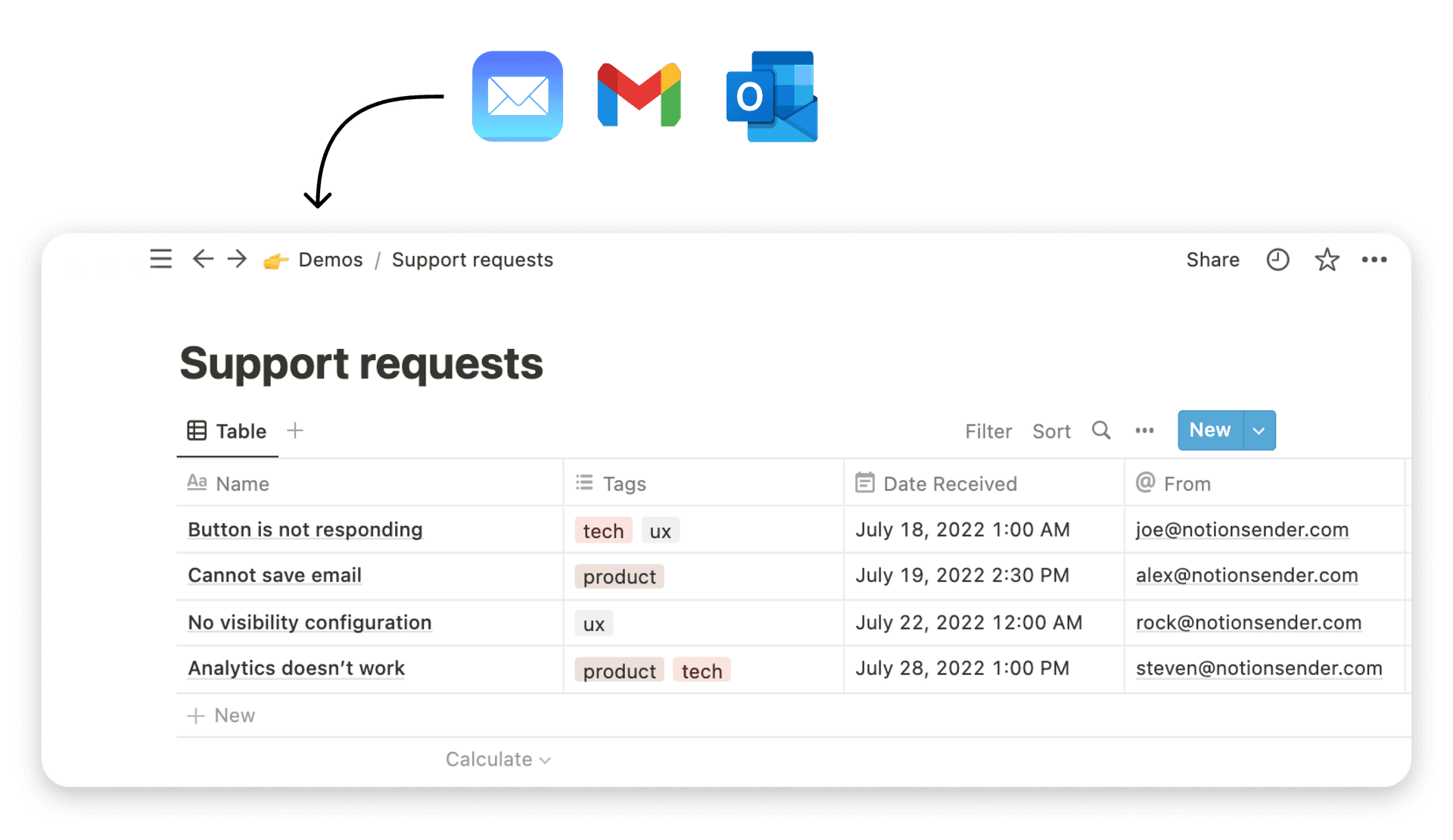
You can then use NotionSender to automate key email touchpoints. Connect your Notion database to your email client to trigger an automated email sequence when a customer's status changes. For example, once an order is marked "Shipped," NotionSender can automatically send a templated shipping confirmation email with tracking information, directly bridging a critical gap in the retention stage.
2. SaaS (Software-as-a-Service) Customer Journey Mapping
The SaaS customer journey map is essential for any subscription-based business. It follows a user's path from their initial discovery and trial sign-up to becoming a fully engaged, paying customer. Unlike a one-time purchase, the SaaS journey is cyclical, focusing heavily on product adoption, value realization, and long-term retention to maximize customer lifetime value (LTV).
This type of map is one of the most critical customer journey mapping examples for modern tech companies. It helps product, marketing, and success teams pinpoint where users get stuck, identify key "aha!" moments, and proactively prevent churn. For businesses like Slack or HubSpot, mastering this journey is the core of their growth model.

Strategic Breakdown of the SaaS Journey
The SaaS journey is typically broken down into five critical stages, each defined by user engagement and product value milestones.
- Acquisition: A potential customer becomes aware of the software, often through content marketing, paid ads, or word-of-mouth. They land on the website and sign up for a free trial or freemium plan. The primary pain point here is a confusing value proposition or a high-friction sign-up process.
- Activation: This is the crucial onboarding phase where the new user experiences the product's core value for the first time (their "aha!" moment). Touchpoints include welcome emails, in-app tours, and setup checklists. A key pain point is a complex interface or lack of clear guidance, leading to immediate abandonment.
- Adoption: The user begins to integrate the software into their regular workflow, discovering new features and becoming a habitual user. Touchpoints might include feature announcement emails, webinars, and help-desk articles. Stagnant usage or failure to adopt secondary features is a major risk here.
- Retention: The user consistently derives value from the product and continues their subscription. They are engaged, see a clear return on investment, and are unlikely to churn. Poor customer support or a lack of new feature development can lead to dissatisfaction.
- Expansion: The happy customer upgrades their plan, adds more users, or purchases add-ons. They become a brand advocate, leaving positive reviews and referring new customers. This stage represents revenue growth from the existing user base.
Key Insight: Activation is the most critical stage in the SaaS journey. If a user doesn't experience the core value of the product quickly, they are highly unlikely to convert to a paying customer or be retained long-term.
Actionable Takeaways & Notion Implementation
To operationalize this journey map, set up a Notion database with properties like "Stage," "Key User Action," "Activation Metric," "Pain Point," and "Automation Opportunity." For the "Activation" stage, a key action might be "Invites two teammates." A pain point could be "User doesn't know how to invite others." The opportunity is to "Create an in-app tooltip pointing to the invite feature."
You can leverage NotionSender to automate user onboarding and engagement sequences based on their journey stage. Connect your database to trigger emails when a user's status changes. For example, if a user's status in Notion is updated to "Stalled" because they haven't logged in for 7 days, NotionSender can automatically send a re-engagement email with helpful tips or a link to book a demo, directly addressing a critical retention risk.
3. Healthcare Patient Journey Mapping
The healthcare patient journey map visualizes the often complex and emotionally charged path a patient takes, from recognizing initial symptoms to receiving ongoing care. This map is crucial for healthcare providers aiming to improve patient outcomes, enhance satisfaction, and streamline operational efficiency. Unlike a typical retail journey, this map must account for clinical needs, emotional states, and communication between multiple departments.
This particular customer journey mapping example is vital for humanizing the healthcare experience. It helps organizations like Mayo Clinic and the Cleveland Clinic identify and address critical pain points, such as long wait times or confusing billing, that can significantly impact a patient's well-being and trust in their provider.

Strategic Breakdown of the Patient Journey
The patient journey is multifaceted and can be broken down into five core stages, each requiring a high degree of empathy and clear communication.
- Symptom & Discovery: The patient experiences symptoms and seeks information. Touchpoints include online health portals (like WebMD), talking to family, or calling a nurse hotline. A major pain point here is medical anxiety fueled by unreliable online information or difficulty determining the urgency of their condition.
- Scheduling & First Contact: The patient decides to seek professional care and books an appointment. Key touchpoints are the clinic's website, phone system, and front-desk staff. Friction points like confusing phone trees, no online scheduling options, or long waits for an appointment are common.
- Diagnosis & Treatment: The patient undergoes consultations, tests, and receives a diagnosis and treatment plan. This stage involves doctors, nurses, and lab technicians. A lack of clear communication about diagnoses, treatment options, or test results can cause immense stress and confusion.
- Ongoing Care & Management: The patient follows the treatment plan, which may involve follow-up appointments, medication management, or physical therapy. Touchpoints include patient portals, follow-up calls, and prescription refills. Pain points often revolve around poor care coordination between specialists or difficulty managing complex medication schedules.
- Billing & Follow-Up: The patient receives and pays their medical bills and provides feedback on their experience. The primary pain point is overwhelmingly complex and non-transparent billing, which can damage the patient relationship even after successful treatment.
Key Insight: The patient journey is not linear; it's an ecosystem. A negative experience in one stage, like billing, can retroactively sour an otherwise positive clinical outcome. Integrating communication and data across all departments is non-negotiable.
Actionable Takeaways & Notion Implementation
To map this journey, create a Notion database with properties for "Stage," "Touchpoint," "Patient Action," "Emotional State," "Pain Point," and "Improvement Opportunity." For the "Scheduling" stage, a pain point could be "long hold times on the phone." The corresponding opportunity would be "Implement an online scheduling system and promote it on the 'Contact Us' page."
You can leverage NotionSender to automate critical patient communications. Connect your Notion database to your email service to send automated reminders or follow-ups. For example, when a patient's status in the database is updated to "Follow-up Required," NotionSender can trigger a personalized email prompting them to schedule their next appointment or check in on their recovery, ensuring no patient gets lost in the follow-up process.
4. Retail/Brick-and-Mortar: Merging Physical and Digital Experiences
The retail customer journey map charts the intricate path a customer takes through both physical and digital spaces. It visualizes the omnichannel experience, from discovering a product online and visiting a store to interacting with staff, making a purchase, and engaging post-visit. This map is crucial for modern retailers like IKEA or Apple, who understand that a customer's experience rarely begins at the front door or ends at the cash register.
This particular customer journey mapping example is essential for any business with a physical presence. It helps bridge the often-siloed gap between online discovery and in-store action, allowing brands to create a cohesive, seamless experience that drives both foot traffic and brand loyalty.

Strategic Breakdown of the Retail Journey
The retail journey blends digital pre-discovery with physical interaction, typically broken down into five distinct stages.
- Discovery: The journey often starts online. A customer sees a targeted social media ad, reads a local blog review, or uses a search engine to find "stores near me." A primary pain point here is a disconnect between online promotions and in-store stock or pricing.
- In-Store Experience: The customer enters the physical store. Touchpoints include store layout, product displays, signage, atmosphere, and interactions with sales associates. Friction points are disorganized aisles, unhelpful staff, or the inability to find a specific product.
- Evaluation & Trial: The customer physically interacts with products. They might try on clothes, test an electronic device, or ask a specialist for a demonstration. A lack of available staff for assistance or poor product accessibility can easily derail the journey at this critical stage.
- Purchase & Checkout: The customer decides to buy and heads to the register. This includes waiting in line, interacting with the cashier, and the payment process. Long queues, a cumbersome checkout process, or a lack of payment options are major frustrations.
- Post-Purchase Engagement: The experience continues after the customer leaves. Touchpoints include email receipts, loyalty program points, satisfaction surveys, and online return processes. A difficult return policy can damage the entire positive in-store experience.
Key Insight: In retail, the in-store experience is the core differentiator. Digital touchpoints are critical for getting customers in the door, but the human-to-human and human-to-product interactions within the store are what build lasting impressions and secure sales.
<iframe width="560" height="315" src="https://www.youtube.com/embed/kgxc4mkeCqk" frameborder="0" allow="accelerometer; autoplay; clipboard-write; encrypted-media; gyroscope; picture-in-picture" allowfullscreen></iframe>
Actionable Takeaways & Notion Implementation
To map this journey, set up a Notion database with properties like "Stage," "Touchpoint," "Customer Emotion," "Pain Point," and "Improvement Idea." For the "In-Store Experience" stage, a pain point could be "Customers can't find staff for help." The corresponding improvement idea would be "Implement a 'press for help' button in key zones or increase staff presence during peak hours."
You can leverage NotionSender to bridge the physical and digital gap. After an in-store purchase, a cashier can ask for the customer's email to send a digital receipt. By adding this email to a "Recent Purchases" database in Notion, you can trigger NotionSender to automatically send a follow-up email asking for feedback or offering a discount on their next online order, seamlessly continuing the conversation.
5. Financial Services Customer Journey Mapping
Mapping the financial services customer journey is a high-stakes endeavor due to long consideration cycles, regulatory complexity, and the critical importance of trust. This journey tracks a customer from initial financial inquiry, through complex decision-making for products like loans or investments, to long-term account management. It’s one of the most intricate customer journey mapping examples because it must account for heightened customer anxiety, significant life events, and stringent compliance requirements.
This type of map is vital for banks, investment firms, and insurance companies seeking to demystify complex products and build confidence. It helps organizations like Ally Bank and Charles Schwab simplify processes, provide transparent communication, and deliver personalized support across numerous digital and physical touchpoints, which is essential for retaining high-value clients.
Strategic Breakdown of the Financial Services Journey
This journey often unfolds over a longer period and can be broken down into five critical stages, each defined by a need for clarity, security, and trust.
- Exploration: The customer identifies a financial need, such as securing a mortgage, opening an investment account, or applying for a credit card. Touchpoints include educational blog content, financial calculators, online ads, and initial consultations. A major pain point is the overwhelming complexity of financial jargon and product options.
- Evaluation & Application: The customer compares providers, fee structures, and terms. They engage with customer service, read reviews, and begin the application process. Friction at this stage is often caused by opaque fee disclosures, a burdensome application process, or a lack of accessible support.
- Onboarding & Activation: The application is approved, and the customer must activate their account or product. This involves setting up online access, understanding account features, and making an initial deposit or transaction. A poor onboarding experience can lead to immediate disengagement and product abandonment.
- Management & Support: The customer actively uses the financial product. Touchpoints include mobile banking apps, monthly statements, customer service calls, and fraud alerts. Pain points arise from poor digital user experience, slow support response times, or unexpected account issues.
- Growth & Loyalty: The customer has a positive relationship with the institution and considers additional products or services. They may increase their investment, refinance a loan, or refer others. The journey falters here if the institution fails to provide proactive, personalized financial guidance.
Key Insight: In financial services, trust is the primary currency. The journey map must explicitly track moments where trust can be built (e.g., transparent fee structures) or broken (e.g., hidden clauses or poor security). Each touchpoint is an opportunity to reinforce security and demonstrate value.
Actionable Takeaways & Notion Implementation
To map this journey, create a Notion database with properties for "Stage," "Customer Emotion," "Touchpoint," "Compliance Check," and "Trust-Building Opportunity." For the "Evaluation & Application" stage, a pain point might be "Anxiety about hidden fees." The corresponding trust-building opportunity would be "Create a one-page, plain-language fee summary document."
You can leverage NotionSender to automate critical communications. Connect your database to your email service to trigger emails at key milestones. For instance, when a customer's application status in Notion is updated to "Approved," NotionSender can automatically send a welcome email that clearly outlines the next steps for onboarding, linking directly to setup guides and support contacts, ensuring a seamless transition from application to activation.
6. B2B Enterprise Sales Customer Journey Mapping
The B2B enterprise sales journey is one of the most complex customer journey mapping examples, involving long sales cycles, multiple stakeholders, and high-value decisions. Unlike a simple B2C transaction, this map tracks the intricate dance between various departments and decision-makers within a target organization, from initial research to final implementation and partnership. This map is vital for sales and marketing teams to align their efforts, build consensus, and navigate the lengthy, often non-linear, path to closing a deal.
This particular customer journey mapping example is critical for any company with a high-touch sales model. It moves beyond a single persona to a "buying committee" framework, helping businesses deliver the right information to the right person at the right time, a key factor in winning large enterprise accounts.
Strategic Breakdown of the B2B Enterprise Journey
The enterprise journey is less of a linear path and more of a multi-threaded process, often broken down into six key stages.
- Problem Identification & Research: A "champion" within the target company identifies a business pain point and begins researching potential solutions. Touchpoints include industry reports from Gartner, thought leadership blog posts, webinars, and search engine discovery. A key pain point is the difficulty in articulating the problem internally to gain traction.
- Vendor Evaluation: The buying committee is formed, including roles like the economic buyer, technical buyer, and end-users. They create a shortlist of vendors and consume targeted content like case studies, whitepapers, and product demos. A major friction point is a lack of content tailored to the specific concerns of each stakeholder role.
- RFP & Solution Validation: The committee issues a Request for Proposal (RFP) or engages in deep-dive technical and security reviews. Touchpoints are formal proposals, proof-of-concept (POC) trials, and ROI calculators. The primary pain point is a vendor’s inability to clearly demonstrate value and align with specific business outcomes.
- Negotiation & Procurement: The economic buyer takes the lead, negotiating contract terms, pricing, and SLAs. Legal and procurement departments are heavily involved. A deal can easily stall here due to budget constraints, legal red tape, or a lack of internal consensus.
- Implementation & Onboarding: The deal is signed, and the focus shifts to deploying the solution and training end-users. Touchpoints include kickoff calls, dedicated support channels, and training documentation. A poor onboarding experience can quickly erode the value promised during the sales cycle.
- Advocacy & Expansion: The customer sees a clear ROI and becomes an advocate. This opens opportunities for upselling, cross-selling, and securing powerful testimonials or case studies to fuel the top of the funnel for new prospects.
Key Insight: In B2B enterprise sales, you aren't selling to a company; you're selling to a committee of individuals. The journey map must account for the unique motivations, pain points, and political landscape of each key stakeholder.
Actionable Takeaways & Notion Implementation
Map this journey in a Notion database using properties like "Stage," "Stakeholder Role," "Key Concern," "Content Asset," and "Next Action." For the "Vendor Evaluation" stage, you might have an entry for the "Technical Buyer" whose key concern is "Integration with existing tech stack." The required content asset would be "API Documentation & Integration Guide."
You can then use NotionSender to automate targeted outreach. When a stakeholder's status in your Notion CRM changes to "Engaged with Demo," trigger an email sequence tailored to their role. For instance, the technical buyer receives an email with a link to technical documentation, while the economic buyer gets a follow-up focused on the ROI calculator. Crafting the right message is crucial; find out more about how to send the perfect email to get the response you want to maximize engagement during these long sales cycles.
7. Subscription/Membership Customer Journey Mapping
For businesses built on recurring revenue, the subscription customer journey map is the most important strategic document. Unlike a one-time purchase, this journey is cyclical, focusing on delivering continuous value to prevent churn and encourage long-term commitment. It visualizes the path from initial sign-up through ongoing engagement, renewal, and potential expansion.
This specific customer journey mapping example is critical for SaaS companies, streaming services like Netflix, and membership-based organizations. It shifts the focus from a single conversion event to building a lasting, value-driven relationship, which is the cornerstone of the subscription economy.
Strategic Breakdown of the Subscription Journey
The subscription journey emphasizes the post-signup experience, breaking it down into distinct, cyclical stages.
- Acquisition & Onboarding: The customer signs up for a free trial or a paid plan. The initial touchpoints are the sign-up form, welcome email sequence, and the first-run experience within the product or service. A major pain point here is a confusing onboarding process that fails to demonstrate the product's core value quickly.
- Engagement & Adoption: The customer begins to use the service regularly. Touchpoints include personalized recommendations (like Spotify's Discover Weekly), feature update notifications, and value-reminder communications. Lack of perceived value or difficulty integrating the service into their daily routine can cause early disengagement.
- Retention & Renewal: The customer sees enough value to continue their subscription. Key touchpoints are renewal reminders, usage reports, and exclusive member benefits. Friction at this stage often stems from unexpected price increases, billing issues, or a feeling that the service is no longer worth the cost.
- Expansion & Advocacy: The customer is deeply engaged and becomes a prime candidate for upselling or advocacy. They might upgrade to a higher tier, refer new users, or provide positive testimonials. This stage is where the highest lifetime value is captured.
Key Insight: In a subscription model, the "aha moment" during onboarding is paramount. If a new user doesn't experience the core value of your service within their first few sessions, the risk of churn increases exponentially. The journey map must be optimized to deliver this value as quickly as possible.
Actionable Takeaways & Notion Implementation
Map this journey in a Notion database with properties for "Stage," "Key Action," "Churn Risk," and "Retention Tactic." For the "Engagement & Adoption" stage, a churn risk could be "Low weekly usage." The corresponding retention tactic would be "Trigger an automated email highlighting an underused feature relevant to their profile."
You can use NotionSender to automate these critical retention communications. Connect your Notion database to your email marketing tool. Set up a trigger so that when a user's engagement score in your database drops below a certain threshold, NotionSender automatically sends a targeted re-engagement email. This proactively addresses churn risk by delivering timely, value-focused content directly from your operational hub in Notion.
8. Technology/Software Product Launch Customer Journey Mapping
Launching a new technology or software product requires a specialized customer journey map that goes beyond typical sales funnels. It visualizes the high-stakes, condensed timeline from pre-launch buzz to early user adoption and feedback, a critical period that can determine a product's long-term viability. This type of map is essential for tech companies to manage hype, streamline onboarding for first-time users, and rapidly iterate based on initial market reception.
This product launch journey mapping example is indispensable for any team bringing a new digital product to market. It provides a strategic playbook for building initial momentum, converting early interest into active users, and laying the groundwork for a loyal user community.
Strategic Breakdown of the Product Launch Journey
The launch journey is a fast-paced process broken into four key stages, each with unique goals and user expectations.
- Pre-Launch (Hype & Awareness): The customer becomes aware of the upcoming product. Touchpoints include beta sign-up pages, press mentions, influencer previews, and "coming soon" landing pages. The primary pain point for users is a lack of clarity on what the product does or when it will be available.
- Launch Day (Consideration & Activation): The product goes live. Customers visit the official website, read launch announcements (e.g., on Product Hunt), and begin the sign-up or installation process. Friction here, such as a buggy sign-up flow or server overload, can instantly kill momentum.
- Onboarding & Early Adoption: The new user interacts with the product for the first time. Key touchpoints are the welcome email series, in-app tutorials, and the initial "aha!" moment. A confusing interface or failure to demonstrate value quickly are major pain points that lead to churn.
- Feedback & Advocacy: The early adopter provides feedback and decides whether to become a long-term user. Touchpoints include feedback forms, community forums (like Discord), and requests for reviews. The goal is to make users feel heard and transform them into product champions.
Key Insight: For a product launch, the feedback loop is the most critical part of the journey. The speed at which a company can collect, analyze, and act on early user feedback directly correlates with its chances of achieving product-market fit.
Actionable Takeaways & Notion Implementation
Organize your launch plan in a Notion database with properties for "Stage," "User Emotion," "Key Touchpoint," "Pain Point," and "Feedback/Action Item." During the "Onboarding" stage, a pain point might be "Users don't understand core feature X." The action item would be "Create a 3-step in-app-guided tour for feature X."
You can use NotionSender to manage critical launch communications directly from your Notion workspace. For example, once a user signs up (a new entry in your "Users" database), trigger a welcome email sequence designed to guide them through the onboarding stage. You can create and send these targeted emails directly from Notion, ensuring your earliest adopters receive timely, helpful guidance.
8-Industry Customer Journey Mapping Comparison
| Journey Type | 🔄 Implementation Complexity | ⚡ Resource Requirements | 📊 Expected Outcomes | ⭐ Ideal Use Cases | 💡 Key Tips |
|---|---|---|---|---|---|
| E-Commerce Customer Journey Mapping | Moderate–High: multi-channel integrations and personalization | Analytics, marketing automation, UX/dev teams; moderate to high cost | Improved conversions; reduced cart abandonment; measurable ROI | Online retailers, marketplaces, high-traffic product sites | Separate new vs returning flows; A/B test checkout; track abandoned-cart emails |
| SaaS Customer Journey Mapping | Moderate: product + onboarding workflows and analytics | Product analytics, in-app messaging, CS/onboarding teams | Higher activation and retention; predictable LTV | Subscription software, freemium/trial models | Define week‑1 activation; contextual in-app guidance; segment stalled users |
| Healthcare Patient Journey Mapping | High: cross‑provider coordination and strict compliance | Clinical staff, secure EHR systems, patient engagement tools | Better clinical outcomes; higher patient satisfaction; fewer readmissions | Hospitals, clinics, integrated care pathways | Involve patients/providers; prioritize scheduling fixes; implement patient portals |
| Retail / Brick‑and‑Mortar Journey Mapping | Moderate–High: physical + digital touchpoints and staff variability | Store staff training, in-store tech (kiosks), traffic analytics | Improved in-store experience; higher impulse purchases; stronger loyalty | Physical retailers, omnichannel brands, showrooms | Use mystery shoppers; integrate O2O; train staff from journey insights |
| Financial Services Customer Journey Mapping | High: regulatory, KYC, multi-step approvals, legacy systems | Compliance teams, secure IT, multi-channel support, fraud prevention | Increased trust and CLV; clear revenue/retention metrics | Banks, insurers, investment platforms, lending services | Simplify compliance communication; show transparent fees; surface security measures |
| B2B Enterprise Sales Journey Mapping | Very High: multi-stakeholder, long cycles, RFPs | Sales/marketing alignment, ABM, CRM, bespoke content and enablement | Large deal value; long-term partnerships; measurable deal ROI | Enterprise vendors, solution sellers, complex procurements | Map stakeholders' concerns; create role-based content; build internal champions |
| Subscription / Membership Journey Mapping | Moderate: retention and renewal-focused lifecycle | Engagement tools, analytics, community management, content teams | Higher retention and LTV; predictable recurring revenue | Streaming services, subscription SaaS, membership programs | Establish early value metrics; build habit loops; run targeted win‑back campaigns |
| Technology / Product Launch Journey Mapping | High (time-sensitive): coordinated pre/post-launch activities | Marketing, support, beta community, rapid dev/ops | Rapid adoption spikes; feedback-driven iterations; market positioning | New product/features launches; startups and major releases | Build pre-launch hype; dedicate launch support; empower early adopters and advocates |
From Map to Motion: Activating Your Customer Journey Insights
We've explored a diverse landscape of customer journey mapping examples, from the fast-paced world of e-commerce to the high-stakes, relationship-driven B2B enterprise sales cycle. Each map, whether for a SaaS onboarding flow or a healthcare patient's treatment path, tells a unique story. But the most valuable story is the one these maps collectively tell: understanding the customer experience is not a passive exercise, it is the active foundation of sustainable growth.
The examples in this article were not just theoretical diagrams. They are strategic blueprints designed to uncover friction, identify opportunities, and ultimately, build a more empathetic, efficient, and profitable business. We saw how a simple pain point in a retail journey, like a confusing store layout, can be just as critical as a complex integration issue in a B2B software implementation. The scale may differ, but the principle is the same. You must walk in your customer's shoes.
Your Blueprint for Actionable Insights
The power of these customer journey mapping examples lies not in their creation, but in their application. A beautifully designed map that gathers dust is a missed opportunity. The goal is to transform your static map into a dynamic engine for continuous improvement.
Here are the core takeaways to activate your own journey mapping efforts:
- Empathy is Your Compass: Every map, from financial services to a new technology launch, started with a deep, empathetic look at the customer's world. Your first step is always to move beyond company-centric assumptions and embrace the user's perspective, including their emotions, goals, and frustrations.
- Data Validates, It Doesn't Dictate: Quantitative data like conversion rates and support ticket volume tells you what is happening. Qualitative insights from surveys, interviews, and feedback forms tell you why. The most effective journey maps merge both to create a complete, actionable picture.
- Pain Points Are Goldmines: The "Pain Points" section of each map is your treasure chest. These are not problems to be lamented; they are direct instructions from your customers on how to improve your product, service, and bottom line. Prioritize them relentlessly.
- Ownership Drives Action: A journey map without clear ownership for each stage and touchpoint is just an academic exercise. Assign responsibility to specific teams or individuals. When the marketing team owns the "Awareness" stage and the customer success team owns "Retention," accountability is built directly into the process.
Turning Your Map into a Living Document
The true value of customer journey mapping is realized when it becomes an integral part of your operational rhythm. It should not be a one-time project you complete and file away. Instead, treat it as a living document that evolves with your customers and your business.
Consider these next steps to put your map into motion:
- Prioritize One Key Journey: Don't try to map everything at once. Pick the single most critical journey based on your current business goals. Is it new customer onboarding? The path from first website visit to purchase? Focus your energy there first.
- Identify Quick Wins: Look at your map and find the low-effort, high-impact improvements. Is there a confusing email in your onboarding sequence? A broken link on a key landing page? Fixing these small friction points can build momentum and show immediate value.
- Integrate and Automate: Connect your map to your tools. As we've discussed, using a flexible platform like Notion to build your map and a tool like NotionSender to automate email touchpoints turns your strategic plan into an automated, operational workflow. This bridges the critical gap between insight and action.
By moving from static analysis to dynamic activation, you transform a customer journey map from a simple illustration into a powerful strategic tool. It becomes your guide for making smarter product decisions, crafting more effective marketing campaigns, and delivering a customer experience that builds loyalty and drives growth. The journey of a thousand miles begins with a single step, and your map is the guide for taking the right one.
Ready to turn your customer journey map insights into automated action? With NotionSender, you can connect your Notion-based journey maps directly to your email, sending personalized, timely communications at key touchpoints. Stop manually managing customer outreach and start building the seamless, automated experiences your customers deserve. Explore NotionSender and activate your customer journey today.