Master eBay My eBay Messages: Complete Guide

You log into eBay to answer one buyer’s shipping question and find a pile of messages waiting. One buyer wants measurements. Another asks whether you’ll combine shipping. A third wants reassurance about condition, delivery timing, or a return. If you sell across multiple listings, ebay my ebay messages can turn from a simple inbox into the part of your business that decides whether a shopper buys, waits, or moves on.
Most guides stop at “click here to open your inbox.” That’s not enough once message volume starts eating your day. The sellers who stay calm under pressure usually have a system. They know which messages need a fast reply, which ones deserve a template, and which ones should be routed into an external workflow so nothing gets buried.
Why Mastering Your eBay Inbox Matters
On eBay, your inbox isn't administrative clutter. It’s where buying intent shows up first.
A buyer who messages you about shipping, item specifics, or compatibility is often close to a purchase. If the reply is slow, vague, or inconsistent, the sale can die before it reaches checkout. If the reply is fast and clear, you remove friction at the exact moment the buyer is deciding.
That matters on a marketplace operating at huge scale. eBay supports 20 million active sellers and 134 million active buyers worldwide, and it has rolled out eBay.ai sitewide to suggest replies to common buyer questions, a sign that message handling has become a core seller workflow rather than a side task (eBay marketplace and messaging scale).
Your inbox affects more than customer service
Messages shape the rest of your store performance. Buyers don't experience your business as separate parts. They don't think in terms of listing quality, shipping settings, and communication. They experience one seller.
That’s why inbox discipline helps in three practical ways:
- It protects momentum. Questions answered quickly keep buyers from drifting to another listing.
- It improves professionalism. Clean replies reduce misunderstandings about condition, shipping, and returns.
- It lowers avoidable conflict. A lot of post-sale frustration starts with a pre-sale message that was missed or answered badly.
Practical rule: Treat every buyer message like a live sales conversation, not back-office admin.
Native tools help, but only up to a point
eBay’s built-in inbox works for everyday selling. For many sellers, that’s enough at the start. But once message volume grows, the native inbox starts to show its limits. It’s harder to spot patterns, harder to track follow-ups across listings, and harder to turn incoming questions into a repeatable workflow.
That’s where a more structured approach helps. First, get completely comfortable with the inbox on desktop and mobile. Then tighten your reply process. Then, if your volume demands it, push the workflow into an external system you control.
Locating Your Messages on Desktop and Mobile
If you can’t get to messages quickly, you’ll answer them slowly. Speed starts with muscle memory.
On desktop, eBay keeps messaging inside the account area. On mobile, the path is similar, but the layout is tighter and easier to miss when you’re multitasking. The fix is simple. Learn one repeatable route on each device and stop hunting for it every time.

Finding ebay my ebay messages on desktop
On the website, start from the top navigation and go into My eBay. From there, open the messages area. Depending on the current layout, eBay may surface your inbox directly or place it inside the account menu.
Once you’re in, pay attention to the standard folders:
| Folder | What it’s for | How to use it |
|---|---|---|
| Inbox | Active conversations and new buyer questions | Check this first during selling hours |
| Sent | Messages you’ve already answered | Use it to confirm what you promised |
| Trash | Removed conversations | Check here before assuming a message vanished |
Search and filters are the two features most sellers underuse. If a buyer says, “I messaged you yesterday,” don’t scroll blindly. Search by item keywords, buyer name, or parts of the conversation. Filters also help isolate unread or priority messages so you can work the inbox in batches instead of reacting randomly.
Finding messages in the eBay app
The app is good for triage. It’s less ideal for detailed replies that need care, but it’s excellent for fast acknowledgment.
The usual path is:
- Open the eBay app and sign in.
- Tap My eBay or your account area.
- Open Messages from the account menu.
- Scan unread conversations first, then check older threads that still need follow-up.
If you sell while sourcing, packing, or traveling, mobile access keeps your response time from collapsing. That matters because buyer communication influences seller performance metrics, and typical eBay sales conversion rates commonly range from 1% to 5%. Strong communication can help support better ratings and stronger performance overall (eBay seller metrics and communication impact).
What to look at once you’re inside
The inbox itself is only half the job. The real improvement comes from reading the message list with intent.
Use this quick sort order:
- Unread buyer questions first. These are often closest to a buying decision.
- Order-related issues next. Shipping confusion and post-sale concerns can escalate if they sit too long.
- Older threads after that. Some don’t need a reply. Others need a short close-the-loop message.
A seller who checks messages in a fixed order usually responds faster than a seller who checks everything at once.
Desktop versus mobile trade-offs
Desktop wins when you need to compare listing details, order information, and prior conversations in one sitting. It’s better for nuanced replies and templates.
Mobile wins when speed matters more than depth. Use it to acknowledge, flag, and queue. If the answer requires policy language, careful wording, or checking item specifics, save it for desktop rather than firing off a sloppy reply from your phone.
Best Practices for Managing eBay Communications
Fast replies help. Precise replies sell.
A lot of buyers ask versions of the same question. Shipping timeline. Measurements. Authenticity. Condition. What’s included. Whether an offer is possible. The mistake is answering each one from scratch, as if the inbox were a fresh problem every time.

Write replies that reduce the next question
The best message is the one that ends the conversation cleanly. That usually means giving the direct answer plus one extra piece of context the buyer was going to ask for next.
For example, if a buyer asks whether an item ships tomorrow, don’t answer with only “yes.” Confirm the shipping window, mention the service level if relevant, and tell them where tracking will appear. One message can remove three follow-ups.
A strong reply usually has these parts:
- Direct answer first. Don’t bury the decision in a long paragraph.
- Listing-based detail second. Refer to what’s already in the listing when possible.
- Clear next step last. Tell the buyer what happens if they purchase, ask for clarification, or need more photos.
Use templates, but don’t sound canned
Saved responses are one of the most impactful habits in eBay messaging. Use them for repeat topics, but keep them modular. A good template is a starting point, not a script.
Templates work best for:
- Shipping questions
- Item condition clarifications
- Combined shipping requests
- Return-policy explanations
- Follow-up after a sale
What doesn’t work is sending the exact same block of text to every buyer. People can tell. The fix is easy. Start with the template, then customize one or two lines to match the item and the actual question.
If you want a better feel for effective communication practices, like generating positive feedback, study examples that sound human, brief, and specific rather than over-polished.
Flag what must not be missed
Some messages are routine. Others are the messages that create defects, disputes, or account stress if you ignore them.
In eBay’s system, flagged messages often require seller action, and forum analysis connected to eBay messaging documentation indicates that unaddressed flagged messages correlate with a 15% to 20% higher rate of disputes in major markets (flagged message guidance in eBay developer documentation).
That means your flagging system shouldn’t be decorative. Use it to mark:
- Order problems that affect shipment or delivery
- Return or damage claims that need a careful reply
- Messages promising action such as “I’ll send updated photos tonight”
- Buyer confusion that could become an “item not as described” complaint later
If a message commits you to a next step, flag it until that step is done.
A lightweight personal rule helps. Reply once, flag if follow-up is required, and remove the flag only after the issue is closed.
Stay on-platform and stay professional
Don’t move the conversation off eBay unless eBay specifically supports the interaction. On-platform messaging protects the record of what was asked, what was promised, and when you replied.
That matters most when the buyer is difficult. If a message turns aggressive, don’t mirror the tone. Keep replies short, factual, and tied to the listing or the order. If the buyer keeps pushing for arguments, repeated exceptions, or suspicious off-platform behavior, stop trying to “win” the conversation.
A few habits improve consistency:
- Use the listing as the source of truth. If the listing says used with cosmetic wear, repeat that clearly.
- Avoid improvising policy. Don’t promise something you haven’t checked.
- Keep emotions out of the reply. Buyers remember tone as much as content.
This short walkthrough is useful if you want a visual refresher on how sellers handle common inbox tasks:
<iframe width="100%" style="aspect-ratio: 16 / 9;" src="https://www.youtube.com/embed/aAi-3O4H47A" frameborder="0" allow="autoplay; encrypted-media" allowfullscreen></iframe>
For day-to-day consistency, basic productivity rules still matter. Batch replies, write shorter responses, and close open loops quickly. The same principles behind simple email management habits that improve productivity apply to eBay inboxes just as much as regular business email.
Troubleshooting Common eBay Message Glitches
Even well-run stores hit inbox problems. A message disappears. A reply won’t send. A buyer claims they contacted you, but you can’t find the thread. Most of the time, the issue is smaller than it feels.
When a message seems to be missing
Start with the boring explanation first. It’s usually correct.
Check the search bar, then review filters. A thread can look “gone” when the inbox is set to unread-only, filtered by date, or buried under a different subject line than you expected. After that, check Trash and Sent before assuming the platform lost it.
Use this order:
- Search by buyer name or item keyword
- Clear any active filters
- Check Trash
- Check Sent for a reply you forgot sending
- Open the order page if the message was post-sale
When your reply won’t send
A stuck message is often caused by app lag, browser issues, or temporary platform hiccups. Refresh first. If you’re on mobile, fully close and reopen the app. If you’re on desktop, switch browsers before rewriting the entire message.
If it still won’t send, review the content itself. Overly formatted text, pasted junk from another app, or unusual links can trigger problems. Rewrite the response in plain language and send the clean version.
Don’t waste time fighting one broken draft. Copy the substance, strip the formatting, and resend.
When a message looks suspicious
Phishing on marketplaces usually tries to create urgency. The message pushes you to click a link, send information outside eBay, or act before you think.
A cautious seller checks for these signs:
- Requests to continue off-platform
- Links that don’t match the issue being discussed
- Pressure to confirm payment or delivery outside normal eBay flow
- Strange grammar paired with urgent action requests
If the message feels off, don’t click anything inside it. Keep all communication inside eBay’s normal channels and report suspicious activity through the platform.
Handling angry buyers without making things worse
An upset buyer doesn’t always need a long reply. They usually need one calm answer that shows you understand the issue and are taking a concrete next step.
Use a simple sequence: acknowledge the concern, state the relevant fact, offer the next action. If the buyer keeps repeating the same accusations, escalating emotionally, or refusing reasonable solutions, stop extending the thread and involve eBay support through the proper channel.
The key is discipline. Don’t argue. Don’t get sarcastic. Don’t send the reply that feels satisfying in the moment.
Build an Automated Message Hub with NotionSender
The native eBay inbox works well until it doesn’t. Once you’re juggling repeat buyer questions, order follow-ups, and multiple active listings, the inbox becomes reactive. You’re searching, switching tabs, and trying to remember which buyer needed what.
That’s the point where an external message hub starts making sense. Not because eBay’s tools are bad, but because they were built for inbox management, not full workflow control.

Why an external hub works better for growing sellers
A structured Notion workspace gives you something eBay’s inbox doesn’t. It lets you treat each incoming message like a record you can sort, tag, assign, and review later.
That changes the job from “check messages all day” to “process message records through a system.”
The practical advantages are easy to spot:
- Searchability improves. You can organize by buyer, item, status, or issue type.
- Follow-up gets visible. Messages stop living only inside a single inbox view.
- Team handoff becomes cleaner. If someone else helps with operations, they can see context fast.
Benchmark data tied to eBay MyMessages notifications shows that automating message parsing and routing can reduce manual checks by 40% for high-volume sellers. The same source notes that AI-suggested replies for common questions can cut response times by 50% when used appropriately (eBay notification automation benchmarks).
A practical workflow using Notion and email forwarding
If you’re not building directly against the eBay API, a simple external workflow still gets you most of the value. The cleanest setup is to capture eBay message notifications in a Notion database and work from there.
The setup looks like this:
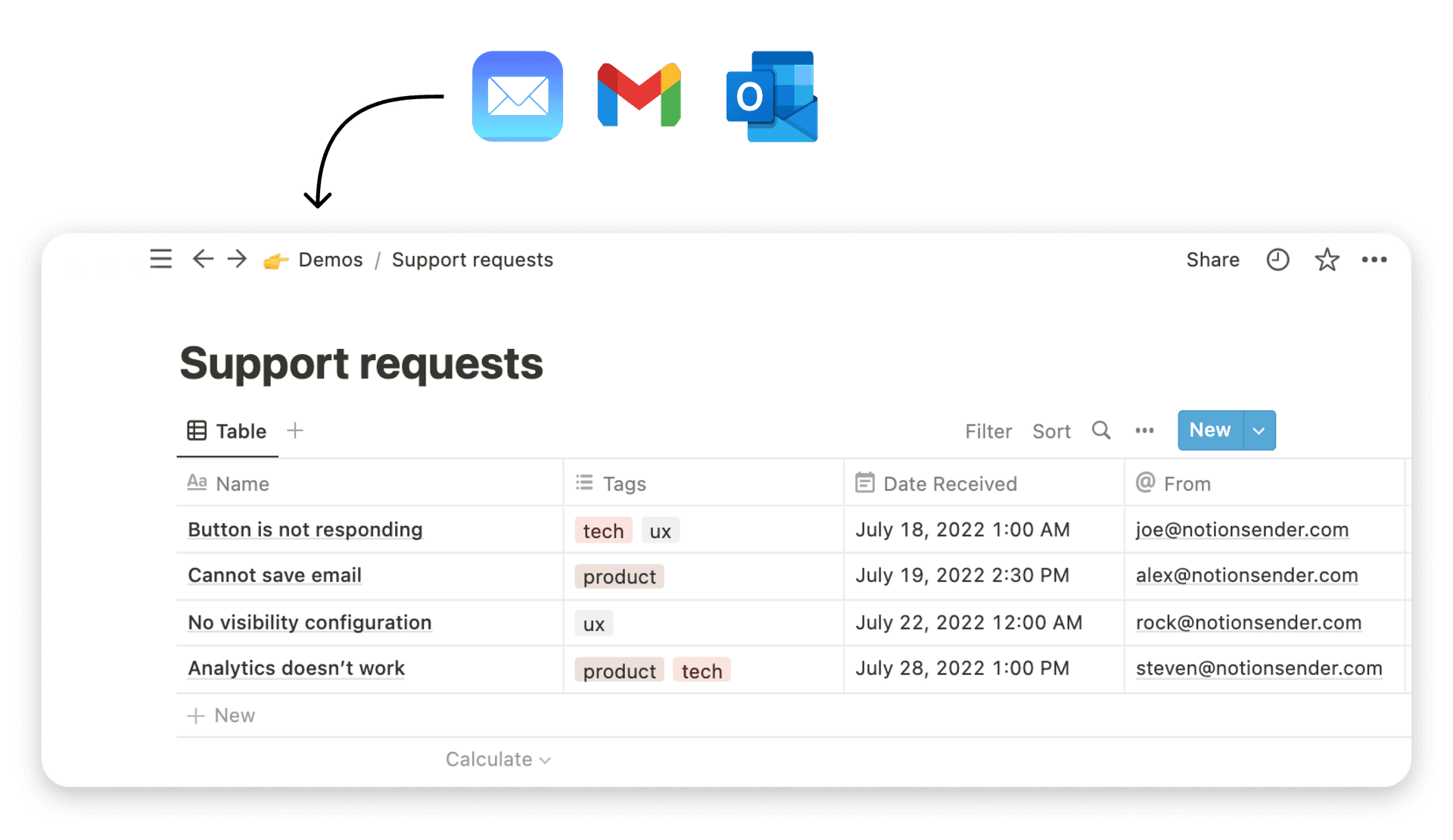
- Create a dedicated Notion database for eBay communications. Use fields like buyer name, item title, message type, status, priority, and next action.
- Generate a unique incoming email address for that database through your Notion email workflow.
- Forward eBay notification emails into that database automatically.
- Tag records by issue type such as shipping, item detail, offer, return, or escalation.
- Review one dashboard instead of bouncing between your inbox and scattered notes.
If you need the mechanics, this guide on sending email into a Notion database is the useful starting point.
What to automate and what not to automate
Sellers often encounter difficulties. Automation should handle routing, sorting, and repetitive acknowledgment. It shouldn’t impersonate judgment.
Good automation targets include:
- Common shipping questions
- Basic item-detail inquiries tied to listing information
- Priority tagging for urgent messages
- Follow-up reminders when a thread needs a next action
Poor automation targets include negotiation-heavy threads, unusual complaints, and anything emotionally charged. Buyers can forgive a short human reply. They rarely forgive a robotic answer that misses the actual issue.
The best automation removes clerical work. It doesn’t replace seller judgment.
If you’re new to the idea, this primer on what no code automation means in practice helps separate useful workflow automation from over-engineering.
The real trade-off
An external system adds setup work. You’ll need naming rules, database fields, and a habit for reviewing the dashboard. But once it’s in place, the workflow becomes far more scalable than living inside one marketplace inbox.
That trade-off is worth it when your store has enough message volume that missed follow-ups, duplicate replies, and constant inbox checking are wasting real time. At that point, external structure isn’t a luxury. It’s operating discipline.
Putting Your New Message System Into Action
A workable message system starts small. Learn the inbox on desktop and mobile so you can get in fast. Tighten your replies so buyers get answers that remove friction instead of creating another question. Use flags and simple templates so important threads don’t disappear into the pile.
Then decide whether your current volume justifies an external workflow. That’s the missing step in most guides. Analysis of seller discussions shows that 30% of top complaints involve message overload, with many sellers reporting 20 to 50 daily inquiries per listing, which is exactly why relying on the native inbox alone eventually breaks down for busy stores (seller discussion analysis on message overload).
A simple rollout order
Don’t change everything at once. Use this sequence:
- Week one. Standardize how you check, sort, and flag messages.
- Week two. Build and test a small set of reply templates.
- Week three. Move notifications into a more structured workspace and refine the process.
If your end goal is a full operating system around communication, it helps to pair inbound capture with outbound workflow. This guide on sending emails from Notion as part of your process is a sensible next step once your records are organized.
Frequently Asked Questions
Can I permanently delete eBay messages?
You can usually move messages out of the main inbox and into Trash, but you should treat eBay messages as business records rather than disposable chat. If a buyer later disputes what was promised, old message history may matter.
Should I click links inside buyer messages?
Only if you fully trust the context and the link makes sense for the transaction. In practice, it’s safer to avoid message links unless they clearly relate to normal eBay activity. Suspicious urgency, odd formatting, or requests to leave the platform are reasons to stop and verify.
Is mobile enough for managing ebay my ebay messages?
For quick replies and triage, yes. For nuanced cases, desktop is better. It’s easier to compare the message with listing details, order information, and prior communication in one view.
When should I stop replying and contact eBay?
Stop extending the conversation when the buyer becomes abusive, keeps demanding off-platform action, or refuses clear and reasonable next steps. At that point, preserve the record and escalate through eBay support instead of trying to out-message the problem.
If your eBay message flow is getting harder to manage, NotionSender gives you a practical way to centralize inbound and outbound communication inside Notion. It’s a strong fit for sellers who want a cleaner system for capturing email notifications, organizing message records, and turning scattered conversations into a process they can scale.