Elevate Your Inbox: Email Communication Best Practices

Email is still where business gets done. A 2024 marketing summary found that 60% of consumers prefer companies to send marketing communications via email, which is the clearest reminder that email isn't a backup channel. It's often the main one.
That makes email communication best practices less about sounding polished and more about being easy to understand, easy to act on, and easy to manage at scale. Most inbox problems aren't writing problems alone. They're workflow problems. Messages go out without context, follow-ups get buried, teams duplicate sends, and important conversations sit in personal inboxes instead of a shared system.
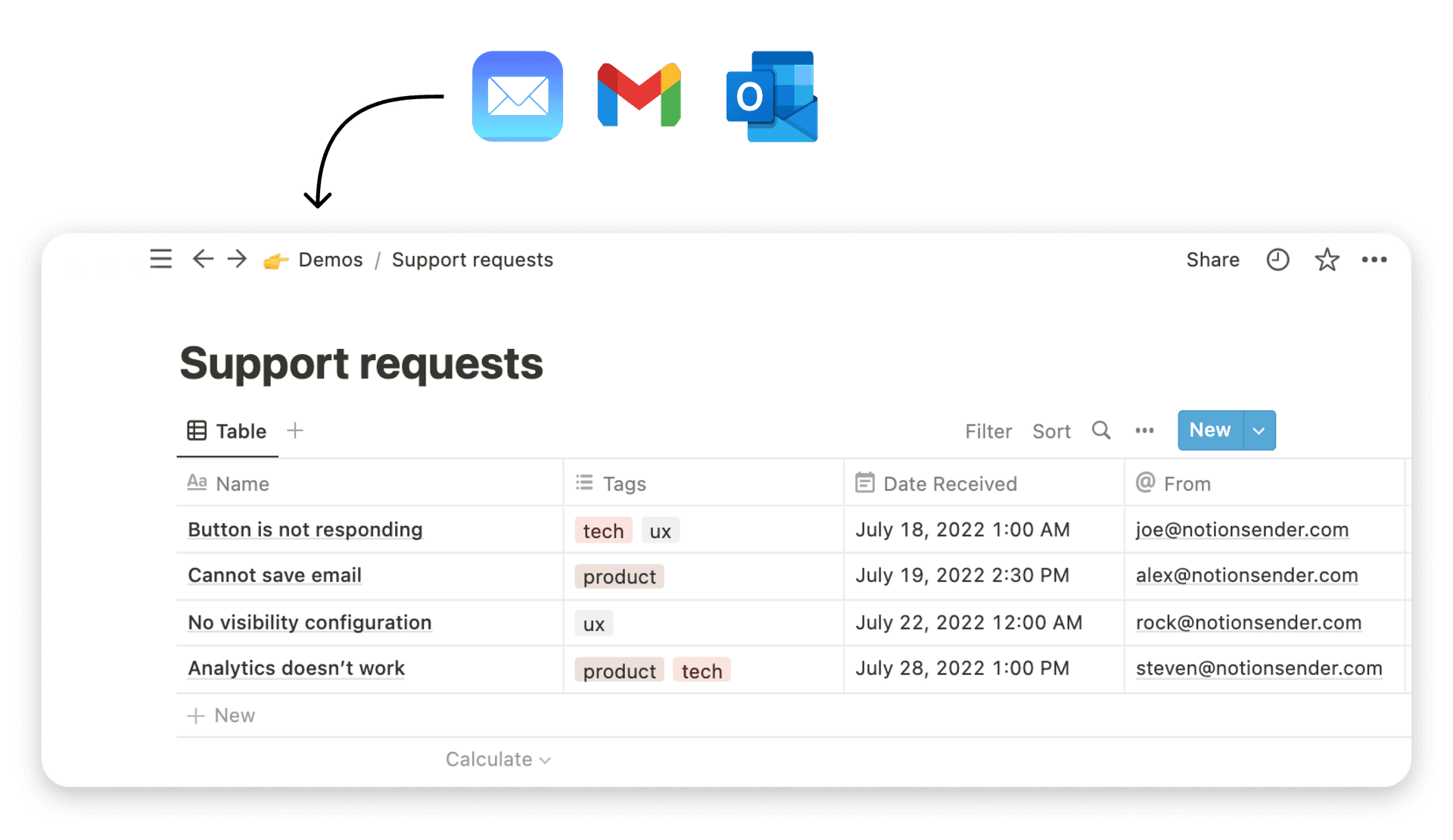
The fix is practical. Write better emails, yes. But also build a structure around them. Centralize templates, store recipient context, tag conversations by project or client, and make every message traceable inside your working system. If you already run projects, sales, client work, or operations in Notion, tools like NotionSender can turn email from a loose thread into part of the workflow.
These 10 practices are the ones that hold up in real work. They help you get more replies, reduce confusion, and spend less time cleaning up communication mistakes later.
1. Maintain a Clear Subject Line
Subject lines decide whether your email gets opened now, skimmed later, or ignored. In day-to-day work, they also do something less obvious. They help recipients sort, search, and return to the right message without rereading the whole thread.
A weak subject line creates extra work. “Update,” “Quick question,” or “Following up” gives the reader no clue about topic, deadline, or relevance. A clear subject line lets them triage the message in seconds, which matters even more on mobile screens and in busy inboxes.

What strong subject lines look like
Good subject lines answer two questions fast. What is this about? What do you need from me?
A few strong examples:
- Project update: “Q4 Website Refresh, Final Copy Review”
- Payment reminder: “Invoice 2024-001, Due Friday”
- Schedule change: “Meeting Moved to Wednesday 3 PM”
- Approval request: “Approve Homepage Draft by Thursday”
The pattern is simple. Name the topic, then add the action, timing, or status. That gives the recipient enough context before they even open the email.
Practical rule: If the recipient cannot identify the topic and expected response from the subject line alone, rewrite it.
Standardize the format
Consistency beats creativity for routine business email. If your team sends regular client updates, invoices, approvals, or status checks, use a repeatable structure such as [Client] + [Topic] + [Action] or [Project] + [Status] + [Date].
I recommend setting these patterns at the workflow level, not leaving them to individual memory. In Notion, store fields like client, project, stage, owner, and due date. Then use NotionSender templates to pull those fields into the subject line automatically. That reduces vague sends, keeps naming consistent across the team, and makes inbox search far easier later.
For more examples, review guidance on how to craft compelling email subject lines and practical ideas on how to increase your open rates with these 10 email marketing tricks.
Clear subject lines are a writing habit. Standardized subject lines are an operating system. The second scales better.
2. Use a Professional Email Signature
A professional signature saves everyone a step. The recipient shouldn't have to search your website, past thread, or LinkedIn profile to figure out who you are and how to reply.
Most signatures should be simple. Name, role, company, best contact info, and one useful link are usually enough. If you overload the signature with banners, badges, social icons, and disclaimers, it starts competing with the message itself.
Keep it consistent across the team
A freelancer's signature might include services and a booking link. A project manager might include title, company, and direct line. A small business owner might add website and physical location if that helps customers trust the business.
What matters is consistency. When a team uses the same basic format, email feels more professional and recipients know where to look for the key details.
Here's a clean structure that works well:
- Identity: Full name and role
- Business context: Company name or service line
- Contact path: Phone, website, or scheduling link
- Optional CTA: One relevant next step, such as “Book a review call”
Make the signature part of the workflow
Don't leave signatures to personal preference. Store an approved signature block inside your email templates and apply it automatically. If you use NotionSender, create a default signature template tied to your workspace so every outgoing message uses the current version.
That approach is especially helpful when people change roles, phone numbers, or offers. Instead of updating signatures manually across accounts, you update one template source and keep communications aligned.
Plain text or light formatting usually works better than complex HTML. It displays more reliably across clients and avoids the broken-logo problem that makes even a good email look sloppy.
3. Keep Emails Concise and Scannable
Email recipients don't read emails line by line. They skim for purpose, deadline, and action.
That's why the best business emails put the main point early. Harvard's guidance on effective email writing says to lead with the main point in the first paragraph, and Carnegie Mellon advises against long, text-heavy emails because readers skim. In practice, that means your first lines should answer three questions fast: what this is, why it matters, and what happens next.

A format that works in real projects
For status updates, client communication, and internal coordination, a simple structure beats clever writing:
- Opening line: State the purpose immediately
- Short body: Use brief paragraphs or bullets
- Single action: Ask for one next step
- Close: Add deadline or timing if relevant
Example:
Hi Sarah, the draft proposal is ready for review.
Key changes are listed below.
Please reply with approval or edits by Wednesday afternoon.
That format works because it respects how people process email now. They may read it on a phone, in between meetings, or through an AI-assisted inbox summary.
Write for scanning first, detail second
If the email needs detail, separate it. Put the essential information near the top, then add supporting context below. That's better than forcing the recipient to dig through background before they reach the actual request.
In NotionSender, save a few prebuilt templates for common scenarios like project updates, invoice reminders, meeting confirmations, and approvals. When the structure is already scannable, you spend less time rewriting and the recipient spends less time decoding.
4. Personalize Your Messages
Personalization isn't just using someone's first name. Real personalization shows that the message fits the recipient's role, history, or current need.
A client should feel that the email belongs to their project. A lead should feel that the message reflects their problem. A team member should see context from the conversation they already had, not a generic broadcast dropped into the inbox.
Segment first, personalize second
Many teams approach this incorrectly. They add a merge tag to a broad send and call it personalized. It isn't. The stronger move is to define recipient groups first, then tailor the content to each group.
A 2026 benchmark roundup reported that segmented campaigns saw a 14.31% higher open rate and a 100.95% higher click-through rate than non-segmented campaigns, while personalized subject lines increased opens by 26%. The practical lesson is straightforward. Relevance comes before customization.
A few useful segmentation approaches:
- By role: Founder, client, manager, prospect, vendor
- By behavior: Downloaded, replied, booked, inactive
- By location or market: Region, timezone, service area
- By workflow stage: Lead, active project, renewal, closed
Use Notion data as message context
If your contacts live in Notion, you already have the ingredients for better personalization. Store fields like company, project stage, last interaction, assigned owner, and current priority. Then use NotionSender placeholders to pull that context into the email.
For example, “Following up on the onboarding checklist from last week” lands better than “Just checking in.” So does “Based on your current project timeline” instead of “For your information.”
Relevance beats charm. A plain email with the right context usually performs better than a polished email sent to the wrong segment.
5. Include a Clear Call to Action
Every business email should make the next step obvious. If the recipient has to ask what you want them to do, the email wasn't finished.
A clear call to action keeps momentum. It tells the reader whether they should reply, review, approve, book, forward, or ignore. Without that clarity, even a well-written message creates delay.

Ask for one action, not three
The simplest fix is to reduce competing asks. If you want feedback, don't also ask them to schedule a call, review an attachment, and share the update with the team in the same email.
Strong CTA language tends to use direct verbs:
- Approve: “Please approve the draft by Thursday.”
- Reply: “Reply with your preferred option.”
- Schedule: “Choose a time that works for you.”
- Review: “Review the proposal and send edits.”
If there's a deadline, include it. Deadlines reduce drift. They're especially useful in project work, invoicing, and approvals, where ambiguity often causes more delay than resistance does.
Tie the CTA to the business outcome
Don't obsess over opens alone. Cerkl's guidance on internal communication measurement recommends tying email metrics to real outcomes like participation, compliance, and alignment, and comparing performance across channels instead of relying only on opens or CTR. The same guidance notes that a typical good email click-through rate falls in the 2% to 5% range, which is a useful operational benchmark when you test CTA placement and wording.
In NotionSender, link CTA buttons or text links directly to the relevant Notion page, calendar booking page, invoice record, or approval doc. The fewer steps between the message and the action, the more likely the action happens.
6. Practice Responsive Design and Mobile Optimization
An email that looks fine on desktop can fall apart on a phone. Long subject lines get cut off, paragraphs turn into walls of text, and small links become hard to tap.
That's why mobile optimization should shape the draft from the start, not get added at the end. Use short paragraphs, enough white space, and layouts that don't rely on side-by-side columns to make sense.
A quick visual overview can help if your team sends formatted campaigns or client newsletters:
<iframe width="100%" style="aspect-ratio: 16 / 9;" src="https://www.youtube.com/embed/1my0z1ju2JY" frameborder="0" allow="autoplay; encrypted-media" allowfullscreen></iframe>
What to check before sending
For everyday business emails, mobile optimization is mostly about readability and tappability. Before sending, check:
- Paragraph length: Keep blocks short enough to scan on a narrow screen
- Link clarity: Make links descriptive so they still make sense out of context
- Button usability: If you use buttons, make them easy to tap
- Image dependency: Don't put critical information only inside an image
One main idea per email also helps. Recent best-practice guidance cited in the verified data emphasizes one primary idea or CTA per message, which fits the way mobile readers skim.
Use previews, not assumptions
If you use NotionSender templates, preview the email on mobile before it goes out. That catches issues like awkward line breaks, bloated signatures, and CTA links buried too low in the message.
This is also where concise writing and clean subject lines pay off again. They survive mobile better than crowded formatting and vague copy do.
7. Use Proper Email Etiquette and Tone
Workers spend a large share of the week on email, which means small tone mistakes get repeated at scale. One sharp sentence can slow a decision, trigger a defensive reply, or make someone avoid your messages the next time.
Good etiquette keeps email useful. Greet people appropriately, state the point early, and choose wording that cannot be misread as blame when someone scans it quickly. Email has no facial expression, no timing cues, and no chance to correct your tone in real time.
Warm, clear language gets faster replies
Professional email should sound respectful and specific.
Compare the difference:
- “Where is the update? I needed this already.”
- “Hi James, checking in on the update. Please send the latest version by 3 PM if it's ready.”
Both ask for the same thing. The second version gives the recipient a clear request without adding friction.
That matters even more when email lives inside a shared workflow. If your team drafts messages in Notion, then sends through NotionSender, the tone in those templates becomes part of your operating system. A rushed phrase does not stay isolated. It gets reused.
Set a tone standard your team can repeat
Useful habits are simple:
- Acknowledge the situation: “I know the timeline is tight.”
- Make requests specific: “Please confirm by Thursday” works better than vague nudges
- Use collaborative wording: “Can we confirm” or “Could you send” usually keeps momentum
- Save hard language for real escalation: Routine follow-ups do not need legal-sounding phrasing
- Pause before sending a frustrated draft: Ten minutes of review can prevent a long cleanup thread later
I've found that teams improve fastest when they stop treating tone as a writing preference and start treating it as a process choice. Build approved phrases for reminders, handoffs, delays, and follow-ups into your templates. Keep them in the same workspace where you track clients and projects. A centralized system makes good etiquette easier to repeat under pressure.
If your inbox still feels reactive, these simple email management tips to boost productivity can help you standardize both message quality and daily handling.
If you want examples of friendly, professional phrasing, this article on emails that make the other person smile is a useful companion.
8. Organize and Tag Emails Systematically
Search time adds up fast. When approvals, invoices, and client replies are scattered across folders and inboxes, teams spend extra time chasing context instead of finishing the work.
A useful system connects each email to the work it supports. That means consistent tags, clear storage rules, and a searchable record inside the same workspace where projects already live.
Use a tagging structure people will actually maintain
Simple systems get used. Complicated systems get ignored after a week.
Keep your tags limited to the fields that help you retrieve and act on messages later:
- Client or account
- Project or workflow
- Status
- Priority
- Phase or deadline
For example, a freelancer might tag an email as Client A / Website Redesign / Feedback / High. A small operations team might use Vendor / Invoice / Awaiting Payment / May.
The test is practical. If someone can tag a message in a few seconds without debating categories, the system is strong enough to hold.
Store email where the work already happens
Folders sort messages. They do not connect decisions, files, tasks, and approvals very well.
Notion and NotionSender help by saving incoming and outgoing emails to the same Notion databases you use for clients, projects, invoices, and meetings. That setup gives your team one place to search history, confirm status, and review past decisions without digging through separate tools. In practice, this is what turns old email advice into a working system. Organization stops being an inbox habit and becomes part of your workflow.
I recommend starting with one convention and applying it everywhere. If your team needs a cleaner process, these simple email management tips to boost productivity give you a good framework for standardizing naming, storage, and follow-up.
9. Manage Email Frequency and Avoid Overload
One of the most useful email communication best practices is also the least glamorous. Send fewer emails.
Volume creates its own penalty. Carnegie Mellon's email guidance recommends aiming for impact instead of volume, avoiding frequent repeated messages, and using targeted lists because irrelevant emails reduce trust and make future messages less likely to be read. That's a hard lesson many teams learn only after their updates start getting ignored.
Send the fewest emails needed to move the work forward.
Consolidate, batch, and choose the right channel
A project manager who sends five separate updates in one day usually gets worse results than one who sends a single clear recap. The second person respects attention and creates a better record.
Useful ways to reduce overload:
- Batch related updates: Send one project summary instead of multiple fragmented notes
- Use digests for non-urgent items: Weekly beats constant drip for many internal updates
- Move fast questions elsewhere: Use Slack or Teams for quick back-and-forth
- Reserve email for decisions and record: Keep formal updates where they can be referenced later
Carnegie Mellon also recommends newsletters for nonurgent updates, which is often smarter than repeated standalone announcements.
Use workflow tools to control cadence
With NotionSender, you can queue messages, schedule sends, and build repeatable update templates instead of firing off ad hoc notes throughout the day. That alone can reduce clutter for both sender and recipient.
The broader point is simple. Better email performance often comes from subtraction, not more output.
10. Ensure Email Compliance and Data Security
A good email that exposes sensitive information is still a bad email. Security and compliance aren't separate from communication quality. They're part of it.
If you handle customer data, employee information, invoices, contracts, or health-related details, email needs guardrails. That includes who can send, what can be shared, how long records are stored, and how consent is tracked for marketing communication.
Protect data before you hit send
Start with the obvious controls:
- Use authenticated sending: Set up domain validation and signing records where appropriate
- Limit sensitive content: Don't send passwords or confidential details in plain text
- Share secure links instead of risky attachments: Especially for financial or personal records
- Restrict access: Only the right people should see the right threads and templates
Compliance also includes list hygiene. Carnegie Mellon advises communicators to use targeted recipient lists for relevant audiences because irrelevant email reduces trust and future engagement. That principle supports privacy as well as performance.
Keep records usable and auditable
When email lives in scattered personal inboxes, governance gets weak fast. A centralized setup makes it easier to apply retention rules, review who sent what, and preserve context for operational or legal needs.
That's one reason teams often move email workflows into structured systems. NotionSender, for example, can fit naturally into a Notion-based process where emails, project records, and permissions are managed together. The benefit isn't just convenience. It's better control over communication and the data attached to it.
Top 10 Email Best Practices Comparison
| Item | 🔄 Implementation Complexity | ⚡ Resource Requirements | 📊 Expected Outcomes | 💡 Ideal Use Cases / Tips | ⭐ Key Advantages |
|---|---|---|---|---|---|
| Maintain a Clear Subject Line | Low–Medium: requires crafting and A/B testing | Low: time for writing and periodic tests | +45% open rates possible; better deliverability and engagement | Use for all external emails; keep ≤50 chars, avoid spam words, test variants | Higher opens, improved discoverability, lower unsubscribes |
| Use a Professional Email Signature | Low: create template and enforce consistency | Low–Medium: design, optional logo assets, quarterly updates | Stronger credibility; easier contact retrieval; supports compliance | Team-wide emails, legal/regulatory contexts; keep 4–6 lines, prefer plain text for compatibility | Brand consistency, quick contact access, subtle marketing |
| Keep Emails Concise and Scannable | Medium: requires editing discipline and templates | Low: time to edit, use of templates for structure | Faster responses; higher read/comprehension rates; lower cognitive load | Status updates, client messages; use bullets, lead with key info, remove ~30% content | Faster decisions, better mobile readability, increased action rates |
| Personalize Your Messages | Medium–High: needs data setup and segmentation | Medium–High: CRM/DB integration and template variables | ~42% higher opens; up to 6× CTR; stronger recipient engagement | High-value outreach, renewals, sales; use {{variables}} and reference past interactions | Higher relevance, stronger relationships, better response rates |
| Include a Clear Call-to-Action (CTA) | Low–Medium: design one primary CTA and placement | Low: link/button assets; possible calendar integrations | Up to ~73% improved response/conversion rates; fewer follow-ups | Sales demos, approvals, scheduling; use action verbs, single primary CTA, mobile-friendly buttons | Clear next steps, improved conversions, easier tracking |
| Practice Responsive Design & Mobile Optimization | Medium–High: requires design + cross-device testing | Medium: responsive templates, testing tools (Litmus, etc.) | Better mobile open/CTR; fewer formatting issues; faster load times | Newsletters, invoices, event invites; design mobile-first, test on multiple devices | Consistent display, higher mobile engagement, improved UX |
| Use Proper Email Etiquette and Tone | Low–Medium: policy and training for team | Low: guidelines, templates, periodic reviews | Fewer misunderstandings; higher trust and collaboration; improved reply quality | All professional correspondence; read aloud before sending, avoid sarcasm | Builds trust, reduces conflicts, enhances professional reputation |
| Organize and Tag Emails Systematically | Medium: define taxonomy and automation rules | Medium: initial setup, training, maintenance | Faster retrieval; searchable institutional knowledge; less duplication | Project-based workflows, client archives; use 2–3 primary categories and auto-tag rules | Improved team collaboration, reduced search time, data-driven insights |
| Manage Email Frequency and Avoid Overload | Low–Medium: set policies and scheduling practices | Low: scheduling tools and discipline | Higher engagement; reduced unsubscribe rates and fatigue; better ROI per email | Newsletters, internal digests; batch topics, schedule sends, respect time zones | Greater attention per message, improved recipient perception |
| Ensure Email Compliance and Data Security | High: legal, technical, and process changes required | High: encryption, auth records, audits, staff training | Legal protection, trust, better deliverability, reduced breach risk | Regulated industries (healthcare, finance), marketing with personal data; implement SPF/DKIM/DMARC, encryption | Mitigates legal risk, protects data, maintains reputation |
Centralize Your Communication, Amplify Your Impact
Effective email communication isn't about memorizing a list of etiquette rules. It's about building a repeatable system that helps you send clearer messages, to the right people, at the right time, with the right context attached.
The core pattern across these best practices is relevance. Better subject lines work because they make the message easier to identify. Concise emails work because people skim. Personalization works because segmentation improves fit. Lower frequency works because inbox trust is finite. Security matters because professional communication includes protecting information, not just delivering it.
For teams and solo operators alike, a key upgrade happens when email stops living as a separate task. Once messages are connected to clients, projects, approvals, invoices, and follow-ups, a lot of common inbox pain starts to disappear. You spend less time searching for context. You send fewer duplicate updates. You can template what should be standardized and personalize what should stay human.
That's where centralized workflow tools become practical, not theoretical. If you already use Notion to run work, storing email alongside your databases creates a cleaner operating system. Templates can pull from live properties. Replies can stay attached to project records. Scheduled sends can support batching instead of reactive messaging. And teams can collaborate without forwarding chains all over the place.
Start small. Pick one fix this week. Standardize subject lines. Rewrite one high-volume template. Move one recurring email workflow into Notion. Set a tagging convention that your team can maintain. Small changes compound when they reduce friction in every send.
If you're also trying to improve inbox placement and sending reliability, this guide to email delivery is a useful next read.
Email will probably stay one of your most important business channels for a long time. The teams that handle it well aren't just better writers. They're better operators. They treat email as part of the workflow, not a side activity that lives in personal inboxes and memory.
If you want to run email inside the same place you manage projects and records, NotionSender is worth a look. It lets you send and receive emails in Notion, save messages to databases, use templates and placeholder variables, and schedule delivery so your communication process stays tied to the rest of your work.