Flodesk vs Mailchimp a Complete Comparison Guide
When you're trying to pick an email marketing platform, the Flodesk vs Mailchimp debate really boils down to one thing: priorities. Are you a creator who lives and breathes beautiful design and loves predictable pricing? Or are you a data-hungry business that needs powerful tools to slice and dice your audience?
Think of it this way: Flodesk is all about aesthetic simplicity, while Mailchimp is built for analytical depth. Your answer to that question will point you in the right direction.
An Honest Introduction to Flodesk vs Mailchimp
Choosing your email tool feels like a huge commitment, doesn't it? It dictates how you’ll talk to your audience for years to come. Flodesk and Mailchimp come from two completely different schools of thought. One’s the chic new kid on the block, and the other is the established giant everyone knows. Getting a feel for their personalities is the first step.
Mailchimp has been around forever—since 2001, to be exact. It grew up with the internet and became so dominant that for many people, the brand is email marketing. Flodesk, on the other hand, showed up in 2019 as a direct response to creators who felt lost in Mailchimp’s sea of features and data.
That difference in philosophy shows up in the numbers. By 2025, Mailchimp had something like 13 million users globally. Flodesk’s user base was estimated to be just over 30,000, which really highlights its focus on a specific, niche audience.
Quick Look Flodesk vs Mailchimp Key Differences
To get a quick feel for how they stack up, this table cuts right to the chase, laying out their core identities.
| Attribute | Flodesk | Mailchimp |
|---|---|---|
| Primary Focus | Visually stunning design and simplicity | All-in-one marketing automation and analytics |
| Best For | Creators, artists, bloggers, solopreneurs | E-commerce, B2B, data-driven businesses |
| Pricing Model | Flat monthly fee, unlimited subscribers | Tiered pricing based on subscriber count |
| Key Strength | Intuitive, beautiful email templates | Advanced segmentation and A/B testing |
This simple summary shows you they’re not really direct competitors; they’re built for different people with different goals.
Just one look at Flodesk's homepage and you get it. The clean, minimalist vibe is front and center, designed for people who believe brand presentation is just as important as open rates.
Ultimately, this isn't about which tool is "better," but which one is the right fit for you. To get a wider view of the landscape, you can check out a broader email marketing platforms comparison to see how these two fit into the larger market. For now, let's dive into the specifics to help you make your choice with confidence.
Comparing Email Design and Template Experience
The moment you open the email editor in either Flodesk or Mailchimp, their core philosophies become crystal clear. This isn't just about a list of features; it's about the entire experience of bringing your vision to life. For many, the decision between the two really hinges on this step, because it dictates how much time and creative energy you'll sink into each campaign.
Flodesk was clearly built from the ground up with a design-first mentality. Its interface feels less like a traditional email builder and more like a minimalist graphic design tool. The whole experience is centered on clean layouts, beautiful typography, and generous white space, which empowers even total non-designers to create stunning emails that look professionally crafted.
Mailchimp, on the other hand, gives you a more utilitarian, block-based system. It's powerful and familiar to many, but it can feel a bit clunky and dated in comparison. Its real strength is in its functionality and massive library of templates, but getting that same level of aesthetic polish you'd find in Flodesk often takes a lot more manual effort.

The Creator's Canvas vs. The Marketer's Toolbox
Let’s put this into a real-world context. Imagine you’re a solo creative entrepreneur—a photographer or a blogger—who needs to send out a weekly newsletter. Your brand is your aesthetic, and your emails absolutely have to reflect that.
In Flodesk, you'd probably start with one of their curated, modern templates. The editor is fluid and intuitive. You just click on the text to edit it and use simple controls to tweak spacing and fonts. The whole process is fast, seamless, and almost guarantees a beautiful result without you having to overthink it.
Now, picture a marketing manager at a mid-sized e-commerce company. They need to build a complex email promoting several product categories, complete with different calls-to-action and content blocks. Mailchimp's structured, block-based editor is practically built for this exact scenario. The team can save branded content blocks and reuse them across campaigns, which helps maintain consistency even when multiple people are working on emails.
The fundamental difference is this: Flodesk empowers you to create beautiful emails quickly, prioritizing aesthetic impact above all else. Mailchimp equips you with a robust system to build functional, complex campaigns, prioritizing structural control and brand consistency.
Customization and Flexibility
When it comes to templates, Flodesk is all about quality over quantity. Its library is smaller but packed with stylish, contemporary designs that need very little tweaking to look great. Mailchimp offers hundreds of templates, but frankly, many of them feel generic or outdated. They often just serve as a basic starting point for some heavy customization.
This difference carries over to the user experience. Flodesk’s editor is designed to gently stop you from making "ugly" emails. It guides your choices with pre-selected font pairings and layout options that stick to solid design principles.
Mailchimp gives you more granular control, which can be a double-edged sword. You can adjust almost everything, but that freedom can also lead to a clumsy design process, especially if you don't have a design background. The experience feels more like assembling a puzzle with lots of tiny pieces.
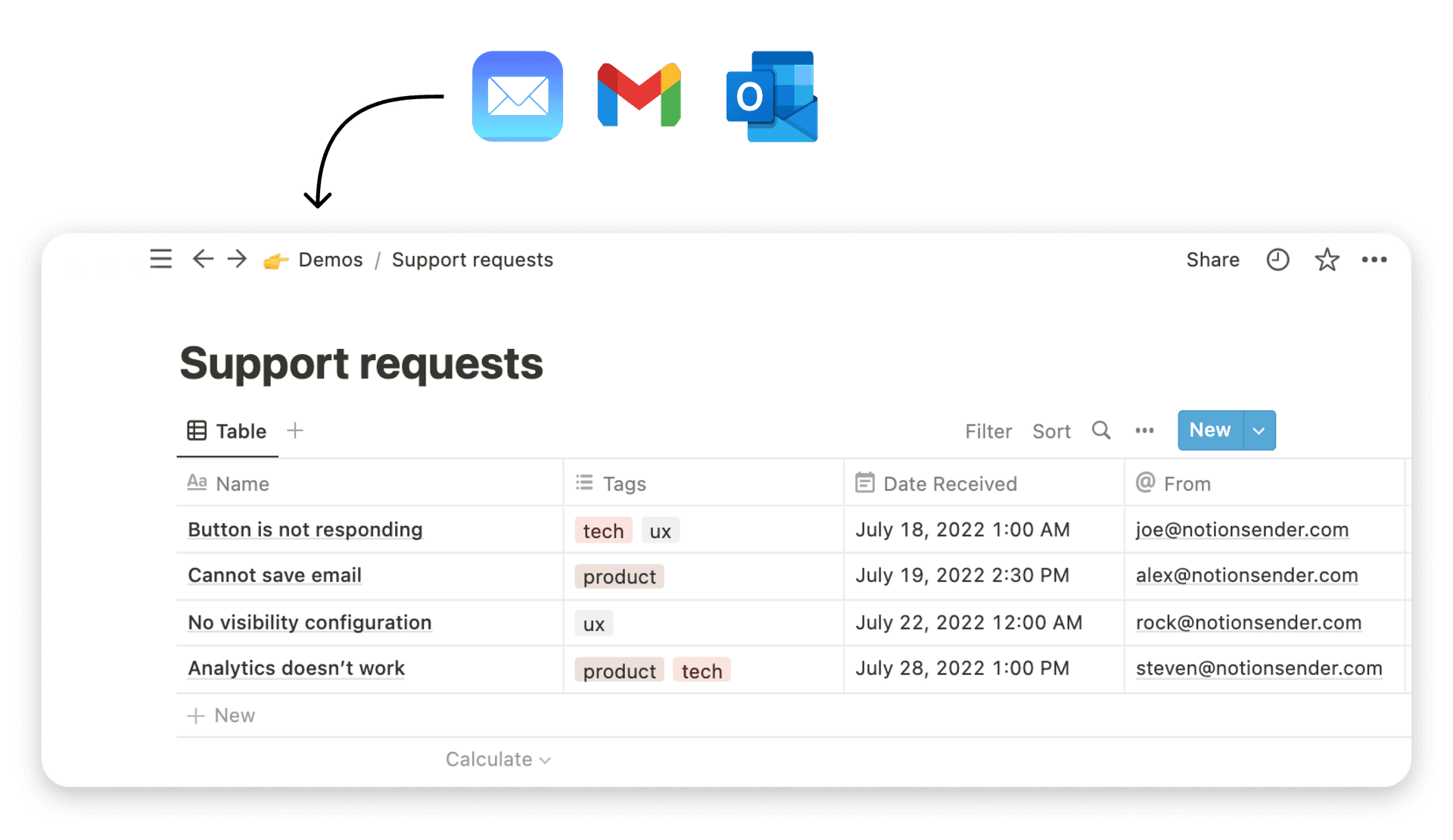
For those who want to move beyond pre-made templates and truly integrate their content creation process, you might explore how to create and send email from Notion, which offers a unique way to streamline your workflow.
The Real-World Impact on Your Workflow
Let's boil down the practical implications of each platform's design experience.
Flodesk's Design Workflow:
- Speed: You can honestly create and send a beautiful email in minutes, not hours.
- Brand Cohesion: The aesthetic is consistently clean and modern, which is perfect for visual-first brands.
- Ease of Use: The learning curve is almost non-existent. It’s ideal for solopreneurs and small teams who just need to get things done.
Mailchimp's Design Workflow:
- Control: It offers deep customization for complex layouts with multiple sections and dynamic content.
- Scalability: It's a better fit for larger teams that need to maintain strict brand consistency with reusable content blocks.
- Versatility: Its robust editor can handle everything from simple announcements to intricate promotional campaigns.
Ultimately, your choice really depends on what you prioritize. If sending gorgeous emails with minimal fuss is your main goal, Flodesk is the clear winner. If you need a powerful, versatile tool to build complex, multi-part campaigns and have the resources to manage it, Mailchimp provides the toolbox you need.
Evaluating Automation and Segmentation Capabilities
When you look past the beautiful designs, the real heart of the Flodesk vs. Mailchimp debate is in the engine room: automation and segmentation. This is where their core philosophies really diverge. One is a powerful, complex machine built for data-obsessed marketers, while the other is an elegant, streamlined system designed for direct, intentional communication.
Your choice here directly shapes how you nurture leads, personalize your content, and ultimately, drive conversions. It’s like deciding between building a multi-lane highway with intricate on-ramps and off-ramps, or paving a beautiful, straight road directly to your destination. Neither is better, but one is definitely a better fit for your business.
Mailchimp: The Power of Complex Journeys
Mailchimp has long set the standard for serious marketing automation, and its Customer Journey Builder is the main event. This tool is for businesses that need to build sophisticated, multi-step funnels that react to how subscribers behave.
Picture an e-commerce store. With Mailchimp, you can craft a journey that kicks off when someone views a product but doesn’t buy it. From there, the system can:
- Send a follow-up email 24 hours later as a gentle reminder.
- If they still don't purchase, tag them as "interested" and send a different email three days later showcasing related products.
- If they open that email but don't click, you can create a conditional split that sends them a small discount code a week later.
This is where Mailchimp shines—in that granular, behavior-based automation. It lets you create highly personalized paths for your subscribers, which can give your engagement and sales a serious boost.

The visual builder makes it easy to see how you can use if/then logic and time delays to create a truly dynamic experience for every single subscriber.
Flodesk: Simplicity and Intentionality
Flodesk takes a completely different tack with automation, prioritizing simplicity and ease of use. Its Workflows feature is perfect for creating clean, linear sequences. Think welcome series, freebie deliveries, or simple course funnels.
For example, a blogger using Flodesk can quickly set up a workflow for new subscribers:
- Trigger: Subscriber joins the "Newsletter" segment.
- Immediate Action: Send the welcome email with a link to a free resource.
- Wait 3 Days: Send a follow-up sharing their most popular blog posts.
- Wait 5 Days: Send another email asking about their biggest challenges.
Flodesk’s system is visually clean and incredibly intuitive. You can get a powerful and effective sequence up and running in minutes, without getting lost in a maze of conditional logic.
Flodesk's automations are built for creators who need to deliver a consistent, high-quality experience without the steep learning curve. Mailchimp's journeys are for marketers who need to react to a huge range of subscriber behaviors in real-time.
Segmentation: The Depth of Audience Management
Segmentation is all about talking to the right people at the right time, and here too, the platforms take different paths. Mailchimp goes deep with a data-rich approach. Its segment builder lets you use dozens of dynamic filters, from signup source and purchase history to predicted demographics. These segments update on their own, fueling hyper-personalized campaigns. This is a game-changer for businesses running multi-channel funnels that need deep analytics from CRMs and ad platforms.
Flodesk, on the other hand, uses a simpler tag-based system. You can create segments based on the tags a subscriber has, which you might apply when they sign up through a specific form or get added to a workflow. While it isn't as dynamic as Mailchimp's system, it's a very effective way to organize your audience by interest or where they came from. A smart segmentation strategy can make a massive difference, as we cover in our guide on how to increase your open rates with these 10 email marketing tricks.
The bottom line is this: if your strategy hinges on complex behavioral triggers and dynamic audience segments, Mailchimp is the obvious winner. But if you need elegant, effective, and easy-to-manage automations to welcome and nurture your audience, Flodesk gives you everything you need with a much better user experience.
Analyzing Pricing Models and Long-Term Cost
Let's talk about the bottom line, because this is often the deciding factor in the Flodesk vs Mailchimp debate. Their approaches to pricing couldn't be more different, and understanding the nuances is key to figuring out your long-term costs. One platform offers dead-simple predictability, while the other gives you a free starting point that can quickly become a significant expense as you grow.
This isn't just about what you'll pay next month. It’s about choosing a financial model that actually supports your growth strategy. Will you be penalized for success with escalating bills, or will your costs stay flat no matter how big your list gets?

Flodesk The Simplicity of a Flat Rate
Flodesk built its reputation on its pricing model, and for good reason. It’s refreshingly simple: you pay one flat monthly fee for unlimited subscribers and unlimited email sends. That's it. This is a massive draw for creators, freelancers, and small businesses who need—and love—cost certainty.
You pay the same amount whether you have 500 subscribers or 50,000. This completely removes the anxiety that often comes with growing your list. You can focus all your energy on attracting new people without bracing for the inevitable price hike that comes with hitting a new subscriber tier. The philosophy is clear: you shouldn't be charged more for doing well.
Imagine your blog post goes viral overnight. With Flodesk, that sudden subscriber surge is a pure win. Your costs don't change, so you can capitalize on the momentum without a surprise bill derailing your budget.
Mailchimp The Scalable Tiered Approach
Mailchimp uses a more traditional, tiered structure that’s based almost entirely on your subscriber count. The free plan is what gets most people in the door—it’s great for getting started, offering up to 500 contacts and 1,000 sends per month (with some notable limitations). But once you outgrow that, the costs can escalate quickly.
As you move up the tiers, you unlock more features while your subscriber and send limits increase. This model makes sense for businesses that want to start small and pay only for what they use right now. The catch? The price jumps between tiers can be steep, making costs less predictable as you scale.
The core trade-off is this: Flodesk gives you absolute cost predictability with a beautifully focused feature set. Mailchimp offers a path to more advanced tools as you grow, but it comes with a scalable and potentially much higher price tag.
Plenty of independent reviews back this up. For a list of 50,000 contacts, Flodesk's flat rate is almost always dramatically cheaper than Mailchimp's equivalent plans. Of course, that higher Mailchimp price buys you more powerful automation, deeper analytics, and a wider range of integrations. It really comes down to balancing your budget against your feature needs. You can read more analysis on this cost-feature trade-off to dig into more detailed comparisons.
Cost Comparison at Different Subscriber Levels
To give you a clearer picture of how these two models play out in the real world, here’s a look at the estimated monthly costs for Flodesk's single plan versus Mailchimp’s popular "Standard" plan.
| Subscriber Count | Estimated Flodesk Monthly Cost | Estimated Mailchimp Standard Plan Monthly Cost |
|---|---|---|
| 5,000 | ~$38 | ~$80 |
| 25,000 | ~$38 | ~$270 |
| 50,000 | ~$38 | ~$430 |
Note: Prices are estimates based on publicly available information at the time of writing and are subject to change.
As you can see, the gap widens pretty dramatically as your list grows. For a business with a large or fast-growing audience, the savings with Flodesk could easily add up to thousands of dollars a year.
So, which is right for you? If your top priorities are budget predictability and stunning design, and you don't need intensely complex automation, Flodesk offers an incredible value. But if your marketing lives and breathes on intricate workflows, deep data analysis, and tons of integrations—and you have the budget for it—Mailchimp's scalable model has the tools to make it happen.
When you look beyond just designing emails, you start to see where the real power of a marketing platform comes from: how well it plugs into the rest of your business. This is where the difference between Flodesk and Mailchimp becomes crystal clear. One is built to be the central nervous system for a complex tech stack, while the other offers a much more focused, all-in-one experience.
Mailchimp has been a giant in this space for years, and its integration library is proof. With over 300 native integrations, it connects with just about any tool a growing business could dream of. We’re talking major e-commerce platforms like Shopify, CRMs like Salesforce, and a seemingly endless list of other apps. This massive network isn't just for show—it enables deep data syncing for some seriously sophisticated marketing plays.
Flodesk, as the newer player, has a much shorter list of native connections. It handles the basics, but for anything more complex, you'll likely be leaning on a third-party connector like Zapier. For a lot of creators, that’s totally fine. But if your business depends on direct, seamless data flow between tools, this can introduce an extra step and another potential weak link in the chain.
Diving Deeper Than Just Email
The gap between the two platforms gets even wider when you start looking at features that go beyond a standard email blast. Mailchimp is absolutely loaded with tools designed for data-driven, multi-channel marketing.
Key Advanced Features in Mailchimp:
- A/B Testing: You can systematically test everything—subject lines, sender names, content, even send times—to dial in what works.
- Advanced Analytics: Mailchimp goes deep with click heatmaps, purchase tracking, and detailed reports that tie email engagement directly to your bottom line.
- Landing Pages & Websites: It’s not just for email. You can build out entire multi-page websites and robust landing pages right inside the platform.
- E-commerce Tools: The deep integrations with Shopify and WooCommerce unlock powerful features like product recommendations and abandoned cart sequences that are make-or-break for online stores.
Flodesk has its own set of killer features, but they’re built for a completely different game. The focus is squarely on simplifying life for creators, especially when it comes to sales and lead generation. Its "Checkout" feature is a prime example. It lets you sell digital products or services right from an email or landing page—a fantastic, streamlined tool for coaches, artists, and consultants.
The core distinction is this: Mailchimp gives you a suite of tools for optimization and multi-channel expansion. Flodesk gives you tools for direct conversion and workflow simplification.
Practical Impact on Your Workflow
Let's put this into context. Imagine you run a buzzing e-commerce store. With Mailchimp, your Shopify data flows in automatically, letting you segment customers based on what they've bought. You can then run a super-targeted A/B test on a new product launch to see which subject line actually drives sales. That whole loop happens right inside Mailchimp.
Now, picture yourself as a freelancer who runs your entire business out of Notion. While neither platform connects to Notion for sending emails out of the box, you can build some seriously powerful workflows. For anyone wanting to centralize their communications, figuring out how to start sending emails from Notion can be a game-changer for managing client outreach without ever leaving your project hub.
For a business that lives and breathes data to make small, continuous improvements, Mailchimp’s feature set is essential. Its whole ecosystem is built to create a powerful feedback loop. But for the creative entrepreneur whose main goal is to sell a course or book a client through a beautiful, simple funnel, Flodesk provides everything you need without the overwhelming complexity.
How to Make Your Final Decision
<iframe width="100%" style="aspect-ratio: 16 / 9;" src="https://www.youtube.com/embed/KJJdcb4k8OM" frameborder="0" allow="autoplay; encrypted-media" allowfullscreen></iframe>
Choosing between Flodesk and Mailchimp isn't just about picking a tool; it's about deciding on your marketing philosophy. The choice really boils down to a simple trade-off: aesthetic simplicity versus analytical depth. Once you know which side of that line your business stands on, the answer becomes pretty clear.
The real question is, what actually drives your growth? Is it the power of a stunning brand experience that captivates your audience, or is it the hard data you get from complex, behavior-driven campaigns? There's no wrong answer here, but one platform is definitely built better for each path.
Choose Flodesk If You Are a Creator
Flodesk is the hands-down winner for visual artists, bloggers, coaches, and any service-based entrepreneur. If your brand's biggest asset is its look and feel, and you need to create a beautiful, cohesive experience, Flodesk was made for you.
Its predictable, flat-rate pricing is a huge plus for anyone building an audience, since you aren't penalized for growing your list. You should go with Flodesk if you:
- Prioritize Design: You need your emails to look professionally designed without wrestling with a clunky editor for hours.
- Value Simplicity: You want an easy-to-use platform for welcome sequences and lead magnet delivery without a major learning curve.
- Need Predictable Costs: Your budget calls for a fixed monthly expense, whether you have 1,000 subscribers or 100,000.
For creators, Flodesk is more than an email service—it's a brand asset. It makes sure every single touchpoint, from the signup form to the final email, matches the quality and style of your work.
Choose Mailchimp If You Are a Data-Driven Business
On the flip side, Mailchimp is the clear choice for e-commerce stores, B2B companies, and any marketer who lives and breathes analytics. If your strategy involves multi-step sales funnels, A/B testing everything, and connecting to a broad tech stack like Shopify or Salesforce, Mailchimp's powerful features are non-negotiable.
Its real strength is in its ability to segment audiences based on things like purchase history and engagement. This lets you run highly targeted campaigns that actually drive sales. You should pick Mailchimp if you:
- Need Complex Automation: You want to build customer journeys that change based on what a user does (or doesn't do).
- Require Deep Analytics: You rely on detailed reports, click maps, and revenue tracking to prove your ROI.
- Need Tons of Integrations: Your workflow depends on data flowing seamlessly between your email platform, CRM, and online store.
This chart does a great job of visualizing the core differences in how deep each platform goes with features and integrations.

As you can see, Mailchimp is built for complexity and advanced integrations, whereas Flodesk nails the core features with an elegant, simple approach.
No matter which platform you go with, knowing how to improve email open rates is going to be key to your success. By matching your business needs to the platform's core strengths, you can pick the right tool that not only works for you today but also grows with you tomorrow.
Got Questions? We've Got Answers
Even with a deep dive, you might still be weighing a few last-minute questions. Let's tackle some of the most common things people ask when choosing between Flodesk and Mailchimp.
Which One Has Better Email Deliverability?
Honestly, this is less about the platform and more about you.
Both Flodesk and Mailchimp have stellar reputations for getting emails into the inbox. Mailchimp is a beast in the industry; they’ve built a massive, robust infrastructure over decades to keep sender scores high across their network. You can’t argue with their track record.
Flodesk is just as committed to great deliverability, guiding users toward clean list management and designing templates that play nice with spam filters. At the end of the day, your deliverability comes down to your own practices—sending great content and keeping your list healthy—not the tool itself.
Can I Move My Subscriber List Between Them?
Yes, and it’s a pretty standard process. You can export your audience as a CSV file from one platform and import it right into the other. Both Flodesk and Mailchimp make this fairly painless.
Here's the catch: while your contacts will come over, their history won't. All that past engagement data—opens, clicks, and purchase history—gets left behind. You’re starting with a clean slate, so be ready to re-engage your audience and follow the new platform's import rules to the letter.
Is Flodesk or Mailchimp Better for Selling Digital Products?
This really hinges on how complex your sales funnel is.
-
Flodesk shines for simple, direct sales. With its built-in Checkout feature, you can sell a digital download, a coaching session, or a workshop seat straight from a landing page. It's an elegant, all-in-one solution for creators who don’t need a full-blown e-commerce store.
-
Mailchimp is the clear winner for anyone with a larger product catalog or needing serious e-commerce muscle. Its integrations with platforms like Shopify are incredibly powerful, unlocking features like abandoned cart sequences and personalized product recommendations that can seriously drive sales.
If you just need a beautiful way to get paid, Flodesk is perfect. If you’re running an online store, Mailchimp’s e-commerce toolkit is tough to top.
And remember, if your entire business runs on Notion, NotionSender bridges the gap. You can manage your subscribers and draft your campaigns right inside your Notion workspace, then send them out through either Flodesk or Mailchimp. See how it works at https://www.notionsender.com.