How to Force Quit an App on Mac: A 2026 Guide

You’re in the middle of real work. Maybe it’s a proposal in Pages, a client email in Outlook, a campaign draft in Notion, or a browser tab jungle inside Chrome. Then the app stops responding. The cursor turns into the spinning beach ball, clicks do nothing, and macOS starts feeling stuck with it.
That moment is frustrating because it breaks concentration first and workflow second. A frozen app can come from a bug, a bad plugin, a runaway helper process, a memory leak, or an app that stopped handling input. Whatever the cause, the priority is the same. Get control back fast, without making the situation worse.
The good news is that if you know how to force quit an app on mac, you usually don’t need to restart the whole machine. The best approach is to escalate in order. Start with the fastest, safest method. If that fails, move to tools that give you more visibility and more force. And before you kill anything tied to cloud sync, take a short pause to protect your work.
That Unmistakable Feeling of a Frozen Mac App
A frozen app has a very specific feel. You click a button and nothing happens. Menus stop opening. Typing doesn’t register. Sometimes the whole window goes pale and the app name gets tagged as not responding. Other times the app looks normal, but it’s dead underneath.
It often happens at the worst time. You’re exporting a PDF from Preview, switching between Slack and Safari, or cleaning up a board in Notion before a meeting. One app hangs, then the delay spreads. The Mac itself may still be fine, but that one process is clogging the flow.
A frozen app isn’t always a full system failure. Most of the time, it’s one process that needs to be closed cleanly so the rest of your Mac can keep working.
That distinction matters. If you treat every freeze like a disaster, you’ll reboot too often and lose time you didn’t need to lose. If you ignore it and keep clicking, you can make things messier, especially with apps that are still trying to save or sync in the background.
The practical move is to stop guessing and use a simple escalation path. Start with the standard force quit window. Try the Dock if the app is visible and you want the quickest mouse-driven option. If the app refuses to die, use Activity Monitor or Terminal. That order works because it balances speed, safety, and control.
Your First Responders The Go-To Methods
The first two methods are the ones every Mac user should know cold. They’re fast, built into macOS, and they solve the majority of everyday hangs without dragging you into deeper troubleshooting.
Use the keyboard shortcut first
The default move is Command + Option + Escape. It has been around since Mac OS 8.5 in 1998, and it remains the fastest and most widely used way to close a frozen app on Mac. It opens the Force Quit Applications window, where unresponsive apps are marked in red with “(Not Responding)”, and it often resolves the issue in under 10 seconds, as described in Parallels’ guide to force quitting on Mac.

When the window appears, find the app that’s locked up, select it, and click Force Quit. If the app is the problem, this is usually enough. The rest of your Mac often becomes responsive again immediately.
A few practical notes make this work better:
- Look for the app in red. That’s usually your smoking gun.
- Quit only the app you trust least right now. Don’t start force quitting several things at once unless you know they’re related.
- Wait a moment after quitting. macOS sometimes needs a beat to redraw windows and release resources.
The Dock method is handy when the app is in front of you
If the app icon is sitting in the Dock and you prefer a mouse-driven fix, this is the quickest visual route. Hold Option, then right-click the app in the Dock. The normal Quit command changes to Force Quit. Click it.
This method is useful when you already know which app is hung and don’t want the extra step of opening the Force Quit window. It’s also easier for people who forget keyboard shortcuts under pressure.
Here’s the trade-off:
| Method | Best when | Main advantage | Limitation |
|---|---|---|---|
| Command + Option + Escape | You want the fastest universal fix | Shows all running apps in one place | Slightly less obvious if you rarely use shortcuts |
| Dock Force Quit | The app is visible in the Dock | Very intuitive and direct | Less helpful when helper processes are causing the issue |
The keyboard shortcut is still the better habit. It’s system-wide, works fast, and gives you a clearer view of what’s not responding.
A quick walkthrough helps if you want to see it in action.
<iframe width="100%" style="aspect-ratio: 16 / 9;" src="https://www.youtube.com/embed/1CO5aGl87ns" frameborder="0" allow="autoplay; encrypted-media" allowfullscreen></iframe>
What works and what doesn’t
Some users keep clicking the red close button on the window, hoping the app will snap out of it. That usually doesn’t help. If the event loop is stuck, the app isn’t processing that click anyway.
What does work is acting decisively but selectively:
- Use normal Quit first if the app still responds. If menus open and the pointer isn’t stuck, give it a chance to close cleanly.
- Use Force Quit when input is dead. That’s exactly what the feature is for.
- Don’t restart the whole Mac as your first move. It’s slower and creates more chances to lose unsaved changes in other apps.
Practical rule: If one app is frozen but Finder, the Dock, and other apps still respond, force quit the app. Don’t reboot yet.
Advanced Solutions for Stubborn Apps
Sometimes the standard window doesn’t close the app. That’s when you stop treating it like an ordinary freeze and start looking at the underlying process.
The expert-level method behind the Force Quit dialog uses ⌘ Cmd + Option + Esc, which invokes the NSQuitApplication handler and sends a SIGTERM (15) to the app asynchronously. According to Cindori’s explanation of force quitting on macOS, this resolves 85-95% of hangs. When that fails, tools like Activity Monitor or Terminal can send a stronger SIGKILL (9).
Activity Monitor gives you visibility first
Activity Monitor lives in Applications > Utilities. It’s the best next step when the app won’t close, or when you’re not sure whether the visible app is the actual problem.
Open it and look at these tabs first:
- CPU when the Mac feels loud, hot, or sluggish
- Memory when the machine crawls and apps take forever to switch
- Disk when saving or exporting seems stuck
A frozen app often has helper processes attached to it. Chrome is the classic example. You may think one tab is misbehaving, but the culprit is a renderer or helper process chewing through resources. Activity Monitor lets you spot that and quit the right process instead of blindly killing everything.

If you select a process and click the stop-sign button, macOS will usually offer Quit first, then Force Quit. Start with Quit if the process still looks somewhat alive. Move to Force Quit if it won’t budge.
Terminal is the last clean resort before bigger troubleshooting
Terminal is for the cases where the interface can’t reach the process cleanly, or where you want exact control. You don’t need to be a developer to use it, but you do need to be deliberate.
The basic logic is simple:
- Find the process name or PID
- Send a quit signal
- Escalate only if the process ignores it
If an app still has a chance to clean up, a gentler signal is preferable. If it’s completely wedged, a stronger kill ends the process immediately. That’s effective, but it gives the app less opportunity to save state.
A simple decision guide looks like this:
| Tool | Use it for | Why it helps |
|---|---|---|
| Activity Monitor | Visible app hangs, helper processes, resource spikes | You can inspect before you kill |
| Terminal | Processes that ignore the GUI tools | You get direct process-level control |
If the app won’t quit from the normal window, check whether the visible app is only the symptom. Background helpers, plugins, and child processes often cause the real freeze.
If freezes keep happening across multiple apps, not just one, this may be bigger than a single bad process. At that point, booting into restarting your Mac in Safe Mode can help isolate whether login items, extensions, or third-party software are involved.
Safeguarding Your Work Before a Force Quit
The reason people hesitate to force quit isn’t the click itself. It’s the fear of losing the last few minutes, or the last few hours, of work.
That fear is justified. A force quit interrupts the app. If the app hasn’t saved your changes locally or synced them yet, you may lose part of what you just did. The safest habit is to take a brief pause before you kill the process, especially with cloud-synced tools.

Cloud sync helps, but don’t assume it finished
Apps like Notion, Google Docs in a browser, and modern email tools usually do some combination of autosave, local caching, and background sync. That reduces risk, but it doesn’t eliminate it.
What matters right before a force quit is whether the app had time to flush your latest changes. If the app is spinning but still repainting the screen, give it a brief chance. If the sync indicator still looks active, don’t rush unless the whole Mac is becoming unusable.
A useful pause checklist:
- Check for a save or sync indicator. If the app shows “saving,” “syncing,” or similar status, wait if it’s still moving.
- Look at recent edits. If the last text you typed appears instantly on another device or companion view, that’s reassuring.
- Avoid repeated clicks. Hammering buttons in a stuck app can create duplicate actions once it recovers.
Specific advice for Notion users
Notion users should be a little more careful than they think. The app often feels fluid because changes appear quickly, but force quitting at the wrong moment can still leave the latest edits unsynced.
Before you force quit Notion:
- Look for sync status in the app interface.
- Confirm the page content settled after your last major edit, especially after pasting large blocks, moving database items, or uploading files.
- Pause after a heavy change such as reorganizing a database, editing a long page, or adjusting properties across multiple entries.
If you also use an email workflow tied to your Notion database, the same principle applies. Drafts, records, and recent updates may depend on the latest database state being written before the app closes.
Best habit: Take a short pause before you force quit a cloud-synced app. Those few seconds can save you from rebuilding work you already finished.
Safety beats speed when the work matters
People often think of force quit as a pure technical action. It isn’t. It’s a workflow decision.
If the app is frozen during low-stakes browsing, close it immediately. If it’s a client deliverable, editorial draft, or project database, spend a moment checking whether your latest work is safe first. That’s the difference between a minor interruption and a painful redo.
Proactive Steps to Prevent Future Freezes
If you have to force quit the same app repeatedly, the bigger problem usually isn’t your quitting technique. It’s the app, the environment around it, or a pattern you haven’t identified yet.
Watch for the cause, not just the symptom
Activity Monitor isn’t only for emergencies. It’s also one of the best preventive tools on the Mac. If one app constantly spikes CPU, grows in memory use over time, or spawns a pile of helpers, that tells you where to look before the next freeze happens.

A few things reduce freezes more than people expect:
- Keep macOS and key apps updated. Bug fixes matter, especially for browsers, creative tools, and utilities that hook into the system.
- Trim background utilities. Menu bar apps, plugin managers, browser extensions, and login items can interfere with normal quitting and launching behavior.
- Restart problem apps before they degrade. If an app gets flaky after long sessions, closing and reopening it on your schedule is better than waiting for a crash.
Don’t overlook Finder and general system drag
Sometimes the problem feels like a frozen app, but Finder is the part that’s misbehaving. If opening files, saving dialogs, or desktop interactions are acting strange, relaunching Finder can clear up the issue without a full reboot.
You can also reduce lockups by paying attention to overall system health. If your Mac has been feeling sluggish beyond one app, this guide on how to speed up a slow computer is a useful companion because many slow-system fixes also reduce the conditions that lead to app freezes.
A short maintenance rhythm works better than heroic troubleshooting
Try this simple routine once in a while:
| Check | What to look for | Action |
|---|---|---|
| Login Items | Apps you forgot were launching at startup | Remove what you don’t need |
| Activity Monitor | Repeat offenders in CPU or Memory | Update, remove, or replace them |
| App Versions | Older builds of browsers and utilities | Install current updates |
Small maintenance beats dramatic recovery. A Mac that isn’t carrying extra baggage is less likely to force you into emergency fixes during work.
Regain Control and Get Back to Work
A frozen app feels disruptive, but it’s usually manageable once you know the order of operations. Start with Command + Option + Escape. If the app is obvious and sitting in the Dock, use the Dock shortcut. If the process resists, move to Activity Monitor. If you need precision, use Terminal.
The bigger lesson is that speed and caution both matter. Close the app quickly when it’s clearly dead, but pause before forcing anything tied to active edits or cloud sync. That’s especially important with tools where the latest changes may still be moving behind the scenes.
When you know how to force quit an app on mac, a freeze stops being a crisis. It becomes a small interruption with a clear fix.
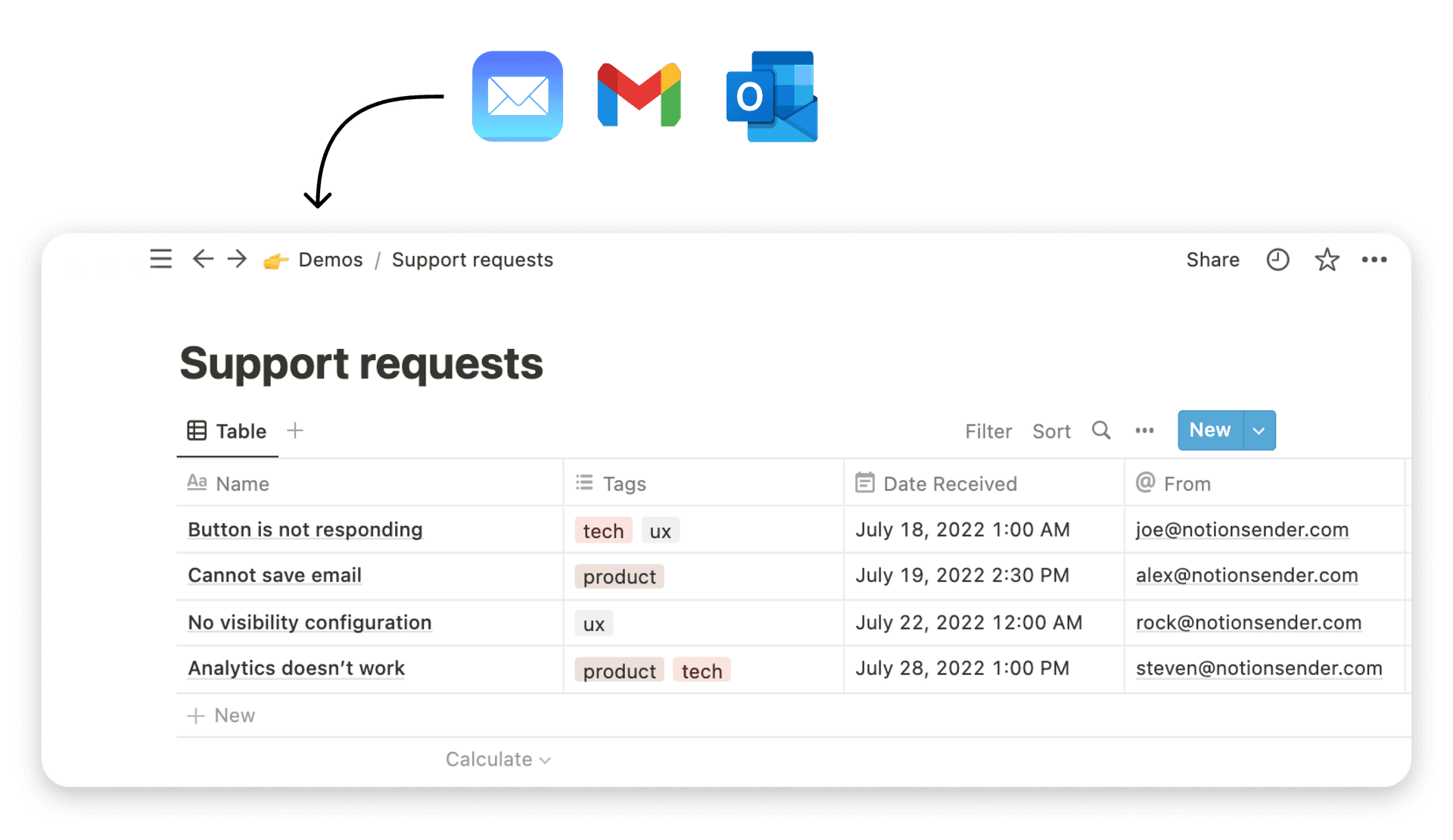
If you run your work inside Notion and want email to live there too, NotionSender is worth a look. It lets you send and receive emails from within your Notion workspace, route messages into databases, and keep project communication tied to the records your team already uses. For freelancers, project managers, and small business owners, that kind of setup can cut down on context switching and keep important conversations attached to the work itself.