12 Best Free Apps for Organization to Supercharge Your Productivity in 2026

In a world of constant digital noise, finding clarity and focus is a superpower. The right tools can turn your workflow from scattered to systematic, but navigating the endless sea of software is a job in itself. This guide cuts through the clutter, offering a curated list of the 12 best free apps for organization designed to bring order to your personal and professional life. We move beyond simple feature lists to provide a deep dive into what makes each app tick, who it's for, and the practical limitations of their free tiers.
Whether you're a freelancer juggling multiple projects, a student managing deadlines, or a team lead coordinating tasks, you'll find a solution here. We'll explore powerful project managers like Asana and ClickUp, flexible workspaces such as Notion and Airtable, and focused task managers like Todoist. Our goal is to help you find the perfect system to regain control and achieve your goals without spending a dime.
Each entry includes a detailed analysis of its free plan, ideal use cases, pros, cons, and screenshots to give you a clear picture of its functionality. When building your perfect productivity stack, it's also worth exploring various digital whiteboard tools and their alternatives, such as looking into the best Google Jamboard alternatives to complement your organizational setup. This guide is your direct path to finding the right free apps for organization that fit your specific needs, helping you conquer the chaos and get back to doing what matters most.
1. Notion
Notion is an all-in-one workspace that consolidates notes, tasks, wikis, and databases into a single, highly flexible environment. Unlike more rigid project management tools, Notion provides a set of building blocks-like pages, databases, and blocks-that you can arrange to create custom systems for everything from content calendars and lightweight CRMs to personal habit trackers. This adaptability makes it one of the best free apps for organization for users who need a tool that can grow with their projects.

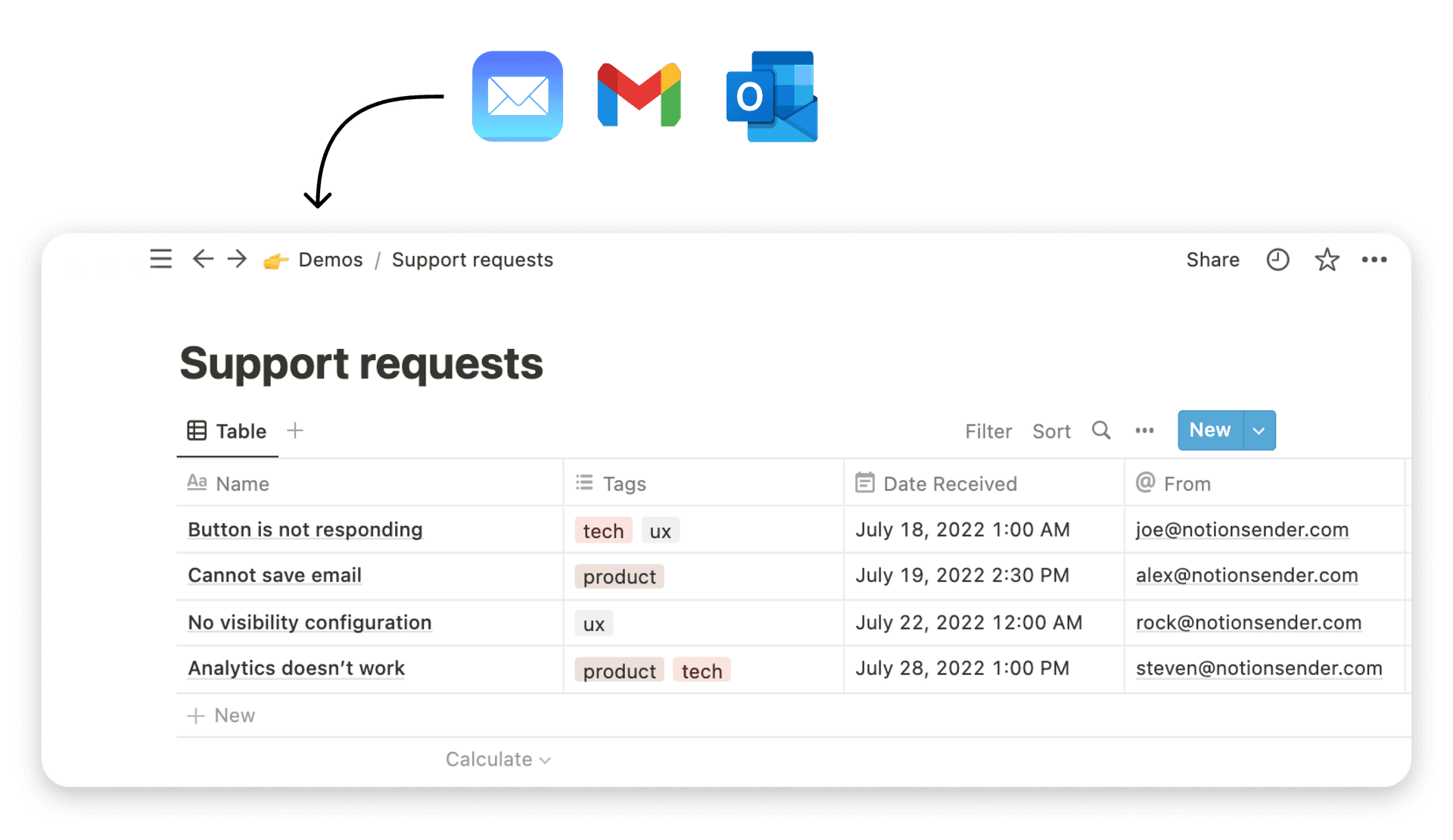
Its real power lies in its database functionality, which allows you to link related information, such as connecting tasks to specific projects or client contacts. For centralizing workflows, you can even integrate key communications directly into your project dashboards. For instance, using a tool like NotionSender allows you to forward important emails from Gmail and save them as organized items in a Notion database, keeping all project-related context in one place.
Key Details & Limitations
Ideal For: Individuals and small teams who want a single hub for documentation, project management, and knowledge bases.
Free Plan Limits:
- File Uploads: Capped at 5 MB per file.
- Version History: Limited to 7 days.
- Guests: Up to 10 guests can be invited to collaborate.
While the free plan is generous, the initial learning curve can be steep for mastering its more advanced database features like rollups and relations. To get started faster, you can check out these 10 tips to help you get the most out of Notion and explore the vast library of community-created templates.
Website: notion.com
2. Trello
Trello is a highly visual and intuitive project management tool that uses Kanban-style boards to organize tasks and workflows. Its card-based system allows you to track project progress through different stages, from "To-Do" to "Done," making it one of the most straightforward free apps for organization available. The drag-and-drop interface is exceptionally easy to learn, enabling teams to get started on planning marketing campaigns, content calendars, or simple team projects within minutes.

What makes Trello stand out is its simplicity combined with powerful extensibility through "Power-Ups." These add-ons bring extra features directly to your boards, such as calendar views, custom fields, and integrations with other services like Slack and Google Drive. The free plan generously includes unlimited Power-Ups, allowing you to customize each board for a specific workflow without needing a paid subscription. This makes it an ideal choice for teams that need a flexible visual system that doesn't overwhelm them with complexity.
Key Details & Limitations
Ideal For: Small teams, freelancers, and individuals who need a simple, visual tool for managing projects and day-to-day tasks.
Free Plan Limits:
- Boards: Up to 10 open boards per Workspace.
- File Uploads: Capped at 10 MB per file.
- Automation: Includes 250 Butler command runs per month.
While the onboarding is very quick, the 10-board limit on the free plan can be restrictive for teams managing multiple long-term projects simultaneously. Growing teams may also find the lack of advanced administrative and security controls a reason to upgrade.
Website: trello.com
3. Asana
Asana is a dedicated task and project management tool designed for team collaboration and clarity. Where some apps offer a blank canvas, Asana provides a structured framework with projects, tasks, assignees, and due dates at its core. This focus on clear hierarchies and responsibilities makes it one of the most effective free apps for organization for teams needing to track who is doing what, by when.

Its strength lies in making project progress visible and actionable. You can visualize work in different ways, like simple lists or Kanban-style boards, helping teams stay aligned on priorities and deadlines. Asana's mature ecosystem also means it connects well with hundreds of other tools, including email, so you can turn communications into trackable tasks. For more ideas on managing your inbox, explore these simple email management tips to boost your productivity.
Key Details & Limitations
Ideal For: Teams that need a clear, task-oriented system for managing projects with multiple contributors and deadlines.
Free Plan Limits:
- Team Size: Up to 10 team members.
- Views: Limited to List, Board, and Calendar views (Timeline and Gantt charts are paid features).
- Projects: Unlimited projects, tasks, and storage.
The free plan is powerful for small teams, but it lacks the more advanced reporting and automation features found in paid tiers. The structured nature of Asana can also feel rigid for users who prefer a more flexible, document-based approach to organization.
Website: asana.com
4. ClickUp
ClickUp is a work management platform that aims to be a single source for nearly all productivity needs, combining tasks, documents, chat, whiteboards, and goals into one application. Its standout feature is the sheer breadth of its capabilities available even on the free plan, making it one of the best free apps for organization for users who want many tools without switching between different software. It offers a structured environment for managing projects from start to finish.

The platform supports multiple views like lists, Kanban boards, and calendars, allowing teams and individuals to visualize their work in whatever way suits them best. Unique features like in-app video recording and collaborative docs make it a strong contender for teams that need to communicate and document processes closely. Its generous free tier includes unlimited tasks and members, which is a significant advantage for growing teams on a tight budget.
Key Details & Limitations
Ideal For: Small teams and individuals looking for a feature-rich, all-in-one project management tool without an immediate cost.
Free Plan Limits:
- Storage: Capped at 100 MB total.
- Feature Usage: Limited uses for certain features like Gantt charts, custom fields, and dashboards.
- Activity History: Limited to 1 day.
While the free plan offers immense value, the 100 MB storage limit can be a major constraint for projects with many attachments. Some users have also expressed frustration with the platform's frequent updates and changes to its feature set and pricing tiers over time, which can create an adjustment period.
Website: clickup.com
5. Todoist
Todoist is a task management app celebrated for its simplicity, speed, and powerful natural language processing. It allows you to quickly capture tasks by typing due dates like "every Friday at 10 am" or "in 3 weeks," which the app automatically schedules. This focus on rapid task entry makes it one of the best free apps for organization for those who need to get thoughts out of their head and into a trusted system without friction.

Its strength lies in its reliable, cross-platform syncing and clean interface, which helps you manage personal productivity and light team collaboration with ease. You can organize tasks with labels, priorities, and filters, and view them in either list or board formats. While Todoist is excellent for task management, complex project documentation often requires a more robust system. By integrating Todoist with a central workspace like Notion, you can connect your actionable to-do items with broader project plans, creating a more complete organizational workflow.
Key Details & Limitations
Ideal For: Individuals and small teams looking for a fast, straightforward, and reliable to-do list manager that works seamlessly across all devices.
Free Plan Limits:
- Active Projects: Up to 5 personal projects.
- Collaborators: Up to 5 per project.
- File Uploads: Capped at 5 MB per file.
- Activity History: Limited to 1 week.
The free plan is perfect for personal task management, but the limits on projects, reminders, and filters will likely push power users or growing teams toward a paid plan. While it lacks the all-in-one documentation features of other tools, its integration capabilities can help bridge that gap, and you can explore ways to connect task management with email and other communications to build a more connected system.
Website: todoist.com
6. Microsoft To Do
For those deeply embedded in the Microsoft ecosystem, Microsoft To Do is a straightforward and effective task manager. It directly replaces Wunderlist and integrates seamlessly with Outlook Tasks, allowing you to manage your to-dos from your inbox and your dedicated task app without friction. Its core strength is its simplicity, making it one of the best free apps for organization if you need a no-fuss daily planner without the complexity of a full-scale project management tool.
The "My Day" feature is a standout, offering a clean slate each morning and intelligently suggesting tasks from your other lists that you might want to tackle. You can create shared lists for collaborating with colleagues or family, and each task can contain sub-tasks (called Steps), notes, and due dates. This focused approach helps users prioritize their day without getting lost in intricate features, making it ideal for managing personal responsibilities and light professional work.
Key Details & Limitations
Ideal For: Individuals and teams using Microsoft 365 who need a simple, integrated task list for daily planning.
Free Plan Limits:
- Storage: 5 GB of file attachments per user on OneDrive.
- File Size: Attachments are limited to 25 MB per task.
- Collaboration: Fully featured for free with a Microsoft account.
While it excels at simplicity, Microsoft To Do lacks the advanced project management capabilities found in more robust platforms, such as Kanban boards, Gantt charts, or complex automations. Its primary value is realized when used alongside other Microsoft products like Outlook and Teams.
Website: microsoft.com/en-us/microsoft-365/microsoft-to-do-list-app
7. Google Keep
Google Keep is the digital equivalent of a bulletin board filled with sticky notes, designed for rapid idea capture and simple task management. It excels at getting thoughts out of your head and into an organized space with minimal friction. You can create notes using text, checklists, images, audio recordings, or even freehand drawings, making it a versatile tool for different types of information. Its deep integration within the Google ecosystem is a key advantage.
Where Google Keep truly shines is its accessibility and speed. It syncs instantly across all your devices and is available in the side panel of Google Docs, Sheets, and Gmail, allowing you to drag and drop notes directly into your work. This makes it one of the best free apps for organization when you need to quickly reference ideas, manage a shared grocery list with a collaborator, or jot down a reminder without leaving your primary workspace.
Key Details & Limitations
Ideal For: Individuals deeply embedded in the Google ecosystem who need a simple, fast way to capture thoughts, quick reminders, and shared checklists.
Free Plan Limits:
- Storage: Shares the 15 GB of storage included with your free Google Account.
- Features: The entire feature set is available for free with no paid tier.
- Reminders: Reminder functionality has been shifted to Google Tasks, and location-based reminders are no longer supported.
The platform is incredibly straightforward, but it lacks the powerful organizational structures like nested folders, tags, or advanced databases found in other tools. This makes it unsuitable for managing complex, multi-stage projects, but perfect for day-to-day personal organization and fleeting thoughts.
Website: keep.google.com
8. Airtable
Airtable is a powerful platform that blends the familiarity of a spreadsheet with the complexity of a database, creating a highly structured way to organize information. It moves beyond simple rows and columns by allowing you to build custom applications for tracking anything from project timelines and content calendars to customer relationships and product inventories. This relational capability makes it one of the most versatile free apps for organization when a standard spreadsheet isn't enough.

Its strength lies in its "bases," which are essentially databases you can view in multiple ways, including a grid, calendar, gallery, or Kanban board. You can link records between different tables, creating a single source of truth that updates everywhere simultaneously. For example, a marketing team can link a campaign in one table to specific social media posts in another, keeping all related assets and data connected and easily accessible.
Key Details & Limitations
Ideal For: Teams and individuals needing to manage structured data for projects, inventories, or lightweight CRMs with more power than a spreadsheet.
Free Plan Limits:
- Records: 1,000 records per base (database).
- Storage: 1 GB of attachments per base.
- History: 2 weeks of revision and snapshot history.
- Collaboration: Up to 5 editors/creators per base.
While Airtable is extremely capable, new users may need some time to grasp how to properly set up their bases and link data effectively. The free plan’s limits on records and storage can also be a constraint for more complex or data-heavy projects, pushing users toward paid plans as their needs grow.
Website: airtable.com
9. Obsidian
Obsidian is a private and flexible knowledge base that operates on a local folder of plain text Markdown files. Unlike cloud-based apps, it prioritizes data ownership and offline access, making it a powerful tool for building a lasting personal knowledge management (PKM) system. Its core strength comes from its ability to create connections between notes, allowing you to build a web of your thoughts and discoveries. This makes it one of the best free apps for organization for researchers, writers, and anyone who values longevity and control over their data.

The platform’s real magic lies in its backlinks and graph view, which visually map the relationships between your notes, helping you uncover new insights. Because it's built on Markdown files, your data is always portable and future-proof. The experience is also extremely customizable through a rich ecosystem of community plugins and themes, letting you add everything from Kanban boards and calendars to advanced table editors, shaping the tool to your exact organizational workflow.
Key Details & Limitations
Ideal For: Academics, writers, developers, and individuals building a "second brain" or a detailed personal knowledge base.
Free Plan Limits:
- Core App: The main application is completely free for both personal and commercial use.
- Plugins & Themes: Access to the extensive library of community plugins and themes is free.
- Collaboration: Natively a single-user app; collaboration requires workarounds like shared cloud folders or using the paid Sync service.
While the local-first approach ensures privacy, syncing across devices requires either a paid add-on (Obsidian Sync) for end-to-end encryption or a third-party solution like Dropbox or iCloud. The initial setup can also involve more curation to find the right plugins and structure compared to more opinionated note-taking apps.
Website: obsidian.md
10. Microsoft OneNote
Microsoft OneNote is a powerful digital note-taking app that structures information like a traditional binder, using notebooks, sections, and pages. Its freeform canvas allows you to type, write, draw, and insert multimedia anywhere on the page, making it an excellent choice for brainstorming sessions, detailed research, and meeting minutes. Unlike more structured apps, OneNote’s flexibility makes it one of the best free apps for organization for those who think visually and need to combine various media types.

Its strength lies in its deep integration with the Microsoft ecosystem and its robust feature set, which is available almost entirely for free. You can clip web pages, extract text from images using OCR, record audio notes, and embed files directly into your pages. This makes it ideal for creating comprehensive knowledge hubs or project binders where all related materials, from documents to sketches, can be stored together for easy access.
Key Details & Limitations
Ideal For: Students, researchers, and professionals who need a free-form, multimedia-rich environment for capturing and organizing long-form notes and research.
Free Plan Limits:
- Storage: Tied to your free Microsoft account's OneDrive storage, which starts at 5 GB.
- Collaboration: Real-time collaboration is included.
- App Versions: Note that the legacy OneNote for Windows 10 app is being phased out in favor of the integrated Microsoft 365 version.
While the free version is incredibly generous, some advanced features like Sticker packs and Math Assistant are exclusive to Microsoft 365 subscribers. The sheer number of features can also feel overwhelming for users seeking a more minimalist note-taking experience.
Website: microsoft.com/en-us/microsoft-365/onenote/digital-note-taking-app
11. Miro
Miro is a collaborative online whiteboard built for visual brainstorming, planning, and remote workshops. Unlike traditional task managers that rely on lists, Miro offers an infinite canvas where teams can map out ideas, create user story maps, or build detailed project roadmaps using digital sticky notes, diagrams, and flowcharts. This visual-first approach makes it one of the best free apps for organization when complex ideas need to be untangled before they can be turned into actionable tasks.

Its strength lies in real-time, unstructured collaboration, making it feel like a shared physical whiteboard for distributed teams. The platform includes a massive library of over 5,000 templates for everything from retrospectives to mind maps, which helps teams get started quickly. With more than 160 integrations, you can connect Miro to tools like Jira, Asana, or Microsoft Teams to turn brainstorming sessions into concrete tasks within your existing project management ecosystem.
Key Details & Limitations
Ideal For: Remote teams, project managers, and creative professionals who need a flexible space for strategic planning, brainstorming, and workshops.
Free Plan Limits:
- Editable Boards: Limited to 3 active boards per workspace.
- Privacy: All boards are visible to the entire team; private boards require a paid plan.
- Advanced Features: Lacks advanced export options and version history.
- AI Credits: Includes 10 AI credits per month per team for features like idea generation.
The free plan is excellent for occasional workshops or mapping out a new project. However, the limit of three editable boards means you'll need to archive or delete old projects to stay within the free tier, which can be cumbersome for ongoing work.
Website: miro.com
12. Calendly
Calendly is a scheduling automation tool that eliminates the time-consuming back-and-forth of coordinating meetings. Instead of trading emails to find a suitable time, you simply share your Calendly link, which shows your real-time availability. Invitees can then book a time that works for them, and the event is automatically added to both of your calendars, complete with confirmation emails and reminders. This makes it an essential free app for organization for anyone managing client calls, interviews, or team syncs.

Its core strength is its simplicity. By connecting directly to your primary calendar (like Google Calendar or Outlook), it prevents double bookings and ensures your availability is always accurate. The professional booking page can be embedded on a website or shared directly, giving clients and colleagues a seamless way to schedule time with you without any manual intervention on your part. This straightforward approach provides immediate value, especially for client-facing roles.
Key Details & Limitations
Ideal For: Freelancers, consultants, and professionals who need a simple, automated way to manage external and internal meeting requests.
Free Plan Limits:
- Active Event Types: Limited to one active event type at a time.
- Calendar Connections: Can only connect one calendar per user.
- Integrations: Basic integrations like video conferencing are included, but more advanced ones are paid.
The free plan is perfect for individuals with straightforward scheduling needs, but it lacks team features like round-robin routing or collective event types. Customization options for branding and notifications are also minimal on the free tier. However, for core scheduling automation, it is an incredibly effective tool that saves significant administrative time.
Website: calendly.com
Top 12 Free Organization Apps: Feature Comparison
| Product | Core features | UX / Quality (★) | Pricing & Value (💰) | Target audience (👥) | Notable strengths (✨ / 🏆) |
|---|---|---|---|---|---|
| Notion | Pages, relational DBs, templates, Notion Mail sync | ★★★★☆ | 💰 Free tier (limits); paid teams | 👥 Teams, knowledge workers, NotionSender users | ✨ All‑in‑one workspace; 🏆 flexible DBs & community templates |
| Trello | Card-based Kanban, Power‑Ups, automations | ★★★★☆ | 💰 Free with board limits; paid for admin features | 👥 Small teams, marketing, content creators | ✨ Fast onboarding; 🏆 simple visual workflows |
| Asana | Structured projects, tasks, assignees, timelines | ★★★★☆ | 💰 Free (limited); paid for advanced PM controls | 👥 Project managers, cross‑functional teams | ✨ Clear task hierarchy; 🏆 mature integrations |
| ClickUp | Tasks, docs, chat, whiteboards, goals | ★★★★☆ | 💰 Generous free tier; paid for scale | 👥 Teams wanting all‑in‑one platform | ✨ Broad feature set; 🏆 rich free features |
| Todoist | Natural‑language tasks, labels, filters, quick add | ★★★★☆ | 💰 Free basic; Pro for power users | 👥 Individuals, small teams | ✨ Fast capture & scheduling; 🏆 reliable cross‑platform |
| Microsoft To Do | My Day planner, Outlook Tasks sync, shared lists | ★★★☆☆ | 💰 Free with Microsoft account | 👥 Microsoft 365 users, casual task users | ✨ Tight Outlook integration; 🏆 zero‑cost for MS users |
| Google Keep | Notes, checklists, media, Docs integration | ★★★☆☆ | 💰 Free (Google account) | 👥 Google Workspace users, quick capture | ✨ Lightweight capture; 🏆 seamless Google integration |
| Airtable | Spreadsheet+DB, views (grid/calendar/gallery), templates | ★★★★☆ | 💰 Free (record/storage limits); paid to scale | 👥 Teams needing structured DBs/CRMs | ✨ Powerful modeling; 🏆 versatile templates & automations |
| Obsidian | Local Markdown, backlinks, graph, plugins | ★★★★☆ | 💰 Core free; paid Sync/Publish add‑ons | 👥 Researchers, privacy‑focused users | ✨ Local‑first & extensible; 🏆 data portability & privacy |
| Microsoft OneNote | Notebooks/sections/pages, ink, OCR, web clipper | ★★★★☆ | 💰 Free with Microsoft account | 👥 Note‑takers, Microsoft ecosystem users | ✨ Rich multimedia & OCR; 🏆 robust free feature set |
| Miro | Visual whiteboards, templates, workshops, integrations | ★★★★☆ | 💰 Free (3 editable boards); paid for teams | 👥 Remote teams, facilitators, workshop leaders | ✨ Collaborative facilitation tools; 🏆 huge template library |
| Calendly | Booking pages, calendar sync, confirmations | ★★★★☆ | 💰 Free (1 event type); paid for team features | 👥 Client‑facing roles, recruiters | ✨ Removes scheduling friction; 🏆 simple rollout & UX |
Building Your Perfect Productivity Stack
You've just explored a dozen of the most powerful and popular free apps for organization available today. The sheer volume of features and options, from Asana's structured project management to Obsidian's interconnected knowledge base, can feel overwhelming. However, the key takeaway is not to adopt every tool on this list, but to thoughtfully select the few that solve your most pressing organizational challenges.
The goal is to move from a chaotic collection of sticky notes, scattered files, and a cluttered inbox to a functional, personalized productivity stack. This "stack" is simply the combination of apps you use to manage your work and life. A well-designed stack ensures that information flows smoothly from one place to another, reducing friction and mental clutter.
Finding Your "Keystone" App
The first and most critical step is to identify your primary pain point. Are you struggling to track multi-step projects with a team? Or is your main challenge simply remembering individual tasks and deadlines? Your answer will guide you to your "keystone" application, the central hub around which your entire system will be built.
- For project-centric work: If your days are defined by complex projects with multiple collaborators and dependencies, a tool like Asana or ClickUp should be your starting point. Their free tiers offer robust project management features that can serve as the command center for your team's efforts.
- For knowledge and information management: If you're a freelancer, student, or solo entrepreneur drowning in notes, research, and ideas, a "second brain" like Notion or Obsidian is a better foundation. These apps excel at connecting disparate pieces of information into a cohesive whole.
- For straightforward task management: If your main need is a reliable to-do list to manage personal and professional responsibilities, Todoist or Microsoft To Do are excellent, no-fuss choices that form a solid, simple base for your stack.
Layering Specialized Tools for a Complete System
Once you've chosen your central hub, you can begin layering in more specialized tools to handle specific functions. This is where you can truly customize your workflow. For instance, you might use Asana as your primary project manager but integrate Miro for brainstorming sessions and visual planning. Or, you could use Notion as your central knowledge base but rely on Google Keep for quick, on-the-go note capture that you later process and file away.
This is also the point where you should consider other aspects of your digital life that need organization. A truly comprehensive system accounts for all inputs, including financial data. To ensure complete digital organization, consider including specialized tools such as an app for scanning receipts in your productivity stack for managing financial records efficiently. Automating tedious processes is another key component. A simple tool like Calendly can eliminate the back-and-forth of scheduling, saving you hours each month and integrating directly with your calendar.
The real power emerges when these tools work together. By thoughtfully combining these powerful free resources, you can build a robust, customized system that brings clarity and control to your work. The perfect system isn't found in a single app; it's built by you, for you.
Ready to connect your inbox to your new organizational hub? If you chose Notion as your central app, NotionSender is the missing piece. It allows you to save emails directly to any Notion database with a single click, turning your cluttered inbox into an organized, actionable part of your system. Get started for free and build your perfect workflow at NotionSender.