Google Calendars Subscribe: A Complete 2026 Guide

You open your calendar to confirm one client call, then notice a teammate’s PTO overlaps with a launch review, a vendor webinar is happening at the same time as your planning block, and the project timeline you thought was fixed has already shifted. People often respond by checking three apps, two inboxes, and one Slack thread.
That’s the slow way to work.
A better approach is to make Google Calendar the place where outside schedules flow in automatically. When people search for google calendars subscribe, they usually want steps. The steps matter, but the bigger win is operational: one view for team availability, client milestones, public events, and recurring reference calendars you need to see but don’t want to manage manually.
Why Subscribing to Calendars Is a Productivity Superpower
The practical value of calendar subscription isn't just convenience. It’s centralized awareness. Instead of chasing updates across tools, you let schedules come to you in a format your day already revolves around.
Google Calendar sits at the center of that workflow. It has approximately 500 million monthly active users, and calendar events drive an 86% increase in engagement versus emails, according to calendar market analysis from Calendar Invite. That matters because professionals don’t reliably revisit emails, but they do revisit calendars.
A subscribed calendar changes how you plan. A project manager can keep a client’s release timeline visible without copying dates by hand. A freelancer can overlay regional holidays from a client’s market. A marketer can keep event calendars and campaign deadlines visible without dumping everything into the primary calendar.
What subscription solves better than email
Email is still where many schedules originate. It’s just a poor place to maintain them.
If a partner updates a public event calendar, a subscription keeps your view aligned. If your team shares calendars internally, a subscription reduces the “Can you send the latest version?” loop. If you rely on recurring schedules, subscription beats screenshots and forwarded messages every time.
For people trying to tame a crowded planning stack, strong email hygiene still matters. These simple email management tips to boost your productivity pair well with a cleaner calendar setup because fewer messages need manual follow-up once the right calendars are subscribed.
Practical rule: Put changing schedules on subscribed calendars. Keep your primary calendar for commitments you own.
Why this is strategic, not technical
The strategic advantage is separation.
Use your main calendar for what you must attend, deliver, or prepare for. Use subscribed calendars for reference layers: team leave, client timelines, public holidays, webinar series, conference agendas, sports schedules, or editorial milestones. You stay informed without turning your own calendar into a dumping ground.
That distinction also helps if you’re comparing platforms. If your current setup feels rigid, reviewing a few Google Calendar alternatives can clarify which tools handle layered scheduling, sharing, and visibility best for your team.
Subscribe vs Import Which Method Should You Choose
People confuse these two actions all the time. The result is predictable: they import a file, expect ongoing updates, then wonder why nothing changes later.
Subscribe means Google Calendar stays connected to a source.
Import means Google Calendar takes a one-time copy.

The simplest way to think about it
A subscription is for calendars that continue to change. Imports are for historical data, migrations, or static event sets.
If you need a live feed of company holidays, a shared team calendar, or a public event series, subscribe. If you exported old appointments from another system and just want them inside Google Calendar, import.
Subscribe vs Import in Google Calendar
| Feature | Subscribe (via URL/Email) | Import (from .ics/.csv file) |
|---|---|---|
| Update behavior | Live connection that refreshes from the source | Static snapshot |
| Best for | Shared calendars, public feeds, recurring external schedules | Past records, one-time migrations, fixed event lists |
| Setup source | Email request or URL feed | Uploaded file |
| Ongoing maintenance | Low once set up | Manual re-import if source changes |
| Ownership | Source owner usually controls updates | You control the copied events after import |
| Risk of stale data | Lower for valid subscriptions | High if original schedule changes |
When subscription is the wrong choice
Subscription isn’t perfect for every case.
If you only need a one-off archive, subscription adds clutter. If the source calendar is messy, subscribing means you inherit that mess. If you need to edit every event as your own, importing might be easier because you’re no longer tied to the publisher’s structure.
Subscribing is best when the source should remain the source of truth.
A quick decision filter
Use this checklist before adding anything:
- Choose subscribe if the source calendar will keep changing and you want updates to appear automatically.
- Choose import if you need a fixed copy and don’t care whether the original changes later.
- Choose email-based subscribe when another person or team controls access to a shared Google Calendar.
- Choose URL-based subscribe when the publisher offers a public or secret iCal feed.
Most workflow mistakes come from choosing a static tool for a dynamic schedule. If the calendar represents an ongoing operational feed, subscription is usually the right move.
How to Subscribe to Calendars on Any Device
Most subscription setup happens on the desktop web version of Google Calendar. That’s the part many users miss, especially if they start on mobile and assume the app can do everything.

For URL-based subscriptions, success rates are over 95% for valid public URLs, and Google automatically polls for updates. For email-based subscriptions, the initial request is desktop-only, and failure rates can reach 40% when users try to do the setup from a mobile app, as noted in Google Calendar support discussion on subscribable calendars.
Request access to a shared calendar by email
This method works best when you want access to another person’s Google Calendar inside your organization or from a known external contact.
Open Google Calendar in a desktop browser. In the left sidebar, find Other calendars, click the + icon, then choose Subscribe to calendar. Enter the calendar owner’s email address. Google may suggest contacts from your organization or address book.
When you send the request, the owner receives an approval email. They can choose permission levels such as seeing free/busy only, seeing event details, or making changes.
Here’s the operational trade-off. This route is clean for internal collaboration, but it depends on the owner responding. If they don’t approve the request, nothing happens. It’s also the wrong method if all you need is a one-way public feed.
Add a public or secret iCal feed by URL
This is the fastest route for event publishers, public holiday feeds, editorial calendars, and external schedules that don’t need approval.
In desktop Google Calendar, go to Other calendars, click +, then choose From URL. Paste the .ics or iCal feed link and confirm. If the URL is valid, Google usually accepts it immediately and adds the calendar under your other calendars list.
This method is ideal when you need a read-only live feed. You see the events, but the source system remains the owner.
If a publisher offers both a shared calendar request and an ICS feed, use the ICS feed when you want speed and low friction.
What usually breaks the setup
Most failed subscriptions come from a short list of mistakes, not from Google Calendar itself.
- Using mobile for the initial email request: The web interface is the reliable starting point for that method.
- Pasting the wrong URL: Many users copy the page URL instead of the direct ICS link.
- Permission mismatch: A shared calendar may exist, but the owner hasn’t granted access.
- Network restrictions: Firewalls or enterprise controls can block feed retrieval.
- Expired or rotated secret links: Some platforms regenerate calendar URLs, which imperceptibly breaks old subscriptions.
A related workflow improvement is reducing how much schedule coordination starts as inbox friction. If your team still builds meetings manually from scattered messages, this guide on creating and sending email from Notion is useful for tightening the handoff between communication and planning.
What happens on Android and iPhone
Once the calendar is added on desktop, it usually appears in the Google Calendar mobile app as the same account syncs across devices. That’s the part mobile users care about most: you don’t need to repeat the subscription setup on each device.
If you don’t see the subscribed calendar on your phone, check whether the calendar is enabled for display in the app. Many “it didn’t sync” complaints are really visibility settings problems. The subscription exists, but the app isn’t showing that calendar layer.
A short walkthrough helps if you want to see the interface in action:
<iframe width="100%" style="aspect-ratio: 16 / 9;" src="https://www.youtube.com/embed/Sw-66SLPw40" frameborder="0" allow="autoplay; encrypted-media" allowfullscreen></iframe>
Which method fits which workflow
Use email-based subscription when you need access to a teammate’s calendar and permissions matter. Use URL-based subscription when the calendar is meant to be distributed broadly, such as events, public schedules, release timelines, or organization-wide references.
For most professionals, the best setup combines both:
- Internal collaboration calendars through email-based access
- External reference calendars through URL-based feeds
- Personal commitments kept separate on your main calendar
That mix keeps your planning system useful instead of noisy.
Finding and Using Public Calendars
Once you understand where subscriptions fit, public calendars become more than convenience feeds. They become planning inputs.
A freelance marketer might subscribe to awareness-day calendars to avoid scrambling for campaign ideas. A consultant working across countries might add local holiday feeds so deadlines don’t land on non-working days. A project lead can track conference dates, launch windows, or community events that affect customer attention.
Where useful public calendars usually come from
The best public calendars are normally published by the organization closest to the event source.
Government sites often provide holiday information. Sports leagues publish season schedules. Conferences and communities sometimes share event feeds. Software ecosystems may offer calendars for releases, office hours, or live sessions. The key is to look for an ICS or iCal link rather than a generic event page.

Practical ways to use them
A few examples show how valuable this gets in real work:
- Content planning: Subscribe to industry event calendars, awareness dates, or webinar series.
- Client operations: Add regional holiday calendars for every market you serve.
- Vendor coordination: Follow shipping blackout periods, maintenance windows, or release schedules when vendors publish them.
- Personal workload control: Keep school terms, sports fixtures, or recurring local events visible without manually entering them.
A public calendar is most useful when it answers, “What outside schedule could affect my timing this week?”
Keep public feeds in their own lane
Don’t treat every public feed as equal. Some belong on-screen daily. Others should stay hidden until needed.
Good organization makes the difference:
- Use distinct colors for reference calendars.
- Rename calendars clearly after subscribing, especially if the feed title is vague.
- Hide low-priority feeds by default and turn them on only when planning.
- Avoid stacking overlapping public calendars that publish the same events in different formats.
Subscription becomes a strategic tool. You’re not collecting calendars for the sake of it. You’re building a planning environment that surfaces external constraints before they become scheduling surprises.
Troubleshooting Common Sync Issues
A subscribed calendar only helps if you trust it. When events lag, disappear, or duplicate, people often abandon the setup too quickly. Most issues have a straightforward cause.
The calendar added successfully but doesn’t look current
This usually points to refresh timing or source-side changes.
Google checks subscribed feeds automatically, but updates aren’t always instant. If a publisher changes an event and you don’t see it right away, first confirm that the source calendar changed. Then open the subscribed calendar’s settings and review whether you’re looking at the right feed and the right account.
If the issue persists, remove the calendar and add it again using the original link. Old or replaced URLs are a common cause of stale subscriptions.
The calendar shows on desktop but not on phone
That usually means a display setting is off rather than a broken subscription.
Open the Google Calendar app and check whether that specific calendar is enabled in the account’s list of visible calendars. If you use multiple Google accounts, make sure the mobile app is displaying the same account where you added the subscription on desktop.
The fastest diagnosis is simple: if the calendar appears on the web but not on mobile, check visibility settings before you troubleshoot sync.
Google rejects the URL
When Google won’t accept a calendar feed, the problem is often the link itself.
Check that you copied the actual ICS or iCal address, not the webpage where the calendar is described. If the publisher gives both a public and secret URL, make sure you used the current one. In work environments, network restrictions can also block retrieval of external feeds.
Try these fixes:
- Verify the file type: The link should point to an iCal or ICS feed, not a landing page.
- Re-copy from the source app: Use the feed’s actual copy-link option when available.
- Test on another network: If it works outside the office, network controls may be involved.
- Ask the publisher whether the link was rotated: Secret calendar URLs sometimes change.
You’re seeing duplicates or clutter
Duplicates usually happen when the same event source enters your calendar more than once, such as an imported file plus a subscribed feed, or multiple subscriptions to similar calendars.
Review your calendar list and remove anything redundant. Keep one authoritative subscription per source whenever possible. If a feed is valuable only part of the time, hide it instead of deleting it immediately.
You need to clean up safely
If a subscribed calendar has become irrelevant, remove it instead of letting it sit in the sidebar forever. A lean calendar list is easier to trust, scan, and maintain.
The best long-term fix for sync problems is restraint. Fewer, better subscriptions outperform a long list of feeds you no longer review.
Advanced Workflow Centralizing Calendars in Notion
Most professionals stop at synchronization. That’s useful, but it’s not the end state. The bigger gain comes when calendar events connect to the work system where projects move.
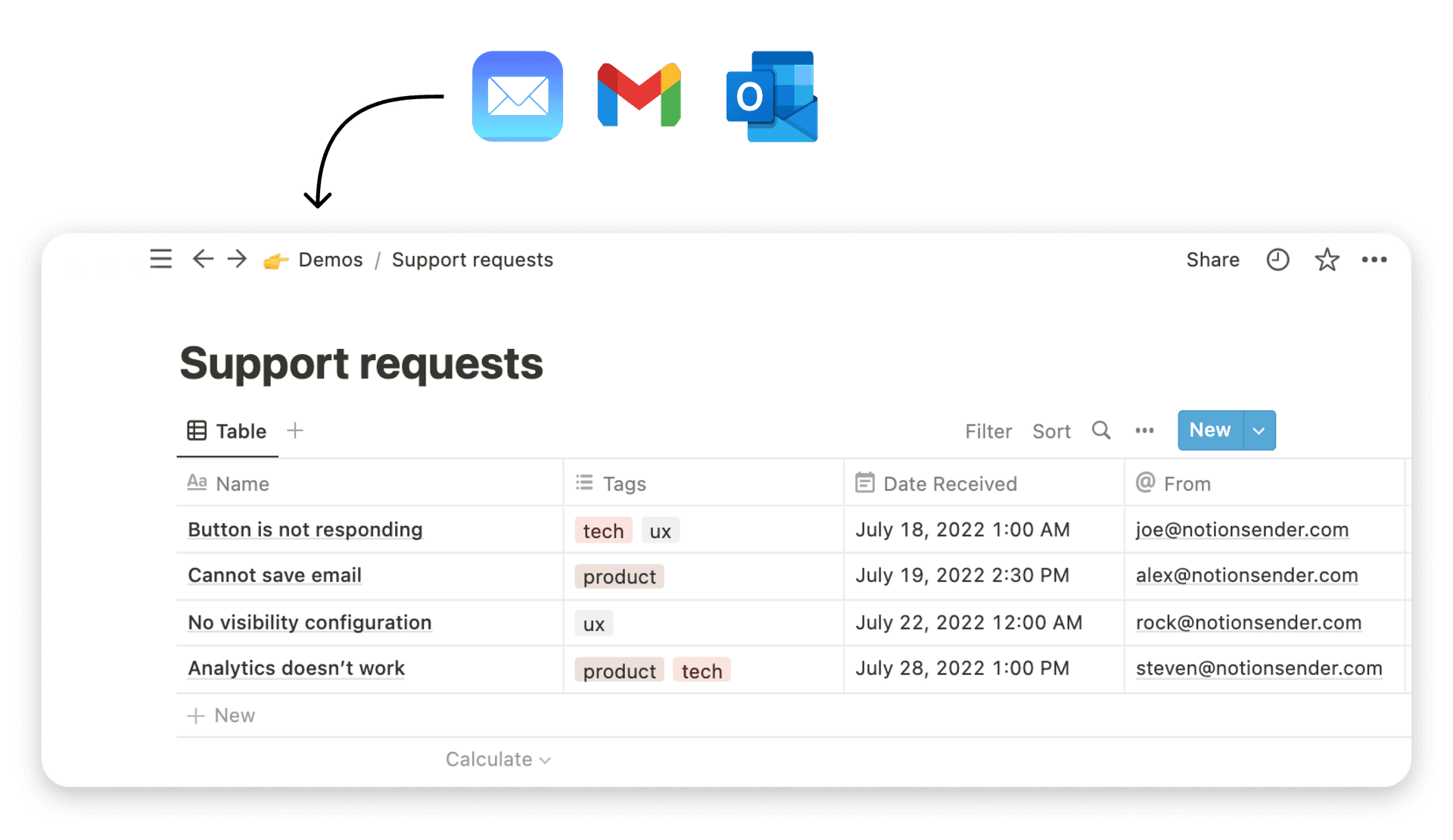
A strong setup links three layers: inbox, calendar, and project database. A meeting invite arrives by email. The event lands on the calendar. The relevant context then belongs in the project workspace where follow-ups, notes, and deliverables live.

Why this matters for real operations
A calendar block by itself is incomplete. It tells you when something happens, not why it matters, what materials are attached, or what action should follow.
In Notion-based workflows, the better model is to treat time as one layer of execution, not the whole system. Meeting context, client communication, links, attachments, and status updates should sit with the project record. If you’re evaluating the surrounding tooling for booking and availability, this roundup of best appointment scheduling software helps clarify where scheduling platforms fit versus project systems.
A cleaner way to run it
The practical workflow looks like this:
- An invitation or schedule email arrives
- The event appears in your calendar
- The project context is captured in Notion
- Tasks, notes, and follow-up stay attached to the same work item
That removes the usual split-brain problem where the meeting exists in one tool, the notes in another, and the action items in a third.
For teams building around Notion, these ways to use Notion to send emails and more show how communication workflows can stay closer to the database where the work is already being managed.
A subscribed calendar tells you what’s happening. A connected workspace tells you what to do about it.
Frequently Asked Questions About Subscribing
How often does a subscribed Google Calendar update
Google automatically polls subscribed calendars for updates, but the timing can vary. If a feed doesn’t refresh immediately, that doesn’t always mean it’s broken.
Can I change the color of a subscribed calendar
Yes. Open the calendar list, find the subscribed calendar, and assign a color that separates it from your own commitments. This is one of the easiest ways to reduce visual clutter.
Can I edit events on a subscribed calendar
Usually not for URL-based subscriptions. Those are typically read-only feeds. For shared calendars added through access requests, editing depends on the permission level the owner granted.
Can I share a calendar I’m only subscribed to
In most cases, you can share the original source only if you control it or have the appropriate permissions. Being subscribed doesn’t automatically make you the publisher.
How do I remove a subscribed calendar permanently
Open Google Calendar on desktop, find the subscribed calendar in your list, open its options or settings, and remove or unsubscribe from it. That clears it from your view and stops future syncing.
If your workflow still breaks between email, meetings, and project tracking, NotionSender is worth a look. It helps you bring email into Notion so calendar-related communication, task context, and follow-up live closer to the work itself instead of getting buried across inboxes and tabs.