How To Send Bulk Emails Effectively In 2026

You've got a list, a message to send, and a deadline that's getting close. Maybe it's your first product update to customers, a launch announcement, a newsletter, or a sales outreach campaign that has grown from a few contacts to something much larger.
That's the point where bulk email stops being a simple admin task and starts becoming an operational one.
Most small teams assume the hard part is writing the email. It usually isn't. Instead, the challenge is sending at scale without hurting deliverability, annoying good contacts, or creating a messy workflow where one person has the contacts, another has the copy, and no one can clearly see what was sent, when, or to whom. If you want to learn how to send bulk emails well, start with two goals: protect your sender reputation and keep your process visible.
Laying the Groundwork for High Deliverability
A small send and a bulk send are not the same thing. Mailgun notes that a “bulk sender” is generally anyone sending a single email to roughly 5,000 contacts in a day, and once you're operating at that level, every send becomes part of a reputation system shaped by mailbox providers like Gmail and Yahoo in Mailgun's deliverability guidance.
That changes how you should think about email. You're no longer just pressing send. You're proving that your domain is legitimate, your recipients want the message, and your sending behavior is consistent enough to trust.
Start with identity and consent
Before you touch the campaign itself, make sure your sending setup can answer two questions clearly: who is sending this, and why is this person receiving it?
Authentication comes first. Configure SPF, DKIM, and DMARC so inbox providers can verify that your emails are really coming from your domain. This doesn't guarantee inbox placement, but skipping it makes everything else harder.
Consent is the second half of the foundation. If people didn't clearly opt in, your campaign starts with a trust problem. Mailgun also advises compliance with laws such as GDPR, CCPA, and CAN-SPAM, because the legal risk is real and the deliverability risk is immediate when recipients mark your messages as spam.

Practical rule: If you can't explain where the list came from and why each contact should expect your email, don't send to that list yet.
Use a pre-send checklist
A reliable bulk send usually starts with a short checklist, not with copywriting.
- Authenticate the domain: Confirm SPF, DKIM, and DMARC are active before you scale volume.
- Verify permission: Use contacts who explicitly asked to hear from you. Purchased or loosely collected lists create complaints fast.
- Clean the list: Remove hard bounces, soft bounces that keep recurring, and stale addresses that haven't engaged in a long time.
- Separate message types: Keep marketing emails distinct from transactional email where possible so one stream doesn't drag down the other.
- Review performance signals: Watch engagement, spam complaints, bounces, and click behavior. Mailgun specifically recommends monitoring these together because they tell you whether list quality and content are healthy.
If you want a second opinion on the mechanics, Scalelist's deliverability guide is a useful companion read because it stays focused on the practical side of inbox placement.
Warm up instead of blasting
One of the most common mistakes is loading a full list into a platform and sending it all at once from a new setup. That looks risky to mailbox providers.
A safer pattern is to start with a few hundred emails and then increase volume gradually, doubling week by week while watching engagement and delivery metrics, as recommended in monday.com's mass email guide. That approach gives inbox providers positive signals from your most engaged audience before you widen the send.
Short, action-oriented subject lines can also help, and monday.com notes that lines under roughly 50 characters are a good rule of thumb. Good subject lines won't rescue a bad list, but they do help a healthy list perform like one.
For teams trying to improve opens without falling into gimmicks, these email marketing tricks for better open rates are a solid next step after authentication and list cleanup.
Segmenting Your List for Maximum Impact
You can do everything else right and still underperform if the wrong people get the wrong message.
That usually happens when a small business exports one list, writes one email, and sends it to everyone at once. Current customers, new leads, old prospects, referral partners, and inactive subscribers all receive the same message even though they are in very different relationships with the business. The result is predictable. More ignores, more unsubscribes, and less trust in future campaigns. Campaign Monitor found that 45.8% of users have marked an email as spam because it looked like spam, which is a good reminder that relevance matters as much as design.
Segmentation fixes that by matching the message to intent and timing.
Build segments around decisions, not demographics alone
A useful segment should help you answer a real sending question. Should this person get a sales email, a follow-up, a customer update, or nothing at all this week?
Start with signals you already have:
- Behavior: purchases, form fills, booked calls, webinar attendance, replies, or key page visits
- Engagement: frequent openers, recent clickers, inactive subscribers, and people who have stopped responding
- Lifecycle stage: new lead, active opportunity, customer, repeat customer, former customer
- Profile data: role, location, industry, product interest, or service line
Profile data helps with messaging. Behavior usually matters more for timing.
That trade-off matters in practice. A list segmented only by industry can still produce weak results if it ignores whether the person bought last week or has not opened an email in six months. I usually tell teams to start with lifecycle and engagement first, then add profile filters once the basic workflow is stable.

What good segmentation looks like in a real campaign
If you run a service business, your last 90 days of contacts probably include at least four distinct audiences. People considering a project. Active clients. Past clients. Referral partners.
Each group needs different context.
A lead who requested information needs a clear next step. A current client needs useful updates and less promotion. A past client may respond to a timely cross-sell tied to previous work. A referral partner usually needs a short relationship-focused note with one ask.
Sending 800 relevant emails often outperforms sending 5,000 generic ones.
Here is a simple way to frame it:
| Audience group | Better email angle | What to avoid |
|---|---|---|
| Recent customers | Onboarding help, next steps, related offers | Generic brand newsletter |
| Cold subscribers | Re-introduction or preference update | Hard sales push |
| Highly engaged readers | Timely offers, product announcements | Repeating basic education |
| Inactive contacts | Re-engagement sequence | Weekly promotional sends |
Control frequency from one place
Segmentation is also how you avoid accidental over-mailing. A subscriber does not care whether one message came from marketing and another came from customer success. They only feel the total volume hitting their inbox.
A central workflow proves beneficial. If your team plans campaigns, follow-ups, and audience rules in one place such as Notion, you can see who is scheduled to receive what before you send. That operational view is easy to overlook, but it prevents a common small-team problem where separate sends stack up on the same contact. A central hub also makes approvals easier because the audience logic is visible, not buried inside one person's email tool.
If you need help tightening message-to-segment fit, this guide on how to send the perfect email to get the response you want is a useful next step. Teams that draft with AI should also review copy before sending so segments still sound human. Humanize AI Text can help with that final polish.
Good segmentation does not need to be complicated. It needs to be deliberate, visible, and tied to how people move through your business.
Crafting Emails That People Actually Open
You can do the hard work of cleaning your list and segmenting it well, then lose the result with a weak draft. That usually happens in a familiar small-team scenario. The audience lives in one place, the copy lives in another, and nobody gives the message a final review against the campaign goal. A central workflow matters here. When your draft, audience notes, and approval status sit in the same workspace, you write with more control and send fewer mixed signals.
The inbox is crowded. Your message competes with client work, receipts, calendar alerts, and every other brand asking for a click. The job of the email is simple. Make the value clear fast enough that the reader does not move on.
Write a subject line that matches the message
A good subject line sets an honest expectation. It gives the reader a reason to open because the benefit is specific, not because the wording tries to manufacture suspense.
Three approaches work well:
- State the value clearly: “Your April project update”
- Signal relevance: “Resources for agencies managing client approvals”
- Point to a next step: “Choose your preferred launch date”
Clear beats clever for most bulk sends.
Avoid inflated claims, fake urgency, and wording the email cannot support in the first few lines. If the subject promises one thing and the body delivers another, subscribers remember that. Open rates often drop on later campaigns because trust fell on this one.
Make the body easy to scan
Readers do not study bulk emails. They skim, especially on mobile.
That is why structure matters more than flair. Lead with why this email matters now. Give one main point. Add a few short supporting details, then close with one clear call to action. If you need two links, make the primary action obvious and let the secondary one stay secondary.
Dense paragraphs create friction. So do five competing buttons, long introductions, and copy that sounds like an internal update instead of a message to a customer.
A practical test helps. Open your draft on your phone and look only at the first screen. If the value, audience fit, and next step are not obvious in a few seconds, revise before you send.
Personalize with context, not just merge tags
Using a first name is fine. It is not enough on its own.
Useful personalization comes from what the subscriber did, wanted, or signed up to hear about. Mention the product they viewed, the stage they are in, the resource they requested, or the problem your segment is trying to solve. That kind of relevance feels natural because it reflects real context, not a template token.
This is another place where a central hub helps small teams. If campaign notes, segment logic, and draft copy are visible in one Notion-based workflow, it is easier to check that the message still fits the audience before it goes out. That prevents a common mistake where a decent email gets sent to the right list with the wrong angle.
If your draft sounds stiff or over-automated, tools such as Humanize AI Text can help smooth phrasing before you send, especially when you're adapting structured notes into more natural email copy.
For stronger message flow, cleaner asks, and follow-up wording that fits the reader's intent, use this guide on how to send the perfect email to get the response you want while polishing the draft.
A Practical Sending Workflow with NotionSender
Most bulk email advice stops at deliverability and copy. That leaves out a problem small teams deal with every week: where does the campaign live?
If your contacts are in one tool, your draft is in another, approvals happen in chat, and the sent history lives in someone's inbox, you can still send the campaign. You just can't manage it cleanly. That's why the move toward bulk sending inside CRMs and shared workspaces matters. Copper, for example, supports bulk email inside the CRM with templates and merge fields, and Gmail offers built-in mail merge, which reflects a broader shift toward email as part of an auditable workflow rather than a disconnected marketing task as described in Copper's product guidance.

Set up one campaign database
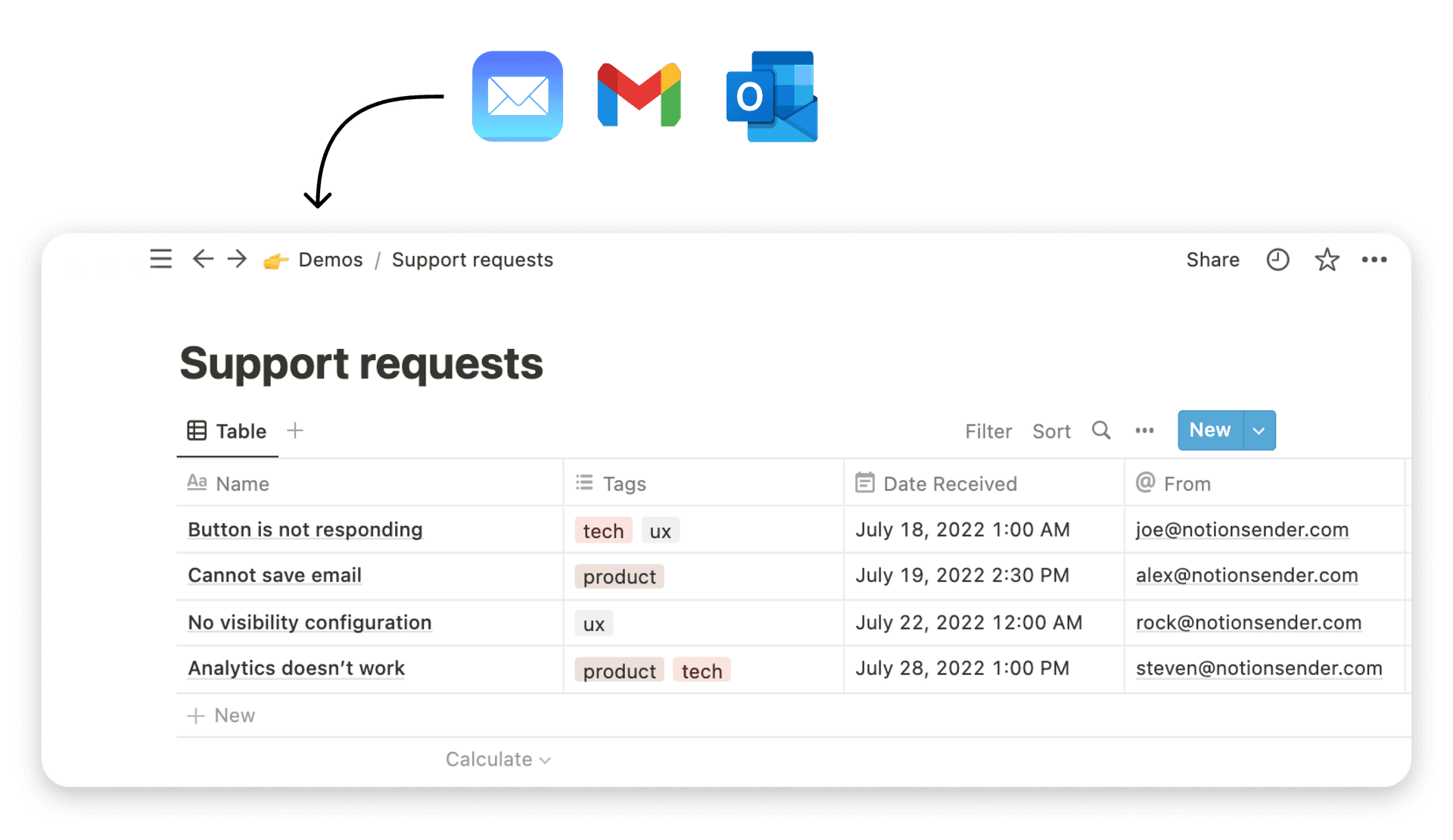
A practical setup inside Notion starts with a database that acts like a campaign outbox. Each row is a contact or send record. The properties hold the essentials: recipient, segment, status, subject, send date, owner, approval state, and any personalization fields you want to reference in the email.
That structure solves a common coordination problem. Instead of asking, “Which spreadsheet is current?” your team works from one system of record.
A typical workflow looks like this:
- Contacts enter the database: imported from your CRM, lead tracker, or signup source.
- Each contact gets tagged: by segment, campaign, or lifecycle stage.
- The message template pulls from properties: name, company, offer, date, or assigned owner.
- Status fields track progress: draft, approved, scheduled, sent, needs review.
- Notes stay attached to the record: so anyone reviewing the send can see context.
Run the campaign without leaving the workspace
A tool like NotionSender addresses this challenge. It lets teams send email from a Notion page or database, which means the draft, recipient data, and send status can stay in the same workspace instead of being split across tools.
That setup is especially helpful for small teams. A project manager can review approvals, a founder can check final copy, and a marketer can schedule the campaign without reconstructing the process from email threads and exported CSVs.
If you want to see the mechanics, this walkthrough on creating and sending email from Notion shows how the workflow can be organized directly inside a database.
A real-world campaign flow
Say you're announcing a new service package to existing clients and warm leads.
First, create two filtered views in your database. One view shows current clients. The other shows warm leads who have already expressed interest. Each group gets its own version of the email, because the framing is different even if the offer is similar.
Next, prepare a small test send to your most engaged contacts. Review replies, formatting, and whether the merge fields render correctly. If the email reads naturally and no technical issues appear, schedule the broader send in stages rather than all at once.
A short product demo helps make the workflow concrete:
<iframe width="100%" style="aspect-ratio: 16 / 9;" src="https://www.youtube.com/embed/_pL8wMrqR7E" frameborder="0" allow="autoplay; encrypted-media" allowfullscreen></iframe>
After the send, update statuses automatically or manually so the database remains accurate. That matters more than is generally appreciated. Once your email history is visible alongside tasks, client records, and internal notes, follow-up gets much easier. No one has to guess whether a contact already received the message.
A clean workflow protects more than efficiency. It protects judgment. Teams make better sending decisions when they can see the full context around each contact.
Tracking Performance and Protecting Your Reputation
A bulk email program gets judged after the send, not before it. Inbox providers watch how recipients react, and those reactions affect whether your next campaign lands in the inbox or gets filtered out.
That is why performance tracking belongs in the same workflow as list prep, approvals, and send history. For a small team, a central system such as Notion plus your sending tool helps keep those signals visible. You can see which segment was mailed, what version they received, and how that campaign performed before you queue the next one.
The core metrics are straightforward: opens, clicks, unsubscribes, bounces, and spam complaints.
Read the numbers like operational feedback
Open rate shows whether the sender name and subject line earned attention. Click rate shows whether the message content and call to action carried that attention forward.
Unsubscribes usually point to a relevance or frequency problem. Bounces point to list quality. Spam complaints are more serious because they signal that recipients did not expect or want the email, and mailbox providers use that behavior to judge future sends.

A single campaign rarely gives a full answer. The pattern across campaigns does.
Look for combinations, not isolated metrics
A high open rate with weak clicks usually means the promise in the subject line did not carry through in the email itself. Low opens with decent clicks often mean the offer is sound, but the subject line or sender identity did not earn enough initial interest.
| Pattern | Likely meaning | Best next move |
|---|---|---|
| High opens, low clicks | Subject line worked, body didn't close the gap | Rewrite the opening and CTA |
| Low opens, normal clicks | Offer is fine, subject line or sender name is weak | Test a new subject line |
| High unsubscribes | Wrong audience or too much frequency | Tighten segmentation and reduce sends |
| Rising bounces | List quality is slipping | Remove invalid and inactive contacts |
| Spam complaints | Expectation or consent problem | Pause and review source of contacts |
Review these trends inside your campaign hub, not in isolation across scattered tools. If your notes, segments, and results sit in one place, it becomes much easier to spot that one list source creates bounces, or that one offer underperforms with a specific audience.
Test cleanly so the result means something
Start with the technical basics first. Configure SPF, DKIM, and DMARC correctly. Then improve performance through controlled testing.
Change one variable at a time. Subject line is a good place to start. Send time, CTA wording, and layout are also worth testing, but only one per experiment. If you change three things at once and performance shifts, you still do not know what caused it.
A simple testing routine works well:
- Choose one variable.
- Keep the segment consistent.
- Decide on one success metric before the send.
- Apply the winner to the next campaign.
Small tests are easier to trust.
Use results to protect the next send
Good reputation management is mostly list management and restraint. If a segment keeps engaging, continue mailing it on a sensible schedule. If another segment has gone quiet, move it into a re-engagement track or suppress it instead of pushing regular campaigns to people who have stopped responding.
This is one of the strongest reasons to run campaigns from a central operating view. When campaign history, segment membership, and contact status are visible together, small teams make better calls about who should receive the next email and who should not.
Mailbox providers care about repeated recipient behavior over time. Your sender reputation is built the same way. One clean campaign helps. A steady run of relevant sends helps much more.
Common Bulk Email Mistakes to Avoid
Some mistakes are obvious. Buying lists is one of them. Others are quieter and often slip through because the campaign still gets sent.
The first hidden mistake is sending a visually heavy email with very little text. That can confuse spam filters and also makes the message harder to scan. The fix is simple. Keep the layout balanced, include real copy, and make sure the main point is readable even if images don't load.
The second mistake is ignoring mobile rendering. A desktop preview can look polished while the phone version feels cramped, broken, or impossible to tap. Before every send, test the email on a phone and check button size, paragraph spacing, and line breaks.
Another common problem is mixing too many goals into one email. If you ask readers to book a call, read a blog post, follow you on social media, and browse three offers, most will do none of them. Choose one primary action and support it clearly.
One more mistake deserves more attention than it gets. Teams often keep sending to inactive contacts because “they might still convert.” Sometimes they do. More often, they dilute engagement and make future campaigns less trustworthy in the eyes of mailbox providers. If a segment has gone cold, move it into a separate re-engagement workflow instead of forcing it into your regular sends.
The safest bulk email programs aren't built on clever hacks. They're built on clean lists, careful pacing, relevant segmentation, and a workflow your team can manage.
If you want bulk email to live inside the same workspace as your contacts, tasks, and approvals, NotionSender gives you a way to send and manage emails directly from Notion so your campaigns stay visible, organized, and easier to audit.