A Guide to Notion for Nonprofits in 2026

For nonprofits, using Notion is all about bringing everything into one central, flexible hub. Think of it as the end of scattered spreadsheets and disconnected apps for managing donors, grants, programs, and even your daily to-do lists.
This isn't just about getting organized; it's about boosting collaboration and transparency. When your whole team has clear, immediate access to the same vital information, you stop wasting time and start focusing on what really matters: your mission.
Building Your Nonprofit's Central Operating System
If you work at a nonprofit, you know what it's like to wear multiple hats. Limited resources often force teams to juggle endless responsibilities, which can create a state of what I call "manufactured scarcity." This is where you spend more time digging through old email threads, random spreadsheets, and different apps for a single piece of information than you do on the actual work.
This kind of fragmentation builds information silos, slows down every decision, and pulls your team away from the work that drives your impact.
Switching to Notion is a conscious move away from that scarcity mindset. By building a single, shared workspace, you’re creating one definitive source for everything your organization does. Just imagine your grant writer and volunteer coordinator working from the exact same up-to-date info. That’s the goal.
Designing Your Workspace Foundation
First things first, you need to map out a simple, high-level structure. Don't overcomplicate it. Think of this as the main lobby of your new digital headquarters—it should feel intuitive and reflect how your nonprofit actually operates.
A solid starting point usually includes a few main pages:
- Fundraising Hub: A dedicated space for all things donor relations, grant tracking, and campaign management.
- Programs HQ: The central command for overseeing your initiatives, tracking project progress, and measuring impact.
- Operations Central: The home for all your internal documentation, team directories, meeting notes, and other admin tasks.
Getting this structure right from the beginning prevents the digital clutter you’re trying to escape. Everyone on the team will know exactly where to look for what they need, which naturally builds a culture of transparency and self-sufficiency. If you're looking for more ideas, you can explore more tips to get the most out of Notion.
Core Databases as Building Blocks
This is where Notion really starts to shine for nonprofits. The databases are the engine of your entire workspace. They aren't just static spreadsheets; they're living, interconnected sets of information that you can use to automate workflows and pull out critical insights.
The goal is to build an ecosystem where data flows seamlessly between different areas of your operation. For example, a single donation recorded in your Donor CRM can automatically update the progress bar on a campaign dashboard and link to the specific program it funds.
To get started, we'll build a few essential databases. Think of these as the foundational building blocks for your entire system.
Here's a quick look at the core databases that will form the backbone of your nonprofit's workspace.
Core Notion Databases for Nonprofit Management
| Database Name | Primary Function | Key Properties to Include |
|---|---|---|
| Donor CRM | Manages all supporter relationships and interactions. | Donation History, Contact Info, Communication Log, Status |
| Grant Tracker | Oversees the entire grant application lifecycle. | Deadline, Status, Funder, Requested Amount, Linked Program |
| Volunteer Hub | Organizes volunteer information and schedules. | Skills, Availability, Hours Logged, Onboarding Status |
With these databases in place, you've laid the groundwork for a truly integrated system. This is how you finally break down those information silos and give your team the real-time data they need to make great decisions.
Creating Your Core Donor, Grant, and Volunteer Databases
Alright, with your workspace foundation in place, it’s time to build the real engines that will run your nonprofit’s day-to-day. These aren't just going to be static lists of names or dates. Think of them as interconnected hubs that bring your fundraising, programs, and volunteer management into one cohesive system.
Let’s start with the big one: your Donor CRM. This needs to be so much more than a digital address book. A great donor database is all about understanding the donor life cycle and nurturing that generosity. When you build this in Notion, you can see the entire journey of your supporters at a glance.
You'll create properties to track everything from a donor's first gift to their communication preferences. This is where the magic happens. For example, you could instantly filter for every donor who gave over $500 in the last year and prefers email updates, then drop them right into a targeted campaign. It’s that precise.
This concept map really helps visualize how these databases all talk to each other, forming a central "operating system" for your entire organization.

When your information flows freely like this, you break down the frustrating silos that often keep your fundraising team separate from your program staff. Everyone is finally on the same page.
Building Your Grant Tracker
Next up, let's tackle your Grant Tracker. We all know how chaotic grant management can get—deadlines, reports, and contact info are usually scattered across a dozen different spreadsheets and calendars. A dedicated Notion database brings all of that chaos into one clean, manageable space.
For every grant you're pursuing or have already won, you’ll create an entry. The key is to make your properties actionable, giving you clarity in a single look.
- Status: A
Selectproperty is perfect here. Use tags like Researching, Application in Progress, Submitted, Awarded, and Declined. - Deadline: The
Dateproperty is your best friend. Set it up and you can even have Notion remind you before a due date. No more last-minute scrambles. - Funder Contact: Use a
Personproperty to assign a team member who owns that relationship. - Requested Amount: A
Numberproperty, formatted as currency, keeps track of your pipeline.
But the real game-changer is the
Relationproperty. By linking your Grant Tracker to another database for "Programs," you can see exactly which grant is funding which initiative. This kind of transparency is huge for your team and board.
Designing the Volunteer Hub
Finally, a Volunteer Hub is absolutely essential for managing the amazing people who give you their time. This database is where you’ll organize profiles, track who’s doing what, and match the right people to the right opportunities.
For each volunteer, you can track much more than just a name and email. I recommend adding properties like these:
- Skills: A
Multi-selectproperty is great for this. Tag volunteers with skills like graphic design, event planning, or grant writing. - Availability: Another
Multi-selectfor tracking when people can help, like Weekends or Weekday Mornings. - Hours Logged: A
Numberproperty is crucial for tracking contributions, both for your own reports and for volunteer appreciation. - Onboarding Status: Use a
Selectproperty to see who has completed orientation, a background check, or other required steps.
Just like with your grants, you can use Relation properties to connect volunteers to specific events or projects in other databases. Imagine you need three volunteers with first-aid training for your annual fundraiser. A quick filter in your Volunteer Hub will instantly pull up a list of qualified people to contact. It's that simple.
These three databases—your Donor CRM, Grant Tracker, and Volunteer Hub—are the pillars of an effective nonprofit operating system built with Notion for nonprofits. They give you the structure to manage all your critical relationships and resources with incredible clarity.
Streamlining Program and Project Management
Your programs are the engine of your nonprofit. It's where the mission statement on your website becomes tangible, real-world impact. But let's be honest—without a solid system, managing those programs can feel like herding cats through a maze of spreadsheets, email chains, and missed deadlines. This is where Notion really starts to shine for nonprofits, moving you from chaos to clarity.

The first thing you’ll want to build is a master Programs database. Think of it as the command center for every major initiative your organization is running, like an "After-School Tutoring Program" or a "Community Garden Initiative." This gives your leadership and board a single, high-level dashboard to see everything at a glance.
A game-changing move here is to connect this database with your Grant Tracker (which we covered earlier). By simply adding a Relation property, you can link each program directly to the grants that fund it. This creates instant financial clarity and answers the crucial question: which funding sources are fueling which initiatives?
Building Dynamic Project Dashboards
Now, inside each program page, you can start nesting the individual projects that bring it to life. For instance, your "Community Garden Initiative" might break down into smaller projects like "Spring Planting Day," "Volunteer Recruitment Drive," and "Harvest Festival." This is where you can get really tactical with Notion's different database views.
The most popular and intuitive view for day-to-day work is the Kanban board. Just create a simple Projects & Tasks database and add a Select property called "Status." Your board will then have columns for each status, and your team can literally drag tasks from one stage to the next. It’s incredibly satisfying.
A common workflow we see looks something like this:
- Backlog: A parking lot for all the ideas and tasks you haven't prioritized yet.
- To Do: Tasks that are approved, fleshed out, and ready for someone to grab.
- In Progress: What the team is actively working on right now.
- Done: The best column of all! A visual log of everything you've accomplished.
This visual approach is a lifesaver. Anyone can pop in and see a project's status without having to interrupt someone for an update. It keeps everyone accountable and the momentum going.
Standardizing Workflows with Templates
For projects you do over and over—like hosting a quarterly workshop or running a seasonal fundraising campaign—Notion's database templates are a massive time-saver. You can design the "perfect" project page once, fully loaded with pre-built task lists, document outlines, and timelines.
By creating a reusable project template, you’re not just saving time—you're standardizing your organization's processes. This ensures every project follows the same best practices, maintaining quality and consistency no matter who is leading it.
For example, you could create an "Event Planning" template that automatically includes tasks for "Book Venue," "Secure Speakers," and "Promote on Social Media." The next time you have a new event, you just apply the template, and your entire project plan is ready to go.
Finally, for mapping out your bigger, long-term initiatives, the Timeline view is essential. It instantly turns your task list into a Gantt chart, showing how different project phases overlap and helping you set deadlines that are actually realistic. You can assign team members and even set dependencies for each task, making it crystal clear who is responsible for what and how their work impacts the overall program timeline.
Automating Donor Communication with NotionSender
Let's be honest: fundraising is all about relationships, but the manual grind of email follow-ups can be a massive time-suck for any nonprofit. Every hour you spend copying and pasting donor names and donation amounts into a thank-you email is an hour you're not spending on your actual mission. It’s a classic bottleneck that can easily lead to slow, inconsistent communication with the very people who keep your doors open.
<iframe width="100%" style="aspect-ratio: 16 / 9;" src="https://www.youtube.com/embed/6EHbZfM5K-U" frameborder="0" allow="autoplay; encrypted-media" allowfullscreen></iframe>
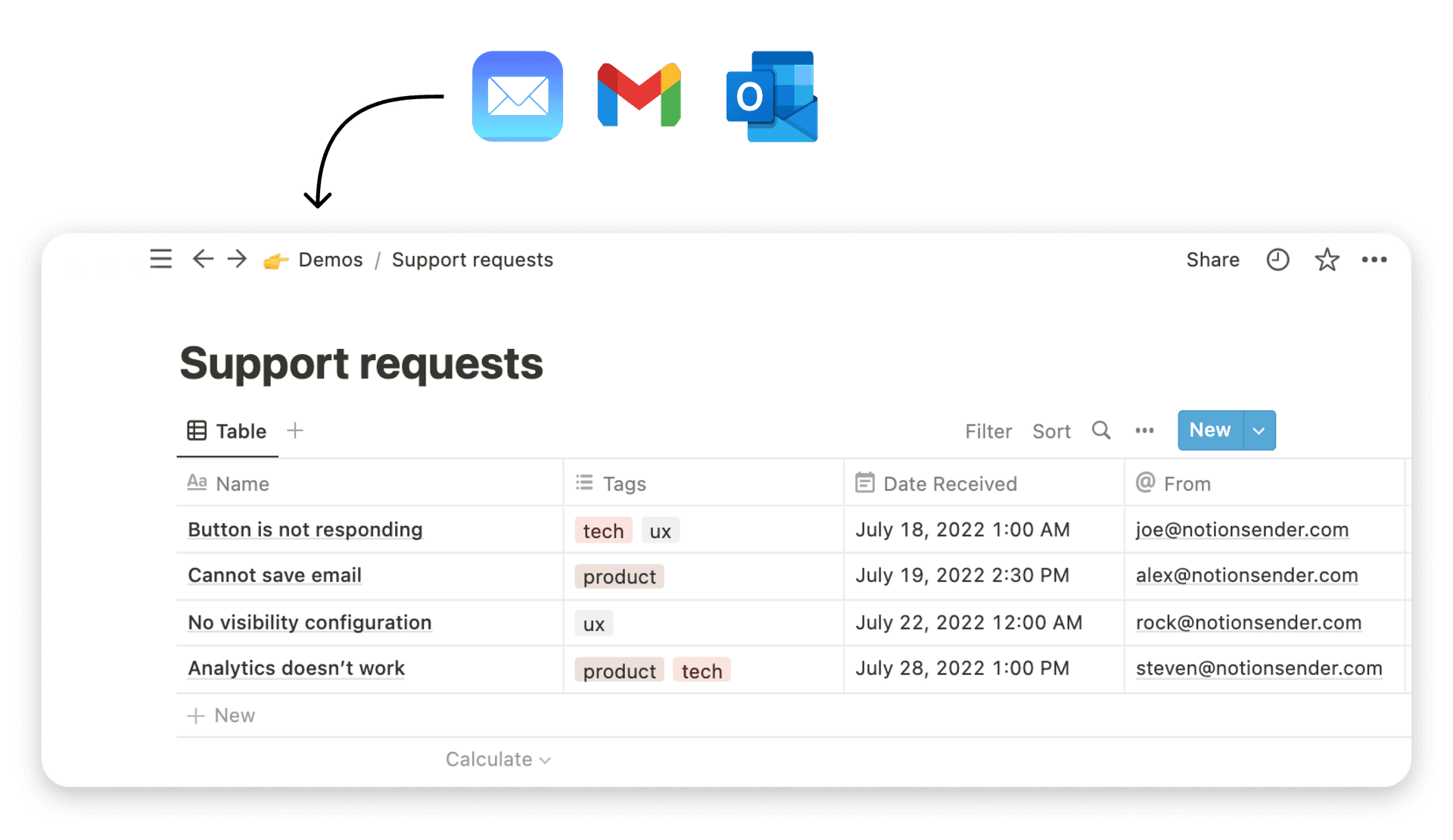
This is exactly where you can connect a tool like NotionSender directly to your donor database. Think of it as the bridge between your CRM in Notion and your email outbox. It’s what finally lets you stop the endless copy-paste cycle and build a communication system that works for you, not against you.
Connecting Your Donor Database
First things first, you need to link your Donor CRM database in Notion to your email workflow. This connection is the magic that allows you to pull information straight from your Notion properties—like First Name, Last Donation Amount, and Donation Date—and drop it right into an email.
Instead of hunting down this info for every single donor, NotionSender grabs it for you automatically. Your static database suddenly becomes a living, breathing part of your outreach, making sure every donor feels seen without you lifting a finger for each message.
For example, you can set it up so that every new donation logged in Notion instantly triggers a personalized thank-you email. This kind of immediate acknowledgment is huge. In fact, a prompt thank-you can increase the chances of a second gift by 400%. Automating it means no one ever slips through the cracks again.
Crafting Dynamic Email Templates
Once you're connected, you can start building dynamic email templates that are personalized for every single recipient. This is where you get the best of both worlds: the efficiency of automation and the personal touch that donors have come to expect. You can build out a whole library of templates for your most common emails.
A few essential templates every nonprofit should have:
- Donation Receipts: Automatically generate a receipt with the donor's name, donation amount, and the date, all pulled directly from your Notion database.
- Thank-You Messages: Create different thank-you notes based on donation size, or whether it's a donor's first-ever gift.
- Campaign Updates: Keep your supporters in the loop with progress reports on the specific campaigns they’ve given to.
The real power here comes from using "merge tags" that match your Notion properties. Your email can start with "Hi {{First Name}}," and later say, "Thank you for your generous gift of {{Last Donation Amount}}!" This is what makes each email feel like it was written just for them.
While NotionSender handles the delivery, the art of a great message is still crucial. Building lasting relationships means knowing what to say, so brushing up on effective strategies for thanking donors will make sure your automated messages really hit home.
This level of personalization does more than just save time—it strengthens relationships and shows supporters they're more than just a line item in a spreadsheet. To see how to get this running in your own workspace, you can learn more about what's possible directly with NotionSender. This is how using Notion for nonprofits goes way beyond just storing data and becomes a central part of your fundraising and relationship-building machine.
Building Insightful Reporting Dashboards
All that data you're collecting? It tells the story of your nonprofit's impact, but only if you can actually see it clearly. A database full of raw numbers is one thing, but a visual dashboard is what turns that data into real-world insights for your team, your board, and even your donors. This is how you transform all that hard-earned information into compelling, real-time reports.

The first thing you’ll want to do is create a new page at the top level of your workspace. Just call it something simple like "Dashboard." This page will become your central hub, pulling in live information from all the different databases we've set up using linked database views. The beauty of this is that your reports are always up-to-date, with zero manual exporting or copy-pasting required.
Creating a Fundraising Dashboard
Let's start with a fundraising dashboard. This is mission control for monitoring the financial health of your organization and seeing how your campaigns are performing. To build this, you’ll pull in linked views of your Donor CRM to highlight the most critical numbers.
First, add a linked view of your donor database. The trick is to filter it to show only donations from the current month. From there, just look for the Calculate option at the bottom of the table and set it to display the Sum of your donation amount column. In about 30 seconds, you’ve got a live total of your monthly fundraising income.
You can then flesh this out with a few more specialized views to get a complete picture:
- Campaign Progress: I like to use a gallery view for this. Filter it for a specific campaign, and you can see the total amount raised toward your goal. If you add a formula property to calculate the percentage-to-goal, Notion even gives you a nice visual progress bar.
- Top Donors: This one's easy. It’s just a simple table view sorted by "Total Donation Amount" in descending order. It instantly shows you who your most dedicated supporters are.
- Recent Gifts: A list view showing the last 5-10 donations as they roll in can be incredibly motivating for the whole team to see.
Having this ready to go makes preparing for board meetings or drafting donor updates so much faster. The numbers you need are always right there, just a glance away.
By centralizing these metrics, you’re not just tracking numbers; you’re creating a single source of truth that empowers your team to make smarter, data-driven decisions about where to focus your fundraising efforts.
Visualizing Program Impact
Of course, fundraising is only half the story. A program impact dashboard is how you prove you’re actually delivering on your mission. For this, you'll be creating linked views of your Programs & Projects and Volunteer Hub databases.
An effective impact dashboard might feature metrics like:
- Beneficiaries Served: A simple number property in your program database can be summed up here to show a live total of people reached.
- Workshops Hosted: Filter your projects database for an "Event Type" property set to "Workshop" and use the
Countfeature to get a quick tally. - Volunteer Hours Logged: Create a linked view of your Volunteer Hub and use the
Sumfunction on the "Hours Logged" property.
This kind of visual reporting makes it dead simple to monitor performance, spot trends as they happen, and pull compelling stats for your impact stories and grant applications.
For those looking to build more advanced dashboards or programmatically pull data, it's worth exploring the possibilities of the Notion API. You can get a sense of what's possible by looking at examples from other integrations; a good place to start is NotionSender's API documentation, which shows how another tool connects to Notion for powerful results.
Frequently Asked Questions About Notion for Nonprofits
Whenever a new tool comes along, a healthy dose of skepticism is natural—especially when you’re a nonprofit juggling a tight budget and a massive mission. Let's get straight to the real questions we hear all the time about using Notion for nonprofits.
First up, the big one: money. Notion actually offers a huge discount for registered 501(c)(3) organizations. This often brings the price of their Plus Plan way down, and in some cases, makes it completely free. It’s their way of making powerful features, like bigger file uploads and a longer page history, available to teams who need them most.
The other major question is about the learning curve. Is this thing going to be too complicated for a team that isn't super tech-savvy? The truth is, you don't need to be a developer. The secret is to not boil the ocean.
The key is to start with a single, specific pain point. If grant tracking is chaotic, focus on building just that one database first. Nail it, get your team comfortable, and then expand from there.
How Secure Is Our Data
This is a non-negotiable for any nonprofit. You're handling sensitive information about donors, volunteers, and the people you serve. Notion understands this and has built its platform with solid security measures.
Here’s what you need to know:
- Encryption: All your data is encrypted, both when it's being sent over the internet (in transit) and when it's stored on their servers (at rest).
- Access Controls: You get incredibly specific control over who can see what. Permissions can be set for the entire workspace, a single page, or even a specific database, so only the right people see the right information.
This means you can confidently manage contact lists and private program notes, knowing everything is locked down to authorized team members only.
Can It Replace Our Existing Tools
Can Notion really take the place of tools like Trello, Asana, or Google Docs? For most day-to-day operations, the answer is a definite yes. Its real power is in bringing everything together.
For example, you can build a project board with Kanban views that functions just like Trello. The best part? You can link a task on that board directly to the meeting notes about it—notes that used to be buried in a separate Google Doc.
While it won't replace hyper-specialized software (like your accounting platform), it’s fantastic at consolidating all those scattered operational tools into one central hub.
Ready to connect your new donor CRM directly to your email? NotionSender makes it easy to send personalized, automated emails right from your Notion database. Stop the copy-paste and start building better relationships. Learn more at NotionSender.