Notion Journal Template: Master notion journal template in minutes

A Notion journal template is so much more than a digital diary. Think of it as a dynamic, database-driven command center for organizing your thoughts, goals, and tasks all in one place. Unlike those static journaling apps, a well-built Notion journal template actually adapts to your life, connecting what you're thinking about personally with what you're working on professionally.
Why Your Digital Journal Isn't Working

Let's be honest, most digital journals are little more than glorified text files. They feel disconnected, and they do a terrible job of bridging the gap between your daily reflections, your work responsibilities, and your long-term ambitions.
If your current journaling method feels like shouting into a void with no real feedback loop, you're not alone. The problem isn't journaling itself; it's the tools we often use.
A simple daily entry log just doesn't help you see the bigger picture. It can't easily connect that breakthrough idea you had on Monday with a client meeting on Thursday. This is where a dynamic, database-driven Notion journal completely changes the game.
Moving Beyond Simple Text Files
Instead of a collection of isolated entries, imagine a personal headquarters where every thought becomes a piece of structured data. A Notion journal template lets you build an intelligent system that turns your random thoughts into actionable insights. It's all about creating connections, not just collecting notes.
You can manage multiple streams of your life seamlessly:
- Freelancers can track client work and project milestones right alongside notes on their personal well-being.
- Founders can map out business goals, log meeting outcomes, and reflect on weekly progress in the same system.
- Students can connect lecture notes, study session logs, and personal development goals.
This kind of integrated system evolves with you. As your priorities shift, your journal adapts without forcing you to switch apps or abandon your old entries.
A truly effective journal shouldn't just be a place to write; it should be a tool that helps you think. It connects the dots between your actions, thoughts, and goals, revealing patterns you would otherwise miss.
A System Built for Growth
This method has become incredibly popular, especially among small business owners and freelancers who need to centralize their personal and professional lives. A well-designed Notion setup helps them set clear, actionable goals.
In fact, some freelancers have reported a 40% boost in productivity just by integrating things like mood tracking and gratitude worksheets. This simple step transforms vague daily entries into concrete, useful insights.
By building a structured journal, you're not just writing—you're creating an intelligent database of your life. It’s a powerful way to turn reflections into real progress. If you're ready to get started, you might find these 10 tips to help you get the most out of Notion.so helpful.
Building the Foundation: Your Journal Database

Every truly powerful Notion journal starts with a solid database. This isn't just a list of pages; it's the engine that will house, organize, and connect every thought, meeting note, and stray idea you capture. Getting this foundation right from the beginning is what turns a simple digital diary into a system that serves you for years.
First things first, create a new page in Notion. When prompted, choose the Table database option. I like to give it a simple, clear title like "My Journal" or "Command Center." A clean table view is the perfect canvas for adding the properties that will bring your journal to life.
The secret sauce is in the properties you choose. This is what separates a basic notes page from a dynamic life-management tool. We're going beyond a simple title and text block to create structured data that you can filter, sort, and visualize in countless ways.
Configuring Your Essential Properties
Let's start by adding the core properties that deliver the most value. For each one, you'll just click the + sign at the far right of your table header. A little thoughtfulness here pays off big time down the road.
The default ‘Name’ property is perfect for your entry's title, so we can leave that as is. Then, let's add a couple of non-negotiables:
- Date: Set this to the
Dateproperty type. This is absolutely critical for any journal. It lets you track entries chronologically and is the key to creating calendar views later. - Mood: The
Selectproperty is my go-to for this. I recommend configuring it with a few simple options, each with a corresponding emoji for a quick visual cue (e.g., 😊 Great, 🙂 Good, 😐 Okay, 😕 Tough).
Just these two properties alone give you a powerful framework. Being able to see your mood correlated with specific dates can reveal patterns you might otherwise miss, helping you identify what triggers a stressful week or when you feel most energized.
Think of your database properties as the building blocks of insight. Each one is an opportunity to ask a question of your future self—'How was I feeling then?', 'What kind of work was I doing?', 'Who was I meeting with?'.
To help you get started, here’s a quick-reference table breaking down the essential properties I recommend for a versatile Notion journal database.
Essential Properties for Your Notion Journal Database
This table breaks down the recommended properties, their types, and real-world use cases to help you build a robust and versatile journaling system from scratch.
| Property Name | Property Type | Configuration Example | Use Case |
|---|---|---|---|
| Date | Date |
Default date format. | Tracks entries chronologically; essential for calendar views and time-based filtering. |
| Mood | Select |
Options: 😊 Great, 🙂 Good, 😐 Okay, 😕 Tough | Provides at-a-glance emotional tracking to spot well-being trends over time. |
| Entry Type | Select |
Options: Daily Reflection, Meeting Notes, Weekly Review, Client Call, Brain Dump | Categorizes entries to quickly separate personal thoughts from professional tasks. |
| Tags | Multi-select |
Examples: Project Phoenix, Acme Corp, Productivity, Health, Team Meeting | Adds layers of context, allowing you to link entries to specific projects, clients, or themes. |
This setup provides a fantastic starting point, but the real power comes from customizing it to fit your unique needs.
Adding Layers for Deeper Organization
Now, let’s add a couple more properties that allow for some seriously sophisticated filtering. This is where you can start tailoring the system to your specific life, whether you're a freelancer tracking client calls or a student organizing class notes.
My two favorites for this are ‘Entry Type’ and ‘Tags.’
- Entry Type: Use another
Selectproperty for this. The key is to define clear, distinct categories for what you log. For instance, you could have options likeDaily Reflection,Meeting Notes,Weekly Review,Client Call, orBrain Dump. This lets you instantly isolate all your work notes from your personal musings. - Tags: This is where the
Multi-selectproperty shines. Tags add another layer of rich context. You can use them for projects (Project Phoenix), clients (Acme Corp), key themes (Productivity,Health), or even people (Team Meeting).
Imagine being able to filter your database to see every single ‘Client Call’ tagged with ‘Acme Corp’ from the last quarter. That's the power you're building right now.
This structured approach transforms a simple log into a searchable, organized archive of your life and work. With this foundation, no valuable insight gets lost in the shuffle, which is what makes a custom notion journal template so incredibly effective.
Designing Page Templates for Consistent Entries

The real magic of a Notion journal isn't just in the database itself—it's in the consistency you build with smart templates. When you create templates for your most common entries, you cut out the friction, save time, and make sure you're capturing the right information, every single time. It's the difference between staring at a blank page and having a structured guide ready to go.
To get started, head over to your journal database. See that blue "New" button? Click the little dropdown arrow next to it and select "+ New template." This opens up a blank canvas where you can design the internal structure for any future journal entry.
Let's walk through building three practical examples together.
The Daily Reflection Template
This is the perfect template for starting or ending your day with a bit of intention. The whole point is to make personal reflection a quick, guided process instead of a chore.
First, give your new template a title like "Daily Reflection." A pro tip is to pre-set the ‘Entry Type’ property to ‘Daily Reflection’ right away so it’s automatically categorized for you.
Next, you'll want to structure the body of the page with some prompts. I like using headings or callout blocks to make them stand out.
- Gratitude Prompt: Start with an H3 heading like
### What are you grateful for today?This simple question is great for priming a positive mindset. - Goal Review: Add another heading:
### How did you move toward your goals?This helps connect your daily actions to your bigger ambitions. - Key Learnings: And finally,
### What was your biggest learning or challenge?This helps you capture those valuable insights that are so easy to forget.
With this structure, a vague journaling session becomes a focused, five-minute review.
The Meeting Log Template
For anyone in a professional role, keeping track of meetings is non-negotiable. This notion journal template standardizes how you capture discussions, decisions, and action items, so nothing ever falls through the cracks.
Go ahead and create another new template, naming it "Meeting Log" and pre-setting the ‘Entry Type’ to ‘Meeting Notes.’
Here's a structure I've found works really well:
- Attendees: A simple bulleted list is all you need to quickly note who was in the room.
- Agenda: Use an H3 heading, followed by a numbered list for the main discussion points.
- Action Items: This is the most critical part. I always use a to-do list format (just type
[]) and bold the person responsible, like this:[] **Alex** to send the revised proposal by EOD Friday.
This layout makes your meeting notes instantly scannable and, more importantly, actionable. You'll never have to dig through messy notes to find a deadline or a deliverable again.
By standardizing your entries, you're doing more than just organizing information; you're building a personal knowledge base. Every meeting log and daily reflection becomes a searchable, filterable piece of data that can reveal powerful patterns over time.
The Client Check-In Template
Freelancers and project managers, this one's for you. This template helps you maintain a consistent, reliable record of all your client communication.
Title this template "Client Check-in" and set the ‘Entry Type’ property. This one can be a bit simpler since the focus is on clear documentation.
- Date of Contact: The database's
Dateproperty handles this for you automatically. - Key Points Discussed: A bulleted list is perfect for a concise summary.
- Next Steps: A clear, brief outline of what needs to happen next for both you and the client.
The demand for structured digital templates is definitely growing. Digital planners on platforms like Etsy, which combine daily schedules with built-in journals, have become a go-to for many professionals. It turns out that pairing these tools with habit trackers really boosts self-understanding—some reports show that 85% of users feel their writing skills and clarity of thought improve within the first month.
These page templates are truly the secret to a sustainable journaling habit. And if you want to get even more efficient, you can explore ways to send emails directly into your Notion workspace, bringing all your information into one central hub.
Getting More Out of Your Journal with Dynamic Views
A database packed with entries is a great start, but let's be honest, raw data is just noise. The real magic happens when you transform that information into something you can actually use. This is where Notion's database views come in—they turn your journal from a simple logbook into a dynamic dashboard for your life and work.
Think of views as different lenses for looking at the same collection of notes. Each view can have its own unique filters, sorting rules, and layout to highlight exactly what you need to see at any given moment. This is how you start spotting patterns, tracking your progress, and making sense of it all without ever messing with the original data.
Ready to build one? In the top-left of your database, just click the little + button next to your default table view. Notion will ask you to pick a layout and name it. That simple click is your gateway to unlocking your journal's true potential.
See Your Month at a Glance with a Calendar View
One of the most intuitive ways to visualize your entries is with a Calendar View. It’s perfect for getting a bird's-eye view of your month, letting you see your activity and even mood trends all laid out.
To set one up, just choose the "Calendar" layout option when you create a new view. Give it a clear name, like "Monthly Overview." Instantly, Notion will plot your entries onto a calendar, using the ‘Date’ property you created earlier. This is brilliant for seeing streaks—how many days in a row did you manage a daily reflection? You can even tell the calendar to show other properties on each card, like your 'Mood' emoji, for an even quicker overview.
Your database isn't just a container; it's a dynamic canvas. By creating multiple views, you're not just organizing data—you're telling a story about your productivity, well-being, and progress over time.
Organize by Entry Type with a Board View
If you're looking for more of a project-management feel, a Kanban-style Board View is a game-changer. This view groups your journal entries into columns based on a property you choose, which is fantastic for keeping different types of information separate.
Create another new view, but this time select the "Board" layout. When it asks how to "Group by," pick your ‘Entry Type’ property. Just like that, you'll have columns for ‘Daily Reflection,’ ‘Meeting Notes,’ and ‘Client Check-in,’ with all your related entries neatly sorted. This is a lifesaver for freelancers who need to pull up all notes for a specific client in a hurry. You can even drag and drop entries between columns if you ever need to re-categorize them.
Filter Your Way to Laser-Focused Insights
The real power move with any view is applying filters and sorts. For any view you've made, you can add rules that hide everything except the entries that meet your exact criteria. It’s how you go from overwhelmed to in-control.
Here are a few practical examples of filtered views you could build right now:
- Last 7 Days: Create a "List View" and add a filter where the ‘Date’ property is "within the past week." This gives you a quick, scannable recap of your recent activity.
- High-Priority Project: Set up a view filtered to show only entries where the ‘Tags’ property contains "Project Phoenix." Suddenly, all your notes for that specific project are in one place.
- Weekly Mood Check-in: Make a "Gallery View" and filter it to show only entries where the ‘Entry Type’ is "Daily Reflection." This creates a visual mood board of your recent personal check-ins.
By mixing and matching different layouts with precise filters, you transform your notion journal template from a place where you just dump data into an active, intelligent tool that genuinely helps you understand your life better.
Putting Your Journal on Autopilot with Automation
Okay, your Notion journal is now beautifully structured, filled with smart templates, and easy on the eyes. The final frontier? Making it work for you, even when you’re not actively using it. This is where we turn your journal from a destination you visit into a central hub that automatically pulls in information from your digital life.
<iframe width="100%" style="aspect-ratio: 16 / 9;" src="https://www.youtube.com/embed/Ymn2u1hzuPQ" frameborder="0" allow="autoplay; encrypted-media" allowfullscreen></iframe>
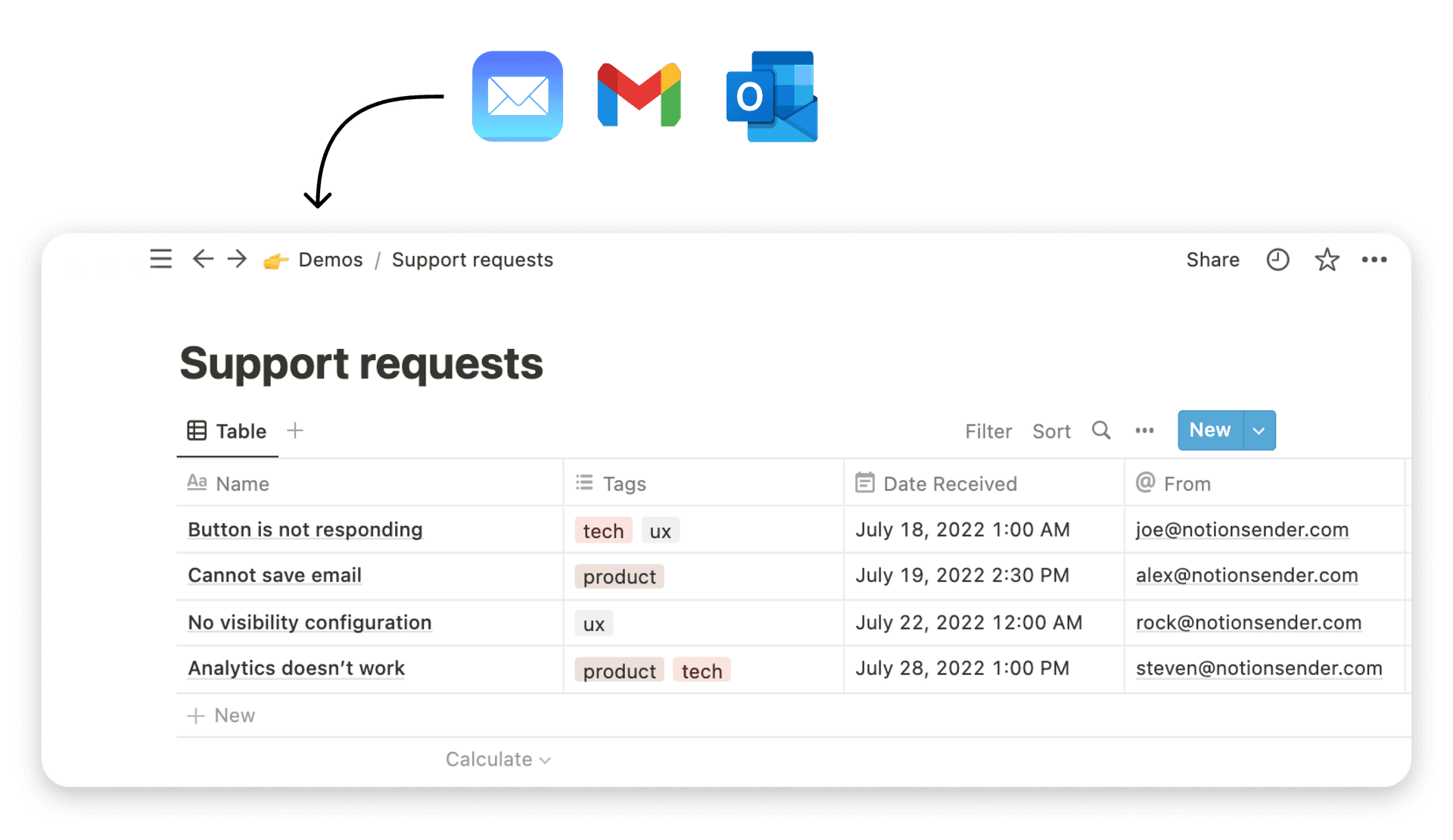
The whole point here is to kill manual data entry. Forget about copying and pasting text from an important client email or a great newsletter you just read. Instead, you can just fire it off directly to your journal, where it lands as a new, perfectly formatted entry.
We can pull this off with a tool like NotionSender. It’s brilliant, really—it gives each of your Notion databases its own unique, private email address. Getting it set up is a breeze. Once you connect the tool to your workspace, all you have to do is copy the special email address it generates for your journal database.
Connecting Your Email Workflow
With this unique email in hand, your inbox suddenly becomes a direct pipeline into your journal.
Picture this: you get an email with follow-up notes from a client. Instead of letting it get buried in a sea of other messages, you just forward it to your journal's private address. Bam. It instantly shows up as a new page, ready for you to add tags, link it to a project, or jot down your own thoughts.
This is a game-changer for pulling together information that would otherwise be stuck in your inbox. No more losing track of important details or commitments in the digital chaos.
For small business owners, this kind of integrated planning can slash disorganization by 60% and create much cleaner workflows. I've seen marketing pros, in particular, use tools like NotionSender to pipe email insights straight into their journals. They automatically capture feedback, categorize potential leads, and turn scattered thoughts into solid, data-driven strategies.
Setting Up Smart Automation Recipes
But true automation is more than just dumping an email into Notion. The real magic happens when you create smart "recipes" that parse the email's data and automatically map it to the right properties in your journal.
You can set up rules to handle this automatically. For instance:
- The email's subject line becomes the title of your new journal entry.
- The sender's email address gets dropped into a ‘Contact’ property you created.
- The entire body of the email populates the page content.
This is where the visual organization we set up earlier really shines. The flowchart below shows how these automated entries can flow right into your different views, making them instantly useful.

Seeing a new entry pop up on your calendar or in a gallery view without you lifting a finger is what makes this system so powerful.
Automation is about building an ecosystem, not just a tool. When your journal can automatically capture ideas from your email, it becomes a living, breathing extension of your mind that works for you in the background.
This whole process eliminates the boring, repetitive admin work. It frees you up to focus on the actual insights inside the journal, not the tedious mechanics of getting them there.
To really kick things up a notch, you should also look into how you can use Notion AI features for automation to summarize or tag these entries automatically. And for a deeper dive into the email setup, our guide on how to create and send emails from Notion has all the details you’ll need.
Answering Your Notion Journal Questions
Once you start using your shiny new Notion journal template, you'll probably have a few questions. Building the system is the first step; the real magic happens when you weave it into your daily life. Let's walk through some of the most common questions I get.
Can I Connect My Notion Journal to Other Apps?
Yes, and you absolutely should. While we focused on email, that's just scratching the surface.
You can link your Notion journal to hundreds of other apps using tools like Zapier or Make. Imagine a new journal entry automatically popping up every time you check off a task in Todoist, save an article in Pocket, or finish a meeting in Google Calendar. This turns your journal into an automated hub for your entire digital life, not just a place you manually type in.
How Can I Share Parts of My Journal Securely?
This one comes up a lot, especially when your journal mixes personal thoughts with professional notes. The key is to think of your Notion journal as a private, secure vault. You control exactly who gets a key and which room it opens.
Notion's sharing permissions are incredibly granular. You can share a single journal entry—just one page—with a client or teammate without ever exposing the rest of your database.
For a more sophisticated approach, try creating a "linked view" of your database on a new page. You can then filter this view to show only entries with a specific tag, like "Project Phoenix." Share that new page, and your stakeholders see only the relevant updates, keeping everything else private.
And if you've built a template you're really proud of, you might even consider selling it. There are some great platforms for selling digital products that can help you get started.
What Is the Best Way to Back Up My Notion Journal?
Notion is pretty reliable with its own server-side backups, but an extra copy never hurts for peace of mind.
You can easily perform manual exports. Just head to Settings & Members > Settings, and you'll find an option to Export all workspace content. If you only want to back up the journal, navigate to your database, click the three-dot menu in the corner, and hit Export. Making this a quick monthly or quarterly habit is a smart move.
How Can I Stop My Notion Journal from Getting Slow?
If you're journaling consistently, your database will eventually grow to thousands of entries, and you might notice a bit of lag. The best fix for this is archiving.
It’s simple: create a new, separate database called "Journal Archive." At the end of each quarter or year, go back to your main journal, filter for that period, select all the entries, and use the "Move to" option to send them over to the archive. This keeps your primary journal lean and fast while ensuring all your old entries are still safe and accessible.
Ready to put your journal on autopilot? NotionSender lets you email entries directly into your Notion databases, automatically parsing key information. It’s the perfect way to eliminate manual entry for good. Get started at https://www.notionsender.com.