10 Best Templates for Freelancers (2026 Guide)

You've probably got the same mess open right now that most freelancers do. One proposal in a doc, a contract buried in email, an invoice living in another tool, and client notes split between tabs you meant to close yesterday. That setup works for a while, until a client asks for the latest version, you forget which payment reminder you already sent, or you spend your best work hours doing admin.
Templates for freelancers help because they remove repeat decisions. You stop rewriting the same scope section, rebuilding the same invoice layout, and hunting for the same onboarding questions. In a freelance economy that now includes 1.57 billion freelancers worldwide, with 76.4 million in the US contributing $1.5 trillion annually, small process gains matter because more independent professionals are competing on responsiveness, clarity, and consistency.
This guide keeps the list practical. You'll get the best template resources for proposals, contracts, invoices, and client workflows, plus the part most roundups miss: how to plug them into a centralized Notion workspace so they become an operating system instead of a folder of static files. If you're also tightening the business side, it helps to find freelancer financial tools that fit the same workflow.
1. NotionSender

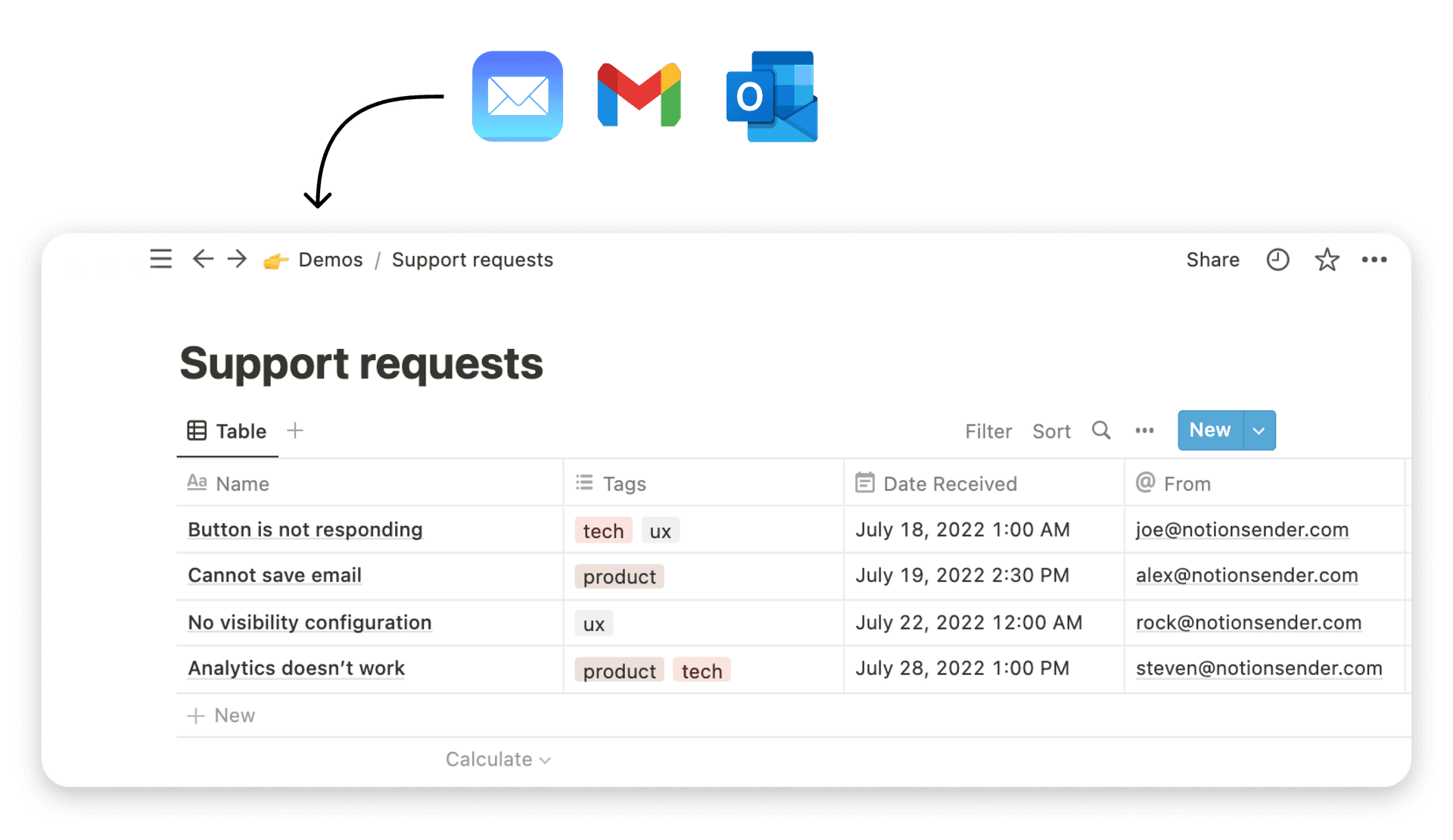
A freelancer updates a proposal in Notion, sends it from Gmail, gets a reply two days later, and then has to copy the response back into a client record by hand. That gap is where admin starts to pile up. NotionSender is useful because it connects the template itself to the next action. Send the email, capture the reply, and keep the record inside the same workspace.
That makes it different from template libraries that stop at document creation. If your proposals, onboarding docs, invoices, or project pages already live in Notion, NotionSender turns those pages into working communication assets instead of static files sitting in a database.
Why it works as the hub
NotionSender assigns an email address to a Notion database, so messages can land directly inside the workspace where you manage clients and projects. It stores the sender, date, and attachments, and it can parse email content into native Notion blocks. The practical benefit is simple. Less copying, fewer lost files, and better context when you revisit a client thread weeks later.
Its template expressions are what make the setup useful for day-to-day freelance operations. You can draft from a Notion page and pull in properties like client name, deliverable, due date, or invoice total. That saves time, but it reduces small errors that happen when you rewrite the same email from scratch.
Practical rule: Keep one client database, one project database, and one invoice database in Notion. Send from the record itself so communication stays tied to the work.
A setup that holds up under real client load usually includes:
- Client record emails: Send onboarding notes, follow-ups, and payment reminders from the client page so the full history stays attached to that account.
- Project status messages: Pair statuses like Ready for Review, Waiting on Approval, or Scheduled with saved email templates to cut response time.
- Invoice communication: Route payment confirmations and billing replies into the invoice database so finance messages do not disappear into your general inbox.
Best use case for freelancers
NotionSender works best for freelancers who already treat Notion as their operating system. If your CRM notes, briefs, scopes, deliverables, and admin tasks are spread across the same workspace, this closes one of the biggest workflow gaps. The document, the message, and the record all live together.
I would use it when the goal is operational consistency, not just nicer templates. A proposal template becomes more valuable when it also handles sending, logging, and follow-up from the same source record. The same applies to invoice reminders and onboarding sequences.
“Saving attachments directly in my Notion workspace has significantly improved my workflow.”
There are trade-offs. You need to give the integration access to the relevant Notion pages and databases, and some features sit behind the paid plan. If you regularly handle sensitive client material or unusually large attachments, test that process before making it part of your standard workflow. For freelancers who want a centralized Notion setup instead of another disconnected document tool, NotionSender is a strong first piece to put in place.
2. Bonsai

Bonsai is what I recommend when someone wants one account to handle the usual freelance paperwork stack. Its template library covers contracts, proposals, invoices, scopes, and briefs, and those documents are meant to be used inside the same workflow rather than exported and forgotten.
That matters if you're tired of stitching together separate apps. Bonsai is less about collecting pretty templates and more about moving a client from lead to signed agreement to invoice with fewer handoffs.
Where Bonsai is strongest
Its biggest advantage is depth. There are role-specific and industry-specific contract templates, plus proposal templates that can be reused and adapted. Built-in e-signatures and deposit capture keep the process tight, especially for service providers who want to reduce friction after a client says yes.
For freelancers who sell repeatable packages, that setup is efficient because the workflow mirrors the actual order of operations:
- Proposal first: Start with a reusable offer structure.
- Contract next: Turn the agreed scope into a formal document without rewriting core terms.
- Invoice after signature: Keep billing attached to the same client flow.
Bonsai works best when you want standardization with light customization. It works less well if you prefer a fully open document environment where every file can live outside the platform without compromise.
How to use it with Notion
The practical move is not to force Bonsai to become your full knowledge base. Let Bonsai handle the legal and transactional layer, and keep Notion as your operating layer.
Use Notion to store client summaries, project status, internal notes, and delivery checklists. Then add links back to each Bonsai proposal, contract, or invoice from the relevant Notion page. If you use NotionSender as your communication hub, your client correspondence can still stay centralized even when the signed documents live in Bonsai.
This tool is a good fit for freelancers who want templates for freelancers that come packaged with admin rails. It's less ideal for people who mainly want downloadable files and no in-app workflow.
3. PandaDoc Templates

If sheer template breadth is the priority, PandaDoc Templates is hard to ignore. The library includes more than 1,000 business templates, including freelance proposals, invoices, quotes, and contracts. That makes it a strong choice when your work crosses service lines and you need a lot of document types in one place.
The editor is the deciding factor, not the gallery size. PandaDoc works well for freelancers who send documents for signature and want reusable blocks, content snippets, and sending workflows built in.
Best fit and main trade-off
PandaDoc is useful when your documents are sales assets, not just records. If you regularly tailor proposals for different industries or project types, the content library saves a lot of repeated typing. You can keep testimonials, scope blocks, pricing language, and terms ready to drop into a new version.
It's less appealing if you want ultra-lightweight templates that stay in Word or Google Docs forever. The platform is strongest when you use its editor, tracking, and signature flow.
Use PandaDoc when your proposal needs assembly speed. Skip it if you only want a static template download.
How I'd integrate it
Store your canonical service components in Notion first. That includes offer names, package descriptions, standard deliverables, optional add-ons, and client discovery notes. Then use PandaDoc to assemble polished client-facing documents from that material.
A good structure is:
- Notion for source-of-truth copy: Keep your approved language and pricing logic in databases.
- PandaDoc for execution: Build the sendable proposal or contract with signature fields and tracking.
- NotionSender for follow-up: Trigger reminder emails, check-ins, or handoff notes from your Notion project record.
This stack works especially well for freelancers who pitch custom projects often. It gives you more structure than a static template folder, while keeping your business memory outside any single document tool.
4. Proposify

Proposify is proposal-first software for freelancers who treat proposals as a core revenue activity, not an occasional admin task. The templates are polished, but the more important features are variables, reusable content, and proposal tracking.
That combination is useful when you send proposals frequently and want consistency without making every document look identical. It gives you control over structure while still allowing personalization where it matters.
Why proposal specialists like it
Proposify's content library helps standardize the parts that shouldn't change much, like process steps, proof points, scope exclusions, or payment language. Variables handle repeated fields cleanly. Tracking adds visibility once the document is out in the world.
That makes it strong for consultants, strategists, designers, and developers who close work through customized proposals rather than fixed checkout pages.
There is one practical caution. Generic templates can become lazy templates. In one 2025 roundup, a cited research note argued that standard templates can reduce win rates for specialized pitches when they're used too mechanically. That's the right frame for Proposify. Use structure for speed, but rewrite the problem statement and recommended approach every time.
Best workflow with Notion
Build a proposal intake database in Notion with fields for client industry, problem summary, offer type, budget notes, and objections. That record becomes the brief for your Proposify draft.
Then keep a simple status pipeline in Notion:
- Drafting
- Sent
- Viewed
- Negotiating
- Won or lost
Once the proposal goes out, use your Notion system to manage the next step. NotionSender is useful here because follow-up messaging can be tied to the opportunity record instead of your memory. Proposify handles the document itself well. Notion should handle the broader sales process around it.
5. Better Proposals
Better Proposals is the cleanest option here for freelancers who want proposals to look modern without spending time designing them. Its library includes more than 250 proposal templates, with built-in pricing tables, merge tags, and e-sign support.
The appeal is speed with polish. You can produce something client-ready quickly, and the result feels much more intentional than a plain doc exported to PDF.
Where it earns a place
Some proposal tools feel like sales software first and writing tools second. Better Proposals is easier to work with if your goal is straightforward: explain the work clearly, present pricing cleanly, and make it simple for the client to approve.
That makes it a strong pick for freelancers who sell scoped projects and want attractive documents without building a custom system from scratch.
A few features sit behind higher plans or add-ons, so this isn't the cheapest route if you need every extra. But the core experience is good enough that many solo operators won't care.
How to make it operational
The mistake with proposal software is leaving it as a one-off sending tool. Instead, tie every proposal to a Notion project shell before you send it. That shell should already include timeline assumptions, service package, internal task checklist, and a client communication log.
Once the client signs:
- Create delivery tasks in Notion immediately
- Store the proposal link on the project page
- Trigger a welcome email from NotionSender
- Queue your invoice or deposit reminder
Templates for freelancers become real systems at this stage. Better Proposals handles client-facing presentation well. Notion handles fulfillment. If you connect the two deliberately, approvals turn into active projects without a scramble.
6. Indy WeAreIndy

Indy is built for solo freelancers who want a simple operations hub and don't want enterprise-level software. Its proposal, contract, and invoice templates are tightly connected, and the overall experience feels more approachable than many heavier platforms.
That's its edge. Indy lowers the setup burden, which matters when you need usable templates this week, not a new internal system project.
Best for getting started fast
The free plan makes Indy attractive for newer freelancers or anyone standardizing their process after a messy growth phase. You can work from ready-made proposal and contract templates, use smart fields for repeated details, and turn accepted estimates into invoices inside the same workflow.
The experience is cohesive in a way many freelancers need. Instead of chasing the “best” separate tool in each category, Indy gives you a decent version of the whole chain.
A simple system you'll actually use beats a perfect system you keep postponing.
The limitation is ceiling, not floor. If your document volume grows or your workflow gets more complex, you may run into plan caps or want more advanced customization.
How I'd use Indy with Notion
I wouldn't duplicate Indy's core docs in Notion. I'd track the business around them. Use Notion for lead qualification, content planning, delivery checklists, and client notes that don't belong inside formal documents.
A useful setup is to create one dashboard per client in Notion with:
- Current Indy proposal link
- Signed contract link
- Invoice status
- Project deliverables
- Email log from NotionSender
That gives you the best of both models. Indy remains the freelancer-friendly paperwork engine. Notion becomes the control center that shows what's happening across clients and projects.
7. HoneyBook Templates

HoneyBook Templates are a strong choice when client experience matters as much as the document itself. Freelancers in service businesses often need more than a proposal and invoice. They need questionnaires, pricing guides, contracts, and a sequence that feels coherent from inquiry to booking.
HoneyBook handles that polished flow well. It's especially useful for photographers, coaches, consultants, and other client-service operators who want branded interactions without assembling everything manually.
Why it stands out
The mix of editable templates, smart fields, e-signatures, shareable links, and automation makes HoneyBook feel less like a document tool and more like a client journey tool. If clients often need hand-holding or structured intake, that's valuable.
Its partner template marketplace is also useful if you want stronger starting points than the default library. The downside is that access depends on having an account, and some premium template options may add cost.
Operational use, not just pretty documents
HoneyBook is easiest to justify when every client goes through a repeatable process. If your engagements are highly customized and change shape often, you may find lighter tools more flexible.
For repeatable service businesses, build your system this way:
- Use HoneyBook for intake and formal client steps
- Use Notion for delivery and internal operations
- Use NotionSender for project communication that needs to stay attached to records
One underrated advantage of this split is visibility. HoneyBook can manage the polished front-stage experience. Notion can hold the backstage details your client never needs to see, including revision notes, meeting summaries, dependencies, and internal deadlines.
8. SignWell Contract Templates

If your main problem is contract friction, SignWell Contract Templates is one of the easiest fixes. The library includes more than 70 contract and agreement templates, and the sending flow is simple enough that you don't need much onboarding.
This isn't a broad business operating system. That's why it's useful. It's focused.
Best use case
Choose SignWell when contracts are the bottleneck and you don't need elaborate proposal design or sales analytics. It gives you clear starting points for common freelance agreements and pairs them with lightweight e-sign capability.
That makes it practical for freelancers who already like their existing proposal or invoicing tool and don't want to replace everything. They just need a more reliable way to issue and sign agreements.
The free plan is limited, so heavy usage will push you toward a paid plan. But for contract-first needs, it remains one of the cleaner options on the market.
Important implementation note
This is also where many freelancers need to think beyond generic templates. One gap in freelancer template coverage is legal compliance and localization. A 2025 roundup highlighted that global freelancers are often left adapting generic templates for region-specific requirements. If you work across jurisdictions, treat any template as a starting point, not a substitute for legal review.
Don't confuse a signed template with a strong contract. The wording still has to match your location, payment terms, and scope realities.
In Notion, create a contract review checklist linked to each client. Include fields for governing law, payment timing, revision limits, usage rights, and tax or compliance notes. Then use SignWell for the actual signature flow once that checklist is complete.
9. HubSpot Free Business Templates

HubSpot Free Business Templates are good old-fashioned starter files. That's their strength. If you want proposal templates, scopes of work, reports, or business docs in common formats like Word, PDF, or Google Docs, HubSpot gives you a broad library without locking you into a platform workflow.
For many freelancers, that's enough. Static files still work when the underlying process is clear and your document volume is manageable.
When static templates are the right choice
I wouldn't put HubSpot at the top for high-volume sending, signatures, or tracking. It doesn't try to be that. I would use it when you need a quick baseline document that your business can then adapt.
This is especially helpful if you're still deciding which paid tools deserve a permanent place in your stack. Start with the downloadable file, refine your language, then move the final version into a systemized tool later if needed.
A practical path looks like this:
- Download the closest-fit template
- Rewrite it to match your offer and boundaries
- Store the approved version in Notion
- Use that record as the source for future automated emails and project setup
Why it still matters
Templates for freelancers don't always need software wrapped around them on day one. Sometimes the right move is to create a reliable first draft and stop improvising. HubSpot is good at that.
The trade-off is obvious. No built-in e-sign, variables, or analytics. You'll need another layer for sending, tracking, or automation. That's where a Notion-centered workflow becomes useful. Keep the finalized language in Notion, and let communication and task orchestration happen from there.
10. Canva Proposal and Invoice Templates

Canva proposal templates are the fastest way to make client-facing documents look polished, especially if visual presentation is part of your brand. For designers, creatives, consultants, and marketers, Canva is useful because it shortens the gap between “functional” and “professional-looking.”
That said, Canva is not your legal backbone. It's your presentation layer.
Where Canva shines
Use Canva for proposals, quotes, pricing sheets, and invoices that need visual clarity. Its drag-and-drop editing makes branding fast, and the wider asset ecosystem helps you keep proposals, decks, and one-pagers visually aligned.
It's especially strong when the client expects a polished PDF or shareable link and you don't want to open heavier design software. If you already work in Canva for marketing assets, adding proposal and invoice templates is an easy extension.
What not to expect
Don't rely on Canva alone for contract rigor, workflow automation, or audit trails. It can support the front end of your client process, but it shouldn't carry the legal or operational load by itself.
A practical stack is simple:
- Canva for presentation
- A contract tool for enforceable agreements
- Notion for project management
- NotionSender for client communication and reminders
This becomes even more useful if you run a solo business with lots of repeat communication. If you also need a lightweight solopreneur invoicing tool, pair that with your Canva-branded documents and keep the final approved wording in Notion so your process stays consistent.
Top 10 Freelancer Template Platforms, Quick Comparison
A freelancer usually feels the weak point in their process when a client says yes. The proposal gets approved, then the active work starts. Contract out, signature reminder, invoice, kickoff note, follow-up, file storage. A good template platform shortens that chain. A good system also keeps those steps connected, so information does not get retyped across five tools.
That difference matters here. Some of the tools below are best as template libraries. Others are better as operating tools that can sit inside a broader Notion-based workflow and keep communication tied to your client database, project records, and status tracking.
| Product | Core features | Unique edge ✨ | Target audience 👥 | Best use in a real workflow | Price / Value 💰 | Quality ★ |
|---|---|---|---|---|---|---|
| 🏆 NotionSender | Send, receive, and save emails in Notion. Unique inbox per database. AI property extraction. Templates and scheduling. | Native two-way email inside Notion with message data pushed into your workspace | Small teams, PMs, freelancers, marketers | Best if Notion is already your client CRM, project tracker, or content hub and you want outreach, follow-ups, and replies logged in one place | Free plan available. Premium starts at $19/mo annually with higher limits | ★★★★★ |
| Bonsai | Large template library. Contracts, proposals, invoices, time tracking, e-sign | Strong all-in-one freelance admin stack | Freelancers who want fewer separate tools | Best for solo operators who want templates plus billing and contracts in the same product, even if customization is less flexible than a Notion-first setup | Paid plans required for the full workflow | ★★★★ |
| PandaDoc Templates | Large gallery, document editor, content library, e-sign | Excellent template depth and reusable content blocks | Freelancers who send proposals often and want document control | Best for repeatable sales documents. Works well if proposals are a standalone process, less well if you want client comms and delivery data in one workspace | Free template access, paid tiers for advanced features | ★★★★ |
| Proposify | Proposal templates, analytics, content library, AI help | Proposal tracking and close-rate visibility | Agencies and freelancers with active pipelines | Best for high-volume proposal work where view tracking matters. Less attractive if you need broader ops beyond the proposal stage | Tiered pricing with limits on lower plans | ★★★★ |
| Better Proposals | Proposal templates, pricing tables, e-sign, mobile-friendly layouts | Fast, polished proposal presentation | Freelancers who care about speed and visual quality | Best for getting proposals out quickly without much design work. Pair it with another system if you need stronger back-office coordination | Good annual-plan value | ★★★★ |
| Indy (WeAreIndy) | Proposals, contracts, invoices, lightweight CRM, e-sign | Simple starter platform for solo businesses | New freelancers and solopreneurs | Best if you want basic documents and client management in one place without a lot of setup. Lighter feature set than specialist tools | Free plan available, paid plan expands limits | ★★★ |
| HoneyBook Templates | Proposals, contracts, invoices, questionnaires, automations | Strong client flow management for service businesses | Creative service providers | Best for photographers, planners, and service freelancers who run a booking-oriented workflow. Less suited to teams building around Notion as the main operating layer | Tiered plans, account required | ★★★★ |
| SignWell Contract Templates | Contract templates, editor, e-sign | Simple contract creation and signing | Freelancers focused on agreements first | Best if contracts are the immediate gap and you want a lightweight signing process without buying a bigger suite | Free templates, affordable paid options for volume | ★★★ |
| HubSpot Free Business Templates | Downloadable proposals, SOWs, reports, editable files | Good free starter documents across business use cases | Freelancers who need editable base documents | Best as a starting library. You will still need a process for sending, tracking, storing, and version control | Free downloads, may require email | ★★★ |
| Canva Proposal & Invoice Templates | Drag-and-drop editing, AI writing help, PDF export | Strong branding and presentation | Designers, marketers, visual freelancers | Best for client-facing polish. Use it with a contract, invoicing, or workspace tool rather than as the center of operations | Free tier, Pro for more assets and features | ★★★★ |
A practical way to choose is simple. Pick the platform that matches your bottleneck, then decide where the source of truth lives.
If your main problem is proposal conversion, Proposify, Better Proposals, or PandaDoc will likely do more for you than a broad admin suite. If contract turnaround is slow, Bonsai or SignWell can tighten that step quickly. If your actual issue is fragmented operations, where messages live in email, notes live in Notion, and templates live somewhere else, a Notion-centered setup with communication built into the workspace usually creates less admin over time.
That trade-off is the key comparison point. Template quality matters, but handoff quality matters more once client volume grows.
Your Next Step From Templates to a System
A common freelance mess looks like this. The proposal is in one app, the signed contract is buried in email, the invoice lives somewhere else, and the kickoff notes sit in Notion with no clear link back to the client thread. Templates help at the document level, but the primary gain comes when each template feeds the next step in the same workflow.
As noted earlier, freelance work keeps getting more competitive and more operationally demanding. Higher client volume usually brings more follow-ups, more approvals, and more room for simple admin mistakes. The practical fix is not collecting more files. It is deciding where your system lives and making every template support that system.
Start with the point of friction that costs you the most time.
If proposals stall, choose the tool from this list that helps you send, track, and revise them with less back-and-forth. If contract turnaround slows down project starts, tighten that step first with a contract-focused platform. If you are still early and want fewer tools, an all-in-one option may be enough for now. The trade-off is straightforward. Specialist tools often handle one stage better, while lighter suites reduce tool sprawl but may give you less control in each step.
Then centralize the workflow in Notion. Store the client record, project stage, scope, pricing, approved documents, delivery checklist, and meeting notes in one workspace. That setup gives you one operating layer even if the proposal is built in PandaDoc, the contract is signed in SignWell, or the invoice starts in Bonsai.
Communication is what turns that setup into an actual system. A template only saves time if the right message goes out at the right moment and the reply stays attached to the client record. Sending a proposal follow-up from the same database entry as the proposal status is faster than searching your inbox and trying to remember what happened last Tuesday.
That is the practical advantage of connecting your templates to your workspace instead of treating them as isolated documents. You reduce duplicate entry, keep context with the work, and make handoffs easier on busy weeks. You also get a clearer audit trail. If a client asks what was approved, when the reminder was sent, or which version was final, the answer is on the record instead of spread across tools.
Start small and build in order:
- Pick one template category that creates the most friction.
- Standardize that document and store its related data in Notion.
- Add status fields, due dates, and owner fields to the database.
- Connect outbound and inbound communication to the same records.
- Repeat for the next template category once the first workflow is stable.
That order matters. Freelancers often try to automate everything at once, then end up with a system nobody trusts because the underlying records are inconsistent.
If you already run projects or client operations in Notion, NotionSender fits naturally into this setup. It lets you send and receive email from the workspace, tie messages to database records, and turn proposal, onboarding, reminder, and update templates into repeatable workflows tied to real client data.
The next step is not downloading more templates. It is choosing a source of truth, connecting each document to that source, and building a process that holds together when client volume increases.