12 Key Types of Newsletters to Grow Your Audience in 2025
Email newsletters are far more than just messages; they are powerful tools for building communities, driving sales, and establishing authority. But with so many strategies available, which one is right for your audience? Navigating the different types of newsletter can feel overwhelming, leading many to default to a generic format that fails to connect or convert. This guide provides a clear roadmap, breaking down 12 essential newsletter formats to help you select, create, and manage the perfect communication strategy for your specific goals.
We'll move beyond theory and dive straight into actionable insights. This comprehensive roundup covers everything from educational and promotional campaigns to community-driven discussions and curated content digests. For each type, we'll provide real-world examples, identify the target audience, and outline key performance indicators (KPIs) to track success. Understanding the specific purpose of each format is crucial. When looking to select the most impactful options for your audience, exploring examples like the best stock market newsletters can provide valuable insights into content and strategy.
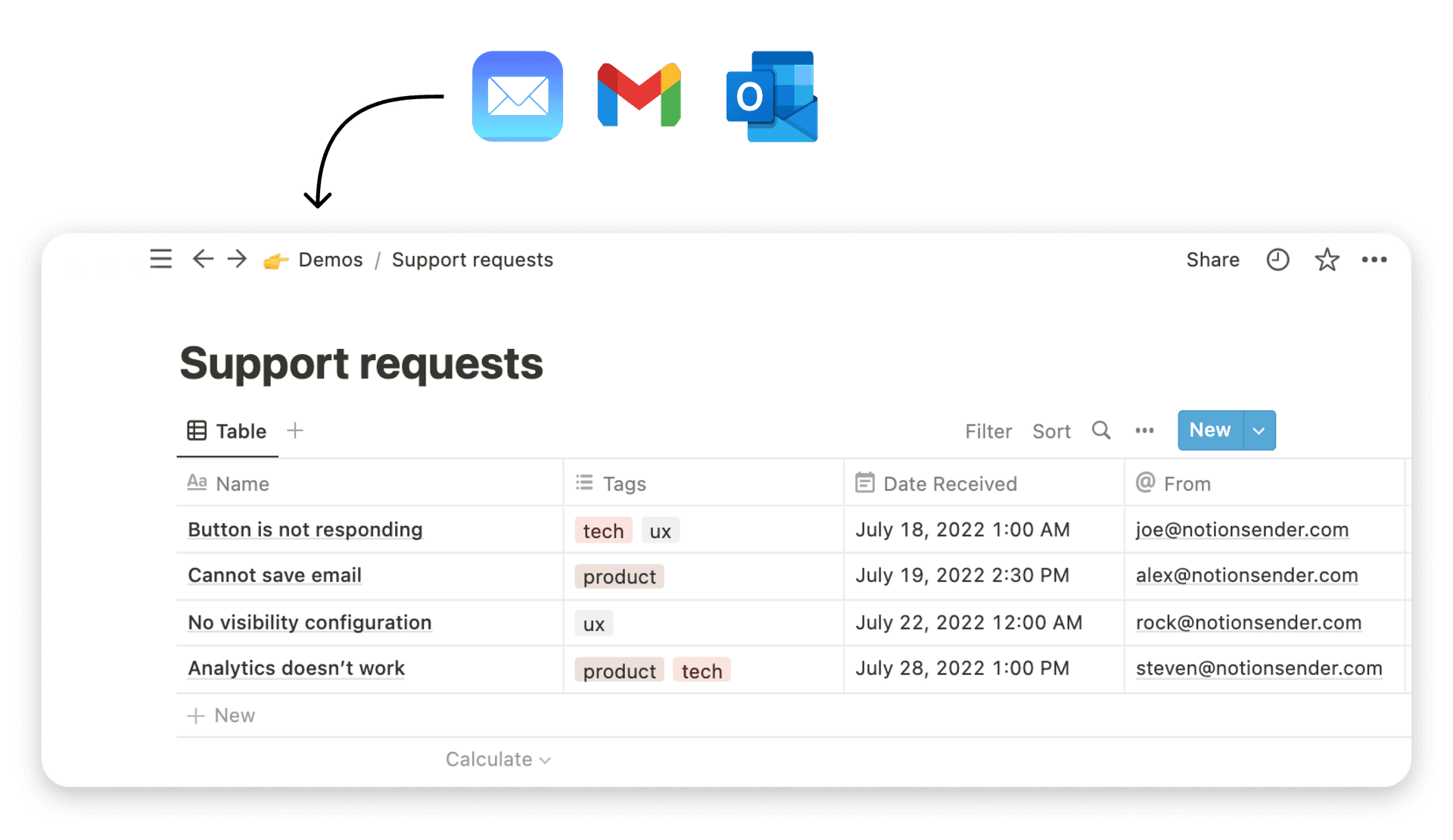
Crucially, we’ll show you how to streamline the entire process, from content creation to automated sending, by leveraging the power of Notion and NotionSender. You'll learn how to transform your existing Notion workspace into a dynamic email marketing hub, complete with templates, automation, and content workflows. This resource is designed to help you not only choose the right newsletter type but also implement it efficiently and effectively, ensuring your message resonates with your subscribers and achieves maximum impact.
1. Educational Newsletter
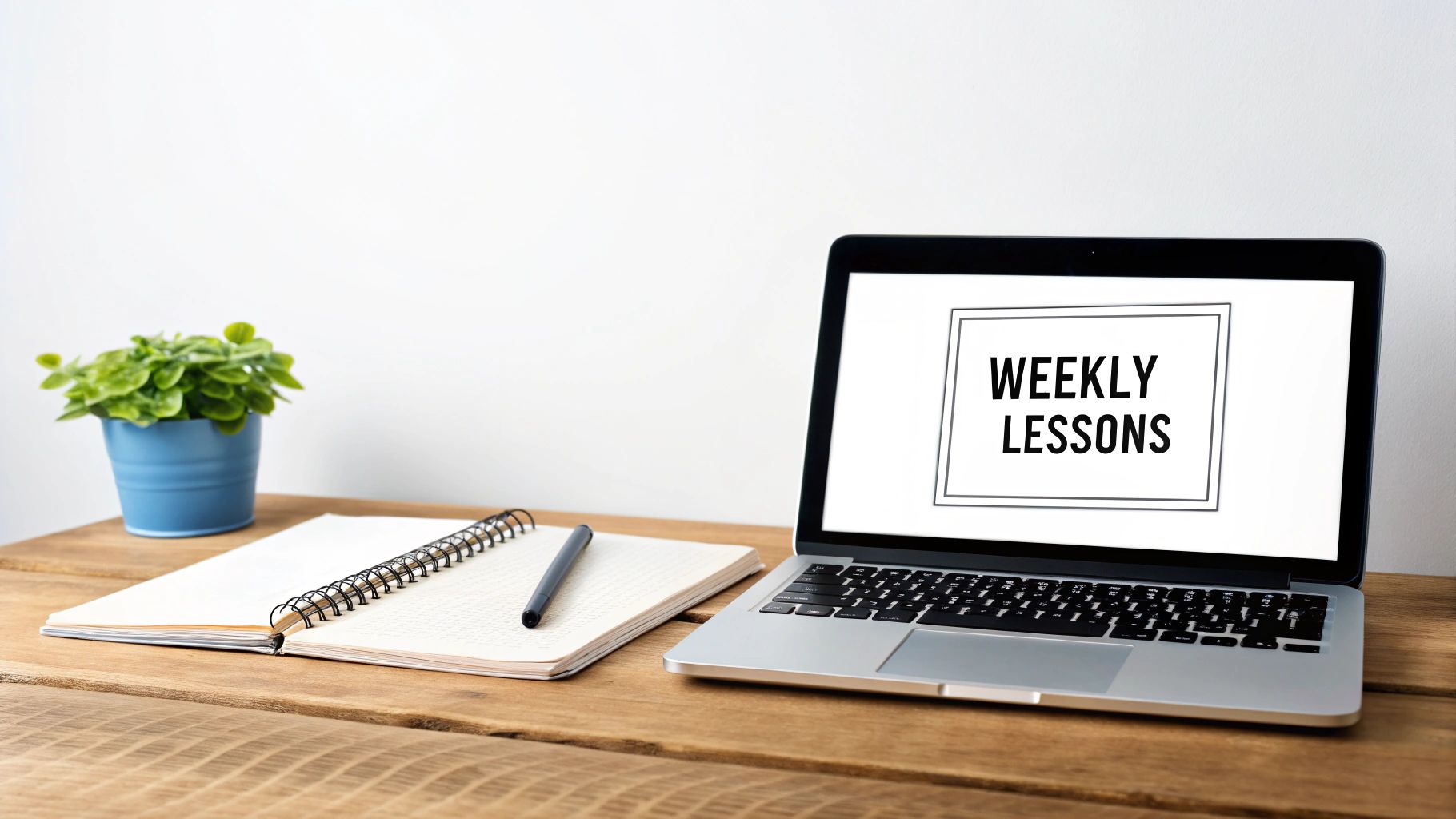
An Educational Newsletter focuses on teaching and skill development, positioning your brand as a credible authority. Unlike promotional emails, its primary goal is to deliver genuine value by sharing structured lessons, tutorials, tips, and expert knowledge directly with subscribers. This approach builds trust and loyalty by helping readers develop new competencies or deepen their expertise on a specific subject, making it one of the most effective types of newsletter for long-term audience engagement.
This format is ideal for businesses in knowledge-based industries, such as SaaS, coaching, and online courses. For instance, the Grammarly Daily Tips newsletter provides bite-sized writing lessons, reinforcing the value of its product without a hard sell. Similarly, the CSS-Tricks Newsletter delivers practical web development tutorials that resonate with its developer audience. The key is consistent, high-quality content that solves a real problem for your subscribers.
Best Practices for Implementation
- Structure Content as a Course: Break down complex topics into a series of digestible weekly or bi-weekly lessons to keep readers engaged and coming back for more.
- Provide Actionable Resources: Include downloadable checklists, templates, or worksheets that help subscribers apply what they have learned.
- Encourage Interaction: End each newsletter with a question or a call to reply. This fosters a sense of community and provides valuable feedback for future content.
<iframe width="560" height="315" src="https://www.youtube.com/embed/mm3G8voLxtE" frameborder="0" allow="accelerometer; autoplay; clipboard-write; encrypted-media; gyroscope; picture-in-picture" allowfullscreen></iframe>
2. Promotional/Marketing Newsletter
A Promotional Newsletter is a commercially focused communication designed to directly market products, services, or special offers to subscribers. Unlike content-driven emails, its primary goal is to drive immediate action, such as a purchase or registration. This type of newsletter is essential for e-commerce brands and businesses with a direct sales cycle, serving as a powerful tool for announcing new releases, communicating limited-time deals, and boosting revenue, making it one of the most results-oriented types of newsletter.

This format is a staple for retail giants like Amazon and Nordstrom, which use it to highlight daily deals and flash sales. Similarly, brands like Sephora leverage it to share VIP exclusives and new product drops with their most loyal customers. For a structured product release, outlining a proven course launch email sequence formula can significantly improve conversion rates. The key to success is balancing promotional messaging with genuine value to avoid fatiguing your audience.
Best Practices for Implementation
- Segment Your Audience: Group subscribers based on purchase history and interests to send highly relevant offers that are more likely to convert.
- Balance Promotions and Value: Follow the 80/20 rule, where 80% of your content provides value and only 20% is promotional, to maintain subscriber trust.
- Create Genuine Urgency: Use clear, honest deadlines for sales or limited stock alerts instead of artificial scarcity tactics that can erode credibility.
- Optimize for Clicks: Since the goal is conversion, ensure your calls-to-action are prominent and compelling. Learn how to increase your open rates with these 10 email marketing tricks to get more eyes on your offers.
3. Curated Content Newsletter
A Curated Content Newsletter acts as a trusted filter, saving subscribers time by aggregating the best articles, videos, and resources from across the web on a specific topic. Instead of creating content from scratch, the curator’s value lies in their editorial perspective, organizing and often adding commentary to third-party content. This approach positions the sender as an industry expert and go-to source for the latest insights, making it one of the most scalable and valuable types of newsletter for building a loyal audience.
This format is perfect for thought leaders, consultants, and industry-focused media brands. Powerhouse examples like Morning Brew and The Hustle built massive audiences by curating and summarizing business and tech news with a unique voice. Similarly, the Hacker News Newsletter provides a weekly digest of top stories for the tech community. The key is to deliver a consistently high-quality, well-organized summary that becomes an indispensable part of your subscriber's routine.
Best Practices for Implementation
- Develop a Distinctive Voice: Don't just list links. Add personal commentary, analysis, or a unique take to provide value beyond the original content.
- Organize Content Logically: Use clear headers to group links by theme (e.g., "Top Reads," "Tools to Try," "Weekend Longread") to improve readability and user experience.
- Attribute and Collaborate: Always link back to the original source with proper attribution. Build relationships with creators you feature to expand your network and potential for cross-promotion.
<iframe width="560" height="315" src="https://www.youtube.com/embed/fD3g5YyY2aE" frameborder="0" allow="accelerometer; autoplay; clipboard-write; encrypted-media; gyroscope; picture-in-picture" allowfullscreen></iframe>
4. Personal/Author Newsletter
A Personal or Author Newsletter is a direct communication channel from an individual creator, author, or influencer to their audience. Its power lies in its intimacy and authenticity, building a one-to-one connection that larger brands often struggle to achieve. Rather than focusing on a product, this format centers on the creator's personal stories, essays, and behind-the-scenes insights, making it a highly effective type of newsletter for fostering a loyal community around an individual's work and ideas.
This format is defined by its personal voice. For example, Austin Kleon's weekly newsletter shares "10 things worth sharing" which feels like a direct recommendation from a creative friend. Similarly, Tim Ferriss' 5-Bullet Friday offers a concise, personal list of his latest discoveries, reinforcing his brand as a life-hacker and expert curator. The goal is to make subscribers feel like they are part of an inner circle, receiving content directly from a person they trust and admire.
Best Practices for Implementation
- Be Consistently Authentic: Share your unique voice, stories, and even vulnerabilities. Authenticity is the currency of this newsletter type, and readers can spot inauthenticity quickly.
- Balance Personal and Professional: Share personal lessons and experiences but always connect them back to the value you provide your audience, whether it's creative inspiration, industry knowledge, or life advice.
- Engage with Replies: Encourage readers to reply directly to your emails and make time to respond. This direct interaction solidifies the personal connection and builds a true community. For more insights, explore these 10 tips to send emails that make the other person smile.
<iframe width="560" height="315" src="https://www.youtube.com/embed/5yKeiv6y4pE" frameborder="0" allow="accelerometer; autoplay; clipboard-write; encrypted-media; gyroscope; picture-in-picture" allowfullscreen></iframe>
5. Data/Analytics Newsletter
A Data/Analytics Newsletter delivers insights, research findings, and statistics in a digestible format. Instead of just presenting raw numbers, this newsletter uses compelling data-driven storytelling to help readers understand complex trends and metrics. By translating data into clear, actionable takeaways, it establishes your brand as an analytical authority and a go-to source for credible information, making it a powerful and distinct example among the various types of newsletter.

This format is perfect for research institutions, financial firms, consultancies, and media organizations that want to showcase their expertise. For example, the Financial Times Visual & Data Journalism newsletter excels at using charts and graphs to tell compelling economic stories. Similarly, publications from Pew Research Center and Statista provide subscribers with rigorously researched data on social, political, and economic trends, reinforcing their reputation for objective analysis. The goal is to make complex data accessible and meaningful.
Best Practices for Implementation
- Tell a Story with Data: Don't just list statistics. Structure your findings into a narrative with a clear beginning, middle, and end to guide the reader’s understanding.
- Prioritize Clear Visualization: Use clean, professional charts, graphs, and infographics. Ensure they are easy to interpret and adhere to a consistent visual style that reflects your brand.
- Provide "So What" Takeaways: Always include a summary or interpretation that explains why the data matters. Answer the reader’s implicit question: "Why should I care about this?"
- Cite Your Sources: Maintain credibility by clearly citing your data sources and methodology, allowing readers to explore the information for themselves.
6. Community/Discussion Newsletter
A Community/Discussion Newsletter focuses on fostering interaction and building a sense of belonging among subscribers. Rather than a one-way broadcast from the brand, its primary goal is to facilitate a two-way conversation by featuring user-generated content, discussion prompts, and member spotlights. This approach transforms a passive audience into an active community, making it one of the most powerful types of newsletter for building brand advocacy and long-term loyalty.
This format is perfect for brands built around a shared interest or platform, like SaaS companies with user forums, membership sites, or online course providers. For example, the Product Hunt daily newsletter sparks discussion by featuring new tech products and asking for community feedback. Similarly, many Substack writers cultivate engagement by using the discussion thread feature, then summarizing the best comments in a subsequent newsletter. The key is to make subscribers feel seen, heard, and valued as core members of the group.
Best Practices for Implementation
- Feature Subscriber Content: Regularly highlight reader stories, project submissions, or insightful comments to encourage participation and make members feel celebrated.
- Ask Open-Ended Questions: Pose engaging questions that invite thoughtful replies, then feature the most interesting responses in the next edition.
- Establish Clear Guidelines: Create and enforce community guidelines to ensure discussions remain respectful, constructive, and on-topic.
<iframe width="560" height="315" src="https://www.youtube.com/embed/5DJKXYQY5A0" frameborder="0" allow="accelerometer; autoplay; clipboard-write; encrypted-media; gyroscope; picture-in-picture" allowfullscreen></iframe>
7. Event/Announcement Newsletter
An Event/Announcement Newsletter is designed for timely communication, focusing on getting crucial information to your audience quickly and effectively. Its primary goal is to inform subscribers about significant happenings like product launches, upcoming webinars, live events, or important company news. Unlike other types of newsletter that build relationships over time, this format is highly transactional and time-sensitive, aiming to drive immediate action, such as registration or purchase.
This format is essential for any business that relies on generating buzz and participation around specific dates. For instance, Apple’s keynote announcement emails are masterful examples, building anticipation and ensuring millions tune in. Similarly, Eventbrite and Meetup.com use these newsletters to drive attendance by alerting users to relevant upcoming events. The key is to deliver all necessary details clearly and concisely, making it effortless for subscribers to understand the what, when, where, and why.
Best Practices for Implementation
- Lead with Essential Details: Place the event title, date, time, and location at the very top of the email to ensure it’s seen immediately.
- Create a Sense of Urgency: Use authentic deadlines, such as "Early bird pricing ends Friday," to encourage prompt action without being overly aggressive.
- Include a Clear Call-to-Action (CTA): Use prominent buttons with direct, actionable text like "Register Now" or "Save Your Spot" that link directly to the registration page.
- Segment Your Audience: Send targeted announcements to subscribers based on their location, past event attendance, or expressed interests to maximize relevance and engagement.
<iframe width="560" height="315" src="https://www.youtube.com/embed/n4cTjG42_O8" frameborder="0" allow="accelerometer; autoplay; clipboard-write; encrypted-media; gyroscope; picture-in-picture" allowfullscreen></iframe>
8. Storytelling/Narrative Newsletter
A Storytelling Newsletter uses compelling narrative arcs and character-driven accounts to engage readers on an emotional level. Rather than presenting facts and figures directly, it weaves information into a memorable story, making complex topics more relatable and entertaining. This format captures attention and holds it, making it one of the most powerful types of newsletter for building a deep, personal connection with your audience.
This approach is perfect for brands that want to humanize their message and stand out in a crowded inbox. For example, The Hustle frames business news as compelling daily stories with clear protagonists and conflicts. Similarly, Randall Munroe's What If newsletter uses narrative to explore wild scientific hypotheticals, making physics and math accessible and fun. The goal is to transform information into an experience that resonates long after the email is closed.
Best Practices for Implementation
- Use Classic Narrative Structures: Frame your content using established storytelling models like the three-act structure or the hero’s journey to create a satisfying arc.
- Develop Relatable Characters: Center your story around a person, a company, or even an idea that your audience can root for.
- Build Tension and Suspense: Create intrigue by introducing challenges, cliffhangers, or unanswered questions that encourage readers to open your next email.
<iframe width="560" height="315" src="https://www.youtube.com/embed/j_8mElM_3qM" frameborder="0" allow="accelerometer; autoplay; clipboard-write; encrypted-media; gyroscope; picture-in-picture" allowfullscreen></iframe>
9. Round-up/Digest Newsletter
A Round-up or Digest Newsletter serves as a periodic summary, curating the most valuable content, news, or updates from a specific period. Instead of creating entirely new content, its primary function is to aggregate and organize existing information, making it easy for busy subscribers to catch up on what they missed. This format builds a reputation for being a reliable source of information and is one of the most efficient types of newsletter for maintaining consistent audience contact without a heavy content creation burden.
This format is perfect for content-heavy platforms, communities, and media outlets. For instance, the Medium Weekly Digest compiles trending stories and articles based on a user's reading history, delivering a highly personalized content experience. Similarly, the LinkedIn Weekly Roundup keeps professionals informed about relevant network activities and industry news. The key is to deliver a well-organized, scannable summary that respects the reader’s time while highlighting must-see content.
Best Practices for Implementation
- Organize by Clear Categories: Group links and summaries into logical sections like "Top Posts This Week," "Industry News," or "Community Highlights" to improve scannability.
- Highlight Top-Performing Content: Use visual cues like a "Most Popular" tag or place the most clicked-on article at the top to guide readers to high-value information.
- Use Visuals and Snippets: Include thumbnails and brief, compelling descriptions for each curated item to increase click-through rates and make the email more engaging.
<iframe width="560" height="315" src="https://www.youtube.com/embed/5Uisf1jtrgM" frameborder="0" allow="accelerometer; autoplay; clipboard-write; encrypted-media; gyroscope; picture-in-picture" allowfullscreen></iframe>
10. Company/Corporate Newsletter
A Company/Corporate Newsletter serves as a direct channel for an organization to communicate news, cultural values, and key updates. It can be tailored for an internal audience of employees to foster transparency and alignment, or for an external audience of stakeholders, customers, and investors to build brand trust. Unlike purely promotional emails, its purpose is to narrate the company's story, share progress, and reinforce its mission, making it a powerful tool among the different types of newsletter for managing brand perception and internal morale.
This format is essential for organizations of all sizes aiming to maintain a cohesive culture and keep their community informed. For example, Buffer is renowned for its transparency reports, which share detailed business metrics and internal challenges. Similarly, Zappos uses internal newsletters to celebrate its unique company culture and employee achievements. The goal is to create a consistent and authentic voice that reflects the organization's core values.
Best Practices for Implementation
- Balance Polish with Authenticity: While maintaining a professional tone, infuse the newsletter with a genuine voice. Share both significant wins and the lessons learned from challenges.
- Showcase Your People: Feature employee stories, team spotlights, and interviews with leadership to humanize the company and make its mission more relatable.
- Segment Internal vs. External: Maintain distinct versions for employees and the public. Internal communications can be more candid, while external ones should align with broader brand messaging.
<iframe width="560" height="315" src="https://www.youtube.com/embed/S_x4_s2a7cQ" frameborder="0" allow="accelerometer; autoplay; clipboard-write; encrypted-media; gyroscope; picture-in-picture" allowfullscreen></iframe>
11. Segmented/Personalized Newsletter
A Segmented or Personalized Newsletter tailors content to individual subscribers based on their data, preferences, or behavior. Instead of sending one generic message to everyone, this approach uses segmentation to deliver highly relevant information, significantly boosting engagement and conversion rates. This makes it one of the most powerful types of newsletter for building a strong, individual connection with your audience and driving specific actions.
This format is essential for e-commerce, media, and SaaS businesses where subscriber interests vary widely. Amazon's product recommendations are a prime example, suggesting items based on past purchases and browsing history. Similarly, Netflix sends personalized emails suggesting shows and movies based on a user's viewing habits. The goal is to make each subscriber feel like the content was created just for them, increasing its value and impact.
Best Practices for Implementation
- Start with Simple Segments: Begin by segmenting your audience based on basic data like demographics, sign-up source, or stated interests. You can collect this information during the opt-in process.
- Use Dynamic Content: Implement dynamic content blocks in your emails that change based on subscriber data. This allows you to personalize sections of a single newsletter without creating multiple versions.
- Leverage Behavioral Triggers: Set up automated emails triggered by specific user actions, such as viewing a product, abandoning a cart, or completing a milestone in your app.
<iframe width="560" height="315" src="https://www.youtube.com/embed/5RVd-roRz2M" frameborder="0" allow="accelerometer; autoplay; clipboard-write; encrypted-media; gyroscope; picture-in-picture" allowfullscreen></iframe>
12. Resource/Tool Newsletter
A Resource/Tool Newsletter centers on curating and sharing valuable assets like software recommendations, templates, and guides. Instead of promoting your own products, the primary goal is to equip subscribers with practical tools that solve their problems, positioning your brand as an indispensable industry resource. This strategy builds authority and a loyal following by consistently delivering tangible value, making it one of the most useful types of newsletter for an audience seeking practical solutions.
This format excels for communities, media brands, and creators who serve a specific professional niche. For example, the Product Hunt Daily newsletter is a go-to source for discovering the latest tech tools, while Tools for Creators curates software specifically for the creator economy. The key is to become the trusted filter for your audience, saving them time and effort in finding the best resources for their needs. This approach is highly effective for list growth as the inherent utility encourages shares and forwards.
Best Practices for Implementation
- Be Thoroughly Vetted: Always test the tools and resources you recommend to provide genuine, firsthand insights. Your credibility depends on the quality of your curation.
- Explain the “Why”: Don't just list tools. Provide specific use cases, explain who the tool is for, and highlight its key benefits to help subscribers understand its value. You can manage this process efficiently by using a database to create and send your email from Notion.
- Disclose Affiliations: Maintain transparency by clearly stating if you are using affiliate links. Honesty builds trust and is often appreciated by audiences who understand the creator economy.
12-Point Newsletter Type Comparison
| Type | 🔄 Implementation complexity | ⚡ Resources & speed | 📊 Expected outcomes (⭐) | Ideal use cases | 💡 Key advantages / Tips |
|---|---|---|---|---|---|
| Educational Newsletter | Medium–High 🔄🔄 | High resources, slower cadence ⚡ | Skill-building, authority; long-term retention ⭐⭐⭐⭐ | Building expertise, thought leadership | Builds credibility; break topics into weekly lessons |
| Promotional / Marketing Newsletter | Low–Medium 🔄 | Moderate resources, fast to deploy ⚡⚡⚡ | Immediate sales and measurable ROI ⭐⭐⭐ | E‑commerce, SaaS launches, retail promos | Drives revenue; segment and balance promo with value (80/20) |
| Curated Content Newsletter | Low 🔄 | Low resources, quick production ⚡⚡ | Time-saver for readers; positions curator as filter ⭐⭐⭐ | Industry updates, news aggregation | Low creation burden; add voice and proper attribution |
| Personal / Author Newsletter | Medium 🔄🔄 | Low technical needs, high creator time ⚡⚡ | Deep engagement and loyalty; strong CLV potential ⭐⭐⭐⭐ | Authors, influencers, thought leaders | Builds personal connection; be authentic and consistent |
| Data / Analytics Newsletter | High 🔄🔄🔄 | High data/tools needs, slower production ⚡ | Research-backed insights; decision support ⭐⭐⭐⭐ | B2B, journalism, policy, BI teams | High credibility; cite sources and visualize clearly |
| Community / Discussion Newsletter | Medium 🔄🔄 | Moderate ongoing moderation, steady cadence ⚡⚡ | High engagement, UGC and advocacy ⭐⭐⭐⭐ | Niche communities, membership platforms | Generates participation; enforce guidelines and feature members |
| Event / Announcement Newsletter | Low 🔄 | Low prep, very fast to send ⚡⚡⚡ | Immediate registrations and actions; time-sensitive impact ⭐⭐⭐ | Event promotion, product launches, urgent updates | Clear CTAs drive conversions; include all essential details |
| Storytelling / Narrative Newsletter | High 🔄🔄🔄 | High creative effort, slower cadence ⚡ | Memorable engagement and emotional connection ⭐⭐⭐⭐ | Brand storytelling, serialized content, entertainment | Differentiates brand; plan arcs and strong characters |
| Round-up / Digest Newsletter | Low 🔄 | Low–Moderate resources, scheduled ⚡⚡ | Catch-up value; drives return traffic ⭐⭐⭐ | Platforms, publications, weekly summaries | Scannable summaries; highlight top items and categories |
| Company / Corporate Newsletter | Medium 🔄🔄 | Moderate coordination across teams ⚡⚡ | Improves alignment and stakeholder updates ⭐⭐⭐ | Internal comms, customer relations, brand building | Strengthens culture; balance corporate messaging with authenticity |
| Segmented / Personalized Newsletter | High 🔄🔄🔄 | High tech and data needs; efficient post-setup ⚡⚡ | Higher opens, clicks and conversions ⭐⭐⭐⭐ | E‑commerce, SaaS, large enterprises | Increases relevance and ROI; respect privacy and test rigorously |
| Resource / Tool Newsletter | Low–Medium 🔄🔄 | Moderate testing and update needs ⚡⚡ | High practical value and shareability ⭐⭐⭐⭐ | Creators, productivity audiences, SaaS users | Immediate utility; disclose affiliations and keep recommendations current |
Unify Your Strategy: Bringing Your Newsletter Workflow into Notion
Navigating the diverse landscape of newsletter types can feel like both an art and a science. As we've explored, the journey from a simple educational update to a highly personalized, segmented campaign is vast, but each step presents a unique opportunity to connect with your audience. The key takeaway is not simply to pick one format and stick with it, but to understand that the most effective email strategies are often a dynamic blend of several types of newsletter, each serving a specific purpose at a specific time.
Your promotional newsletter might drive sales, but it's the consistent value from your curated digest or storytelling series that builds the long-term trust required for that sale to happen. Similarly, a community newsletter fosters a sense of belonging that a corporate update simply cannot, while an event-driven email creates a sense of urgency that a monthly round-up might lack. The true power lies in strategically deploying these different formats as part of a cohesive, multi-faceted communication plan.
From Understanding to Execution: Centralizing Your Efforts
Recognizing which newsletter to send is the first hurdle. The second, and often more challenging one, is managing the execution of this varied strategy without succumbing to operational chaos. Juggling different content calendars, audience segments, performance metrics, and creative assets across scattered platforms is a recipe for inefficiency and burnout. This is precisely where a unified workflow becomes not just a convenience, but a strategic advantage.
By bringing your entire newsletter creation and management process into Notion, you build a "single source of truth." Your content ideas, drafts, audience segments, and analytics can live side-by-side, interconnected within a system you already know and trust. This integrated approach offers several critical benefits:
- Consistency: When all your newsletter templates, brand assets, and content drafts are in one place, maintaining a consistent tone, voice, and visual identity across all communication becomes effortless.
- Collaboration: Your entire team, from writers to designers to marketers, can work within the same Notion workspace, leaving feedback, updating statuses, and tracking progress in real-time.
- Clarity: A centralized dashboard gives you a bird's-eye view of your entire email strategy. You can see your promotional calendar, your educational content pipeline, and your community engagement efforts all at once, enabling you to make smarter, more informed decisions.
- Efficiency: Automating the flow from idea to inbox is the ultimate goal. When your content is created in Notion, using a tool like NotionSender to send it directly eliminates the clumsy, time-consuming process of copying and pasting content between different applications.
Actionable Next Steps for a Cohesive Strategy
Mastering the different types of newsletter is about more than just sending emails; it's about building a robust communication engine that drives your business forward. To turn the insights from this guide into tangible results, consider these immediate next steps:
- Audit Your Current Approach: Review the newsletters you currently send. Which types are you using? More importantly, which are you not using that could fill a gap in your audience engagement strategy?
- Map Your Customer Journey: Identify key touchpoints in your customer's lifecycle. Where would an onboarding series be most effective? When is a promotional newsletter most likely to convert? When does a community digest make the most sense?
- Build Your Notion Hub: Create a new database in Notion specifically for your email marketing. Create properties for
Newsletter Type,Target Segment,Status,Send Date, andKey Metric. Use this as your command center for all future campaigns.
Ultimately, the goal is to create a system where your newsletter strategy is as organized and powerful as the ideas it's built upon. By thoughtfully selecting the right types of newsletter for your goals and centralizing their execution within a streamlined Notion workflow, you transform email from a simple marketing task into a scalable, strategic asset for your brand.
Ready to stop juggling tabs and start sending beautiful, effective newsletters directly from your favorite workspace? Explore how NotionSender can unify your entire workflow, allowing you to manage every type of newsletter discussed here without ever leaving your Notion dashboard. Visit NotionSender to connect your workspace and send your first campaign in minutes.