10 Essential Vendor Management Best Practices for 2025
For small businesses and agile project teams, vendors are more than just suppliers; they are critical partners in growth. But managing these crucial relationships can quickly devolve into a tangle of overdue invoices, missed deadlines, and misaligned expectations. Ineffective vendor management doesn't just create administrative headaches. It directly impacts your bottom line, service quality, and ability to scale efficiently. When vendor processes are chaotic, projects stall, costs inflate, and strategic opportunities are lost.
This guide cuts through the complexity and provides a clear, actionable framework. We will detail 10 essential vendor management best practices designed specifically for the dynamics of modern teams and small businesses. You will learn how to move beyond reactive problem-solving and build a proactive system that strengthens your supply chain, reduces risk, and unlocks greater value from your partnerships.
This isn't about vague theories. We'll cover everything from rigorous vendor selection and crafting iron-clad SLAs to implementing performance scorecards and automating administrative tasks. You'll gain practical strategies for:
- Establishing clear communication and performance metrics.
- Mitigating risks before they disrupt your operations.
- Streamlining invoice and document handling to save time and prevent errors.
- Transforming transactional relationships into strategic, long-term partnerships.
By implementing these proven methods, you can build a resilient, efficient, and cost-effective vendor ecosystem that actively fuels your business's success rather than drains its resources. Let’s dive into the practices that will master your supply chain.
1. Vendor Selection and Due Diligence
Effective vendor management begins long before you sign a contract. A systematic selection and due diligence process is a foundational best practice that prevents costly mismatches and ensures you partner with vendors who are reliable, financially stable, and aligned with your quality standards. This involves moving beyond a simple price comparison to a holistic assessment of a potential partner's capabilities, reputation, and operational health.

This methodical approach, championed by frameworks like ISO 9001, helps de-risk your supply chain and sets the stage for a successful long-term relationship. Companies like Apple and Toyota are renowned for their rigorous supplier vetting, which scrutinizes everything from manufacturing processes to ethical labor practices, ensuring every partner reinforces their brand's promise of quality and integrity.
How to Implement a Due Diligence Framework
To apply this critical vendor management best practice, you can create a standardized evaluation system. This ensures consistency and objectivity, regardless of who is performing the assessment.
- Create a Standardized Scorecard: Develop a template that scores vendors on key criteria such as financial stability (requesting credit reports), quality certifications (ISO, SOC 2), data security protocols, and relevant industry experience.
- Involve Cross-Functional Teams: Include stakeholders from finance, legal, IT, and the department that will use the vendor's service. Their diverse perspectives will uncover potential issues that one person might miss.
- Verify References: Don't just ask for references; contact them. Ask specific questions about their experience with communication, problem resolution, and adherence to service-level agreements (SLAs).
- Extend Vetting to Intermediaries: For international supply chains, thorough due diligence extends to key intermediaries. This includes vetting partners like sourcing agents to ensure they meet your standards for reliability and compliance.
By formalizing your selection process, you transform it from a gut-feel decision into a strategic business function that protects your company and enhances operational resilience.
2. Establishing Clear Contracts and SLAs
Once a vendor is selected, formalizing the relationship with a comprehensive, legally sound contract is the most critical next step. This foundational document moves beyond verbal agreements to create a single source of truth, clearly defining responsibilities, deliverables, timelines, and payment terms. A well-crafted contract, reinforced by a specific Service Level Agreement (SLA), is a cornerstone of effective vendor management best practices that prevents ambiguity and establishes mutual accountability.

This practice is essential for setting clear performance benchmarks and providing recourse if standards are not met. Tech giants like Amazon Web Services (AWS) provide a clear public model with their detailed SLAs, which precisely define metrics like "Uptime Percentage" and offer service credits for non-compliance. This level of clarity removes guesswork and protects both parties, ensuring the business relationship is built on a solid, mutually understood foundation.
How to Implement Strong Vendor Agreements
To apply this best practice, treat contract creation as a strategic process, not just a legal formality. A strong agreement is proactive, anticipating potential issues and outlining clear paths for resolution.
- Define Key Metrics in an SLA: Go beyond vague promises. Specify measurable performance standards like Mean Time to Resolution (MTTR) for support tickets, guaranteed uptime percentages for software, or defect rates for manufactured goods.
- Include Clear Escalation Paths: Outline the exact steps to take when a problem arises. Who is the first point of contact? At what point is management involved? This prevents minor issues from escalating due to communication breakdowns.
- Incorporate Provisions for Change: Business needs evolve. A good contract includes a change control process that defines how to request, approve, and implement modifications to the scope of work or service requirements.
- Schedule Regular Contract Reviews: Set an annual or semi-annual cadence to review contracts with your vendors. This ensures the terms remain relevant, pricing is competitive, and the agreement still aligns with your strategic goals.
By establishing robust contracts and SLAs from the outset, you create a framework for a transparent and predictable partnership, minimizing risk and maximizing vendor value.
3. Regular Performance Monitoring and Scorecards
Effective vendor management is an ongoing process, not a one-time setup. Implementing a system for regular performance monitoring is a critical best practice that transforms your vendor relationships from reactive to proactive. By consistently tracking performance against predefined metrics, you create a transparent, data-driven framework that holds both parties accountable and fosters continuous improvement.
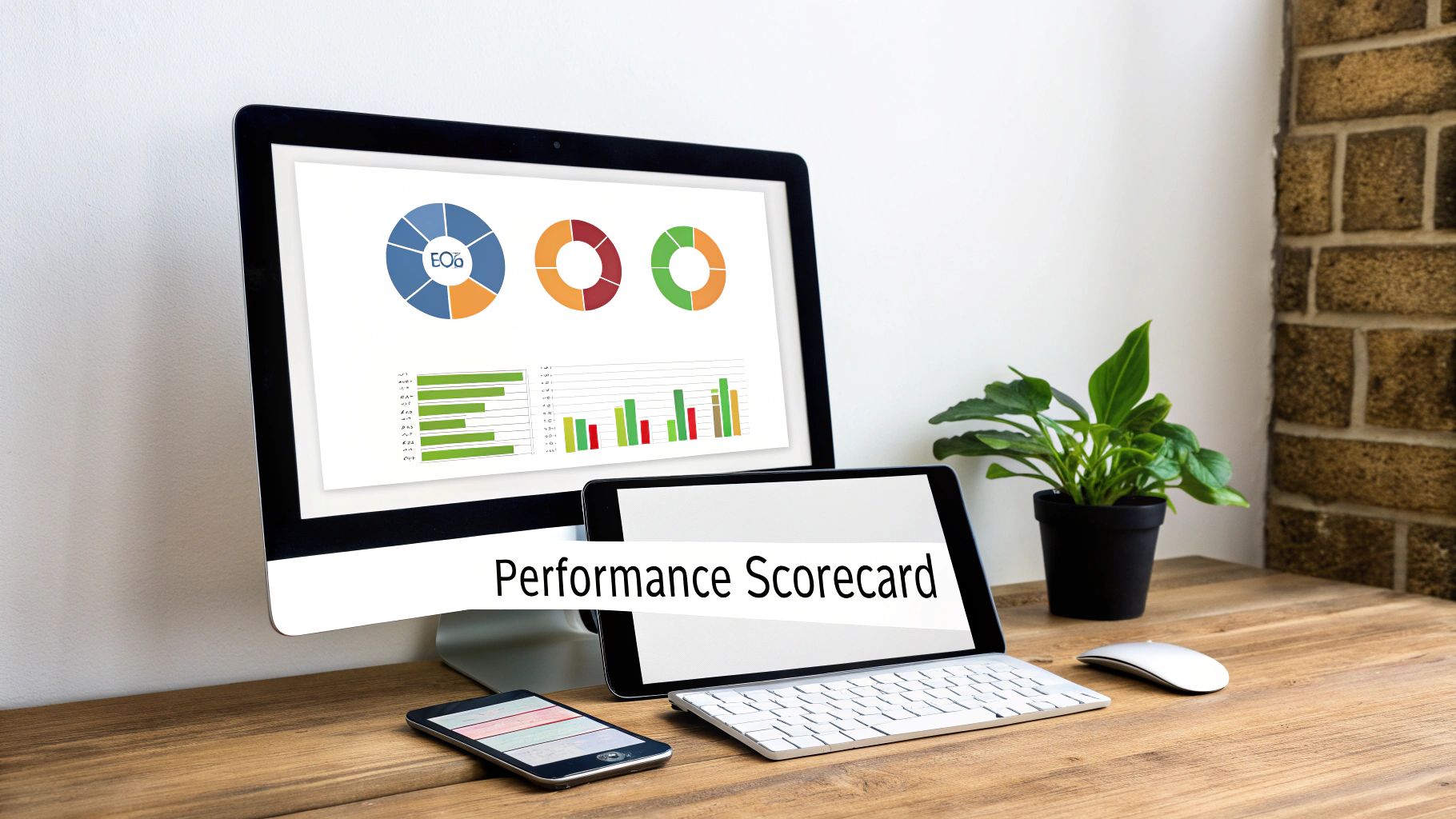
This approach replaces subjective feedback with objective data, making conversations about performance more productive. Companies like Walmart have perfected this with their supplier scorecard system, which tracks everything from on-time delivery to inventory levels, ensuring suppliers consistently meet their high operational standards. Similarly, Dell utilizes real-time tracking systems to maintain visibility and agility within its complex supply chain.
How to Implement a Performance Scorecard System
A well-designed scorecard system provides clear insights into vendor effectiveness and highlights areas for improvement. This system should be simple enough to maintain but detailed enough to be meaningful.
- Select 5-7 Core KPIs: Focus on what truly matters. Key performance indicators (KPIs) often include delivery timeliness, product or service quality (e.g., defect rate), cost adherence, responsiveness, and customer satisfaction.
- Use Automated Tools: Leverage technology to gather data automatically. Project management tools can track deadlines, while accounting software can monitor invoice accuracy, reducing manual effort and human error.
- Share Data Transparently: Regularly share the scorecard with your vendors. This transparency builds trust and allows them to see exactly where they are succeeding and where they need to improve.
- Schedule Quarterly Reviews: Set a recurring meeting with key stakeholders and the vendor to discuss the performance data. Use this time to address issues, recognize achievements, and align on future goals.
By systematically monitoring performance, you can identify and resolve small issues before they become major problems, ensuring your vendors consistently deliver value and support your business objectives.
<iframe width="560" height="315" src="https://www.youtube.com/embed/zdMMRPPR8dA" frameborder="0" allow="accelerometer; autoplay; clipboard-write; encrypted-media; gyroscope; picture-in-picture" allowfullscreen></iframe>
4. Vendor Risk Assessment and Mitigation
Effective vendor management isn't just about performance; it's about proactively identifying and neutralizing potential threats. A robust risk assessment and mitigation strategy protects your business from disruptions caused by vendor-related issues, including financial instability, cybersecurity breaches, operational failures, or non-compliance. This practice involves systematically evaluating potential risks and implementing plans to manage them before they impact your operations.
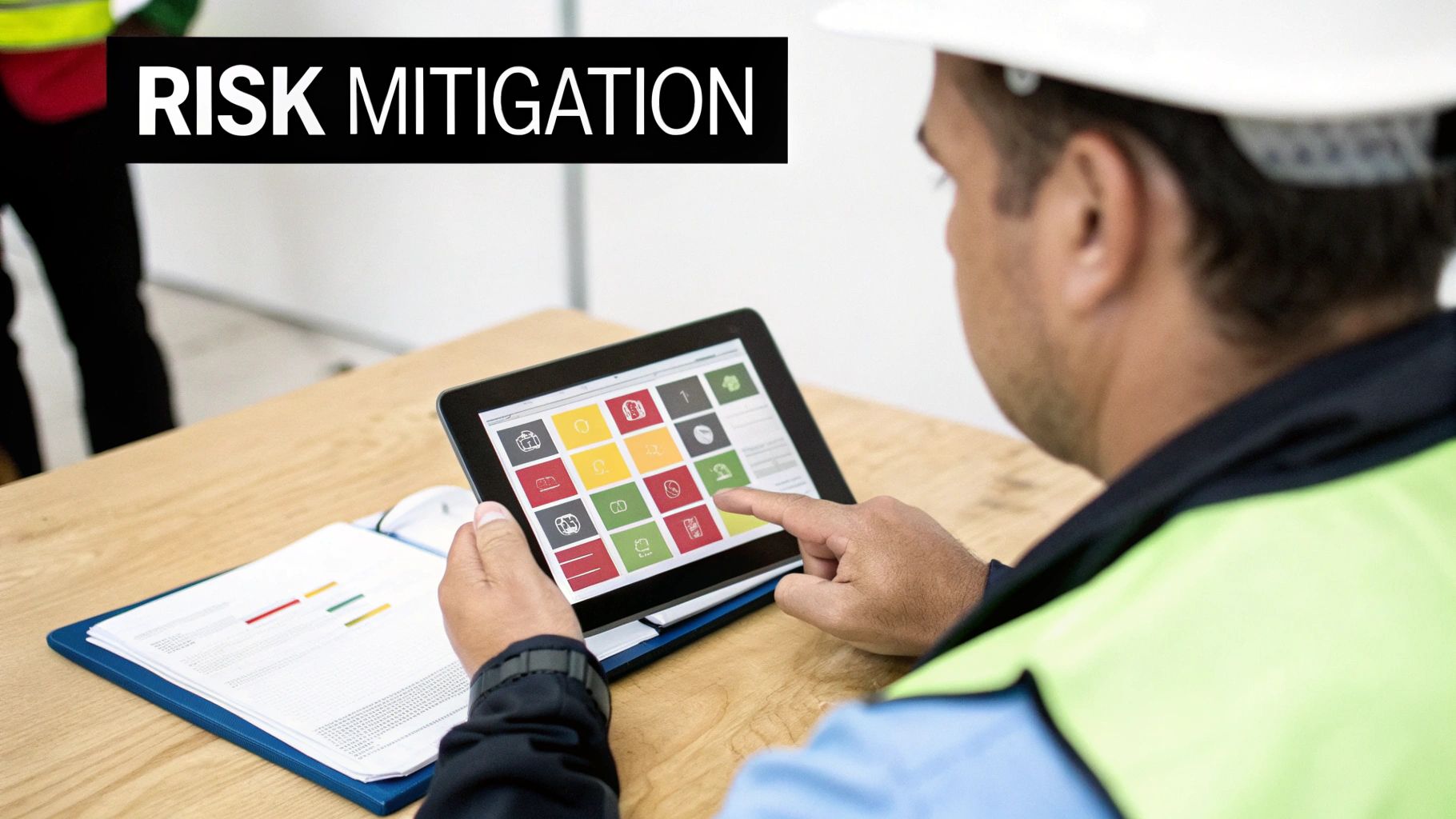
This forward-thinking approach is a cornerstone of operational resilience. For example, after the 2008 financial crisis, the automotive industry intensified its supplier financial monitoring to prevent production halts. Similarly, Netflix utilizes a multi-CDN (Content Delivery Network) strategy, diversifying its vendors to ensure high availability and prevent a single point of failure from disrupting its streaming service.
How to Implement a Risk Management Framework
To integrate this vendor management best practice, you should build a continuous cycle of risk identification, assessment, and mitigation. This framework makes your supply chain more durable and adaptable to unforeseen challenges. For a deeper dive into assessing the risks associated with external partners, consult this comprehensive guide to third-party risk assessment.
- Conduct Regular Risk Assessments: At least annually, evaluate each key vendor's risk profile. Assess their financial health, cybersecurity posture (requiring certifications like SOC 2), compliance record, and geopolitical exposure.
- Diversify Your Vendor Base: Avoid over-reliance on a single supplier for critical goods or services. Diversifying geographically can mitigate risks from regional disruptions, a strategy heavily employed by companies like Apple to protect their global supply chain.
- Develop Contingency Plans: For critical vendors, establish a clear business continuity plan. This should include identifying backup suppliers and testing failover procedures to ensure a smooth transition if your primary vendor fails.
- Include Protective Contract Clauses: Work with your legal team to add clauses that address risk. This includes requiring specific insurance coverage, clear indemnification terms, and data breach notification protocols to protect your business legally and financially.
By treating risk management as an ongoing process rather than a one-time check, you build a resilient operational foundation that can withstand vendor-related turbulence.
5. Strategic Vendor Partnerships and Relationship Management
True vendor management excellence transcends transactional interactions. Shifting from a simple buyer-supplier dynamic to a collaborative partnership with key vendors is a powerful best practice that unlocks mutual growth, innovation, and long-term value. This strategic approach involves treating vendors as extensions of your team, fostering open communication, setting shared goals, and investing in mutual success.
This philosophy is central to the success of industry leaders. Toyota’s legendary supplier development program, for instance, involves working closely with suppliers to improve their processes, which in turn enhances Toyota's own production quality and efficiency. Similarly, Starbucks cultivates long-term relationships with coffee farmers, ensuring a sustainable, high-quality supply chain while supporting local communities.
How to Cultivate Strategic Partnerships
Building a true partnership requires a deliberate and consistent effort to foster trust and collaboration. This transforms the relationship from a cost center into a source of competitive advantage.
- Schedule Quarterly Business Reviews (QBRs): Move beyond performance metrics to discuss strategic alignment. Use these meetings to share your company's roadmap, upcoming projects, and challenges, and ask your vendor for their insights and how they can contribute.
- Share Forecasts and Strategic Plans: Give key vendors visibility into your future needs. This allows them to plan capacity, allocate resources, and proactively suggest solutions, leading to better service and potential cost savings for you.
- Establish a Joint Innovation Forum: For critical technology or service partners, create a dedicated channel to brainstorm new ideas and co-develop solutions. This can lead to process improvements or new product features that benefit both organizations.
- Communicate Transparently and Proactively: Don't wait for a problem to escalate. Share challenges openly and work together to find solutions. This builds trust and resilience in the partnership, making it one of the most effective vendor management best practices.
6. Compliance and Regulatory Management
Beyond performance and cost, a critical vendor management best practice involves ensuring your partners meet all legal, industry-specific, and regulatory requirements. This practice is about systematically managing compliance risk by verifying certifications, conducting audits, and maintaining meticulous documentation. It transforms compliance from a reactive, check-the-box activity into a proactive strategy that safeguards your business from legal penalties, reputational damage, and operational disruptions.
This rigorous approach is non-negotiable in highly regulated sectors. For instance, healthcare providers must ensure all vendors handling patient data are fully HIPAA compliant, while financial services firms require partners to adhere to strict regulatory programs like SOX or PCI DSS. Failing to manage vendor compliance effectively exposes your organization to the same liabilities as if you had committed the violation yourself.
How to Implement a Compliance Management Framework
To apply this essential vendor management best practice, integrate compliance checks and verification into the entire vendor lifecycle, from onboarding to offboarding. This creates a continuous and auditable trail of due diligence.
- Maintain a Compliance Checklist: Develop and maintain a checklist of required certifications, licenses, and regulations specific to your industry and the vendor's services (e.g., ISO 27001 for IT vendors, GMP for pharmaceutical suppliers).
- Embed Audit Rights in Contracts: Your vendor contracts should explicitly state your right to conduct compliance audits, either directly or through a third party. Schedule these audits at regular intervals.
- Require and Verify Documentation: Don't just take a vendor's word for it. Request and validate copies of all necessary certifications and licenses, and track their expiration dates to ensure they remain current.
- Implement a Corrective Action Plan: When a compliance gap is identified, use a formal system to document the issue, assign responsibility, and track the vendor's progress on implementing corrective actions until the issue is fully resolved.
By systematizing your approach to regulatory oversight, you build a resilient supply chain that not only performs well but also operates squarely within legal and ethical boundaries.
7. Cost Management and Optimization
Effective vendor management extends beyond service delivery to strategic financial oversight. Implementing robust cost management and optimization is a crucial best practice that ensures you receive maximum value without compromising quality. This involves a holistic approach to analyzing not just the sticker price, but the total cost of ownership (TCO), which includes hidden expenses like maintenance, integration, and potential downtime.
This strategic approach to spending is a hallmark of industry leaders. For instance, Southwest Airlines meticulously manages costs with its vendors, from aircraft parts to in-flight snacks, enabling its competitive pricing model. Similarly, Costco leverages its immense purchasing volume to negotiate exceptional terms, passing savings to its members and demonstrating the power of strategic procurement.
How to Implement Cost Optimization Strategies
To apply this essential vendor management best practice, you must integrate financial analysis into your vendor relationship lifecycle, transforming it from a simple transaction into a value-driven partnership.
- Perform Total Cost of Ownership (TCO) Analysis: Look beyond the initial price. Calculate the long-term costs associated with a vendor, including implementation fees, training, support, and potential switching costs. This provides a more accurate picture of the true investment.
- Benchmark and Negotiate Strategically: Regularly benchmark your vendor pricing against market rates to ensure competitiveness. Use this data to negotiate better terms, and consider adding caps on annual price increases to your contracts for predictable budgeting.
- Consolidate and Leverage Volume: Centralize purchasing with key vendors where possible. By consolidating your spend, you increase your leverage and can often negotiate significant volume discounts, a powerful tactic for small businesses looking to scale their purchasing power.
- Balance Cost with Vendor Health: Aggressive cost-cutting can harm a vendor's ability to deliver quality service. The goal is value optimization, not simply finding the cheapest option. Ensure your vendors remain profitable and viable partners for a sustainable, long-term relationship.
8. Vendor Onboarding and Documentation
A signed contract is a starting point, not a finish line. A systematic onboarding process is a critical vendor management best practice that integrates new partners into your workflows smoothly and efficiently. This structured approach moves beyond simple account setup to ensure vendors understand your processes, systems, and expectations, preventing early-stage friction and miscommunication that can derail a new partnership.
This methodical integration sets the foundation for a productive relationship from day one. Enterprise-level companies like Accenture and Salesforce have refined vendor onboarding into a science, using dedicated portals and structured programs to ensure every new partner is equipped for success. This minimizes disruptions and accelerates the time-to-value for the services procured.
How to Implement a Vendor Onboarding Framework
To apply this essential vendor management best practice, you can build a repeatable onboarding system that guarantees consistency and clarity for every new partner. This ensures all necessary information is collected and disseminated effectively.
- Create a Standardized Onboarding Checklist: Develop a comprehensive checklist that covers all steps from contract signing to first payment. Include items like W-9 collection, system access setup, key contact introductions, and scheduling the initial kickoff meeting.
- Assign a Dedicated Onboarding Coordinator: Designate a single point of contact within your team to guide the vendor through the process. This person answers questions, facilitates introductions, and ensures all checklist items are completed on time.
- Centralize All Documentation: Consolidate all onboarding documents, communications, and contracts in a single, accessible location. Centralizing this information is crucial for maintaining a clear audit trail. You can streamline this by using tools that allow for saving vendor emails directly into Notion, ensuring no detail gets lost in an inbox.
- Conduct a 30-Day Check-in: Schedule a follow-up meeting after the first month to review initial performance, address any early challenges, and gather feedback on the onboarding experience itself.
By formalizing your onboarding, you transform a potentially chaotic administrative task into a strategic process that reinforces expectations and builds a strong foundation for a successful, long-term vendor relationship.
9. Communication and Escalation Protocols
A signed contract is just the beginning of a vendor relationship; effective, structured communication is what sustains it. Establishing clear communication and escalation protocols is a vendor management best practice that prevents minor issues from spiraling into major crises. It ensures that problems are addressed by the right people in a timely manner, minimizing operational disruptions and maintaining a healthy, professional partnership.
This structured approach removes ambiguity and frustration from the problem-solving process. For example, financial services firms use rigid incident response protocols with their technology vendors to ensure that system outages are reported and resolved within minutes, not hours, protecting millions in transactions. Similarly, a clear escalation path ensures your team isn't wasting time trying to find the right contact when an urgent issue arises.
How to Implement a Communication and Escalation Framework
A robust communication plan should be documented and shared with the vendor during onboarding. This sets clear expectations from day one and provides a roadmap for handling any situation that might occur.
- Define Severity Levels and Response Times: Categorize potential issues (e.g., Critical, High, Medium, Low) and assign a required acknowledgment and resolution time for each. For instance, a "Critical" issue like a full system outage might require a 15-minute response, while a "Low" priority issue like a minor UI bug might have a 48-hour response window.
- Create a Clear Escalation Path: Document a multi-tiered contact list for both your organization and the vendor. Level 1 could be the day-to-day operational contact, Level 2 a team manager, and Level 3 an executive sponsor for critical failures.
- Centralize Communication Records: Use a ticketing system or a centralized platform to log all significant vendor communications. This creates a transparent, auditable record of all requests, responses, and resolutions. For instance, using tools to send and track vendor emails directly from Notion can help keep all interactions organized within your project management workspace.
- Schedule Regular Business Reviews: Don't wait for problems to arise. Schedule quarterly or bi-annual meetings to discuss performance, review SLAs, and proactively address any emerging concerns.
By formalizing how you communicate, you build a resilient and predictable vendor relationship capable of weathering challenges effectively.
10. Continuous Improvement and Innovation Collaboration
Effective vendor management extends beyond maintaining the status quo. A commitment to continuous improvement and innovation transforms a transactional supplier relationship into a strategic partnership that drives mutual growth and competitive advantage. This involves proactively collaborating with vendors to identify opportunities for process enhancements, cost reductions, and joint innovation, ensuring both parties evolve together.
This approach, popularized by Toyota's lean manufacturing and supplier development programs, views vendors as an extension of your own team. Companies like Procter & Gamble and Cisco have built powerful innovation ecosystems by actively engaging their suppliers in new product development and capability-building initiatives. Adopting this mindset is a key vendor management best practice that creates a resilient and forward-thinking supply chain.
How to Foster Collaborative Improvement
To implement this practice, you need to create structured channels for feedback, shared goals, and joint problem-solving. This moves the relationship from reactive issue management to proactive value creation.
- Schedule Quarterly Improvement Reviews: Dedicate regular meetings specifically to discuss performance trends, identify bottlenecks, and brainstorm solutions. This is separate from day-to-day operational check-ins.
- Implement a Shared Suggestion System: Create a formal process where both your team and the vendor's team can submit ideas for improvement. This could be a shared document or a dedicated feedback channel.
- Launch Collaborative Pilot Projects: Test new processes, technologies, or service enhancements on a small scale. Working together on a pilot project builds trust and allows you to validate an idea before a full-scale rollout.
- Automate Communication for Consistency: Use tools to schedule and send reminders for these collaborative sessions. You can learn more about how to use Notion to send emails and keep all parties aligned on meeting schedules and follow-ups.
By systematically working with vendors on improvement, you unlock new efficiencies and innovations that would be impossible to achieve alone, turning your vendor relationships into a powerful strategic asset.
10-Point Vendor Management Comparison
| Practice | Implementation Complexity 🔄 | Resource Requirements ⚡ | Expected Outcomes ⭐ / 📊 | Ideal Use Cases 💡 | Key Advantages ⭐ |
|---|---|---|---|---|---|
| Vendor Selection and Due Diligence | High — multi-step evaluation 🔄🔄 | Specialized expertise, audit budget, cross-functional time ⚡ | High quality suppliers; reduced failure risk ⭐📊 | Critical suppliers, high-value contracts, regulated vendors 💡 | Reduces supply disruptions; early cost-saving identification ⭐ |
| Establishing Clear Contracts and SLAs | Moderate — legal drafting & negotiation 🔄 | Legal counsel, negotiation time, stakeholder alignment ⚡ | Clear expectations; enforceable metrics; fewer disputes ⭐📊 | Outsourced services, IT providers, performance-critical suppliers 💡 | Legal protection; objective performance measurement ⭐ |
| Regular Performance Monitoring and Scorecards | Moderate — KPI design and tooling 🔄 | Monitoring tools, data collection effort, analysts ⚡ | Objective performance insights; early issue detection ⭐📊 | Large supplier bases; ongoing services with measurable KPIs 💡 | Data-driven decisions; vendor improvement; audit trail ⭐ |
| Vendor Risk Assessment and Mitigation | High — continuous risk analysis 🔄🔄 | Risk analysts, contingency budgets, monitoring systems ⚡ | Reduced disruptions and financial exposure; faster response ⭐📊 | Critical supply chains; cybersecurity-sensitive vendors 💡 | Improved resilience; regulatory compliance; stakeholder confidence ⭐ |
| Strategic Vendor Partnerships & Relationship Management | High — governance and alignment 🔄🔄 | Executive engagement, joint investment, regular reviews ⚡ | Innovation, improved service, long-term value ⭐📊 | Key strategic suppliers; innovation and co-development partners 💡 | Drives innovation; deeper vendor commitment; competitive edge ⭐ |
| Compliance and Regulatory Management | Moderate — audits and documentation 🔄 | Compliance team, audit costs, documentation systems ⚡ | Audit readiness; legal protection; fewer fines ⭐📊 | Regulated industries (healthcare, finance, pharma) 💡 | Protects reputation; ensures standards; reduces liability ⭐ |
| Cost Management and Optimization | Moderate — TCO analysis & negotiation 🔄 | Procurement analysts, benchmarking tools, negotiation cycles ⚡ | Lower total costs; improved margins; better budgeting ⭐📊 | High-spend categories; margin-sensitive operations 💡 | Cost savings; improved negotiating leverage; identifies hidden costs ⭐ |
| Vendor Onboarding and Documentation | Low — standardized workflows 🔄 | Onboarding coordinator, systems access, training resources ⚡ | Faster ramp-up; consistent setup; fewer errors ⭐📊 | New suppliers; frequent vendor turnover 💡 | Smooth integration; reduced operational friction; clear expectations ⭐ |
| Communication and Escalation Protocols | Low — defined channels & severity levels 🔄 | Ticketing systems, contact lists, training time ⚡ | Faster issue resolution; clear accountability ⭐📊 | Incident-prone services; IT and operational vendors 💡 | Quicker resolution; better tracking; reduced miscommunication ⭐ |
| Continuous Improvement & Innovation Collaboration | High — ongoing programs and pilots 🔄🔄 | Cross-functional teams, pilot budgets, governance frameworks ⚡ | Process improvements; new offerings; cost reductions ⭐📊 | Long-term partners; R&D and product development collaborations 💡 | Sustained innovation; efficiency gains; shared value creation ⭐ |
Bringing It All Together: Centralize and Automate Your Vendor Management
Navigating the complexities of vendor relationships can feel like a daunting task, especially for lean teams and growing businesses. We've explored a comprehensive set of ten vendor management best practices, from rigorous initial selection and due diligence to fostering strategic partnerships built on continuous improvement. Each practice, whether it's establishing ironclad contracts, implementing performance scorecards, or managing regulatory compliance, represents a critical pillar in building a resilient and efficient supply chain.
However, understanding these individual pillars is only half the battle. The true power of effective vendor management is unlocked not by simply performing these tasks, but by integrating them into a cohesive, centralized, and automated system. Without a unified hub, your efforts will remain fragmented. Contracts get lost in email threads, performance data lives in isolated spreadsheets, and critical renewal dates are missed, leading to unnecessary risks and financial leakage. The core challenge is transforming these best practices from a checklist of activities into a living, breathing operational workflow.
From Theory to Action: The Power of a Unified System
The transition from theory to practice hinges on one central concept: creating a single source of truth for every vendor relationship. Imagine having one dedicated space where you can instantly access any vendor's contract, review their latest performance scorecard, see a complete history of communication, and track every invoice and payment. This level of organization is not a luxury; it's a strategic necessity for mitigating risk and maximizing value.
This is where the principles of centralization and automation become your greatest allies.
- Centralization eliminates the frantic search for information across multiple platforms. It ensures every team member, from project managers to finance, is working with the same up-to-date data, fostering alignment and preventing costly miscommunications.
- Automation removes the burden of repetitive, manual tasks that consume valuable time and introduce human error. Automating invoice processing, renewal reminders, and data entry frees your team to focus on high-impact activities like strategic negotiation and collaborative innovation with your key partners.
By implementing a system that combines these two elements, you're not just managing vendors; you're orchestrating a network of partnerships designed to propel your business forward. A robust vendor management framework, built on these best practices and powered by smart technology, transforms your supply chain from a simple cost center into a significant competitive advantage.
Your Next Steps to Mastering Vendor Management
Mastering these vendor management best practices is an ongoing journey, not a one-time fix. The key is to start small and build momentum. Begin by identifying your biggest pain point. Is it disorganized communication? Missed contract renewals? Inefficient invoice handling?
Once identified, focus your efforts there. For example, if documentation is scattered, commit to creating a centralized digital repository for a single, high-value vendor. Use this pilot project to test and refine your process. As you demonstrate success, you can systematically roll out these improvements across your entire vendor portfolio. Remember, the goal is consistent progress, not overnight perfection. By taking these deliberate, actionable steps, you will build a scalable, compliant, and highly effective vendor ecosystem that supports your business's long-term growth and success.
Ready to eliminate scattered emails and manual data entry from your vendor management process? Discover how NotionSender can automatically capture vendor communications, extract invoice data, and centralize all your critical documents directly within your Notion workspace. Streamline your workflow and implement these best practices today by visiting NotionSender.