What is substack newsletter and how it works in 2026

Ever felt like you're juggling a blog, an email list, and a payment system just to share your work? Imagine if all those tools lived in one simple, elegant house. That's pretty much what Substack is.
It's a platform built specifically for writers, thinkers, and creators to publish their work directly to an audience, get paid for it, and skip the technical headaches altogether.
What Exactly Is a Substack Newsletter?
Think of Substack as your own personal digital magazine. You're the publisher, the editor, and the writer. Whether you're covering deep-dive industry analysis, personal essays, or news for a niche hobby, Substack gives you the tools to deliver it right to your readers' inboxes. It even hosts all your posts on a clean, simple website for you.
This all-in-one approach is a game-changer. Before platforms like this came along, starting a newsletter was a real project. You’d have to:
- Build and maintain your own website.
- Sign up for and manage a separate email marketing service.
- Figure out how to integrate a complicated payment processor for subscriptions.
Substack wraps all of that into a single, user-friendly dashboard. That means you can pour all your energy into what you actually love doing: creating great content that people want to read. The platform handles the rest.
To give you a clearer picture, here’s a quick breakdown of how all the pieces fit together.
Substack Core Features at a Glance
This table shows the essential components that make Substack an all-in-one publishing machine.
| Component | What It Does | Benefit for Creators |
|---|---|---|
| Publishing Platform | Hosts all your posts on a dedicated website, like a blog. | Gives your work a permanent, public home that's easily discoverable. |
| Email Service | Automatically sends every new post to your subscribers' inboxes. | Delivers content directly to your audience, bypassing social media algorithms. |
| Subscription & Payment System | Manages free and paid subscriptions, handling all billing securely. | Makes it incredibly simple to monetize your work and earn a living directly. |
| Community Tools | Includes features like comments and discussion threads for each post. | Fosters engagement and helps you build a loyal community around your writing. |
| Analytics Dashboard | Provides key metrics like open rates, click rates, and subscriber growth. | Offers clear insights into what content resonates most with your audience. |
Essentially, you get a full suite of publishing tools right out of the box, letting you launch and grow your publication in minutes, not weeks.
The Power of a Direct Connection
Beyond the tools, the real magic of Substack is the direct line it creates between you and your readers. It cuts out the middlemen—the social media algorithms and traditional media gatekeepers—and puts your work right where people will see it: their email inbox.
This direct-to-reader model is incredibly powerful. Since its launch in 2017, the platform has grown to over 1 million active paid subscribers globally. Engagement is off the charts, too. Substack newsletters often see open rates topping 45%, a massive leap from the 20-30% average for typical marketing emails. You can even find more details on how Substack is competing with big media on OnlineWritingClub.com.
The real power of Substack isn't just publishing; it's ownership. You own your email list and your direct relationship with readers. This is a powerful asset that gives you independence and long-term security for your creative work.
You can see this creator-first philosophy reflected right on the platform’s homepage.
The call to action is simple and direct: "Start a paid newsletter." It immediately gets to the heart of what Substack is for—helping writers turn their passion into a real, sustainable business by building a community that pays them directly for their work. It’s not just about writing; it’s about building something of your own.
How Substack Works From Publishing to Payouts
So, what does the day-to-day of running a Substack actually look like? Let's walk through the entire journey, from a blank page to money in your bank account.
It all starts in a clean, minimalist editor. Substack is intentionally designed to get out of your way and let you focus on what matters most: writing. You won't find any cluttered menus or distracting sidebars here—just a simple canvas for your ideas.
Once your post is ready, the real magic happens when you hit ‘Publish.’ With a single click, Substack does two things at once: it sends your article as an email directly to your subscribers and simultaneously publishes it as a post on your publication’s website. This creates a public, searchable archive of your work while still delivering it right to your audience’s inbox.
The goal is to move your ideas from your head to your readers with as little friction as possible. This simple flow is the core of the platform's power.

As you can see, the platform is the engine connecting your writing directly to your community. It handles both the distribution and the financial side of things, which is what makes it so appealing for creators.
Turning Your Words Into Revenue
This is where the business model really clicks. On Substack, you have total control over how you make money from your work. You can create different tiers to serve your audience in different ways.
- Free Tier: You can offer some or even all of your content for free. This is a great way to build an audience and show people the value you provide.
- Paid Tiers: You can also create exclusive content that’s only available to paying subscribers, who typically sign up for a monthly or annual plan.
When a reader decides to pay for a subscription, they enter their card details through Stripe, a secure payment processor that’s built right into Substack. You don’t have to worry about setting up a merchant account or dealing with any complex billing code; it's all handled for you.
In exchange for managing the tech, distribution, and payments, Substack takes a 10% cut of your paid subscription revenue. Stripe also takes its standard processing fee, which is usually around 2.9% + 30¢ per transaction. You keep the rest—roughly 87% of everything you earn.
The earning potential here is very real. By 2026, many newsletters had become serious businesses. The top 27 highest-earning publications on the platform were collectively bringing in over $22 million per year. This proves that building a substantial income from a dedicated community is a very achievable goal.
Owning Your Most Important Asset
This part is critical: you always own your content and your email list.
If you ever decide to leave Substack for another platform, you can export your entire list of subscribers and take it with you. This gives you long-term security and independence, making sure your business isn't locked into one platform’s rules or algorithm.
For creators looking to build more advanced workflows, it's also possible to integrate your content systems using an API to automate and scale your publishing process even further.
Of course. Here is the rewritten section, crafted to sound completely human-written in the style you provided.
The Pros and Cons of Building on Substack
Let's be real: no platform is a magic bullet. Substack has some incredible, almost magnetic, appeal for writers, but it's smart to go in with a clear-eyed look at the trade-offs. Before you dive in and build your entire creative business on it, we need to talk about what you get and what you give up.
One of the biggest wins for Substack is its sheer simplicity. Honestly, you can go from a fresh idea to a live publication—with paid subscriptions enabled—in a matter of minutes. All the messy technical stuff like web hosting, email delivery, and payment processing is handled for you. This lets you just be a writer, not a part-time web developer.
The Upsides of Publishing on Substack
Beyond just being easy to use, Substack has a few key advantages that really empower independent creators. The big one is how it forges a direct financial connection between you and your readers.
- Direct Monetization: Turning your writing into a real, paying gig is incredibly straightforward. The platform integrates with Stripe, so you can flip a switch and start earning from your most loyal fans with just a few clicks.
- Audience Ownership: This is a huge deal. On Substack, you own your email list. If you ever decide the platform isn't for you anymore, you can export all your subscribers and walk away. That kind of independence is priceless.
- Built-in Network Effects: Substack isn't just a tool; it's a growing ecosystem. Features like Recommendations help readers who enjoy similar newsletters find your work. It's an organic growth engine that’s tough to build from scratch on your own.
The Downsides and Key Considerations
That "all-in-one" convenience does come with some compromises. The most talked-about downside is Substack’s 10% platform fee on every dollar you earn from paid subscriptions. While this covers all the technology and network benefits, it can start to feel steep as you grow.
Think about it: for a writer earning $100,000 a year, that’s a $10,000 fee paid directly to Substack, and that's before Stripe takes its own payment processing fees.
The trade-off is clear: you exchange a percentage of your revenue for convenience and access to a built-in growth network. For many, this is a worthwhile price, but high-earning creators may find it costly over time.
You also give up a lot of control over design and functionality. Substack's look is intentionally minimal. You can’t add custom branding, change page layouts, or plug in advanced marketing tools. The analytics are also pretty basic—you'll see open rates, but you won't get the deep segmentation or automation features you’d find in a dedicated email marketing tool.
For some, this simplicity is a feature, not a bug. For others, it's a creative and strategic straitjacket.
Substack vs. Traditional Email Platforms
To put it all in perspective, it helps to see how Substack stacks up against more traditional email service providers (ESPs) like Mailchimp or ConvertKit. They serve different needs and operate on fundamentally different models.
Here’s a quick breakdown:
| Feature | Substack | Traditional ESP (e.g., Mailchimp) | Best For |
|---|---|---|---|
| Primary Goal | Publishing & Monetization | Marketing & Communication | Writers vs. Businesses |
| Pricing Model | Free to start, 10% cut of revenue | Tiered monthly fees based on subscribers | Creators starting out vs. Scaled operations |
| Ease of Use | Extremely simple, plug-and-play | Steeper learning curve, more setup | Beginners who want to focus on writing |
| Customization | Very limited design and branding | Highly customizable templates and branding | Brands needing a unique look and feel |
| Analytics | Basic (opens, clicks, subscribers) | Advanced (segmentation, A/B testing, automation) | Marketers needing deep data insights |
| Discovery | Built-in network and recommendations | None; you must build your own audience | Creators looking for organic growth |
Ultimately, choosing between them comes down to your primary goal. If you're a writer first and foremost who wants the simplest path to earning an income from your work, Substack is a fantastic choice. If you're a business that needs advanced marketing automation, deep analytics, and total brand control, a traditional ESP will give you the power you need.
How to Grow Your Substack Audience

Starting a Substack is the easy bit. The real work? Getting people to actually read it.
Your first move is simple but absolutely crucial: tell everyone you know. Blast it out to your friends, family, and professional network. This initial push gets you your first subscribers and, more importantly, some early feedback.
After that, growing your audience is all about being consistent and smart about how you engage with the Substack community. The platform has some fantastic built-in tools, but you have to be the one to use them.
Master Substack’s Built-In Growth Tools
Substack isn't just a place to publish your thoughts; it’s a living, breathing network. To really tap into it, you need to get involved.
Start by getting a handle on the features designed for discovery.
- Activate Recommendations: This is your secret weapon. When you recommend other newsletters, their writers get a notification prompting them to recommend you back. This creates a powerful growth loop, putting your publication in front of thousands of readers who are already into similar content.
- Engage with Notes: Think of Notes as Substack’s answer to Twitter. It’s a place for quick thoughts, sharing other writers' posts, and jumping into conversations. Being a consistent, thoughtful voice in Notes gets your name and your newsletter seen by a much wider audience.
- Collaborate with Other Writers: Don’t look at other writers as your competition. Reach out to creators in your niche and ask about doing cross-promotions. A single shoutout in a popular newsletter can easily send hundreds of new subscribers your way.
This kind of internal networking really pays off. Substack is a sticky platform—in the UK alone, 3.7 million monthly users spend a combined 54 million minutes reading on the site.
The Recommendations feature, launched in 2022, was a game-changer. It created viral loops that helped one writer rocket to 70,000 subscribers in under a year. You can see just how much potential the platform has by checking out the platform's explosive growth statistics.
The fundamental rule of Substack growth is simple: give value to get value. Recommend other writers, leave insightful comments, and publish free content so good that people can’t help but wonder what’s behind your paywall.
Create Content That Converts
Your free posts are your best marketing assets. They are your audition, your chance to prove to casual readers that you’re worth their time and, eventually, their money.
If your free content feels phoned-in or generic, nobody is going to pay for more of it. Each free article needs to be a knockout sample of the unique value only you can provide.
To get even more mileage out of your work, explore some solid Content Repurposing Strategies. You can turn a deep-dive article into a series of Notes, a social media thread, or even a short audio clip to expand its reach.
The better your free stuff performs, the more likely Substack’s algorithm is to feature it. And of course, make sure your emails are actually getting opened. You can increase your open rates with these 10 email marketing tricks to ensure your hard work doesn’t go to waste.
Supercharge Your Substack Workflow with NotionSender
Running a successful Substack is about more than just great writing. It demands a solid, organized system behind the scenes. As your publication grows, trying to manage ideas, drafts, research, and outreach can get messy, fast. This is where combining Notion with NotionSender can completely change your game, turning a scattered process into a powerful content machine.
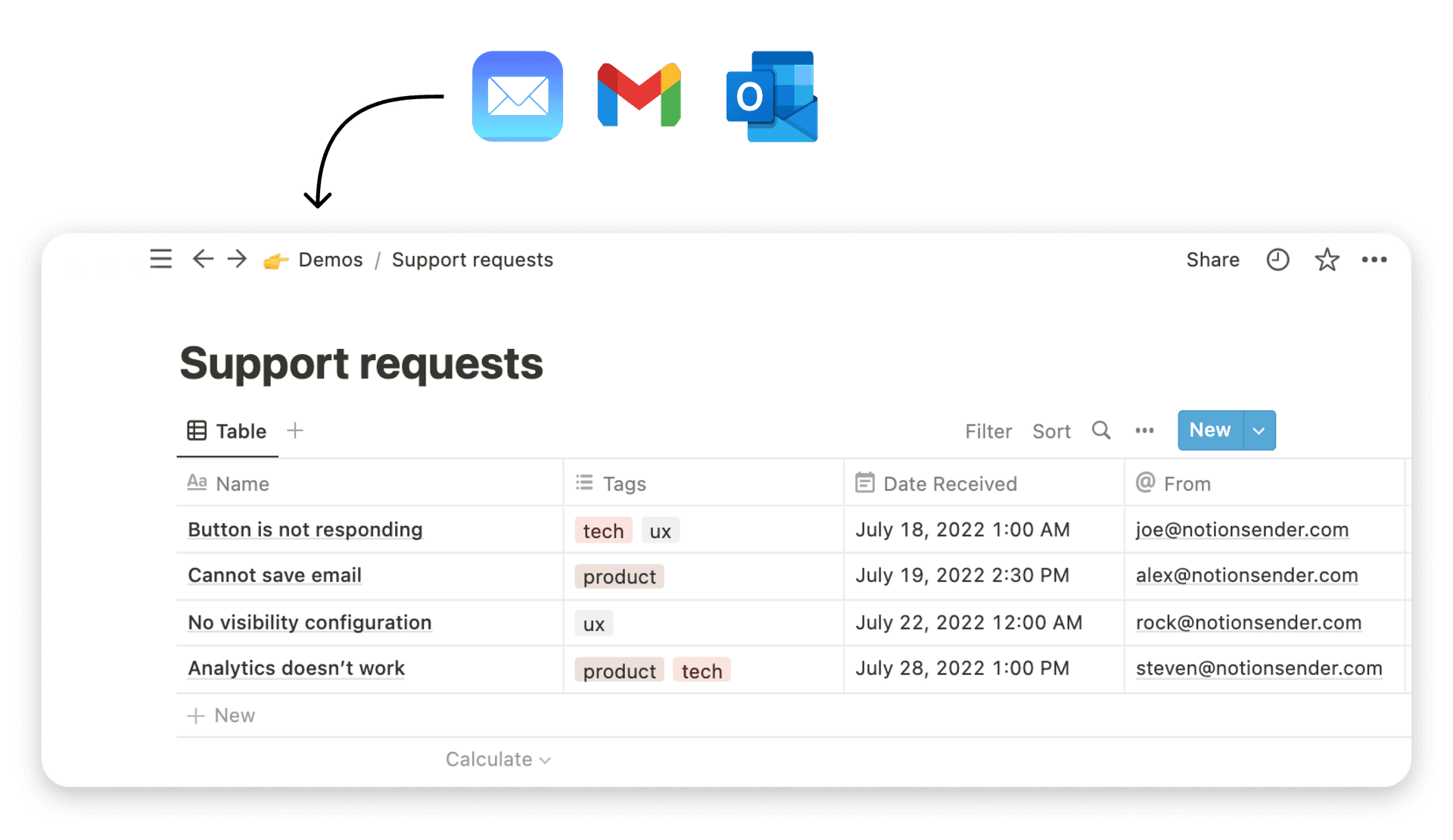
Think of Notion as your central command center. It's the perfect spot to build out a content calendar, track article ideas, and hammer out your first drafts. The catch? Notion, by itself, is a closed-off environment. That’s where NotionSender steps in as your secret weapon, building a bridge from your organized workspace to the outside world.

The image above gets it just right: a clean, organized workflow hub where all your content operations live. When you build this kind of system, you stop jumping between a dozen different apps and start managing everything from one place. That saves you a ton of time and mental energy.
Build a Professional Content Machine
Imagine this workflow for a moment. You have a database in Notion where you keep track of potential guest writers. With NotionSender, you can write and send personalized pitch emails directly from that database. When they reply, their emails are automatically saved right back to their writer profile in Notion. No more digging through your inbox trying to piece together a conversation.
This level of organization is what you need to scale your publication. You can use it for all sorts of tasks:
- Guest Writer Outreach: Manage your pitches and follow-ups without ever leaving Notion. All the communication history stays tied to each collaborator.
- Promotional Campaigns: Organize your outreach to other newsletters or media outlets, keeping track of who you've contacted and what they said.
- Research Management: Find a valuable article or an insightful email thread? Forward it straight into your Notion research database for later.
By connecting your internal planning hub (Notion) to your external communication tool (email), you create a single source of truth for your entire content operation. This systematic approach is what separates a hobbyist newsletter from a professional content business.
For a deeper look at this setup, our guide on how to create and send email from Notion gives you a complete step-by-step walkthrough. This isn't just about understanding what a Substack is; it's about building the infrastructure to run one like a pro.
Scaling Your Publication Systematically
As your newsletter grows, the complexity of managing it grows, too. A messy process leads to missed opportunities and, eventually, creative burnout. To keep things running smoothly and ensure you're publishing consistently, mastering content workflow management is an essential skill for any growing Substack author.
Here’s a practical example of the NotionSender workflow in action:
- Idea Capture: You read an email with a brilliant insight you want to save. You just forward it to your unique NotionSender address, and it instantly lands in your "Research" database in Notion.
- Drafting and Collaboration: You finish a draft in Notion and need your editor's feedback. You send the draft to them directly from the Notion page. Their feedback, sent via email, gets saved automatically right back to that same page.
- Publishing and Promotion: Once your post is live on Substack, you pull up your Notion database of promotional contacts. You send out announcement emails to everyone on the list and track the responses as they come in.
This connected system gets you out of the administrative weeds. It frees you up to focus on what actually matters: creating high-quality content that keeps your audience excited for the next issue. It’s the professional framework you need to scale your Substack from a simple newsletter into a thriving media business.
Is a Substack Newsletter Right for You?
<iframe width="100%" style="aspect-ratio: 16 / 9;" src="https://www.youtube.com/embed/-M_sPgaUMcA" frameborder="0" allow="autoplay; encrypted-media" allowfullscreen></iframe>
So, with all the options out there, how do you figure out if Substack is actually the right home for your newsletter? The truth is, it comes down to what you’re trying to achieve. The platform was built from the ground up for a specific kind of creator—one who cares more about simplicity and a direct line to their audience than anything else.
You'll feel right at home on Substack if you see yourself in one of these roles:
- Subject-Matter Experts: You’ve got deep knowledge in a field like finance, tech, or even art history, and you want a no-fuss way to share your insights directly with people who care.
- Journalists and Commentators: You're looking for total editorial freedom. You want to build your own publication from scratch, report on stories your way, and say what you mean without an editor changing your words.
- Niche Hobbyists and Community Builders: Your passion is specific—maybe it's vintage synthesizers or rare plant collecting—and you want to bring together a community of people who are just as obsessed as you are.
When to Consider Other Tools
On the flip side, Substack's greatest strength—its simplicity—can also be its biggest weakness. If your project depends on intricate marketing funnels, A/B testing, or deep brand customization, you’ll probably find yourself hitting a wall pretty quickly.
For example, e-commerce brands that need advanced sales analytics or corporate blogs requiring a highly customized design are often much better off with more flexible, all-in-one marketing platforms.
Substack shines for creators focused on content and community. If your primary need is advanced e-commerce or marketing automation, you'll likely find its streamlined nature restrictive.
Ultimately, Substack is an incredibly powerful tool for independent writers to build something that truly matters—and makes money. It gives you the keys to own your content and your audience relationship, providing a clear path to turn what you love into a sustainable business.
Frequently Asked Questions
Jumping into a new platform always brings up a few questions. Let's clear up the most common ones people have about Substack so you can move forward with confidence.
How Much Does It Really Cost to Start?
Here’s the simple answer: getting started on Substack is 100% free. You can launch your publication, write and send posts, and grow your email list without ever pulling out your wallet.
The costs only come into play if you decide to turn on paid subscriptions. When you start earning money, Substack takes a 10% cut of that revenue. On top of that, the payment processor, Stripe, charges a standard transaction fee, which is usually around 2.9% + 30¢. This model is great because you only pay a fee when you're actually getting paid yourself.
Can I Bring an Existing Email List to Substack?
Yes, and it’s surprisingly straightforward. Substack knows you don't want to start over from zero, so they make it easy to import your existing audience.
All you need is a standard CSV file of your subscribers. Just upload it, and your community is right there with you, ready for your first post on the new platform.
The ability to both import—and just as importantly, export—your email list is a huge part of Substack's appeal. It means you truly own your audience and have the freedom to move platforms if you ever decide to.
What Kind of Content Works Best on Substack?
Generic, seen-it-before content tends to fade into the background. What really thrives on Substack is writing that offers a unique perspective or deep value that people can't find just anywhere.
Think about what makes your voice special. Some of the most successful formats we see are:
- Niche Analysis: Deep dives into a specific industry, a new trend, or a fascinating topic.
- Expert Commentary: Your unique take and insights on what's happening in your field.
- Personal Essays: Story-driven posts that build a real, human connection with readers.
- Community-Driven Reporting: Journalism or reporting that focuses on a particular community or shared interest.
Ready to organize your content strategy and manage your newsletter like a pro? NotionSender turns your Notion workspace into a powerful email hub, perfect for managing your Substack posts, research, and subscriber communication. Get started with NotionSender today.