Your Handwritten To Do List: A Notion Import Guide

Your notebook is probably doing two jobs at once.
It helps you think, because a handwritten to do list slows you down just enough to clarify what matters. But it also traps useful work inside paper. Client follow-ups sit in the margin. Meeting action items live on a sticky note. A task you wrote in the morning disappears under your keyboard by lunch.
That tension is common for freelancers, small business owners, and project managers. Paper feels better for planning. Digital systems are better for search, sorting, sharing, and follow-up. One often ends up choosing one and losing the strengths of the other.
You don't have to.
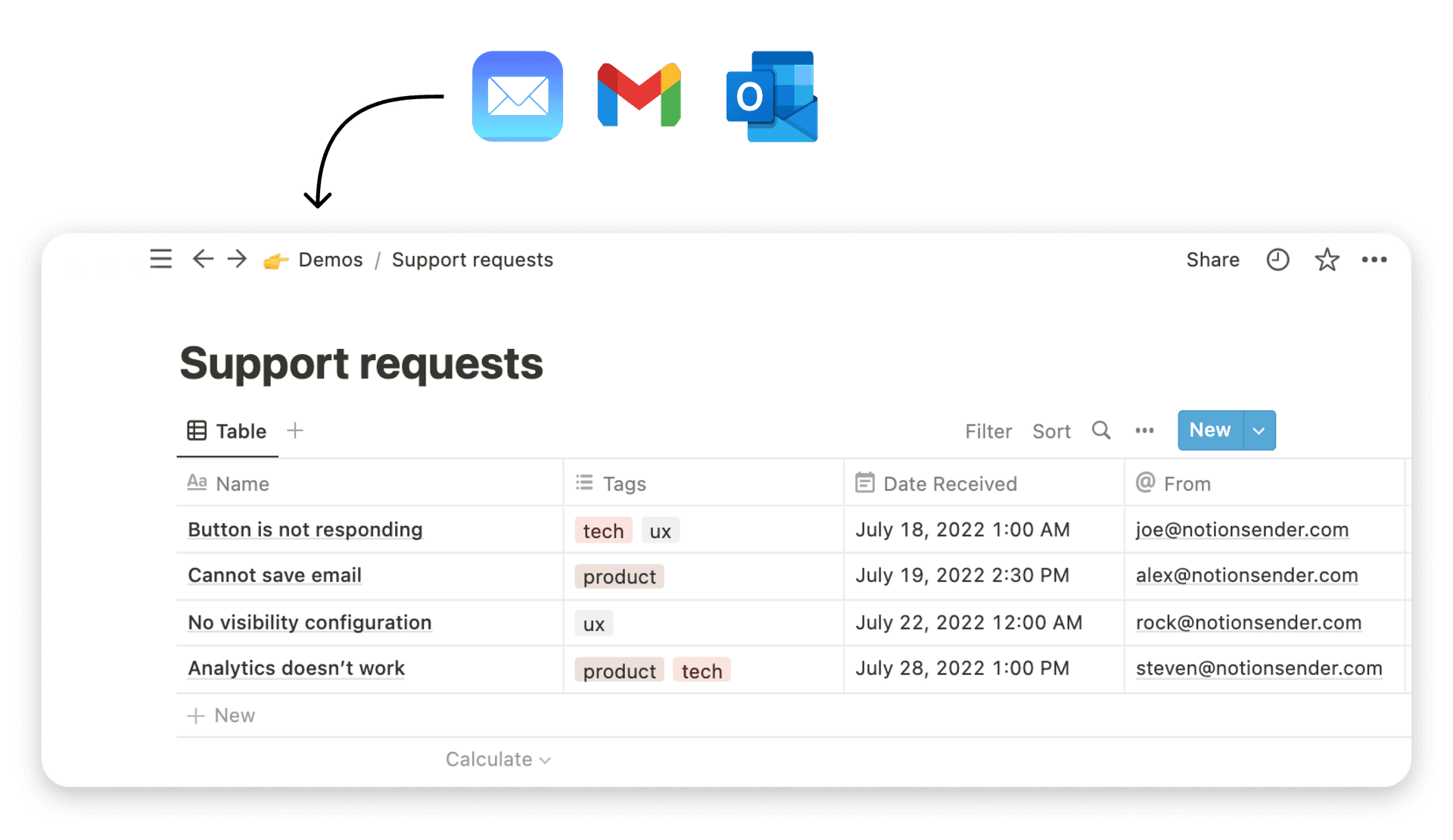
A better setup keeps the notebook for capture and memory, then moves the useful output into Notion in a format you can readily work with. The key is building a clean path from handwritten page to OCR text to structured task data to email-based import. Once that path is in place, your analog habit stops fighting your digital system.
Why Your Best Ideas Start on Paper
A lot of productive people still keep a legal pad, a pocket notebook, or a stack of index cards within reach. Not because they're nostalgic. Because paper is fast in a different way.
When your day gets noisy, a handwritten to do list cuts through the clutter. You open a notebook, write three or five tasks, circle the one that matters most, and move. No tabs. No alerts. No fiddling with fields before you've even figured out the work.
That feeling isn't just preference. Japanese neuroscientists at the University of Tokyo found that people who wrote information by hand showed more brain activity in memory-related regions and recalled the information 25% faster than people using digital devices, according to the Stack Overflow article on why writing by hand is still the best way to retain information.
A freelancer sees this when sketching a client deliverable list before opening the laptop. A consultant feels it during a planning session when handwritten next steps stick without checking the page again. A founder notices it after writing priorities in a notebook and remembering them during meetings without opening an app.
Paper helps you think
Handwriting forces decisions.
You don't transcribe as mindlessly as you can on a keyboard. You shorten phrases. You group tasks. You rewrite vague work into actions you can take. That friction is useful when the core issue isn't storage. It's clarity.
Paper is often the best place to decide what the work is before you decide where the work should live.
Paper also creates operational mess
The same notebook that helps you think can make execution harder.
A handwritten to do list is hard to search. It's awkward to share with a collaborator. It won't update a project tracker. It won't automatically show all tasks related to one client, one campaign, or one deadline.
That's why a hybrid workflow works so well. Keep paper where it has the advantage. Use digital tools where they have the advantage. Don't ask one format to do both jobs poorly.
Mastering the Digital Capture
The whole workflow falls apart if your capture step is sloppy.
OCR doesn't read intention. It reads shapes. If your photo is dim, crooked, shadowed, or cluttered, you'll spend more time fixing text than you saved by digitizing the page in the first place.

Good capture beats perfect handwriting
You don't need beautiful penmanship. You need consistency.
A common problem with paper systems is perfectionism. People rewrite lists to make them cleaner, then waste time grooming the system instead of using it. Another problem is rigidity. A fixed paper list doesn't adapt well when priorities change. The Parade piece on handwritten lists notes both issues and points out that digitizing after creation helps offset paper's limitations: traits of people who write to-do lists by hand according to psychologist.
Capture what you wrote. Don't rewrite it just to make it machine-friendly unless the page is genuinely unreadable.
Use this photo checklist
If you're using a phone camera, stick to a repeatable setup:
- Flat surface: Put the page on a plain table or white sheet of paper.
- Straight angle: Hold the camera directly above the page, not from the side.
- Even light: Use daylight or a lamp that doesn't cast a hard shadow across the text.
- High contrast: Dark ink on light paper works best.
- Tight crop: Fill the frame with the page, but don't cut off edges.
- One page at a time: OCR gets worse when several notes compete in one image.
Scanner vs phone camera
A flatbed scanner gives cleaner results if you already have one on your desk. Most freelancers don't. For day-to-day use, a phone is usually the right tool because it's immediate.
| Method | Best for | Main advantage | Main drawback |
|---|---|---|---|
| Flatbed scanner | Batch capture at a desk | Even lighting and sharp edges | Slower, less convenient |
| Phone camera | Daily capture on the go | Fast and always available | Easy to introduce shadows and skew |
If you write on iPad instead of paper
Some people want the feel of handwriting without carrying notebooks. That's a different workflow, but the same capture principles apply. If you're using Apple Pencil and trying to improve legibility, layout, or note structure, this guide on how to take notes on iPad is worth a read.
If your end goal is getting that captured text into a Notion workflow through email, this walkthrough on sending email to Notion helps clarify the destination before you start optimizing the input.
Practical rule: Don't optimize the page for aesthetics. Optimize the capture for legibility.
Choosing Your OCR Tool
Once you've got a clean image, the next question is simple. How do you turn handwriting into usable text without creating a new headache?
OCR sounds technical, but for this workflow it just means this: software looks at your image, detects letters and words, and gives you text you can copy, edit, and send elsewhere.
For handwritten notes, that's harder than printed text. Messy spacing, shorthand, checkboxes, arrows, and half-finished bullets all confuse the tool. Still, modern OCR is good enough to make hybrid workflows practical. The Expert Editor article notes that guides often ignore this part even though OCR tools can detect and extract handwritten words well enough to support analog-digital systems for non-technical users: 7 distinct qualities of people who prefer handwritten to-do lists over digital ones.
Three practical OCR paths
You don't need enterprise software. It's generally best to choose from one of these categories.
Built-in phone OCR
This includes tools like iOS Live Text or Google Lens.
They're convenient because there's nothing new to install in many cases. You snap a photo, select text, and copy it. For clean handwriting and short lists, this is often enough.
Best when:
- Your list is short
- Your handwriting is fairly consistent
- You want the fastest possible path from page to text
Weak point:
- They can struggle with symbols, odd spacing, or tightly packed notes.
Notes apps with handwriting recognition
Some note-taking apps can import a photo or handwritten page and do a better job preserving structure. These can be useful if you already work inside an app ecosystem.
Best when:
- You already store planning material in a note app
- You want easier review before exporting
- You often mix text with boxes, headings, and annotations
Weak point:
- Export can be clunky. You may still need to clean the output before it goes anywhere useful.
Dedicated OCR apps and desktop tools
These are worth testing if your handwriting is messy, your pages are dense, or you process many lists every week. They usually give you more control and often make it easier to recheck results side by side with the image.
Best when:
- You digitize handwritten notes often
- You need fewer recognition errors
- You want a stable routine, not a quick workaround
Weak point:
- More setup. Sometimes more cost. Sometimes more steps than a lightweight workflow needs.
How to choose without overthinking it
Use convenience as the default. Upgrade only when failure is recurring.
| Option | Speed | Setup | Best fit |
|---|---|---|---|
| Built-in OCR | Fast | Minimal | Simple daily lists |
| Notes app OCR | Medium | Moderate | Mixed handwritten planning |
| Dedicated OCR app | Slower upfront | Higher | Frequent or messy capture |
If you need to correct just a few words after OCR, the tool is working. If you need to reconstruct the whole page, switch tools or improve the photo first.
What matters more than the app
Most OCR problems aren't really OCR problems. They're input problems.
If the page is angled, low contrast, crowded, or full of tiny marginal notes, even a strong tool will struggle. Good capture and readable task phrasing matter more than brand choice. Keep your handwritten to do list simple enough for a machine to read later. Short lines help. Clear bullets help. Leaving a little space between tasks helps even more.
Structuring Text for Notion Import
OCR gives you text. It doesn't give you structure.
That's the gap many users miss. They copy a block of converted handwriting into Notion and end up with a digital junk drawer. Searchable, yes. Useful, not really.
The fix is to use a lightweight syntax that your future self can parse quickly and that an email-based workflow can map into database properties.

A simple line format that works
Use one task per line. Keep the task name first. Then add predictable markers.
A practical format looks like this:
- Draft homepage copy *High (2026-10-25) #Website
- Send invoice to client *Medium (2026-10-28) #Admin
- Review launch email *High #Campaign
You don't need those exact labels, but you do need consistency.
The properties worth extracting
For most freelance and small team workflows, four fields are enough:
| Property | Example | Why it matters |
|---|---|---|
| Task name | Draft homepage copy | The core action |
| Priority | *High | Helps sort the day |
| Due date | (2026-10-25) | Supports calendar views |
| Project tag | #Website | Groups related work |
Clean the OCR output in this order
First, delete junk
OCR often adds broken characters, duplicate line breaks, or random punctuation. Remove anything that isn't helping a task become actionable.
Then fix the task verbs
A raw handwritten note might say "homepage" or "invoice". Convert that into an action:
- homepage becomes Draft homepage copy
- invoice becomes Send invoice to client
That one edit makes the record useful in Notion later.
Standardize your markers
Pick one date format and stick to it. Pick one priority style and stick to it. Pick one project marker and stick to it.
If you change conventions every day, the import step becomes fragile.
A machine doesn't need elegance. It needs patterns.
You can make the paper itself easier to parse
The cleanest systems start before OCR.
When writing your handwritten to do list, leave a little gap between items. Keep side notes on a separate section of the page. If a note isn't a task, mark it clearly as a note. That one habit reduces cleanup later.
These visual decisions also make email-to-database workflows easier to maintain. If you're interested in that handoff specifically, this guide on saving emails to Notion is useful context because it shows how inbound text becomes structured records.
A before and after example
Raw OCR text
- draft home page copy wed
- invoice sam
- rev launch email high
- blog ideas maybe later
Cleaned text
- Draft homepage copy (2026-10-25) *High #Website
- Send invoice to Sam #Admin
- Review launch email *High #Campaign
- Blog ideas #Backlog
That final line format doesn't need to be fancy. It just needs to be repeatable.
Automating Ingestion with NotionSender
Most handwritten workflows fail at the same point. The notes are captured, the text is extracted, and then everything stalls in a half-digital state.
You have a photo in your camera roll. Maybe a block of OCR text in a notes app. Maybe an intention to move it into Notion later. Later usually means never, or at least not before a task gets missed.
The useful shift is turning "I should enter this" into "I can forward this now."

Some productivity benchmarks cited by Writing Clear Science report that project managers using paper saw 15-20% higher task completion rates, while the same piece notes that people asking about handwritten versus digital ROI still struggle to find a system that preserves the benefits of paper while scaling digitally: handwriting to-do lists. The hybrid answer is straightforward. Think on paper. Operate from a database.
What the workflow looks like in practice
The clean version has five parts:
- Write the list by hand
- Capture the page with your phone
- Run OCR and clean the text
- Email the structured text into your system
- Let Notion store it in a task database
The email step matters because email is already universal, fast, and easy from any device. It also gives you a durable bridge between tools that weren't built to talk to each other directly.
Build the Notion side first
Set up a dedicated tasks database in Notion before you automate anything.
Keep the fields simple:
- Task
- Priority
- Due date
- Project
- Source
- Status
Add a default view for triage. I like a table view first, then a board grouped by status once the import pattern is stable.
Don't start with a giant operating system. Start with a landing zone that can accept messy but structured input.
Use email as the ingestion layer
Once the database exists, the next move is assigning it a clear intake path. In an email-to-Notion workflow, each database gets a unique destination address. That means your handwritten list doesn't need manual copy-paste into rows. You can send the cleaned OCR result as an email and let the system create records from it.
A practical setup looks like this:
Subject line
Use the subject for the batch label or list title.
Examples:
- Monday client tasks
- Studio ops handwritten list
- Campaign planning notes
Email body
Put the cleaned task lines in the body, one per line.
Example:
- Draft homepage copy (2026-10-25) *High #Website
- Send invoice to Sam #Admin
- Review launch email *High #Campaign
That gives you a consistent handoff from analog capture to digital storage.
The best automation doesn't replace thinking. It removes retyping.
Parsing rules that make the system hold up
If you're going to use email for import, simple parsing rules matter more than advanced features.
Use these constraints:
- One task per line: Easier to separate records
- One date format: Prevents weird imports
- One priority marker: Avoids ambiguity
- One project tag style: Keeps filtering clean
When people say their workflow "sort of works," this is usually where it breaks. They vary the syntax every day, then blame the tool.
Add a review checkpoint before the email leaves
Automation isn't a license to send sloppy input.
Before you hit send, do a ten-second review:
- Is every line a real action?
- Are dates formatted consistently?
- Are project tags useful?
- Did OCR mistake a name or deadline?
That checkpoint prevents bad data from spreading into your workspace.
If you want to go deeper technically
Some teams eventually want custom logic, richer parsing, or app-to-app workflows built around incoming email. If you're working at that level, the NotionSender API documentation is the right reference point for understanding what's possible beyond a basic manual email-forward flow.
A short demo also helps if you want to see the workflow visually before building your own:
<iframe width="100%" style="aspect-ratio: 16 / 9;" src="https://www.youtube.com/embed/kfKv3yuOh9s" frameborder="0" allow="autoplay; encrypted-media" allowfullscreen></iframe>
What works and what doesn't
What works
- Short handwritten lists: Easier OCR, faster cleanup
- Consistent syntax: Better imports, cleaner database records
- Single intake habit: One email destination, one routine
- Daily review: Catch errors before they become missed work
What doesn't
- Dense notebook pages: Marginal notes and arrows confuse OCR
- Vague tasks: "Website" isn't a task
- Overbuilt databases: Too many properties slow adoption
- Manual re-entry as a default: That's where the system dies
For freelancers especially, the win isn't elegance. It's continuity. You keep the notebook you already trust, but your tasks end up somewhere searchable, sortable, and reusable.
Real-World Workflows and Examples
A hybrid handwritten to do list system only matters if it survives real work.
The average British adult writes three to-do lists a week, or 156 a year, according to polling referenced by Upworthy: handwriting vs typing grocery list. If you write that often, repeated manual re-entry becomes its own admin job. A capture-and-import routine keeps those lists from disappearing into notebooks or becoming another thing to process later.

Freelancer workflow
A freelance designer writes client tasks in a notebook after each call.
The page includes rough bullets, a few deadlines, and one or two "waiting on client" notes. After capture and OCR cleanup, each line gets a project tag like #ClientA or #ClientB. The imported tasks land in Notion, where the designer filters by client and checks a board view before the workday starts.
What makes this work is separation. The notebook is for thinking during the call. The database is for execution afterward.
Small business owner workflow
A shop owner leaves team meetings with a legal pad full of action items.
Some belong to operations. Some belong to marketing. Some are follow-ups for suppliers. Instead of rewriting the whole page into a shared task tool, the owner captures the page, cleans the text, and imports the actions into a central Notion database with project tags like #Ops, #Inventory, and #Marketing.
The owner keeps the original page for context, but the team works from the digital records. That removes the classic problem where one person's notebook becomes the company's hidden project manager.
Marketing workflow
A marketing lead runs campaign planning on paper because brainstorming is faster there.
The initial handwritten to do list includes content ideas, launch tasks, asset reviews, and approval reminders. During cleanup, only actionable items get imported. Loose ideas go into backlog tags rather than cluttering the active board.
For teams that need help deciding what deserves top billing once tasks are inside the system, this guide on prioritization techniques for your to-do list is a useful companion to the workflow.
You don't need every handwritten note in Notion. You need the notes that should turn into action, ownership, or follow-up.
The pattern across all three
The details differ, but the working pattern stays the same:
- Capture by hand when speed and clarity matter most
- Digitize quickly before the page gets buried
- Clean lightly so the text is structured
- Import into a database where work can be filtered and reviewed
What fails is trying to make the notebook do everything. What holds up is assigning each format a job.
Paper is where many people think best. Digital is where teams retrieve, organize, and act best. The bridge between them doesn't need to be complicated. It just needs to be consistent.
If you want a cleaner way to turn handwritten task text into structured Notion entries through email, NotionSender is built for exactly that handoff. It gives each Notion database its own email address, supports smart data extraction, and helps you turn a favorite analog habit into a repeatable digital workflow without living in copy-paste mode.