Notion Book Tracker: Build Your Ultimate Reading Hub

Your reading life probably already exists in five places.
A book recommendation is buried in email. Your current read lives in a half-finished Notes app list. Kindle highlights sit in one app, audiobook progress in another, and the books you meant to buy are split between tabs, wishlists, and messages you forgot to star. That’s why another static spreadsheet isn't sufficient. Readers need a system that catches books when they enter their life and keeps them organized after that.
A good notion book tracker can do that better than almost anything else I’ve used. Not because it’s pretty, though it can be. It works because Notion lets you combine database structure, filtered views, page templates, and lightweight automation in one place. The result feels less like a reading log and more like a personal reading hub.
That difference matters. A plain list tells you what you’ve read. A smart tracker helps you decide what to read next, see what’s in progress, save quotes in context, and keep recommendations from slipping through the cracks. If you also run a business, work with clients, or do professional development reading, it becomes even more useful. Books stop being isolated items and start becoming part of your workflow.
I also think most book tracker tutorials stop too early. They show a shelf view, maybe a progress property, then call it done. The better setup connects your library, notes, authors, quotes, and even incoming reading-related emails. If you want a broader Notion workflow upgrade beyond books, these practical tips for getting more out of Notion pair well with the system below.
From Scattered Notes to a Smart Reading Hub
You save a book from a newsletter on Monday, buy another after seeing a podcast recommendation on Wednesday, and get a receipt for an ebook on Friday. Two weeks later, you remember wanting to read all three, but they’re buried in different places. That’s the failure point for a basic tracker.
A useful notion book tracker needs to do more than log what you finished. It should catch books at the moment they enter your life, keep reading notes attached to the right title, and make retrieval fast later. That’s the difference between a shelf and a system.
I’ve found that the tracker gets better the moment you stop treating every piece of reading data like it belongs in one table. Books, authors, quotes, recommendations, and purchases behave differently. Storing them the same way creates clutter fast.
What a reading hub actually needs
A reading hub has to support three jobs without turning maintenance into a chore:
- Library management for status, genre, format, source, and rating
- Reading workflow for deciding what to pick up next and finishing what is already in progress
- Knowledge capture for notes, highlights, and quotes you can find again
The structure behind that is usually relational. One database holds books. Related databases can handle authors, series, and quotes if you want cleaner data and better filtering later. That setup sounds nerdy, but the trade-off is simple. You spend a little more time designing the system once, and save a lot of cleanup every month after.
Practical rule: If you keep retyping the same author, series, or recommendation source, the database structure is the problem.
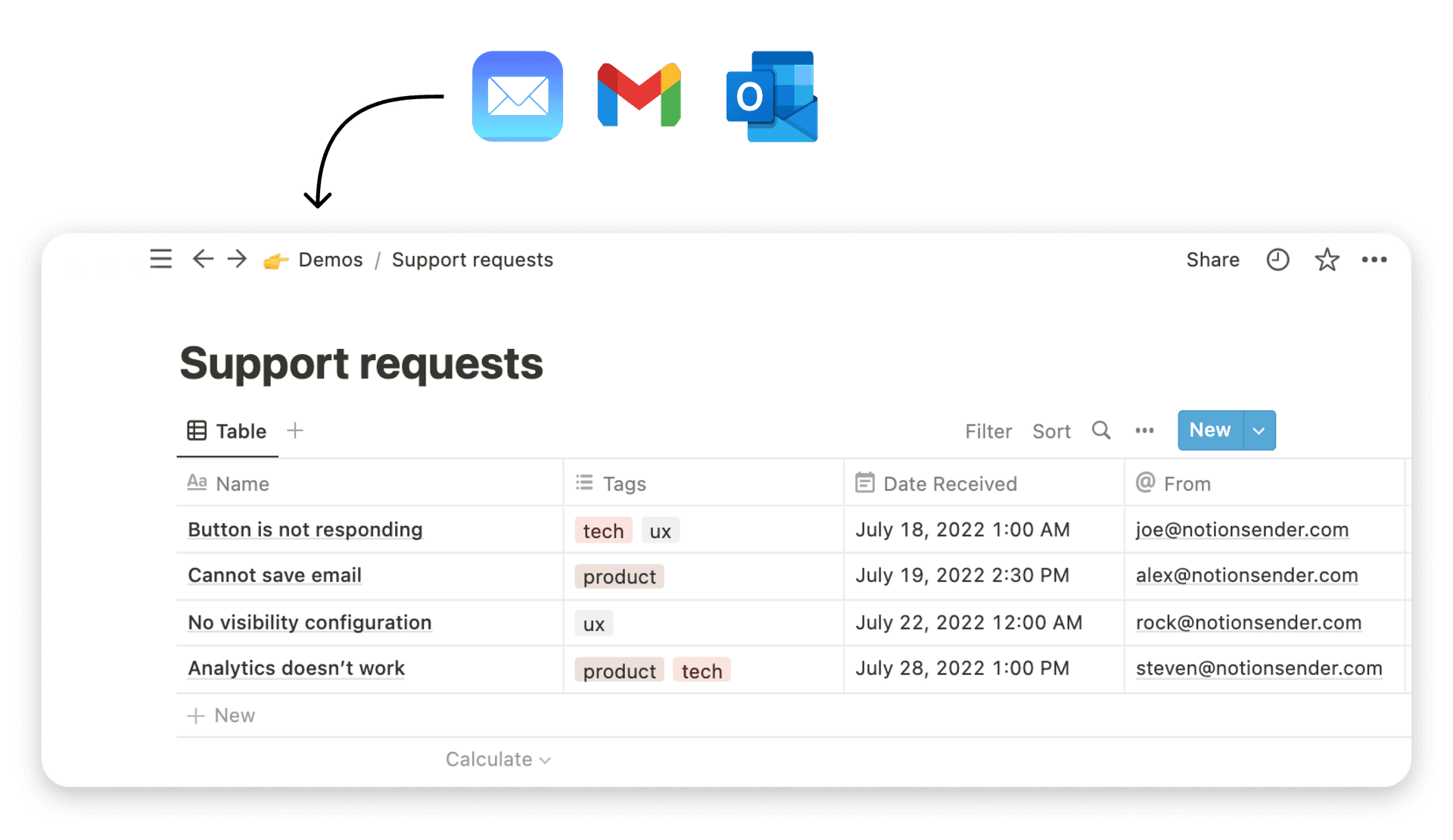
The other missing piece in many book tracker tutorials is intake. A tracker only works if new books make it in consistently. That’s why I like pairing Notion with inbox capture. Recommendation emails, order confirmations, and reading lists already hit your inbox first. With the right setup, tools like NotionSender can route those emails into Notion so your tracker keeps itself current instead of relying on memory. If you want a broader foundation for that kind of workflow, these practical tips for getting more out of Notion are a useful companion.
Retrieval is where the system starts paying for itself.
Once your reading data is connected, useful questions become easy to answer. Which business books are still unread? Which audiobooks are dragging past the halfway mark? Which recommendations came from colleagues versus newsletters? Which authors show up again and again in your highest-rated reads?
That’s when your notion book tracker stops being a nice-looking template and starts working like a real reading hub.
Designing Your Book Tracker Database Foundation
A good reading system starts with a database you can trust. If the structure is messy, every later step gets harder. Filters break, views feel inconsistent, and automation from your inbox has nowhere clean to land.
Use one full-page Books database as the center of the system. Full-page databases are easier to maintain, easier to turn into linked views, and easier to connect to templates and automations later. That last part matters more than it seems. If you plan to send recommendation emails, order confirmations, or saved reading lists into Notion with NotionSender, those incoming records need a stable home and predictable properties.

The core properties worth adding first
This is the setup I recommend first. It covers daily use without turning the database into a maintenance project.
| Property | Type | Purpose |
|---|---|---|
| Title | Title | The book name |
| Author | Relation or Text | Connect to an Authors database if you want cleaner long-term data |
| Genre | Multi-select | Useful for filtering and grouping |
| Status | Select | Use values like To Be Read, Currently Reading, Completed, DNF |
| Format | Select | Book, Ebook, Audiobook |
| Rating | Number or Select | Keeps reviews sortable |
| Start Date | Date | When you began reading |
| Finish Date | Date | When you completed it |
| Total Pages | Number | Needed for page-based tracking |
| Pages Read | Number | Useful for progress formulas |
| Series | Relation or Text | Helps with reading order |
| Source | Select | Recommendation, purchase, library, newsletter, gift |
| Notes | Text or page body | Short summary field if you want one |
| Cover | Files and media | Makes gallery views much better |
A few of these properties do more work than they appear to. Source becomes especially useful once email capture is part of the system. It lets you separate books that came from a friend, a newsletter, a purchase receipt, or a library email without manually sorting them later. Format matters too, because audiobook progress and print progress usually need different habits and different formulas.
If you know you want to keep quotes, author pages, or series order, plan for that now. You do not need to build every related database on day one, but you should avoid boxing yourself into a flat table that will be painful to clean up later.
Relations beat repeated text fields
The biggest design mistake I see is storing the same information in multiple places as plain text. An author name gets typed five different ways. A series title changes halfway through. Recommendation sources become impossible to filter because one entry says “newsletter” and another says “email list.”
Related databases fix that.
- Books database holds reading status, format, dates, progress, and rating
- Authors database stores each author once and links all related books
- Series database keeps reading order clean for sequenced books
- Quotes database stores highlights as separate entries tied back to a book
This takes a little more setup. It saves a lot of cleanup.
I usually tell people to use a simple rule: if the value will repeat across multiple books and you may want to filter, count, or expand it later, make it a relation instead of a text field.
Keep status values boring
Status is one of those properties that gets overdesigned fast. Resist that urge. The tracker works better when status names are obvious and stable.
Use a small set:
- To Be Read
- Currently Reading
- Completed
- DNF
That gives you clean filtering, clean formulas, and fewer edge cases. It also makes automation easier. If NotionSender creates a new entry from a recommendation email, the default status can safely be To Be Read. If an entry comes from a purchase receipt, that same default still makes sense. Fancy statuses like “Paused for Now” or “Someday Maybe” usually create clutter unless you know exactly how you will use them.
Build templates before you think you need them
Templates save time, but the bigger benefit is consistency. Every new book starts with the same structure, which means your notes are easier to review and your automations have fewer chances to break.
A solid New Book template should pre-fill:
- Default status, usually To Be Read
- A prompt for format
- Sections for Summary, Key Ideas, Favorite Quotes, and Action Items
- Placeholders for Genre, Author, and Rating
- Any default tags or source fields you use often
I also like to create separate templates for different intake paths. One template for manual adds. Another for books captured from email recommendations. Another for purchases. The properties stay mostly the same, but the prompts change. A recommendation entry might include “Who suggested this?” while a purchase entry might include “Why did I buy this now?” Small differences like that make the system feel much sharper in daily use.
What to avoid early
A few choices cause trouble quickly.
- Complicated formulas before the property structure is stable
- Too many genre tags
- Manual summary counts that should be calculated later
- Storing quotes, authors, and series only as text when you already know they repeat
- Inbox automation before the destination properties are defined clearly
That last one is easy to miss. Email capture is powerful, but only after the database is ready for it. If incoming emails create half-complete records with random labels, the automation is doing exactly what you asked and still making the tracker worse. Get the schema right first. Then let the inbox feed it.
A notion book tracker gets useful when entry is fast, structure is consistent, and every new book lands in the right place with minimal cleanup. That foundation is what makes the later views, formulas, and email workflows worth building.
Crafting Powerful Views for Every Reading Mood
Once the database exists, the next job is making it pleasant to use. Raw tables are fine for setup. They’re bad for daily reading decisions.
Views are where a notion book tracker becomes personal. You’re not changing the data. You’re changing how you see it. That difference is huge because the same library should support different moments. Picking your next book is not the same task as updating reading progress or reviewing finished titles.

The three views I’d build first
Start with a small set of views you will use.
To Be Read table
Use a plain table view for decision-making. Filter it to show only books where Status is To Be Read.
Then sort in a way that reflects how you choose books. I like Genre first, then Author, or sometimes Source if I want to prioritize recommendations from specific people. If you track business or professional development reading, sorting by Source can surface books that came from clients, newsletters, or peers.
This view should answer one question fast. What should I read next?
Currently Reading gallery
Gallery is the best format for active reading because covers and progress are easier to scan than rows.
Use these settings:
- Filter Status is Currently Reading
- Card preview Cover
- Visible properties Author, Format, Pages Read, Total Pages
- Sort Start Date descending or Pages Read descending
This becomes your “reading now” shelf. It’s also the right place for a visual progress formula later, because gallery cards make that feel useful instead of gimmicky.
Completed library
Your completed view is where pattern recognition starts. Table works if you care about sorting and analysis. Gallery works if you care about visual browsing.
Try these filters and sorts:
- Filter Status is Completed
- Sort Finish Date descending
- Secondary sort Rating descending
- Group by Genre or Format
If you want one practical use case, this is the view that lets you pull up completed books in a specific genre and scan your highest-rated ones when someone asks for a recommendation.
The best Notion view isn’t the prettiest one. It’s the one that matches a real decision you make repeatedly.
Add one operational view
Most readers stop at shelf views. I’d add one operational view that helps maintain the system.
A simple option is a Needs Update table filtered for books missing important fields. For example:
- Missing author
- Missing cover
- Status is Currently Reading but Pages Read is empty
- Completed but Finish Date is empty
This kind of maintenance view keeps the database trustworthy. Without it, small data gaps pile up and your formulas stop being useful.
Grouping that actually helps
Grouping can clean up a cluttered tracker, but only if you use it with restraint.
Good grouping choices:
- By Genre when you want to browse moods
- By Author when you read multiple titles from the same person
- By Format when you balance print, ebook, and audio
Bad grouping choices are usually the ones you almost never act on. If grouping doesn’t help you choose, review, or update something, skip it.
A dashboard should curate, not duplicate
Your home dashboard doesn’t need every field from the main database. It should surface linked views that support your current reading life.
A clean reading dashboard might include:
- Currently Reading gallery at the top
- Quick Add button or template access nearby
- To Be Read shortlist below it
- Completed this month or Recently finished at the bottom
That creates a front door into the tracker without hiding the database foundation underneath.
Supercharging Your Tracker with Formulas and Templates
Templates save time. Formulas make the tracker feel alive.
That’s the combination users seek when attempting to build an “ultimate” notion book tracker. They don’t mean more fields. They mean less manual upkeep and more self-updating information.

Build a page template that removes friction
Your default book template should open with structure already in place. When you click “New Book,” the page shouldn’t feel blank.
I’d include these blocks inside the page body:
- Summary
- Key takeaways
- Favorite quotes
- Who recommended this
- Related ideas or actions
Then pre-fill the properties that usually repeat. If most books enter the system as To Be Read, make that the default. If you mostly read ebooks and physical books, keep Format options tight. If you use an Authors database, include that relation prominently so you don’t forget to connect it.
If you want to extend the setup beyond the interface and wire in more custom workflows later, the NotionSender API documentation is useful for understanding how email-driven data can map into database properties.
Formula one progress bar
A visual progress bar is the one formula almost every good tracker benefits from. Keep it simple.
Assume you have:
- Pages Read as a number
- Total Pages as a number
Use a formula that calculates percentage and turns it into a simple bar. In Notion, the exact syntax can vary based on your formula style, so the key principle is this:
- Divide
Pages ReadbyTotal Pages - Multiply by the bar length you want
- Repeat a filled character for completed units
- Repeat an empty character for remaining units
Example logic:
- completed units = rounded reading ratio
- bar output = filled blocks + empty blocks
You can also add a percentage display next to it. What matters is readability, not cleverness.
Keep formula bars short. Long bars look impressive in tutorials and annoying in real databases.
One common mistake in advanced trackers is overcomplicating progress formulas without understanding Notion’s formula syntax limits, which leads to inaccurate page count calculations, as noted in the earlier advanced implementation reference.
Formula two reading duration
This formula is more useful than it gets credit for. If you track Start Date and Finish Date, calculate the time it took to finish a book.
The logic is simple:
- If either date is missing, return empty
- Otherwise, calculate the date difference
That gives you a clean “reading duration” field for completed books. For nonfiction, this can reveal which titles you worked through slowly because they were dense or reference-heavy. For fiction, it can show what you tore through in a weekend.
Here’s a clean way to think about the output:
- blank for unfinished books
- a day count for completed books
No need to make it fancier unless you use the extra detail.
Formula three lightweight status signals
A small icon field can improve scanning more than a complex dashboard widget.
For example, you can output a simple symbol based on Status or Rating:
- one icon for To Be Read
- another for Currently Reading
- another for Completed
- another for DNF
Or use ratings to create a visual signal in your completed library. This works well when you want quick pattern recognition in a table without opening every page.
Here’s a useful walkthrough to watch before you start polishing the interface too much:
<iframe width="100%" style="aspect-ratio: 16 / 9;" src="https://www.youtube.com/embed/g1maiGeki6I" frameborder="0" allow="autoplay; encrypted-media" allowfullscreen></iframe>
What formulas should not do
Formulas should clarify, not impress.
Avoid these traps:
- Nested logic for edge cases you don’t encounter
- Decorative outputs that hide the underlying data
- Trying to replace rollups with giant formulas
- Building formulas before property names are stable
If a formula breaks every time you rename a property, it’s not helping. If you can’t explain what it does in one sentence, simplify it.
A better standard for smart trackers
The best formula layer supports action. It should help you see progress, understand reading pace, and scan your library faster. That’s enough.
You don’t need a miniature analytics platform inside Notion. You need a system you’ll still trust after dozens or hundreds of entries.
Automating Your Library with Email Integration
A recommendation lands in your inbox during a busy afternoon. A purchase receipt shows up later that night. Three days later, both are buried under newsletters, client threads, and shipping updates. Your Notion book tracker is still clean. It is also missing the books you meant to save.
That failure point has very little to do with database design. It comes from capture. If a book only enters your system when you remember to log it manually, the tracker will always lag behind your reading life.
Email fixes that because discovery already happens there. Recommendations get forwarded in threads. Retailers send order confirmations with useful metadata. Newsletters introduce titles you may want to read next. Library systems send due dates and hold notifications. A strong Notion setup should collect those signals while they are still fresh, not after they disappear into search.

What email should feed into your tracker
The right rule is simple. Save messages that contain a book decision, a book lead, or book metadata you do not want to retype.
That usually includes:
- Purchase confirmations with title, author, price, format, or retailer details
- Book recommendations from coworkers, friends, clients, or collaborators
- Newsletter issues that mention books worth reviewing later
- Library notifications for holds, due dates, and renewals
- Publisher emails about new releases in topics you actively follow
Templates rarely cover this well. Even polished systems such as this advanced book tracker template context focus on organizing books after entry, not on capturing them from the inbox where discovery often starts.
That gap matters. Once email becomes an input layer, your tracker stops being a static catalog and starts acting like a reading system.
A practical workflow that stays maintainable
I have found that the cleanest setup uses one of two paths. Send emails into a dedicated intake database if your sources are messy. Send them straight into your Books database if your formatting is predictable and your parsing rules are already tested.
A workable flow looks like this:
- Create an intake database for book-related emails, or connect email directly to your Books database if you trust the source formats.
- Forward selected emails to your database email address.
- Parse the body and subject line into fields such as Title, Author, Source, Format, Price, and URL.
- Review exceptions in a cleanup view for missing fields, duplicates, or bad matches.
- Approve or merge entries before they affect your main reading views.
That review step is where good systems stay clean. Without it, one oddly formatted receipt can create duplicate titles, broken author fields, or half-filled entries that pollute every filtered view.
If your recommendations already come from feeds and curated newsletters, a build RSS to email workflow can route those sources into the same inbox pipeline before they ever touch Notion.
Inbox automation works best when you define what counts as a book signal. If every email becomes an entry, the tracker turns into storage instead of support.
What separates a useful automation from a noisy one
The strongest setups do three things well. They filter aggressively, parse only the fields that matter, and leave room for manual correction when an email format changes.
In practice, that means setting rules for repeated senders, mapping predictable patterns from retailer receipts, and using validation properties to catch incomplete records. ISBN, title, author, date purchased, and source are usually enough. Page count, publisher, and edition can wait unless they directly affect how you choose books.
The weak version usually breaks in familiar ways:
- No duplicate control, so one receipt and one forwarded recommendation create two records
- No validation checks, so missing titles or authors slip through unnoticed
- No fallback process, so a retailer email redesign breaks the parser
If you want the mechanics, this guide on sending email into Notion databases walks through the workflow clearly.
A significant advantage is not speed alone. NotionSender gives your book tracker an intake layer. Recommendations, receipts, and reading leads can flow into the same system you already use for statuses, notes, and review queues. That creates a hub that stays current with far less manual cleanup, which is what makes the whole tracker more likely to survive long term.
Your New Hub for Lifelong Learning
A good notion book tracker isn’t just a prettier reading list. It’s a working system for attention, memory, and follow-through.
Once the pieces are in place, the workflow feels different. Books enter through a structured database. Views surface what matters right now. Templates remove repetitive setup. Formulas handle the small calculations you shouldn’t be doing manually. Email capture pulls recommendations and receipts into the same environment where you already manage your reading.
That combination turns passive logging into active support. You stop asking, “Where did I save that book?” and start asking better questions. What should I read next? Which ideas are worth revisiting? Which authors, genres, or formats are shaping my thinking?
The best part is that this system doesn’t need to stay fixed. It should evolve with your reading habits. Add a Quotes database if highlights matter more now. Add an Authors database when you want better connections. Tighten your views when your library grows. The strongest Notion setups are rarely finished. They stay useful because their owner keeps refining them.
If you want your reading system to capture recommendations, purchase emails, and other book-related messages without manual copying, NotionSender is worth a look. It gives your Notion databases a dedicated email layer, which makes it much easier to turn scattered inbox activity into organized entries inside your tracker.