Unlocking Growth with Revenue Sharing Models

A revenue sharing model is a business agreement where partners split the income generated from a joint activity. Instead of a fixed fee, compensation is tied directly to performance, ensuring all parties are invested in achieving success together. This "pay-for-performance" approach aligns incentives and reduces upfront financial risk.
What Is a Revenue Sharing Model?
Imagine you and a partner decide to launch a new product. Instead of one person paying a hefty upfront fee for marketing services, you both agree to split the profits from the sales you generate together. That's the heart of a revenue sharing model.
It’s a simple but powerful idea: your financial reward is directly tied to the income you create as a team. This shifts the dynamic from a typical client-vendor transaction to a genuine partnership. Everyone has skin in the game, so if the project takes off, you all win. If it stumbles, the financial hit is shared, not carried by one person alone.
Why Shared Success Is Such a Game-Changer
The real magic of a revenue share agreement is how it naturally aligns everyone's goals. When a marketing agency or freelancer gets paid based on the sales they help bring in, their focus isn't just on ticking off tasks. It's on delivering real, measurable results that move the needle.
This approach is a perfect fit for:
- Startups and SMBs who need access to top-tier talent but don't have a massive budget for upfront retainers.
- Freelancers and consultants who are confident they can drive growth and want to earn a piece of the upside.
- Marketing partnerships where success hinges on a joint effort to find leads and close deals.
A revenue share model flips the script on compensation. It stops being about the hours you put in and starts being about the value you create. This transforms a simple contract into a true alliance built for mutual growth.
But does this model just feel good, or does it actually work? Let's look at the difference between this and a more traditional setup.
Revenue Sharing vs Fixed-Price Contracts at a Glance
When you're deciding how to structure a partnership, you're usually choosing between sharing the rewards (revenue share) or paying a flat rate (fixed-price). Here’s a quick comparison to help you see the core differences.
| Attribute | Revenue Sharing Model | Traditional Fixed-Price/Hourly Model |
|---|---|---|
| Incentive | Aligned for mutual growth and maximum revenue. | Focused on completing tasks within a set scope or time. |
| Risk | Shared between all parties. Lower upfront cost. | Primarily on the client, who pays regardless of the outcome. |
| Relationship | Collaborative partnership with "skin in the game." | Transactional client-vendor relationship. |
| Potential Payout | Unlimited; scales with the success of the project. | Capped at the agreed-upon fixed fee or hourly total. |
| Best For | Performance-based projects, startups, long-term partnerships. | Clearly defined projects with a predictable scope and outcome. |
Ultimately, a revenue share creates a powerful "we're in this together" mentality that you just don't get when one person is simply paying another for a service.
The Bigger Picture: Why Revenue Alignment Matters
This shift toward performance-based deals isn't just a niche trend. It’s a core part of a massive market movement toward better revenue alignment. The global Revenue Operations (RevOps) market—which includes the systems that make these models possible—was valued at USD 4.39 billion in 2024 and is expected to rocket to USD 16.98 billion by 2033.
Why the explosion? Companies are hungry for data-driven ways to improve their sales forecasting and keep customers happy. In fact, businesses that get RevOps right report up to 20-30% better revenue visibility. You can explore the full revenue operations market report to see just how big this is.
By embracing a revenue sharing model, you're not just trying something new—you're tapping into a modern, forward-thinking approach to building a more profitable business.
Exploring Common Revenue Sharing Structures
So, you're sold on the idea of sharing revenue. But how do you actually do it? Diving into a revenue share deal without a clear plan is like setting sail without a map—you might get somewhere, but probably not where you intended.
Choosing the right structure is everything. It defines the rules of the road for your partnership and lays out exactly how success will be measured and rewarded. Let's walk through the most common models you’ll come across so you can pick the one that makes the most sense for your situation.
The whole point of these partnerships is to balance the excitement of shared success with the reality of shared risk.

As the image shows, a solid partnership connects both sides of the coin: shared profit and shared risk. Getting this right is what makes it all work.
The Percentage Split Model
This is the classic, the go-to, the most straightforward model out there. With a Percentage Split, partners simply agree to divide the revenue based on a pre-agreed ratio, like 70/30 or an even 50/50.
It’s clean and incredibly simple to calculate. The incentive is crystal clear: the more money the partnership brings in, the more everyone gets. No complex math needed.
- Example: Imagine a freelance writer partners with an e-commerce store to create a new email campaign. They agree to a 20% share of all sales generated directly from that campaign for the first six months. If the campaign pulls in $10,000, the writer gets a check for $2,000.
- Best For: Affiliate marketing, simple content collaborations, and any joint venture where you can easily track where the money came from.
The Tiered Revenue Share Model
The Tiered Model is a step up in sophistication. It uses the percentage split as a base but adds performance milestones to the mix. The revenue share percentage actually changes—usually going up—as the partnership hits specific revenue targets.
This is a fantastic way to light a fire under your partners. It encourages them not just to meet goals, but to blow past them.
By introducing performance tiers, you create a powerful incentive for partners to scale their efforts. Reaching a new tier means a bigger piece of the pie, which directly rewards sustained growth and high achievement.
This model is especially potent in the SaaS world. For NotionSender users, this could mean partnering with an email template creator on a 20-40% revenue share for any subscription upsells their templates generate. When incentives are aligned, historical data from SaaS alliances shows 30-50% faster customer growth. Tiers make this even better, like increasing the share percentage after the first $1,000 in revenue is hit.
The Hybrid Model
What if you love the idea of sharing revenue but still have bills to pay? The Hybrid Model is your answer. It blends a fixed-fee component with a smaller, performance-based revenue share.
This gives the service provider some guaranteed income to cover their basic costs, while still keeping them motivated to drive results. It's a smart way to lower the risk for everyone involved.
- Example: A marketing agency is helping a startup launch a new product. They agree to a $2,000 monthly retainer (the fixed fee) plus a 10% share of all revenue. This ensures the agency can keep the lights on while they work toward a much bigger payday from sales.
- Best For: New business ventures, projects that require a lot of upfront work, or any partnership where one side needs a bit more financial security.
The Performance-Based Model
While all these models are based on performance, this one gets a bit more creative. A Performance-Based Model ties payments to specific metrics other than direct revenue. Payouts might be triggered by hitting goals for qualified leads, new user sign-ups, or customer retention.
This is really useful when it’s tough to track revenue directly back to a partner’s efforts. For instance, if a partner is focused on top-of-funnel activities, it makes more sense to pay them based on the quality of leads they generate rather than the final sale.
No matter which structure you land on, it's absolutely crucial to have a clear definition of "revenue" and follow proper revenue recognition standards. You need to agree on what money counts and when it officially gets logged in the books to ensure everyone gets paid fairly.
Let's be honest: choosing a revenue sharing model feels like a big deal, because it is. You're either unlocking a new path to growth or walking into a partnership full of potential headaches. A simple fixed-fee contract is predictable; a rev-share is a bet on the future.
So, let's have a frank discussion about the exciting upside and the very real pitfalls.
Imagine you’re a startup with a fantastic product but a tiny marketing budget. You can't even think about the $10,000+ per month retainer a top agency wants. By offering them a cut of future sales, you can suddenly bring that powerhouse team on board. This isn't just a hypothetical—it’s how smart businesses get access to world-class talent every single day.
The biggest win here is perfectly aligned goals. When everyone gets paid only after a sale is made, you’re all rowing in the same direction. The focus shifts from just ticking off tasks to getting real, measurable results.
The Upside of Sharing Success
A well-planned revenue share agreement can be a complete game-changer, especially for small businesses or freelancers testing the waters of a new partnership.
- Lower Upfront Costs: This is the most obvious perk. You can bring on partners, vendors, or collaborators without draining your cash reserves, freeing up capital for other parts of the business.
- Access to Top-Tier Talent: When you offer a piece of the pie, you attract partners who are confident enough in their own skills to bet on the outcome. They see the potential and are willing to invest their time to make it happen.
- True Partnership Motivation: Your partners aren't just punching a clock. Their pay is directly tied to the results they produce, making them genuinely invested stakeholders in your company's growth.
The core idea behind revenue sharing is simple: you pay for results, not just effort. This turns a basic transaction into a powerful partnership where everyone is focused on the same finish line.
When everyone shares the same commitment, you create an environment where creative solutions and quick problem-solving become the norm.
Understanding the Inherent Risks
However, you absolutely need to go into these agreements with your eyes wide open. The very same structure that promises so much can also introduce serious risks if you aren't careful. The main challenge often comes down to operational details.
For starters, income can be wildly unpredictable. If you're a freelancer or a small agency, relying entirely on a rev-share deal can feel like a feast-or-famine roller coaster. A project might take months to start generating cash, which can create serious cash flow problems that a fixed monthly retainer would have avoided.
Then there's the whole issue of tracking and attribution.
- Complex Tracking: How can you be 100% sure which partner’s work led to a specific sale? Without a bulletproof tracking system that everyone agrees on beforehand, you're setting yourself up for disputes.
- Defining "Revenue": Are you splitting the gross revenue from the top line, or net profit after all the expenses are paid? A simple disagreement over this one word has soured many promising partnerships.
- Potential for Disputes: If the results don't live up to the initial hype, fingers start pointing. This can quickly strain the relationship and lead to some very difficult conversations.
A Clear Look at the Pros and Cons
To make sense of it all, it helps to see the potential rewards and risks side-by-side. Think of it as a balanced scorecard for your decision.
| Aspect | Potential Advantages (The Reward) | Potential Disadvantages (The Risk) |
|---|---|---|
| Financial | Low to zero upfront cost, preserving your cash flow for other business needs. | Unpredictable income streams, making financial forecasting difficult for both parties. |
| Motivation | Perfectly aligned goals where both parties are motivated to achieve the same outcome. | Potential for conflict if performance expectations are not met or if one party feels they are contributing more. |
| Talent | Access to high-quality partners who might otherwise be too expensive. | Risk of partnering with someone who overpromises and under-delivers, wasting valuable time. |
| Operations | Fosters a true partnership mentality focused on collaborative problem-solving. | Requires complex tracking and reporting to ensure fair and accurate payment attribution. |
Ultimately, a successful revenue share comes down to trust, transparency, and a crystal-clear agreement that anticipates these issues before they arise.
How to Protect Your Partnership (and Your Revenue)
Preventing these problems requires being proactive from day one. A key concept to borrow from the corporate world is Revenue Assurance—a set of practices designed to stop "revenue leakage," or lost income from messy billing and tracking. The global market for these solutions hit USD 5.8 billion in 2023 and is projected to reach USD 12.9 billion by 2033.
For freelancers and small businesses, the core principle is the same, even if the tools are simpler. Think about how large companies use assurance frameworks to recover 5-10% of hidden revenue each year. For you, this might look like using a tool like NotionSender to automate your email-to-database workflows. This simple step prevents missed invoices, lost client messages, and other small errors that cause your own version of financial leakage. You can read more about the growing revenue assurance market here.
By setting up clear, automated tracking from the very beginning, you’re adopting the heart of revenue assurance: making sure every single dollar is accounted for.
Building a Fair and Effective Partnership Agreement
Any good partnership starts with trust, but a great one is backed by a crystal-clear agreement. When you're excited about a new venture, it's easy to skip the fine print. But this is the most critical time to get everything down on paper.
Think of your agreement as the blueprint for your collaboration. It’s not about mistrust; it’s about making sure everyone is on the exact same page, turning handshake deals into concrete, shared goals. While I'm not a lawyer, let's walk through the essential pieces every agreement for revenue sharing models needs to have.

What Exactly Counts as Revenue
This is where most revenue share deals fall apart. Being vague about what "revenue" means is a recipe for a future fight. Your contract must spell this out with zero ambiguity.
Are you splitting gross revenue (the total cash collected)? Or is it net revenue (what's left after subtracting costs)?
- Gross Revenue: It's simple and easy to track. But it can be unfair if one partner has to spend a lot on ads or tools to bring that money in.
- Net Revenue: This is often a fairer approach, but it means you have to agree on—and track—every single deductible expense.
If you go with net revenue, you need to list out every cost that gets deducted. Things like marketing spend, transaction fees, refunds, and software costs should all be explicitly named. This prevents arguments down the road.
How and When You Get Paid
Okay, so you’ve defined what money you’re splitting. Now, how does it actually get into everyone’s bank account? Don't leave this to chance.
Your agreement needs to answer three simple questions:
- Payment Frequency: Are payouts happening every month, every quarter, or when you hit a certain amount (like every $1,000 earned)? Monthly is a solid, common choice.
- Payment Method: How will the money move? Specify if it’s PayPal, a direct bank transfer, or another service.
- Payment Timeline: How long after a period ends does the payment get sent? A simple clause like, "Payment will be sent within 15 days of the end of each calendar month" is perfect.
Getting this right gives both partners peace of mind and makes managing cash flow predictable.
Tracking Performance and Reporting
Trust is great. Verifiable data is better. A healthy partnership is a transparent one, and your agreement has to lock in how you'll both track and share performance data.
A partnership without a shared dashboard is flying blind. Both parties need access to the same data, at the same time, to ensure complete transparency and build mutual trust.
Your contract should get specific here:
- The Tracking System: Name the tool you'll use. Is it Google Analytics, a CRM, or a dedicated affiliate platform?
- Reporting Access: Will both partners get a login to see the data in real-time? Or will one person send reports?
- Reporting Frequency: If you’re sending reports, define how often: daily, weekly, or monthly.
Formalizing your partnership is a key step. For SaaS businesses getting started, using a SaaS Affiliate Agreement Template can be a huge time-saver and a great foundation.
Other Critical Clauses to Include
Beyond the money, a solid agreement anticipates the "what-ifs" that can sink a partnership if you don't plan for them.
- Exclusivity: Is this an exclusive deal? Can the other partner work with your direct competitors? Define these lines clearly from the start.
- Termination Clause: How does the partnership end if it's not working out? Set a clear notice period (e.g., 30 days written notice) and spell out what happens to any final payments.
- Dispute Resolution: If you do end up disagreeing, what's the plan? Deciding on a process like mediation upfront can save you a world of headaches and legal fees later.
By tackling these points head-on, you're not just protecting your business—you're building a foundation for a partnership that’s profitable and built to last.
How to Manage Your Revenue Share Partnership with NotionSender
You've signed the agreement and shaken hands. Now the real partnership begins. Managing a deal built on revenue sharing models takes more than good intentions; it demands organization, transparent communication, and a clear record of everything.
This is where you can turn NotionSender into the command center for your partnership. Forget about digging through old emails, wrestling with messy spreadsheets, or trying to remember verbal agreements. You can bring your entire partnership workflow right into Notion, tackling the administrative chaos that can sink a great revenue share deal.
Centralize All Your Communication
In a partnership, crucial updates and decisions fly back and forth through email. But when those conversations are split between your inbox and your partner's, it’s a recipe for lost details and misunderstandings.
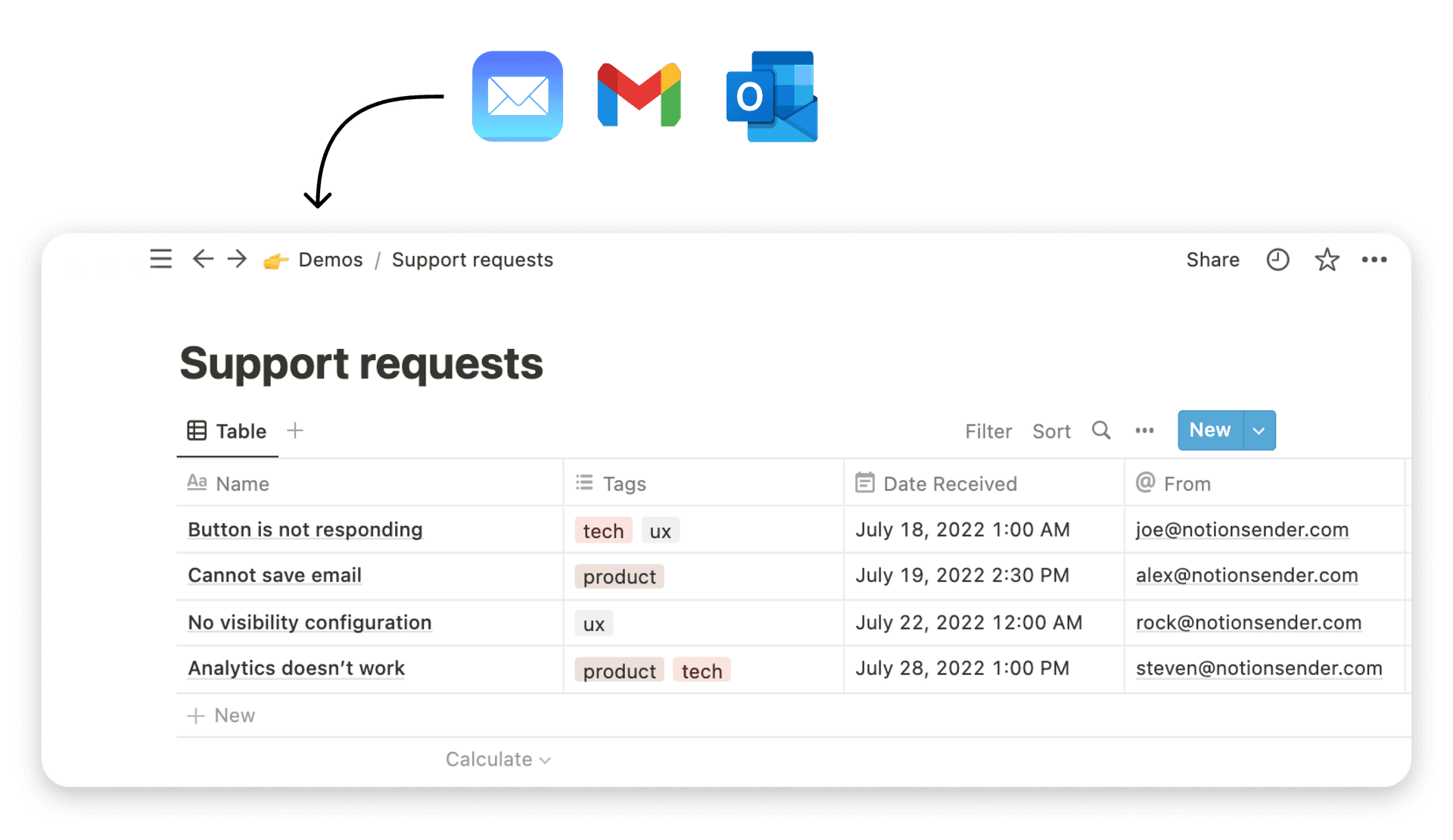
NotionSender offers a surprisingly simple fix. By giving your shared Notion database its own unique email address, both you and your partner can save any important email directly into your workspace.
- Forward key emails about strategy shifts or approvals straight to your Notion database.
- Log payment confirmations and invoices as they arrive.
- Keep a permanent, searchable history of every decision made.
Suddenly, you have a single source of truth that both of you can check anytime. No more "I'm sure you said..." conversations. It's all there, organized and timestamped.
Automate Your Reporting and Tracking
Nobody enjoys manually crunching numbers for reports. It’s not just tedious; it’s a minefield for human error. One misplaced decimal or a forgotten invoice can create serious friction and erode trust. This is where automation becomes your best friend.
NotionSender can help automate this by pulling key data from incoming emails. For instance, when your partner emails a sales report from their payment system, NotionSender can grab the revenue figures, dates, and other details, then neatly populate your Notion database.
Here’s an idea of how a shared Notion dashboard, powered by NotionSender, gives everyone a crystal-clear view of the partnership's performance.

This shared dashboard ensures you're both looking at the exact same data, updated consistently. It just wipes out confusion.
The real goal here is to build a system where transparency reinforces trust. When both partners see the same data, there’s no room for doubt—only collaboration.
By connecting your tools, you create a transparent ecosystem. To see how you can link other platforms for even more powerful automations, feel free to explore our NotionSender API documentation.
Manage Contracts and Milestones Seamlessly
A revenue share contract isn't something you sign and file away forever. It's a living document that guides your collaboration. You need a central spot to keep that contract, track your progress on milestones, and manage all the related tasks.
With NotionSender, you can handle all of this inside one integrated workspace.
- Store Your Contract: Save the final, signed agreement in your Notion workspace. It’s always there for easy reference.
- Track Milestones: Set up a timeline or a Kanban board to visualize progress towards performance tiers or project deadlines.
- Collaborate on Tasks: You can assign tasks, set reminders, and discuss what's next right next to your email logs and performance data.
Imagine a freelance marketer and a small business using this setup. They have a shared Notion page with the contract, a database for all their emails, and another for tracking campaign revenue. This unified view turns what could be a messy arrangement into a professional, smoothly run operation.
Alright, you’ve wrapped your head around the theory. Now for the fun part: putting a revenue sharing model into action.
Moving from a great idea to a profitable partnership can feel like a huge leap. But with a solid plan, you can avoid the common pitfalls and build something that lasts. This isn't just about dotting i's and crossing t's; it's about creating a foundation of trust and clarity from day one.
Think of the following steps as your pre-launch sequence. Getting these right ensures a smooth journey for both you and your partner, setting you up for a long and profitable collaboration.
The Implementation Checklist
A successful partnership is built on more than just a good agreement—it’s built on a clear process. Here’s a step-by-step guide to get your revenue share collaboration off the ground.
- Define Who Does What: This sounds basic, but it’s where most partnerships stumble. Who’s handling the marketing? Who’s on point for sales calls and customer service? Get it all down on paper so there are no overlaps or, even worse, crucial tasks falling through the cracks.
- Set Up a Bulletproof Tracking System: This is completely non-negotiable. You need a single source of truth that both you and your partner can access and trust. This could be a shared CRM, dedicated affiliate software, or even a meticulously managed spreadsheet. Transparency is everything here.
- Get the Agreement Signed: It’s time to make it official. Your formal contract should capture everything you've agreed upon—the exact revenue share structure, when and how payments will be made, and a crystal-clear definition of what triggers a payout.
- Schedule Regular Check-ins: Don't just set it and forget it. Get weekly or bi-weekly meetings on the calendar before you launch. This creates a dedicated time to review what’s working, tackle challenges head-on, and make strategic adjustments together.
By working through these steps, you’re not just starting a partnership; you’re building one on a bedrock of accountability and clear communication. You can learn more about how to create a system for this in our guide on NotionSender.
Key Metrics to Track for Partnership Health
Here’s a secret: the final revenue number is the last thing you should be looking at. To really know if your partnership is thriving, you need to track the numbers that predict future success. These give you a real-time pulse on your collaboration.
Your final revenue is a lagging indicator—it tells you what already happened. To proactively manage your partnership, you must focus on the leading indicators that show you where you're headed.
Start tracking these key performance indicators (KPIs) from the get-go:
- Lead Generation Volume: How many potential customers is the partnership actually generating? A consistent flow of new leads is the first green flag that your joint efforts are paying off.
- Lead-to-Customer Conversion Rate: Out of all those leads, what percentage are actually becoming paying customers? This metric is a direct reflection of your lead quality and the effectiveness of your sales process.
- Partnership ROI: This one’s simple but powerful. Just divide the total revenue generated by the amount you paid out to your partner. It gives you a stark, clear picture of the direct financial return on your collaboration.
Frequently Asked Questions About Revenue Sharing
Once you start seriously considering a revenue share deal, a few big questions always pop up. Moving from a simple fixed-price project to a partnership is exciting, but it brings a different set of things to figure out. Let's walk through the most common questions we see.
What Is a Fair Revenue Sharing Percentage?
This is the million-dollar question, and the honest answer is: there's no magic number. What's "fair" really comes down to the value and risk each person is bringing to the partnership. But, we can look at some common starting points.
- Affiliate Marketing: This usually falls between 5% to 30%. The final number depends on the product's price, its profit margin, and how much work the affiliate is putting in.
- Content & Creative Collaborations: You’ll often see a split from 10% to 50%. A creator with a massive, dedicated audience will naturally command a bigger slice of the pie.
- Sales & Business Development: This can be anywhere from 20% to 50%, and sometimes even higher. This makes sense if your partner is handling the entire sales process, from finding the lead to closing the deal.
A "fair" percentage isn't just a number; it's an agreement that reflects the balance of effort, risk, and reward. The partner taking on more risk or doing more of the heavy lifting should rightfully expect a larger piece of the pie.
How Do You Accurately Track Revenue for a Sharing Model?
Trust is everything in a revenue share deal, and that trust is built on transparent, accurate tracking. If you can’t agree on the numbers, the partnership is doomed from the start. The solution is to establish a single source of truth that both of you can see and trust.
Here are a few ways to do it:
- Dedicated Affiliate Software: Tools like PartnerStack or Impact.com are built for this. They give partners unique tracking links and a clear dashboard to see their results.
- CRM Systems: A shared view in your CRM lets both sides see where leads came from, what stage a deal is in, and which sales to attribute to the partner.
- UTM Parameters & Google Analytics: For simpler setups, you can use custom URLs to track the traffic and sales generated from a partner's website or campaign.
The most critical step is to agree on which system you'll use before any work starts.
What Happens If a Partnership Doesn’t Work Out?
Not every partnership is a home run, and it's smart to plan for how you'll part ways if things don't work out. This is exactly what a termination clause in your agreement is for. A clear exit plan keeps things professional instead of personal.
You can learn more about building strong agreements in our other guides on the NotionSender blog.
Your termination clause really needs to define two things:
- The Notice Period: A standard timeframe, like 30 days, gives everyone enough time to wind down their efforts cleanly.
- Final Payouts: Be explicit about how any outstanding commissions will be calculated and paid. This prevents any arguments over the final checks.
Ready to keep your revenue sharing partnership organized and transparent? NotionSender turns your Notion workspace into a central hub for all partner communications, reporting, and contract management. Save crucial emails, automate data entry, and build trust with a shared, organized system. Get started with NotionSender today and manage your partnerships with confidence.